Last Updated on September 19, 2026
Naltrexone is a prescription medication used to treat alcohol use disorder (AUD). It blocks opioid receptors involved in alcohol’s rewarding effects and can help reduce cravings and heavy drinking. This FAQ answers common questions about how naltrexone works, dosing, side effects, safety, other medications, and how to get a prescription online.
If you’re considering naltrexone to help you drink less or quit drinking, you probably have questions. How does it work? Can you still drink while taking it? What are the side effects? And how do you know whether it’s working?
Naltrexone has been used to treat alcohol use disorder (AUD) for decades, so researchers have accumulated a substantial body of evidence on its safety and effectiveness. But there’s also plenty of confusing or oversimplified information about it online.
Below, we’ll answer some of the most common questions about naltrexone, from how it affects alcohol cravings to what you should know about side effects, other medications, and getting a prescription online.
How Naltrexone Works
What is naltrexone?
Naltrexone is a prescription medication used to treat alcohol use disorder and opioid use disorder. It’s an opioid antagonist, meaning it blocks opioid receptors in the brain rather than activating them.
For alcohol use disorder, naltrexone can help reduce heavy drinking and the likelihood of returning to heavy drinking. A large 2023 systematic review and meta-analysis found that oral naltrexone improved several drinking outcomes compared with placebo.
Naltrexone isn’t addictive, doesn’t produce a high, and doesn’t cause the kind of unpleasant reaction to alcohol associated with medications such as disulfiram.
How does naltrexone work for alcohol?
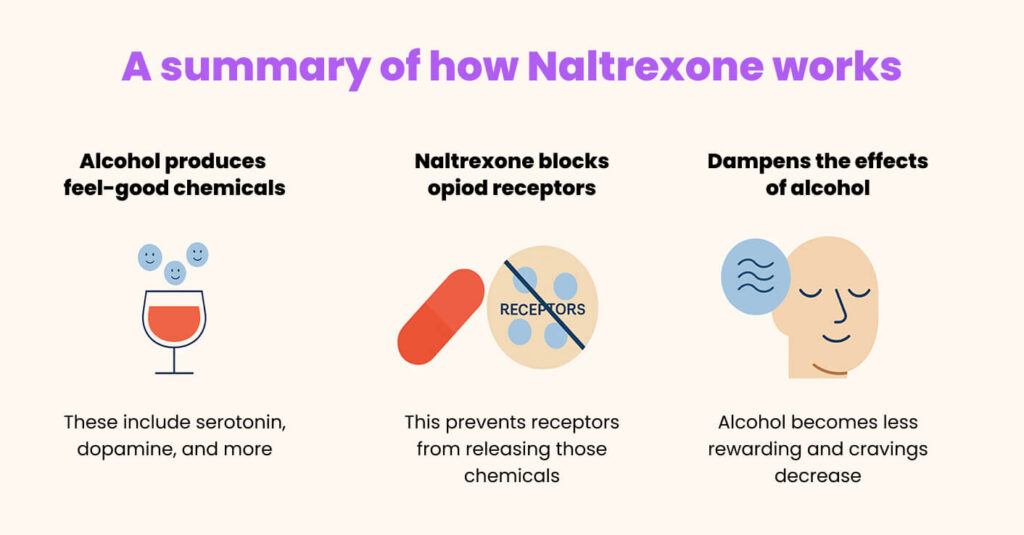
Alcohol activates several systems in the brain, including the endogenous opioid system involved in reward and reinforcement. Naltrexone blocks opioid receptors, which can reduce some of alcohol’s reinforcing effects.
In practical terms, alcohol may feel less rewarding, and some people experience less craving or less desire to continue drinking. A meta-analysis of human laboratory studies found that naltrexone reduced both alcohol consumption and self-reported craving compared with placebo.
That doesn’t mean everyone experiences a dramatic change in how alcohol feels. The effects vary from person to person.
Does naltrexone stop you from getting drunk?
No. Naltrexone doesn’t prevent alcohol intoxication.
You can still become impaired while taking it, and drinking can still affect your coordination, judgment, and reaction time. Naltrexone instead acts on the reward pathways involved in alcohol use.
So even if drinking feels less rewarding while you’re taking naltrexone, the usual safety risks of intoxication still apply.
Does naltrexone reduce alcohol cravings?
Yes, it can. Clinical research has found that naltrexone reduces craving on average, although individual responses vary.
Some people notice that they think about alcohol less often. Others may still experience cravings but find them less intense or find it easier to stop drinking once they’ve started.
Craving is also only one way researchers measure naltrexone’s effectiveness. Studies have found benefits for outcomes including heavy drinking days and return to heavy drinking.
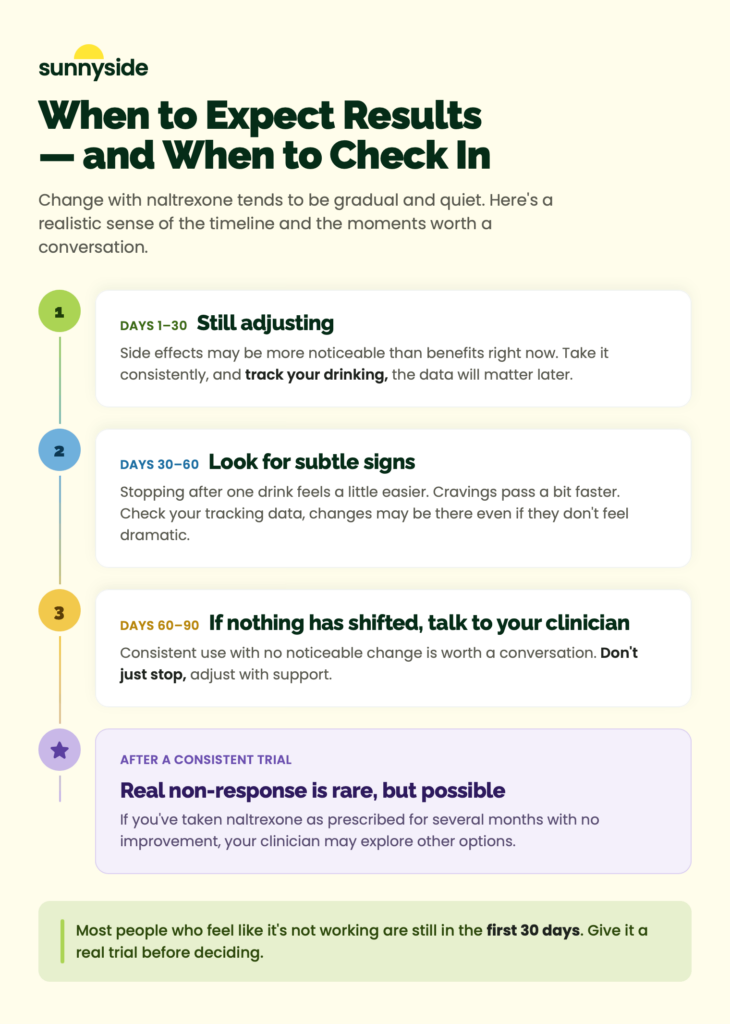
How long does it take for naltrexone to work?
Naltrexone begins acting pharmacologically relatively quickly, but that doesn’t necessarily mean you’ll notice an immediate change in your drinking.
Changes in cravings, alcohol’s rewarding effects, or drinking patterns may become apparent over time, and the experience varies from person to person. If you don’t notice a dramatic difference right away, that doesn’t necessarily tell you whether the medication will ultimately be helpful. Your clinician can help you evaluate your response over time.
Does naltrexone work for everyone?
No medication works for everyone, and naltrexone is no exception.
Across clinical trials, oral naltrexone has been shown to reduce the risk of returning to heavy drinking and improve several other alcohol-consumption outcomes compared with placebo. But those results describe averages across groups of people, not a guarantee of how any one person will respond.
Researchers have investigated whether factors such as genetics, craving levels, and drinking patterns can predict who responds particularly well to naltrexone. So far, there isn’t a simple test or characteristic that can reliably tell you in advance whether it will work for you.
If naltrexone is medically appropriate, your response is something you and your clinician can assess over the course of treatment.
Taking Naltrexone
What is the usual naltrexone dose for alcohol use disorder?
For oral naltrexone, 50 mg once daily is a commonly used dose for alcohol use disorder. A clinician may recommend starting at a lower dose and increasing it depending on your medical history, side effects, and treatment plan.
Naltrexone is also available as an extended-release injection, sold under the brand name Vivitrol, that’s typically given once a month.
Your clinician should determine the appropriate dose and formulation for you.
Can you drink alcohol while taking naltrexone?
Yes. Naltrexone doesn’t cause the type of adverse reaction to alcohol associated with disulfiram (Antabuse).
Importantly, naltrexone doesn’t prevent intoxication. You can still become impaired while taking it, and the usual risks of drinking alcohol still apply.
Whether your goal is to drink less or quit entirely, follow your clinician’s guidance about drinking while taking naltrexone.
When should you take naltrexone?
If you’ve been prescribed naltrexone once daily, the most important thing is to follow your clinician’s dosing instructions and take it consistently.
The best time of day to take naltrexone can depend on your treatment plan and how you respond to the medication. If side effects make your current schedule difficult, talk with your clinician before changing how you take it.
For more on the different approaches to timing, see our guide to when to take naltrexone.
What happens if you miss a dose of naltrexone?
If you miss a dose, follow the instructions provided by your clinician or pharmacist. In general, you shouldn’t double your next dose to make up for one you missed.
If you’re regularly forgetting doses, let your clinician know. They can help you figure out a schedule that makes it easier to take the medication consistently.
How long do you take naltrexone?
There’s no single treatment length that’s right for everyone. How long you take naltrexone depends on factors including your response to the medication, your drinking goals, and your clinician’s recommendation.
Some people use naltrexone for several months, while others continue treatment longer. Rather than treating a particular number of months as a required endpoint, your clinician can help you evaluate whether the medication is still beneficial and when it might make sense to stop.
Can you stop taking naltrexone without tapering?
Naltrexone doesn’t cause physical dependence, so stopping it doesn’t produce the type of withdrawal syndrome associated with addictive substances.
That doesn’t mean you should make changes to your prescription without talking to your clinician. The medication’s effects won’t continue once you stop taking it, and your clinician can help you decide when and how discontinuing it fits into your treatment plan.
Naltrexone Side Effects and Safety
What are the most common side effects of naltrexone?
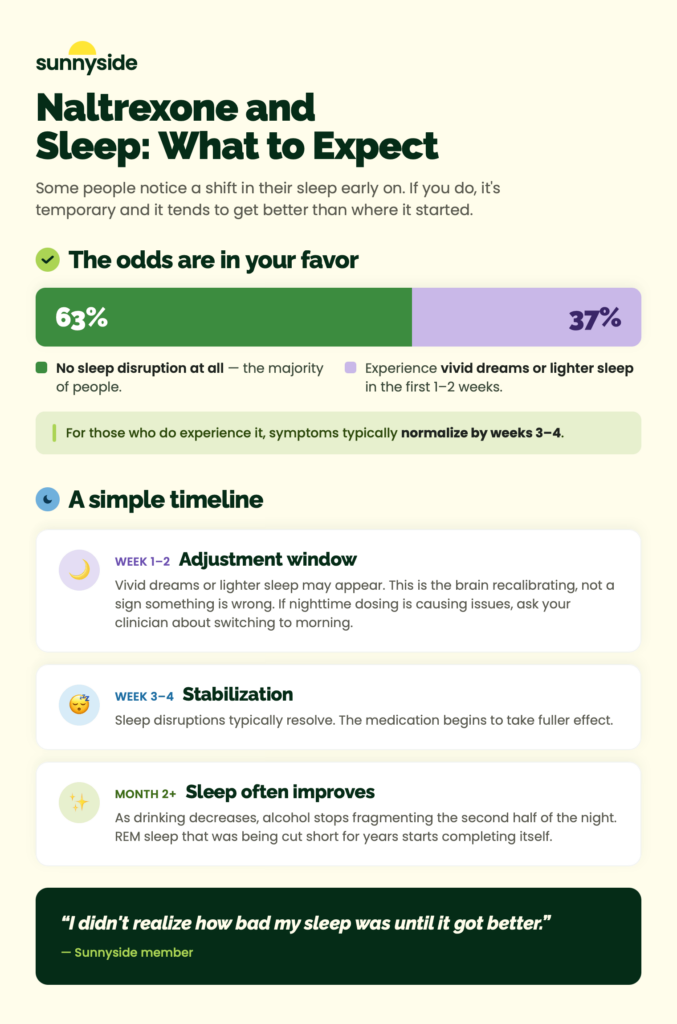
Common naltrexone side effects include nausea, headache, dizziness, fatigue or sleepiness, vomiting, decreased appetite, and sleep problems. Not everyone experiences side effects, and their severity and duration vary.
Nausea is one of the most commonly reported side effects of oral naltrexone. Some side effects improve as your body adjusts to the medication, but you should let your clinician know about symptoms that are persistent, severe, or concerning.
Does naltrexone make you tired?
It can. Fatigue and sleepiness are reported side effects of naltrexone, although not everyone experiences them.
If you’re unusually tired after starting naltrexone, talk with your clinician. They can help determine whether the medication may be contributing and whether any changes to your treatment plan are appropriate.
Does naltrexone cause weight loss or weight gain?
Naltrexone by itself isn’t approved as a weight-loss medication, and weight loss or weight gain isn’t its primary effect when it’s prescribed for alcohol use disorder.
Some people may experience appetite changes while taking naltrexone. Changes in drinking can also affect calorie intake, so someone’s weight may change for reasons that aren’t directly caused by the medication.
Some of the confusion comes from Contrave, an FDA-approved weight-management medication that contains both naltrexone and bupropion. That’s a different treatment from taking naltrexone alone.
Is naltrexone addictive?
No. Naltrexone isn’t considered addictive and isn’t a controlled substance.
It blocks opioid receptors rather than activating them, doesn’t produce a high, and doesn’t cause physical dependence. Stopping naltrexone therefore doesn’t produce a naltrexone withdrawal syndrome.
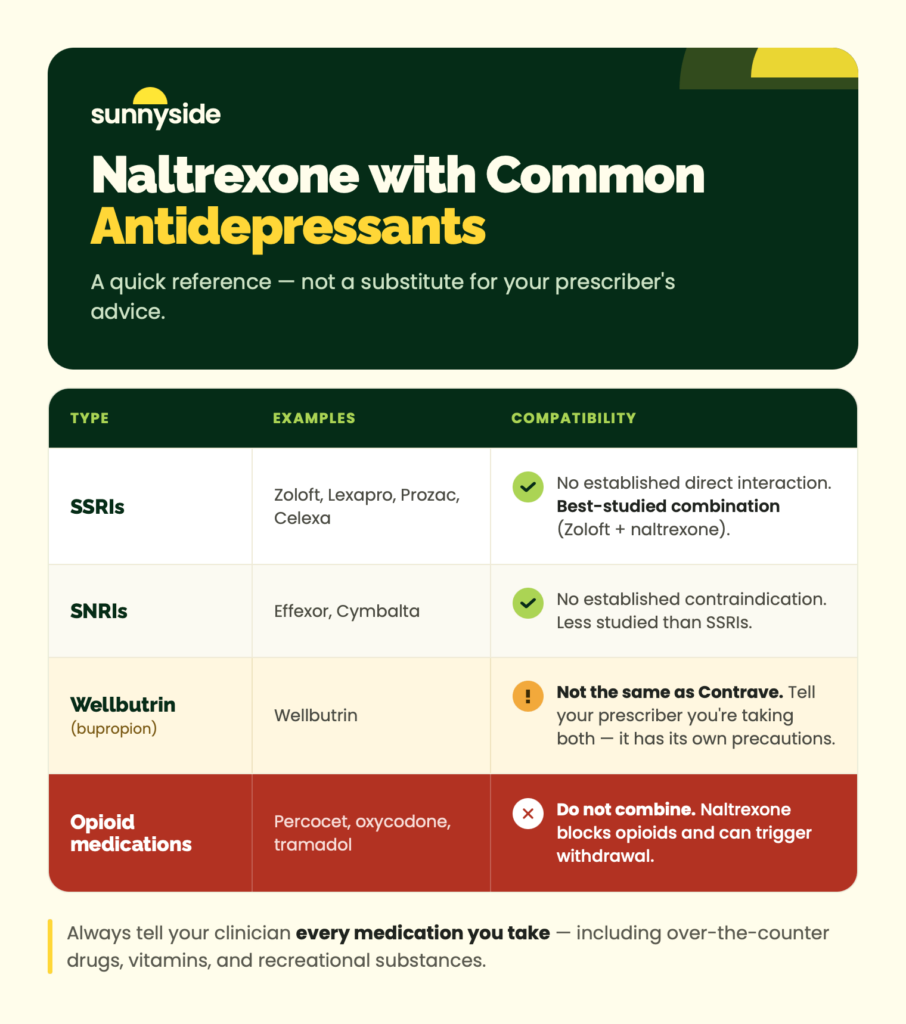
Can you take naltrexone with antidepressants?
Naltrexone can often be prescribed alongside commonly used antidepressants, including SSRIs and SNRIs. There aren’t well-established direct drug interactions between naltrexone and many of these medications, but whether a particular combination is appropriate depends on your full medication list and medical history.
Don’t start, stop, or change either medication on your own. A clinician should review the specific medications you’re taking.
For a closer look at the research and potential considerations, see our guide to naltrexone and antidepressants.
Is naltrexone safe for your liver?
For many people, yes. Naltrexone does carry warnings related to liver injury, but clinically significant liver toxicity appears to be uncommon when the medication is used at therapeutic doses.
Having elevated liver enzymes or some forms of liver disease doesn’t automatically mean naltrexone is off the table. Whether it’s appropriate depends on the type and severity of liver disease, other medications, alcohol use, and your overall health.
A clinician can review your history and determine whether testing or monitoring is appropriate. You can read more in our guide to naltrexone and liver safety.
Can you take naltrexone if you use opioids?
Naltrexone generally shouldn’t be started while opioids are still in your system. Because it blocks opioid receptors, it can trigger sudden withdrawal in someone who is physically dependent on opioids. It can also prevent opioid medications from providing their intended effects.
The opioid-free period required before starting naltrexone can vary depending on which opioid you’ve used and other clinical factors. Your clinician needs to know about prescription pain medications, opioid-containing medications, illicit opioids, and other substances with opioid activity before prescribing naltrexone.
This interaction is important enough that we’ve covered it separately in our guide to what to avoid when taking naltrexone.
Naltrexone vs. Other Medications
What’s the difference between naltrexone and Antabuse (disulfiram)?
Naltrexone and disulfiram can both be used to treat alcohol use disorder, but they work very differently.
Naltrexone blocks opioid receptors involved in alcohol’s rewarding effects and can help reduce heavy drinking and cravings. Disulfiram, sold under the brand name Antabuse, interferes with the way your body metabolizes alcohol. Drinking while taking it can cause an unpleasant reaction that may include flushing, nausea, vomiting, headache, and heart palpitations.
Because of that difference, disulfiram is generally used to support abstinence. Naltrexone can be used when the goal is either abstinence or reducing heavy drinking.
What’s the difference between naltrexone and acamprosate?
Both naltrexone and acamprosate are FDA-approved for alcohol use disorder, but research suggests they have somewhat different strengths.
Naltrexone has stronger evidence for reducing heavy drinking and return to heavy drinking. Acamprosate is used to help people maintain abstinence after they’ve stopped drinking.
Which medication makes sense depends on your goals, medical history, other medications, and other individual factors. A clinician can help determine which, if either, is appropriate.
Is Vivitrol the same as naltrexone?
Vivitrol is an extended-release injectable form of naltrexone. Instead of taking an oral medication regularly, you receive an injection approximately once a month.
Both forms block opioid receptors, but there are practical differences between them. An injection removes the need to remember a daily medication, while oral naltrexone can be stopped more readily if side effects or other issues arise.
Cost, insurance coverage, medical history, and personal preference can all factor into which formulation is appropriate.
Is naltrexone the same as Suboxone?
No. Naltrexone and Suboxone are different medications that can both be used in the treatment of opioid use disorder.
Naltrexone is an opioid antagonist, meaning it blocks opioid receptors. Suboxone contains buprenorphine and naloxone. Buprenorphine is a partial opioid agonist, so its mechanism and role in treatment are different from naltrexone’s.
If you’re currently taking Suboxone or another opioid medication, tell your clinician before starting naltrexone.
Getting a Naltrexone Prescription
Who can prescribe naltrexone?
Naltrexone is a prescription medication, but you don’t necessarily need to see an addiction specialist to get it. An appropriately licensed clinician can prescribe naltrexone if they determine it’s medically appropriate.
That might include a primary care clinician, psychiatrist, addiction medicine clinician, or a licensed telehealth provider. If your regular clinician isn’t familiar with the medication, our guide to finding a naltrexone-friendly doctor covers some of your other options.
Do you need an alcohol use disorder diagnosis to get naltrexone?
You don’t necessarily need to arrive at your appointment with an existing AUD diagnosis. A clinician will evaluate your drinking patterns, health history, medications, and goals to determine whether naltrexone is appropriate.
Naltrexone also isn’t reserved only for people with severe drinking problems. If you’re wondering whether you might be a candidate, our guide to naltrexone eligibility explains some of the factors a clinician considers.
Can you get naltrexone online?
Yes. Naltrexone can be prescribed through telehealth when a licensed clinician determines that it’s medically appropriate.
The exact process varies by provider, but it generally involves completing a health assessment and having your information reviewed by a clinician. Depending on the service, medication may then be filled through a pharmacy or shipped to your home.
You can read more about the process in our guide to getting naltrexone online.
How much does naltrexone cost?
It depends on how you get it.
Generic oral naltrexone itself can be relatively inexpensive, particularly with insurance or a prescription discount. Telehealth programs may cost more because their fees can also include clinical care, medication delivery, coaching, tracking tools, or other services.
Sunnyside Med costs $99 per month, billed quarterly, plus a one-time $50 intake fee. The program includes compounded naltrexone with vitamin B6 for eligible members, along with clinical care, drink tracking, coaching, and community support.
For a more detailed comparison, see our guide to naltrexone telehealth costs.
Does insurance cover naltrexone?
Many insurance plans cover generic oral naltrexone, but your out-of-pocket cost depends on your plan, pharmacy, and formulation. Coverage for extended-release injectable naltrexone can differ from coverage for oral medication.
Telehealth programs also have their own payment structures and may or may not accept insurance.
Sunnyside Med doesn’t require insurance. The program is paid out of pocket and is HSA/FSA eligible.
Get Naltrexone Online With Sunnyside Med
If you’re done browsing this naltrexone FAQ and interested in trying naltrexone, you don’t necessarily need to find a local specialist or wait weeks for an appointment. Sunnyside Med makes the process 100% online.
You’ll start by completing a short assessment about your health, medications, drinking habits, and goals. A licensed clinician will review your information and determine whether naltrexone is appropriate for you. Eligible members receive compounded naltrexone with vitamin B6, delivered discreetly to their door.
But medication is only one part of the program. Sunnyside Med also includes drink tracking and analytics, daily reminders, text coaching seven days a week, a private community, weekly group calls, and ongoing clinical care. You can use the program whether your goal is to drink less or quit entirely.
“For the first time in years I’ve been waking up clear headed and feeling good,” said one member. “I still plan to drink some but I don’t miss feeling like I have to drink.”
Ready to see if naltrexone could be a fit for you? Take the quick online assessment.
Naltrexone is a prescription medication. Eligibility is determined by a licensed clinician. This content is educational and should not be taken as medical advice.