Last Updated on May 10, 2026
If you’ve been researching (okay, Googling) ways to work on your relationship with alcohol, you’ve probably come across two names pretty quickly: naltrexone and acamprosate.
At first glance, they can seem interchangeable—or at least really similar. Both naltrexone and acamprosate are FDA-approved medications for alcohol use disorder, and both medications have plenty of research backing them up. Both are meant to help people drink differently.
But in actuality, they’re designed for very different situations.
The Main Difference Between Naltrexone vs. Acamprosate
A simple way to think about it is this: acamprosate is usually used after someone has already stopped drinking and wants help staying abstinent. Naltrexone, meanwhile, is often part of a “drink less” approach. (Check out Sunnyside’s comprehensive naltrexone guide to learn more.) People may still be drinking when they start it. Some want to quit eventually; others are more focused on cutting back, reducing cravings, or feeling less stuck in the cycle of overdoing it.
That distinction matters because the medications work differently, too.
Naltrexone works on opioid receptors connected to alcohol’s rewarding effects. The science gets complicated fast, but the practical version is easier to understand: for some people, drinking simply stops feeling so compelling once they’ve started. The first drink doesn’t automatically lead to the fourth in the same way.
That doesn’t mean alcohol suddenly becomes disgusting or impossible to drink. Most people who take naltrexone don’t describe some dramatic overnight shift. It’s usually subtler than that. More like realizing halfway through the night that the urge to keep going isn’t hitting quite as hard as it normally would.
If you’ve ever had the experience of planning to have “just a couple” and then somehow finding yourself opening another without really making a conscious decision, that’s the sort of loop naltrexone is intended to interrupt.
One Sunnyside Med member described it this way: “Alcohol just isn’t as interesting anymore. I used to think about my next drink before I’d finished the first one. That voice got quiet, and I didn’t even notice it happening.”
Acamprosate works differently. Instead of changing alcohol’s rewarding effects, it’s thought to help stabilize some of the neurological stress that can linger after a person stops drinking. Researchers believe it affects glutamate and GABA systems involved in withdrawal and post-acute abstinence symptoms.
So in practice, the two medications are often helping with different parts of the experience. Naltrexone is more associated with reducing the momentum of drinking itself. Acamprosate is more often discussed in the context of staying steady after quitting.
Acamprosate: Usually Best If You’ve Already Stopped Drinking
Acamprosate is approved to help maintain abstinence after someone has already stopped drinking. It is not designed to be effective if you’re still drinking. That’s not a judgment on its quality as a medication; it’s just how the drug works.
There’s also a practical barrier. Acamprosate requires taking two tablets three times a day. Some people do totally fine with that, but it can become harder to stay consistent when normal life gets busy.
Research findings around acamprosate have also varied depending on the population being studied. A large 2023 review published in JAMA found evidence supporting both acamprosate and naltrexone for alcohol use disorder, although outcomes varied across studies and treatment settings.
Some addiction researchers have pointed out that acamprosate appeared more effective in earlier European abstinence-focused treatment programs than it did in some later U.S.-based studies. That doesn’t mean the medication “doesn’t work.” It suggests the context and treatment goal matter quite a bit. That’s important context for people who are still drinking and aren’t necessarily trying to become fully abstinent right away.
Naltrexone Can Start Where You Are
One reason naltrexone gets attention among gray area drinkers is that it does not require someone to quit drinking before starting treatment. In fact, numerous clinical sources note that naltrexone may be initiated while a person is still drinking, depending on the situation and medical guidance.
Some people want abstinence. Some want fewer blackout nights. Some are tired of constantly negotiating with themselves about whether tonight is “allowed” to be a drinking night. Others mainly want alcohol to take up less mental space.
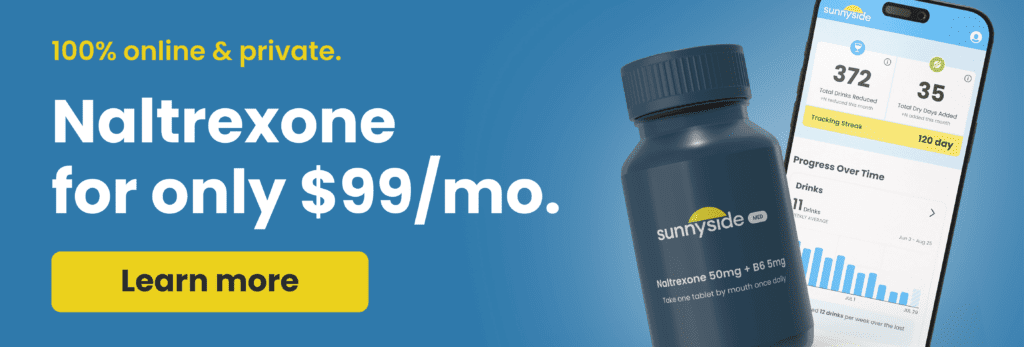
Naltrexone has been studied across a range of those outcomes, including reducing heavy drinking days and cravings. For many people, the experience is less dramatic than you might expect. Not “I suddenly hated alcohol.” More like realizing halfway through the night that the automatic momentum to keep drinking isn’t quite as strong. Sunnyside Med’s compounded naltrexone (50mg + Vitamin B6) is taken once daily and can be started without quitting first.
Nick Allen, Sunnyside’s CEO, describes the broader goal this way: “We want to take willpower out of the equation [of mindful drinking] as much as possible.”
That framing resonates with a lot of people because white-knuckling usually works… until it doesn’t.
What the Research Says
One significant comparison of the two medications is a 2013 meta-analysis by Jonas Maisel and colleagues, which reviewed dozens of randomized controlled trials.
Researchers found that naltrexone showed stronger effects for reducing heavy drinking and craving, while acamprosate showed stronger effects for supporting abstinence after quitting.
That pattern has generally held up in later reviews as well. So, if you’re a gray area drinker looking to shrink alcohol’s role in your life (but perhaps not quit drinking completely), there is evidence that naltrexone is the stronger choice for you.
Importantly, neither medication works identically for everyone. Outcomes depend on factors like:
- drinking patterns
- treatment goals
- medical history
- support systems
- consistency of use
Be sure to discuss these factors with your provider before making any decisions about medication.
Side Effects of Naltrexone vs. Side Effects of Acamprosate
Naltrexone’s most common side effects include nausea, dizziness, fatigue, and changes in sleep. For many people, these are mild and pass within 1-2 weeks. (Pro tip: Taking the medication with food helps with nausea.) A licensed clinician reviews every Sunnyside Med application to ensure naltrexone is appropriate and safe in each circumstance.
It’s critical to note that naltrexone cannot be taken by anyone using opioids of any kind. Taking naltrexone while opioids are already in your system can lead to precipitated withdrawal, which is a serious medical emergency.
Acamprosate’s most common side effects are diarrhea, headache, dizziness, and dry mouth, irritability, and trouble sleeping. The medication is generally well tolerated, though it should be used with caution in people with kidney and liver problems. (Again, be sure to discuss all these risks and possibilities with your provider!)
Naltrexone vs. Acamprosate Side-by-Side
| Naltrexone | Acamprosate | |
|---|---|---|
| Goal | Drink less / cut back | Maintain abstinence after quitting |
| Start while drinking? | Yes | No (designed for post-quit use) |
| Dosing | 1 pill/day | 6 pills/day (2 pills, 3x daily) |
| Evidence | Stronger for reducing cravings | Stronger for abstinence maintenance |
| Best for | Gray area drinkers who want to cut back | People who have already quit and want to stay quit |
Sunnyside Med’s Approach
Sunnyside Med combines compounded naltrexone (50mg + Vitamin B6) with the Sunnyside app’s tracking tools, coaching, and behavior-change support. The program is online, available across the U.S., and designed for people who want support changing their drinking habits without needing to enter a traditional treatment setting.
Among active members with 50%+ app engagement, Sunnyside reports that members averaged 45.6% fewer drinks per week. Individual results vary, of course.
“I prescribe naltrexone regularly as a safe, effective way to curb heavy drinking,” says Sunnyside Med Advisor Dr. Hrishikesh Belani, M.D. “I highly recommend pairing it with a behavioral health program like Sunnyside.”
The conclusion? If you’ve already stopped drinking and want help maintaining abstinence, acamprosate might make some sense to explore. But if you are still drinking and want help cutting back, reducing cravings, or interrupting heavy-drinking patterns, naltrexone is probably the more appropriate path.
Take the quiz to find out if Sunnyside Med is a fit for you and your goals.
Sunnyside is the Perfect Companion for Your Naltrexone Journey
Sunnyside is the #1 mindful drinking app. Since 2020, we’ve been honing our harm-reduction approach, and have helped over 400,000 people cut out 22 million drinks from their baseline habits. 96.7% of our members report success drinking less, and in a third-party study, our approach was demonstrated to reduce weekly drinking by 33% after 12 weeks.
Think of Sunnyside as the front-door for anyone who wants to change their relationship with alcohol. If you want to drink less, we can help you get there. If you want to eventually quit, but want to take a gradual approach, we can make that happen.
When you sign up for Sunnyside, you’ll take a quick 3-minute personalization quiz, then hop into the app. It’s as simple and quick as that.
We’ll give you weekly plans to gradually reach your drinking goals, and we’ll provide nudges, coaching, exercises, and advice to help you get there.
We have daily tracking and journaling tools, including the option to chat with a real human coach at any time. And of course we have great analytics so you can track your progress over time.
Sunnyside is a full-featured mindful drinking app, and thus the perfect companion for your Naltrexone journey. Naltrexone will actively help you reduce cravings around alcohol, and Sunnyside will help you understand your triggers and patterns, giving you a healthy system for habit change.
If and when you see success drinking less, and you choose to stop taking Naltrexone, Sunnyside is a tool you can keep using to maintain your healthy habits.
Everyone who signs up for Sunnyside gets a free 15-day trial, then the subscription is $8.25/month, less than the cost of a fancy drink. And the best part is our members save an average of $50 per month, easily paying for the cost of the subscription.
Whether you’re currently taking naltrexone, or just doing some research on alcohol moderation, we’d love to have you sign up for our 15-day free trial today.