



Naltrexone / A guide to the evidenceAll research ↗

The science behind
naltrexone.

How an established medication can help people drink less or quit. Explore more than 30 years of research, from the brain’s reward system to the results of major clinical trials.

Conceptual yellow capsules on a sunlit blue desk with cream stationery and soft room shadows
Conceptual capsule imagery. Actual medication appearance varies.Illustrative imagery.
1994FDA approval of oral naltrexone for alcohol dependence[11]
30+ yearsof published alcohol-treatment research[2]
47 trialsof naltrexone in one major Cochrane review, 2010[5]

Research and approval refer to studied drug formulations. Sunnyside’s compounded naltrexone isn’t FDA-approved; its specific compounded product and program weren’t tested in these trials. Read the formulation note.

00The big picture

An established medication for drinking less or quitting.

A small yellow capsule on a ceramic dish beside a book in a sunlit room
00 · The big pictureIllustrative photography

Naltrexone gives people who want to change their drinking another treatment option. It can help reduce heavy drinking, and it’s supported by decades of clinical research.[1]

It works by blocking opioid receptors involved in alcohol’s rewarding effects. Oral naltrexone was FDA-approved for alcohol dependence in 1994. Major evidence reviews and clinical guidelines now recommend it as a treatment option for alcohol use disorder, or AUD.[10][11][12]

The evidence includes early placebo-controlled studies, large clinical trials and reviews that pool results across studies. This guide explains what they found, what the numbers mean, and what to discuss with a clinician.[1][5]

01How naltrexone works

How naltrexone changes alcohol’s rewarding effects.

Blue sculptural forms and a yellow shape suggesting a blocker fitting into a receptor
01 · How naltrexone worksConceptual illustration, not a literal receptor model.

Alcohol activates several brain systems, including opioid signaling that contributes to reward. Those rewarding effects can reinforce drinking and make it harder to stop.

Naltrexone blocks opioid receptors. That can reduce alcohol’s reinforcing effects and help reduce heavy drinking. Researchers are still studying exactly how this translates into different responses to treatment.[10][1]

You might notice less interest in another drink, or a gradual change in how much you drink. There isn’t one feeling that tells you whether treatment is working. Tracking your drinking gives you and your clinician a clearer picture.[12]

Reward and intoxication are different. Naltrexone doesn’t cancel alcohol’s effects on coordination and judgment. You can still be impaired even if drinking feels less rewarding. Don’t drive after drinking.[14]
THE REINFORCEMENT PATHWAYSimplified model
1

Alcohol engages reward systems

Opioid signaling contributes to the rewarding experience of drinking.

2

Naltrexone blocks opioid receptors

The medication reduces activation at those receptors.

3

Alcohol may feel less rewarding

That change can support fewer cravings and less heavy drinking.

A conceptual explanation of the mechanism, not a brain scan or a prediction of an individual response.[10],[11]

02The results

Naltrexone can help people drink less or quit.

Across decades of research, naltrexone has helped reduce heavy drinking. Studies have also measured more alcohol-free days and lower consumption. Here’s what those results mean.[1][5]

An illustrative everyday scene of a woman reading with a glass of sparkling water
02 · The resultsIllustrative photography

Less return to heavy drinking

Major reviews found that people receiving naltrexone were less likely to return to heavy drinking than those receiving placebo. It’s one of the clearest findings in the evidence.[1][5]

See the pooled evidence ↗

More alcohol-free days

In COMBINE, naltrexone with medical management increased the share of days without drinking compared with placebo and medical management.[4]

Inside the COMBINE trial ↗

Lower alcohol consumption

A targeted-dose trial in sexual and gender minority men with mild to moderate AUD found fewer reported drinks with naltrexone and counseling than with placebo and counseling.[6]

Read the reduction study ↗

The studies used specific formulations, doses and treatment settings, usually with medical or psychosocial support. Results vary by person. These trials weren’t tests of Sunnyside’s compounded prescription or complete program.

0330 years of research

More than 30 years of naltrexone research.

Naltrexone’s alcohol research story spans early controlled trials, regulatory approval, larger clinical studies and modern evidence reviews.

Cloth-bound books and an open volume on a sunlit research-library table
03 · 30 years of researchIllustrative photography
1992

Landmark trials

Early placebo-controlled trials establish a clinical signal.[2],[3]

1994

Oral FDA approval

Oral naltrexone is approved for alcohol dependence.[11]

2006

COMBINE

A large multisite trial evaluates medication and clinical support.[4]

2010

Pooled evidence

Cochrane reviews dozens of naltrexone trials.[5]

2022–26

A sharper picture

Research explores reduction goals, updates pooled evidence and adds safety data. A 2026 trial also studied naltrexone in men with compensated alcohol-associated cirrhosis.[6],[1],[9],[15]

04The study library

Inside the landmark studies.

Read the findings alongside the people, doses and treatment settings studied. The design and interpretation are shown with each result, so you can see what the evidence supports.

Research pages, reading glasses and a blue notebook on a bright desk
04 · The study libraryIllustrative photography

Study 01 / Research library

JAMA Network publisher logo
Published in
Archives of General Psychiatry
1992
Randomized controlled trial
Read the original ↗

A lower relapse rate

In a 12-week study of 70 men receiving outpatient treatment, 23% of those assigned naltrexone met the study’s relapse criteria, compared with 54.3% assigned placebo. This was early controlled evidence that naltrexone, alongside treatment, could change drinking outcomes.[2]

Participants70 men
Dose50 mg daily
Duration12 weeks
ComparisonPlacebo-controlled

Participants meeting study-defined relapse criteria

Placebo
54.3%
Naltrexone
23%
0100%
Volpicelli et al., 1992. Lower is better. Both groups received outpatient treatment. Scale: 0–100%.
View chart data
GroupPercent
Placebo54.3%
Naltrexone23%

Study design & interpretation

The comparison: Naltrexone or placebo, each alongside outpatient rehabilitation, in men with alcohol dependence after detoxification.

How to read it: The difference was 31.3 percentage points on this particular relapse measure. The sample was small and all male. It’s a landmark result, not an estimate of what every person starting naltrexone will experience.


Study 02 / Research library

JAMA Network publisher logo
Published in
Archives of General Psychiatry
1992
Controlled factorial trial
Read the original ↗

Better drinking outcomes with naltrexone

Naltrexone outperformed placebo on several drinking outcomes. The highest abstinence rate came with naltrexone and supportive therapy. Among people who began drinking, those receiving naltrexone and coping-skills therapy were least likely to relapse. The benefit depended partly on the therapy approach.[3]

Participants97 treated/analyzed
Dose50 mg daily
Duration12 weeks
TherapyTwo approaches
Study design

One trial, two treatment questions

NaltrexonePlaceboCoping-skills therapy
Medication +
coping-skills therapy
Placebo +
coping-skills therapy
Supportive therapy
Medication +
supportive therapy
Placebo +
supportive therapy
O’Malley et al., 1992. 97 participants treated/analyzed; 12 weeks; oral naltrexone 50 mg/day. Boxes show the four treatment combinations, not group sizes or success rates. Benefits differed by therapy condition.[3]

Study design & interpretation

The comparison: Naltrexone or placebo paired with coping-skills or supportive psychotherapy.

How to read it: Benefits differed across therapy conditions. The primary abstract reports 97 treated/analyzed participants; this isn’t the full randomized enrollment count. These findings support a treatment approach, without establishing that any particular commercial support program produces the same results.

Study 03 / Research library

JAMA Network publisher logo
Published in
JAMA
2006
Multisite randomized trial
Read the original ↗

More alcohol-free days

COMBINE enrolled 1,383 adults at 11 sites. During treatment, participants receiving naltrexone with medical management had 80.6% abstinent days, compared with 75.1% for placebo with medical management in the comparison without intensive behavioral intervention.[4]

Enrollment1,383 overall
Dose100 mg daily
Duration16 weeks
Setting11 study sites

Days without drinking during treatment

Placebo + MM
75.1%
Naltrexone + MM
80.6%
0100%
COMBINE, 2006. Higher is better. MM = medical management; comparison excludes intensive behavioral intervention. Scale: 0–100%.
View chart data
GroupPercent
Placebo + MM75.1%
Naltrexone + MM80.6%

Study design & interpretation

The outcome: Percent days abstinent is the share of days without drinking during treatment. It isn’t the percentage of participants who quit. The trial also found a lower hazard of a first heavy-drinking day with naltrexone (hazard ratio 0.72; 97.5% CI, 0.53–0.98).

The important nuance: COMBINE used a factorial design. Adding its intensive behavioral intervention didn’t further improve naltrexone’s efficacy. The study supports medication with medical management; it doesn’t prove that more intensive support always adds benefit. Between-group differences weren’t significant one year after treatment.

Study 04 / Research library

Cochrane logo
Published in
Cochrane
2010
Systematic review
Read the original ↗

Less heavy drinking across pooled trials

A Cochrane review examined 50 opioid-antagonist trials, including 47 naltrexone trials. Its naltrexone analysis found a lower risk of heavy drinking than placebo (risk ratio 0.83; 95% CI, 0.76–0.90).[5]

Naltrexone evidence47 trials
FormulationMultiple forms
Time frameVaried by trial
DesignSystematic review
Cochrane / 2010

Lower risk of heavy drinking than placebo

Cochrane / 2010: pooled risk ratio and 95% confidence interval0.60.70.80.91.01.1No difference (1.0)← Lower risk with naltrexoneRisk ratio0.83
Dot: pooled risk ratio. Line: 95% confidence interval. RR 0.83 (0.76–0.9), about 17% lower relative risk. This isn’t a percentage-point reduction or a personal success rate. Naltrexone formulations varied. The review included 47 naltrexone trials within 50 opioid-antagonist trials overall; not all trials contributed to this outcome.[5]
View chart data
MeasureEstimate95% CI
Risk ratio0.830.76–0.9

Study design & interpretation

Why it matters: A systematic review asks whether a finding holds across studies, rather than relying on a single striking result.

How to read it: A risk ratio of 0.83 represents about a 17% relative reduction in the pooled outcome. The review’s full 50-trial, 7,793-person inventory also included three nalmefene trials. Its naltrexone studies weren’t all conventional oral tablets. Don’t add these trials to later reviews as if they were entirely separate evidence.

Study 05 / Research library

The American Journal of Psychiatry logo
Published in
American Journal of Psychiatry
2022
Randomized controlled trial
Read the original ↗

26% fewer binge-drinking days

In a 120-person trial involving sexual and gender minority men with mild to moderate alcohol use disorder, targeted naltrexone plus counseling was associated with a 26% lower rate of binge-drinking days than placebo plus counseling.[6]

Participants120 men
Dose50 mg targeted
Duration12 weeks
SupportCounseling in both arms

Binge-drinking day rate, indexed to the placebo group

Placebo
100
Targeted naltrexone
74
0100
Santos et al., 2022. Relative rate index, not actual days or percentages of participants. Incidence rate ratio 0.74 (95% CI, 0.56–0.98). Counseling in both groups. Scale: 0–100 index points.[6]
View chart data
GroupRelative rate index
Placebo100
Targeted naltrexone74

A second outcome in the same trial

Fewer reported drinks over 30 days

Placebo + counseling
100
Targeted naltrexone + counseling
69
0100 · relative rate index
Santos et al., 2022. The reported rate of drinks in the past 30 days was 31% lower with targeted naltrexone (IRR 0.69; 95% CI, 0.52–0.91). The modeled relative rate is indexed to placebo = 100. These aren’t actual drink counts, a change from baseline or a separate study. This specific population and targeted regimen differ from a daily compounded prescription.[6]
View chart data
GroupRelative rate index
Placebo + counseling100
Targeted naltrexone + counseling69

Study design & interpretation

The numbers: The binge-day incidence rate ratio was 0.74 (95% CI, 0.56–0.98). The reported rate of drinks over the past 30 days was also lower (IRR 0.69; 95% CI, 0.52–0.91).

How to read it: These are relative rates, not percentage-point changes or a 26% chance of success. This study tested targeted dosing in a specific population. It doesn’t establish identical effects in every population or for a daily compounded prescription. Drinking-day frequency and intention-to-treat alcohol biomarker results weren’t significantly different. The paper was published in 2022; its public manuscript became available in 2023.

Study 06 / Research library

JAMA Network publisher logo
Published in
JAMA
2023
Systematic review & meta-analysis
Read the original ↗

Lower risk of returning to heavy drinking

An updated review supported oral naltrexone 50 mg/day as a first-line option for alcohol use disorder. Compared with placebo, the pooled risk of returning to heavy drinking was lower (risk ratio 0.81; 95% CI, 0.72–0.90).[1]

Overall review20,976 across AUD drugs
Featured regimenOral 50 mg daily
Efficacy trialsAt least 12 weeks
DesignReview & meta-analysis
JAMA / 2023

Lower risk of heavy drinking than placebo

JAMA / 2023: pooled risk ratio and 95% confidence interval0.60.70.80.91.01.1No difference (1.0)← Lower risk with naltrexoneRisk ratio0.81
Dot: pooled risk ratio. Line: 95% confidence interval. RR 0.81 (0.72–0.9), about 19% lower relative risk. This isn’t a percentage-point reduction or a personal success rate. Return to heavy drinking with conventional oral naltrexone 50 mg/day. The reviews include overlapping trials.[1]
View chart data
MeasureEstimate95% CI
Risk ratio0.810.72–0.9
A closer look at the statistics

What “number needed to treat” means

11Estimated NNT
95% CI: 5–41

The review estimated that treating about 11 people with oral naltrexone 50 mg/day would prevent one additional return to heavy drinking, compared with placebo.[1]

This measures the extra benefit over placebo. It doesn’t mean only one person improves, or that the others receive no benefit. Trial populations and durations varied, and most included psychosocial care.

Study design & interpretation

The bigger review: The full analysis covered 118 trials and 20,976 participants across several alcohol-use-disorder medications. Those totals aren’t naltrexone-only counts.

The result in context: For oral naltrexone 50 mg/day, the estimated number needed to treat to prevent one additional return to heavy drinking was 11 (95% CI, 5–41). Most trials included psychosocial care. A pooled estimate describes an average treatment effect across differing studies and populations, not a personal prediction.

Study 07 / Research library

JHEP Reports publication banner
Published in
JHEP Reports
2024
Retrospective safety cohort
Read the original ↗

No likely naltrexone-related liver injury in this cohort

Researchers examined naltrexone initiation in people with cirrhosis. Among 2,940 participants with laboratory follow-up, no cases were classified as possible, probable or highly probable naltrexone-related drug-induced liver injury under the study’s causality assessment.[9]

Started treatment3,285 patients
Lab follow-up2,940 patients
Injury window3 months
DesignObservational cohort
How the safety cohort was assessed
3,285Started naltrexone
2,940Had follow-up labs
0Cases classified as possible, probable or highly probable naltrexone-related liver injury
Thompson et al., 2024. Retrospective cirrhosis cohort, with liver injury assessed during the first three months. Investigators evaluated 62 enzyme-elevation cases; none were classified as possible or more likely naltrexone-related injury. No untreated comparison group. This finding doesn’t establish zero risk or suitability for every patient.[9]

Study design & interpretation

Why it matters: This is reassuring real-world safety evidence for a population in whom liver health is especially important.

How to read it: This wasn’t a randomized trial, and there was no untreated comparison group. It can’t establish zero risk or suitability for everyone. Prescribing warnings and individual liver assessment still matter. It also doesn’t establish eligibility for Sunnyside Med, which has its own clinical screening.

Published in
Liver International
2026
Randomized trial
Read the original ↗

More participants reported abstinence at 12 weeks.

In a trial of 100 men with compensated alcohol-associated cirrhosis and AUD, 32 of 50 taking naltrexone reported no drinking during the four weeks before the 12-week visit, compared with 11 of 50 taking placebo. Both groups received frequent follow-up and psychosocial support. This was not continuous abstinence over 12 weeks, and the six-month difference was not statistically clear.[15]

Study design & interpretation

The trial used oral naltrexone 50 mg daily at one specialist center in India, with supervised dosing. People with more advanced liver disease were excluded. Two naltrexone participants developed jaundice; a medication contribution could not be definitively excluded. The findings do not establish zero liver risk, eligibility for Sunnyside, or results for its compounded medication.[15]

Why some trials tell a different story

Evidence for an established medication can include negative trials. A 627-person Veterans Affairs study of adults with chronic severe alcohol dependence didn’t find a statistically significant advantage for naltrexone on its relapse or longer-term drinking outcomes.[8]

Other studies have found that benefits differ by treatment context. Heinälä and colleagues’ 121-person study used daily medication followed by targeted dosing and found benefit in its coping-skills subgroup, rather than uniformly across therapy groups.[7]

That’s a reason to read the pooled evidence and individual designs together. Neither a single positive trial nor a single negative trial can tell the entire story. Medication selection and follow-up remain individual clinical decisions.

05What to expect

What improvement can look like.

Researchers measure several kinds of progress. These are useful starting points for a conversation about your own goals.

An illustrative scene of a woman using a phone at a sunlit desk
05 · What to expectIllustrative photography
01

Less heavy drinking

This is one of the clearest outcomes in the evidence. Fewer high-consumption episodes can be meaningful even when someone hasn’t stopped drinking entirely.[1]

02

Fewer cravings

Reduced reinforcement or craving may make drinking feel less compelling. The experience can be subtle, and it won’t feel identical for everyone.[11]

03

More alcohol-free days

Studies also measure abstinent days and total consumption. Your own progress might include alcohol-free days, fewer drinks or a change in the pattern you want to address.[4],[6]

How quickly should you judge it?

A medication can act on receptors before a person has established a new drinking pattern. The trials here evaluated outcomes over weeks or months. Give your clinician a picture of your drinking, cravings, medication use and side effects over time, rather than relying on one evening’s impression.

Ask what to track, when to follow up and what would prompt a change in the plan. Take medication according to your own prescription.

Daily or targeted dosing?

The largest body of evidence includes daily oral treatment. Researchers have also studied targeted schedules, including the 2022 trial above. Those approaches answer related but different questions.[1],[6]

Sunnyside Med uses clinician-directed care. A study’s dosing schedule isn’t an instruction to change your own. Discuss timing, missed doses and any changes with your care team.

Getting started

Start with a clinical conversation.

01

Share your goals

Talk about your drinking, what you want to change, your health and any medications or substances you use.

02

Review your options

A clinician can assess whether naltrexone fits your needs and explain benefits, risks and alternatives.

03

Make a follow-up plan

Ask what to track, when to check in and how to get help with side effects or changes in your drinking.

06Before starting

What to discuss before starting.

A well-studied option still needs to be the right option for you. A clinician should review your health, medications and goals before prescribing.

An illustrative consultation between a clinician and an adult patient
06 · Before startingIllustrative photography

Six questions to discuss with your clinician.

  1. How much are you drinking?

    Describe a typical week, your heaviest drinking days and any past withdrawal symptoms. These details help your clinician assess what care you need.[12]

  2. What do you want to change?

    Talk about whether you want to cut back, quit or first address a specific drinking pattern. Agree on goals you can track together.[12]

  3. Could another treatment fit better?

    Ask about other medications and behavioral treatment. Your health, preferences, past treatment and side effects should help shape the choice.[12]

  4. Online care or an in-person visit?

    Ask whether remote care fits your needs or whether you need an in-person assessment, closer monitoring or supervised withdrawal care.[12]

  5. Do you use opioids or need pain treatment?

    Naltrexone can block opioid pain medicines and trigger severe withdrawal in someone who is opioid-dependent. Tell your clinician about opioid pain or cough medicines, tramadol, methadone, buprenorphine and other substance use. They’ll determine whether and when you can safely start. Tell other treating clinicians that you take naltrexone.

    Never try to overcome the blockade by taking more opioids; this can cause a fatal overdose. If you’ve used opioids before, stopping or interrupting naltrexone can also increase overdose risk. Discuss this with your clinician.[10]

  6. Which side effects should we watch for?

    Nausea, headache, dizziness and fatigue can occur. Discuss persistent or concerning symptoms with your care team. Liver health, pregnancy or breastfeeding, other medications and future pain-management needs also belong in the prescribing conversation.[10],[12]

Alcohol withdrawal is a separate medical issue. Naltrexone doesn’t treat acute alcohol withdrawal. If you drink heavily or have had withdrawal symptoms, get medical guidance before abruptly cutting back or stopping. Seizures, hallucinations or severe confusion need urgent medical care.[12]

07Common questions

Common questions.

Two adults having a thoughtful conversation at a kitchen table
07 · Common questionsIllustrative photography
Is naltrexone addictive?
Naltrexone isn’t addictive and doesn’t produce physical or psychological dependence. It’s an opioid antagonist, rather than an opioid medication that activates those receptors. That distinction doesn’t remove the need for a medication and health review before starting.[10]
Do I have to want to quit entirely?
Alcohol research includes both abstinence and drinking-reduction outcomes. Clinical guidance supports discussing the person’s goals, including harm reduction. Whether moderation, abstinence or a higher level of care is appropriate depends on your health and drinking history. Sunnyside supports people working toward drinking less or quitting.[1],[12]
Can I still feel intoxicated if I drink?
Yes. Naltrexone can reduce alcohol’s rewarding effects, but alcohol can still impair judgment, coordination and reaction time. It doesn’t make drinking safe or prevent alcohol poisoning. It also doesn’t work like disulfiram, a different medication that produces an aversive reaction with alcohol.[10],[14]
What does “FDA-approved since 1994” actually mean?
Oral naltrexone was approved for alcohol dependence in 1994. Approval applies to particular drug products and indications. It isn’t FDA approval of the Sunnyside program or of Sunnyside’s compounded naltrexone. Compounded drugs aren’t FDA-approved.[11],[13]
Are these studies of Sunnyside Med?
No. These are independent studies of specific naltrexone formulations, doses and treatment settings. Sunnyside’s compounded prescription and the complete Sunnyside Med program weren’t tested in the trials presented here. The research informs a clinical discussion about naltrexone; it doesn’t establish identical results for a different product or program.
How long would I take it?
There isn’t one duration that fits every person. Your clinician should consider your response, goals, tolerability and ongoing risk, and review the plan over time. Many efficacy studies run for several months; trial duration isn’t a universal stopping rule. Don’t change your prescription based on a study summary.[12]
Do I have to stop drinking before starting oral naltrexone?

Not always. Clinical guidance allows treatment with naltrexone while someone is still drinking, when it's appropriate. Your clinician should assess withdrawal risk, your health and other medications first. Abruptly stopping alcohol can be dangerous if you're physically dependent, so follow your prescriber's plan.[12]

How can I tell whether it's helping?

Track your drinking, heavy-drinking episodes, alcohol-free days and cravings over time. The trials evaluated progress over weeks or months, rather than one evening. Bring that record and any side effects to follow-up so your clinician can assess your response and discuss the plan.[1][4][6][12]

Can it help without intensive therapy?

COMBINE found benefit from naltrexone with structured medical management; adding intensive behavioral therapy didn't further improve the medication's efficacy in that study. Support can still be valuable. Work with your clinician to choose follow-up and behavioral support that fit your needs.[4][12]

What if I need opioid pain medicine or have surgery planned?

Tell your prescriber, surgeon, dentist and other treating clinicians that you take naltrexone. It can block opioid pain medicines, so pain treatment needs planning. Don't try to overcome that blockade by taking more opioids; it can cause a fatal overdose.[10]

08Considering naltrexone?

Start with Sunnyside Med.

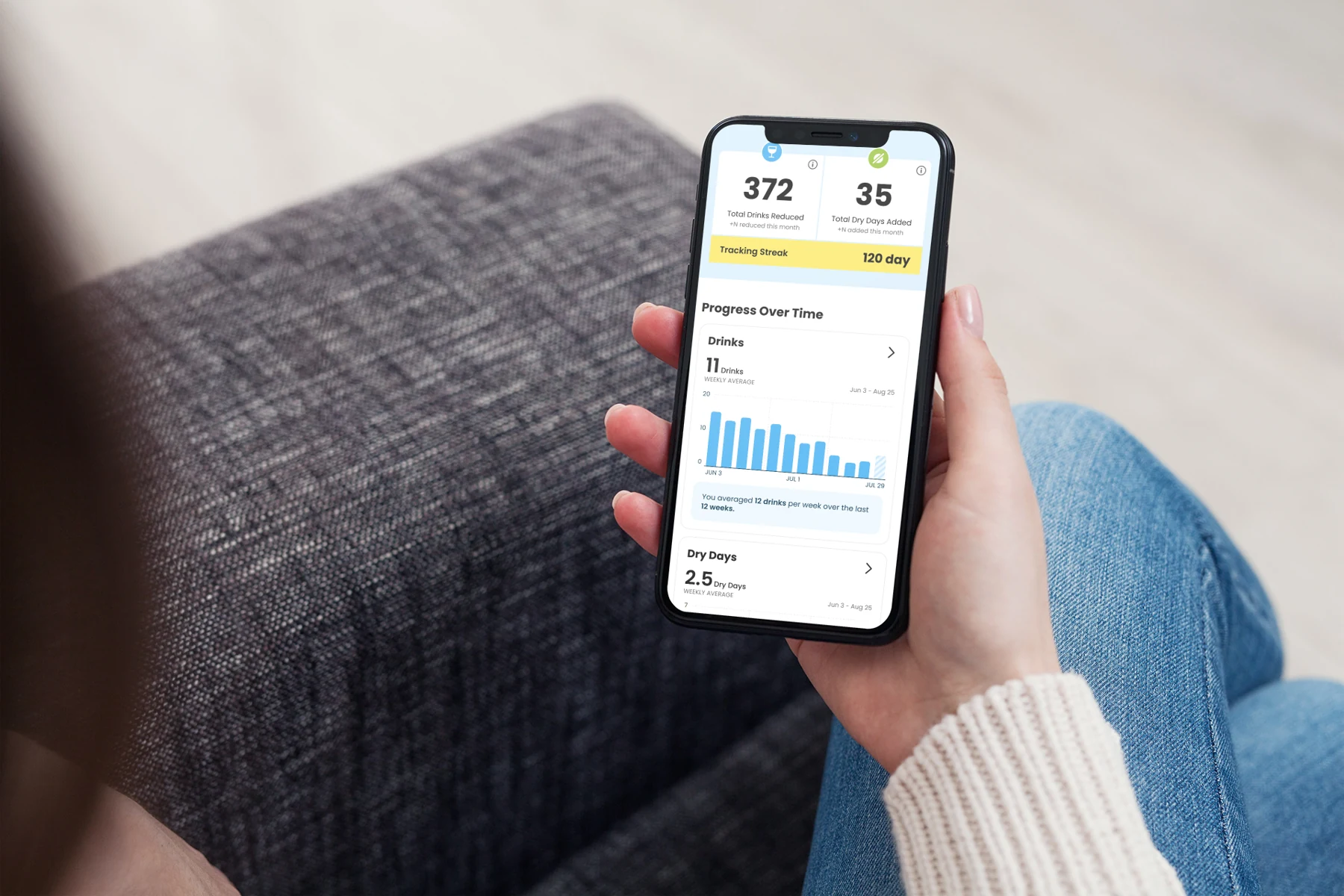
A person viewing the Sunnyside tracking app on a phone
08 · Sunnyside MedApp display shown for illustration.

An online program built around your goals.

Sunnyside Med combines clinical care with practical support for people who want to drink less or quit. Start with an online assessment. A licensed clinician reviews your drinking, health, medications and goals to decide whether naltrexone is appropriate.

If you’re prescribed medication, you also get the Sunnyside app, human coaching and a private community. Use them to plan your week, understand your drinking patterns and work on the situations where sticking to your goals gets difficult.

Clinical guidance for your prescription.

A licensed clinician determines eligibility and gives you instructions for your prescription. Bring medical questions, side effects and medication changes to the clinical care team. Your coach supports habit change; medical decisions stay with a clinician.

Medication delivered discreetly.

If prescribed, compounded naltrexone is delivered discreetly to your door. Follow your own care plan, and contact the clinical team if you have questions about taking it. The program’s medication reminders and logging tools can help you keep track of your routine.

The Sunnyside app.

Set goals, make a weekly plan and track your drinks day by day. Progress insights let you look back at what changed and where you want to focus next. Reflection tools give you a place to note patterns, challenges and the situations around your drinking.

Real human coaching.

Text with a human coach for practical, nonjudgmental support. Talk through a difficult evening, plan for a social event or rethink a routine that isn’t helping. Coaching gives you a place to reflect and keep working on your goals, including when a week doesn’t go to plan.

Community and member meetings.

Connect with others working on their relationship with alcohol in a private community. Read their experiences, share your own and take part in member support meetings. You can ask questions and learn from other people’s approaches without having to figure everything out on your own.

Education you can return to.

Guides and videos cover getting started, common medication experiences, consistency and everyday habits. Revisit them when a question comes up or you want a practical next step. Educational resources complement your care plan; individual medical questions belong with the clinical team.

How to get started.

  1. Tell us about yourself.

    Complete an online assessment about your drinking, goals, health and medications.

  2. Have your information reviewed.

    A licensed clinician decides whether medication is appropriate and, if so, provides a prescription and care instructions.

  3. Put your plan into practice.

    Use the app, coaching, community and educational resources alongside your prescribed care plan.

Get started with Sunnyside Med

A prescription isn’t guaranteed. A licensed clinician determines eligibility.

The research in this guide tested specific naltrexone formulations and treatment settings. It wasn’t research on Sunnyside’s compounded prescription or complete program. Compounded medications aren’t FDA-approved.[13]

09Sources

References & research notes.

This is a curated guide to foundational trials, major evidence reviews and clinical context, not a registered systematic review. The same trials may appear in multiple reviews. The initial evidence review was October 26–27, 2026, with a substantive weekly review on October 30, 2026; publication years identify when each source appeared. We’ve focused on alcohol outcomes and kept the studied formulation and population visible.

An open book in a sunlit library with blue, cream and yellow volumes
09 · SourcesIllustrative photography
  1. Alla M, Varshney M, Bhardwaj A, et al. Naltrexone Is Superior to Placebo for Abstinence and Craving Reduction in Alcohol-Associated Cirrhosis: NAL-CI Trial. Liver Int. 2026;46:e70845. doi:10.1111/liv.70845. ↗Online August 19, 2026 · September issue · Full main article checked October 30, 2026; protocol and supplements not independently reconciled

Guide updates

October 30, 2026 · Weekly evidence update. Added the NAL-CI randomized trial and extended the research timeline. The new study note distinguishes four-week abstinence at the 12-week visit from continuous abstinence and retains population, follow-up and liver-safety limits. Existing charts, the Thompson safety cohort and prescribing warnings are unchanged. Human clinical review remains pending.

Important formulation note: Oral naltrexone drug products have FDA approval for alcohol dependence. Sunnyside Med prescribes compounded naltrexone. Compounded drugs aren’t FDA-approved, and the FDA doesn’t verify their safety, effectiveness or quality before marketing. Studies of conventional oral tablets, injected naltrexone or other treatment settings don’t establish the effectiveness of Sunnyside’s specific compounded formulation or complete program.[13]

Educational information, not individual medical advice. Naltrexone is a prescription medication and isn’t appropriate for everyone. Talk with a licensed clinician about benefits, risks, other medications and a plan that fits your situation. Individual results vary.

AI-generated chapter images are illustrative; they don’t depict actual Sunnyside members, clinicians or research participants. The published research findings come from the cited sources.