Last Updated on June 24, 2026
Here, we’ll discuss medications to reduce alcohol cravings, each of which works differently. Naltrexone reduces the brain’s reward response to alcohol, acamprosate restores neurochemical balance after quitting, disulfiram creates a physical deterrent to drinking, and GLP-1 medications like semaglutide show early promise in reducing alcohol’s appeal. The right choice depends on whether you want to moderate, maintain abstinence, or are already taking a GLP-1 for another reason.
For many people, alcohol cravings don’t feel like a habit or a lack of willpower. They feel like something deeper—something that starts in the brain before you have a chance to reason with it. Maybe you’ve tried cutting back on your own. Maybe it worked for a while. Then the cravings came back.
That’s because alcohol changes the brain over time. As it adapts to repeated drinking, it can begin to expect it, creating alcohol cravings that feel automatic and difficult to ignore. That’s not just biology. And there are medications designed to help.
This article compares four medications to reduce drinking, including how they work, who they’re best suited for, and their limitations. We’ll also explain where naltrexone and Sunnyside Med fit into the picture for people who want extra support in reducing or quitting alcohol.
What Matters Is the Mechanism
Most articles compare medications to reduce alcohol cravings by listing names, side effects, or success rates. We’re organizing them by how they work in the brain, because a medication’s mechanism often determines whether it’s a good fit for your goals.
Some medications reduce alcohol’s rewarding effects (naltrexone and, potentially, GLP-1 medications). Others help restore the brain’s chemical balance after chronic drinking (acamprosate). One creates an unpleasant physical reaction if you drink (disulfiram).
Understanding those differences makes the choice much simpler. If your goal is to cut back, maintain abstinence, or create a strong deterrent to drinking, each medication is designed to solve a different problem.
Naltrexone: Best For People Who Want To Drink Less Without Quitting
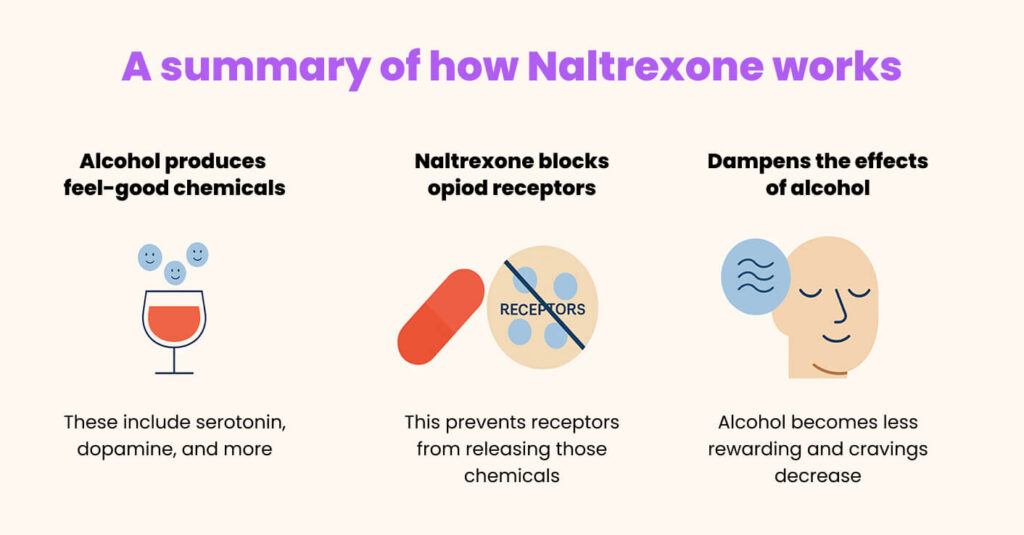
Naltrexone is an opioid receptor antagonist. It blocks the opioid receptors involved in alcohol’s rewarding effects, reducing the dopamine response that reinforces drinking. Over time, that can make alcohol feel less rewarding, thereby subduing the craving cycle that keeps you coming back for more.
For many people, this change is subtle rather than dramatic. Instead of constantly thinking about drinking or feeling pulled toward another drink, the urge simply becomes less persistent. As one Sunnyside Med member described it: “The noise around alcohol just got quieter. I didn’t even notice at first.”
Can you still drink?
Yes. One of naltrexone’s advantages is that you don’t have to stop drinking before starting it. If your goal is moderation, you can begin taking naltrexone while you’re still drinking. Rather than making alcohol impossible to drink, it gradually changes how rewarding alcohol feels, helping many people naturally drink less over time.
This also clears up one of the biggest misconceptions about the medication. Naltrexone does not make you sick if you drink alcohol. That’s disulfiram (Antabuse). Naltrexone works by reducing alcohol’s rewarding effects, not by creating a physical reaction.
What the evidence says
The evidence supporting naltrexone is extensive. A 2023 systematic review and meta-analysis published in JAMA analyzed 118 clinical trials involving more than 20,000 participants and found that oral naltrexone consistently reduced the risk of returning to heavy drinking compared with placebo. A separate meta-analysis by Maisel and colleagues from 2017 reached similar conclusions, reinforcing naltrexone’s role as one of the best-studied medications for reducing alcohol consumption.
Naltrexone can be prescribed in two ways. The most common approach—and the one used by Sunnyside Med—is daily dosing, which provides consistent receptor blockade and is supported by most clinical guidelines. Another option is targeted dosing, sometimes called the Sinclair Method, in which the medication is taken before anticipated drinking occasions. Both approaches have evidence behind them, although daily dosing has been studied more extensively.
Limitations and side effects
Like every medication, naltrexone has limitations. It generally works better for people who want to reduce their drinking than for people whose primary goal is long-term abstinence, where acamprosate may have an advantage.
“[Naltrexone] isn’t only for people at or approaching rock bottom,” says Sunnyside co-founder and CEO Nick Allen. “We’re building Sunnyside Med to provide proactive and preventive access to medication before alcohol becomes a massive negative part of your story.”
Its efficacy also depends on consistency. The medication can’t help you if you don’t take it!
The most common naltrexone side effects include nausea, headache, dizziness, and fatigue. These are usually mild and tend to improve during the first week or two as your body adjusts. With Sunnyside Med, your care team will be available to answer questions and provide support throughout this phase (and beyond).
Acamprosate: Best for People Who Have Already Stopped Drinking
Acamprosate (brand name Campral) works differently from naltrexone.
Long-term heavy drinking disrupts the balance between the brain’s inhibitory (GABA) and excitatory (glutamate/NMDA) signaling systems. After drinking stops, that imbalance can contribute to anxiety, restlessness, sleep problems, and other symptoms that make early recovery difficult. Acamprosate helps normalize this imbalance, reducing the discomfort that can increase the risk of relapse.
Can you still drink?
No. Acamprosate is designed for people who have already stopped drinking. It works best when started after achieving abstinence and is not intended to reduce the rewarding effects of alcohol the way naltrexone does.
What the evidence says
A 2013 meta-analysis by Maisel and colleagues found that acamprosate was most effective for helping people maintain abstinence after quitting alcohol, while naltrexone showed greater benefits for reducing heavy drinking. This difference reflects the medications’ distinct mechanisms and makes acamprosate a particularly strong option for people whose goal is long-term sobriety.
Limitations and side effects
The biggest limitation when it comes to acamprosate is that you need to stop drinking before starting treatment, which can be a significant hurdle for some people. Acamprosate is also taken three times a day, making adherence more challenging than it is with once-daily medications. The most common side effect is diarrhea, although gastrointestinal symptoms are usually mild.
Disulfiram: Best for People Who Want an External Barrier to Drinking
Disulfiram (brand name Antabuse) takes a completely different approach than naltrexone or acamprosate. Rather than reducing cravings or changing alcohol’s rewarding effects, it works by creating a strong physical deterrent to drinking. It blocks the enzyme that breaks down acetaldehyde, a toxic byproduct of alcohol metabolism.
Can you still drink?
No. If you drink while taking disulfiram, acetaldehyde builds up and can cause flushing, nausea, vomiting, chest pounding, headache, and other unpleasant symptoms. In some cases, the reaction can be severe, which is why people taking disulfiram are advised to avoid alcohol completely.
It’s generally best for people who are committed to abstinence and want a strong external barrier to drinking, particularly when a partner, family member, or treatment program can help support consistent use.
What the evidence says
Unlike naltrexone or acamprosate, disulfiram doesn’t reduce cravings—it works only if you keep taking it. A 2011 systematic review by Jørgensen and colleagues found that disulfiram was most effective when treatment was supervised, such as by a partner, family member, or healthcare professional who helped ensure the medication was taken consistently. This suggests that disulfiram works best as part of a structured abstinence plan rather than as a stand-alone medication.
Limitations and side effects
Disulfiram requires complete abstinence and careful avoidance of alcohol in products like certain cough syrups, mouthwashes, cooking wines, and some sauces. It also remains in the body for up to one to two weeks after stopping, so you can’t simply skip a dose and safely drink the same day.
The most common side effects include drowsiness, headache, a metallic or garlic-like taste in the mouth, and skin rash. More serious side effects, including liver problems, are uncommon but require prompt medical attention.
GLP-1 Medications
GLP-1 receptor agonists such as semaglutide and tirzepatide were developed to treat type 2 diabetes and are also frequently prescribed to treat obesity. Researchers became interested in them for alcohol use after many patients reported that, along with reducing “food noise,” the medications also seemed to quiet alcohol cravings (though that’s definitely not the case for everyone).
Can you still drink?
Yes. GLP-1 medications don’t create an unpleasant reaction if you drink, and they don’t require abstinence. If they affect alcohol use at all, it’s by reducing cravings or making alcohol feel less rewarding—but they’re not FDA-approved for this purpose, and not everyone experiences this effect.
What the evidence says
Early research is encouraging but still limited. In a 2025 randomized controlled trial published in JAMA Psychiatry, semaglutide significantly reduced weekly alcohol cravings compared with placebo, although reductions in overall alcohol consumption were less consistent. These findings suggest GLP-1 medications may influence the brain’s reward system, but larger and longer studies are still needed.
Limitations and side effects
GLP-1 medications are not FDA-approved to treat alcohol use disorder or alcohol cravings. Today, most people experiencing this effect are already taking semaglutide or tirzepatide for diabetes or weight management. They are also generally much more expensive than FDA-approved medications like naltrexone or acamprosate. Thus, they’ll likely work best for people who are already taking a GLP-1 medication for another reason, not as a first-line treatment for reducing alcohol use.
Which Medication Is Right for You?
No single medication works for everyone. Your goals, your relationship with alcohol, and your medical history all matter. Here’s a starting point to help determine which might be right for you:
| If your goal is… | Potential best option | Why |
| Drink less without quitting | Naltrexone | Reduces alcohol’s rewarding effects and can be started while you’re still drinking. |
| Stay sober after you’ve already quit | Acamprosate | Helps restore neurochemical balance during early abstinence and supports long-term sobriety. |
| Create a strong deterrent against drinking | Disulfiram (Antabuse) | Causes an unpleasant physical reaction if you drink, making it best for people committed to abstinence. |
| You’re already taking a GLP-1 medication | Semaglutide or tirzepatide | Some people notice reduced alcohol cravings, but these medications are not FDA-approved for alcohol use disorder. |
| You want the strongest evidence for reducing heavy drinking | Naltrexone | Backed by decades of research and recommended by major clinical guidelines for reducing heavy drinking. |
| You want a medication that works with a moderation goal | Naltrexone | The only FDA-approved medication that can be started while you continue drinking and gradually cut back. |
Medication Works Best With Support
The research on medications for alcohol cravings is encouraging. But medication is only part of the equation.
Many people stop treatment before they’ve had a chance to experience its full benefits. Research has found that more than half of naltrexone prescriptions are never refilled, limiting the medication’s effectiveness in the real world. Large clinical trials, including the COMBINE study, have also shown that medication and behavioral support can measurably improve outcomes, making the case that they’re best paired with each other.
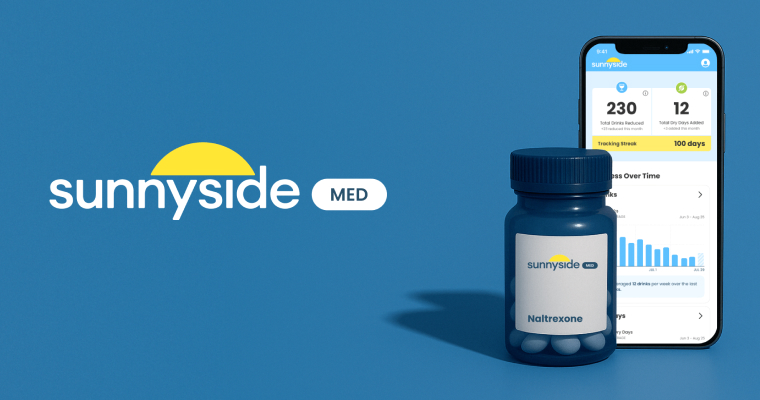
That’s the gap Sunnyside Med was designed to address. Members receive an online evaluation from a licensed clinician, and if prescribed, can access compounded naltrexone alongside daily tracking, coaching, and accountability tools designed to help them stay engaged with treatment.
“Now that I have medication to help, I feel even more confident in implementing the coping skills that I’ve learned,” reports one Sunnyside Med member.
Among engaged Sunnyside Med members, prescription refill rates are three times higher than among members who don’t use the app’s tracking features. Separately, according to internal data, 78% of engaged members meaningfully reduce their drinking over 12 weeks.
Naltrexone is a prescription medication. This content is educational and should not be taken as medical advice. A licensed clinician reviews every Sunnyside Med application.
Frequently Asked Questions: Medications to Reduce Alcohol Cravings
Can I take one of the medications to reduce alcohol cravings and still drink?
It depends on the medication. Naltrexone is specifically designed to be taken while you continue drinking. It reduces the reward your brain gets from alcohol, so over time, you naturally drink less. Acamprosate and disulfiram both require abstinence before starting.
Do GLP-1 medications like Ozempic reduce alcohol cravings?
Early evidence suggests it’s possible. A 2025 randomized controlled trial by Hendershot et al. found that semaglutide reduced alcohol craving compared to placebo. But GLP-1 medications are not FDA-approved for this use, and the research is still developing. Most people noticing this effect are already taking semaglutide for diabetes or weight management.
How is naltrexone different from disulfiram?
They work in very different ways. Naltrexone reduces the pleasure you get from drinking, making alcohol less interesting over time. Disulfiram makes you physically ill if you drink. Naltrexone is designed for moderation. Disulfiram is designed for enforced abstinence. You can drink on naltrexone. You cannot safely drink on disulfiram.
Do you have to stop drinking before starting naltrexone?
No. Naltrexone can be started while you are still drinking. This is one of its biggest advantages, especially for people who want to cut back gradually rather than quit cold turkey.
What is the best medication to reduce alcohol cravings?
For most people who want to drink less without quitting entirely, naltrexone has the strongest combination of evidence, ease of use, and compatibility with moderation goals. It’s backed by decades of clinical research and does not require abstinence to start. Sunnyside Med pairs naltrexone with daily tracking and coaching support because medication works better with a plan.
If you’re exploring medications to reduce alcohol cravings and want to see whether naltrexone through telehealth might be right for you, take a 2-minute quiz at joinsunnysidemed.com to learn more.
Sunnyside Is the Perfect Companion for Your Naltrexone Journey
Sunnyside is the #1 mindful drinking app. Since 2020, we’ve been honing our harm-reduction approach and have helped over 400,000 people cut out 22 million drinks from their baseline habits. 96.7% of our members report success drinking less, and in a third-party study, our approach was demonstrated to reduce weekly drinking by 33% after 12 weeks.
Think of Sunnyside as the front door for anyone who wants to change their relationship with alcohol. If you want to drink less, we can help you get there. If you want to eventually quit, but want to take a gradual approach, that’s great, too.
When you sign up for Sunnyside, you’ll take a quick 3-minute quiz, then hop into the app. From there, we’ll give you weekly plans to gradually reach your drinking goals, providing nudges, coaching, exercises, and advice to help you get there. We also have daily tracking and journaling tools, including the option to chat with a real human coach at any time. And, of course, we provide great analytics so you can track your progress over time.
Sunnyside is a full-featured mindful drinking app, and thus the perfect companion for your Naltrexone journey. Naltrexone will actively help you reduce cravings around alcohol, and Sunnyside will help you understand your triggers and patterns, giving you a healthy system for habit change.
Everyone who signs up for Sunnyside gets a free 15-day trial, then the subscription is $8.25/month. And the best part is our members save an average of $50 per month, easily paying for the cost of the subscription.
Whether you’re currently taking naltrexone or just doing some research on alcohol moderation, we’d love to have you sign up for our 15-day free trial today.