Last Updated on August 9, 2026

The most important thing to avoid when taking naltrexone is opioids, including opioid pain medications and other products that contain opioids. You should also make sure your clinician knows about any medications or supplements you take and any history of liver problems. But one thing you don’t necessarily have to avoid is alcohol. Naltrexone is often prescribed specifically to help people drink less.
Starting a new medication tends to come with a lot of questions. Can I still take Tylenol? What if I need pain medication? Should I take naltrexone with food? And if I’m taking it to cut back on drinking, am I actually allowed to have a drink?
Fortunately, the list of things you need to avoid on naltrexone isn’t especially long. Opioids are the big one, and they require some planning both before you start naltrexone and if you ever need opioid pain relief while you’re taking it. Other medications and health conditions may call for a conversation with your clinician rather than avoiding them outright.
There are also plenty of things you don’t need to avoid. You don’t have to follow a special naltrexone diet, and taking naltrexone doesn’t mean you have to commit to never drinking again.
Knowing what to avoid when taking naltrexone, and what you don’t need to worry about, can make starting the medication feel a lot less complicated.
Avoid Opioids While Taking Naltrexone
This is the big one. Naltrexone blocks opioid receptors, so opioid medications won’t work the way they normally would while the medication is active.
That includes common prescription pain medications like oxycodone, hydrocodone, codeine, and morphine. Opioids can also turn up in medications you might not immediately think of as painkillers, including some prescription cough and diarrhea medications. If you’re not sure what’s in something you take, check with your clinician or pharmacist.
It’s especially important to talk about opioids before you start naltrexone. If your body is still physically dependent on an opioid, taking naltrexone can suddenly displace it from opioid receptors and cause precipitated withdrawal. For that reason, SAMHSA guidance recommends making sure patients are opioid-free before starting oral naltrexone. The exact amount of time you need to wait depends on what you were taking and how long you were taking it, so this is one situation where you don’t want to guess.
You should also tell your doctors, dentist, or other medical providers that you take naltrexone, especially if you’re having a procedure or might need pain management.
One more thing: do not try to “push through” naltrexone’s opioid-blocking effects by taking a larger amount of an opioid. That can be very dangerous. If you unexpectedly need opioid pain medication, contact the clinician managing your naltrexone rather than trying to adjust either medication yourself.
Check Medications and Supplements Before Taking Them
You don’t need to assume that every over-the-counter medication or supplement is off-limits just because you take naltrexone. But it’s a good idea to check the label and ask a clinician or pharmacist about anything you use regularly.
The main thing to watch for is, again, opioids. Some cough, cold, or diarrhea medications contain opioid ingredients, and SAMHSA specifically recommends checking these products when you take oral naltrexone.
Kratom deserves a special mention, too. It’s sold as an herbal supplement, but some of its active compounds act on opioid receptors. There are published case reports of people who regularly used kratom developing sudden withdrawal symptoms after taking naltrexone. In a 2023 case report, for example, a patient who hadn’t initially disclosed daily kratom use developed severe withdrawal shortly after his first dose of naltrexone (Jarka and Gregoire, 2023).
That doesn’t mean you need to worry about every vitamin or herbal tea in your kitchen. It does mean your clinician should know about the medications and supplements you actually take, including anything you buy over the counter.
Don’t Ignore Your Liver Health
Naltrexone has a reputation for being hard on the liver, but that concern is often overstated. At the doses normally prescribed today, liver problems from naltrexone are uncommon.
In fact, the FDA removed naltrexone’s boxed warning about liver injury in 2013. More recent research has also been reassuring. A 2022 study of naltrexone in people with and without liver disease found that the medication was associated with lower average liver enzyme levels after treatment, including among people who already had liver disease.
That doesn’t mean liver health is irrelevant. Your clinician will want to know if you have a history of liver problems, and liver function tests may be appropriate before or during treatment depending on your situation. Naltrexone may not be appropriate for someone with certain serious or acute liver conditions.
It’s also worth mentioning other medications you take regularly. Acetaminophen (Tylenol), for example, can cause liver injury when taken in excessive amounts. That doesn’t mean everyone taking naltrexone needs to avoid Tylenol. It does mean you shouldn’t exceed recommended doses, and if you have existing liver problems or regularly take medications that affect the liver, your clinician should know about them.
For most people who are appropriate candidates for naltrexone, liver concerns aren’t a reason to be afraid of the medication. They’re simply one more part of your health history for your clinician to consider.
You Don’t Have to Avoid Alcohol Completely
This one surprises a lot of people: you can drink alcohol while taking naltrexone.
Naltrexone sometimes gets confused with disulfiram (Antabuse), a different medication that causes an unpleasant physical reaction when you drink. Naltrexone doesn’t work that way. It blocks opioid receptors involved in alcohol’s rewarding effects, which can make drinking feel less compelling and help reduce the urge to keep going.
That’s one reason naltrexone can be a good fit for people whose goal is moderation rather than immediate abstinence. Research has looked at naltrexone specifically in people who were still drinking. In a randomized trial published in the American Journal of Psychiatry, participants with mild-to-moderate alcohol use disorder who received naltrexone had fewer binge-drinking days and fewer drinks per month than those who received a placebo.
“Tracking my drinks and starting the medication has been a game-changer. This is the first time in many years I’m starting to take control.”
—Sunnyside Med member
That doesn’t mean naltrexone makes heavy drinking risk-free. Alcohol still affects your judgment, coordination, sleep, and overall health, and naltrexone doesn’t prevent intoxication. You may also find that side effects like nausea or dizziness are more noticeable when alcohol is involved.
But if you’re wondering what to avoid when taking naltrexone, alcohol doesn’t automatically belong on the “never” list. Some people take naltrexone precisely because they want help having one or two drinks instead of four or five.
With Sunnyside Med, moderation is a valid goal. You can work with your clinician on a medication plan while using drink tracking, planning, and coaching to gradually change the habits around your drinking, too.
“Tracking my drinks and starting the medication has been a game changer,” said one Sunnyside Med member. “This is the first time in many years I’m starting to take control.”
You Don’t Need to Avoid Specific Foods
Good news if you’ve been Googling lists of naltrexone food interactions: there isn’t a long list of foods you need to cut out.
In fact, if naltrexone makes you nauseated, taking it with food may be more comfortable for some people. You can also ask your clinician whether changing when you take your dose makes sense for you.
You may have seen claims online that eating before drinking somehow makes naltrexone less effective. There isn’t good evidence that having food in your stomach cancels out the medication’s effects. Eating before drinking can actually slow alcohol absorption and lower your peak blood alcohol concentration, so skipping dinner to make naltrexone “work better” isn’t a strategy we’d recommend.
The bigger point is that you don’t need to build a special diet around naltrexone. If a particular meal or routine seems to make nausea worse, pay attention to that and talk with your clinician. Otherwise, you can generally eat normally.
Don’t Ignore Side Effects That Are Bothering You
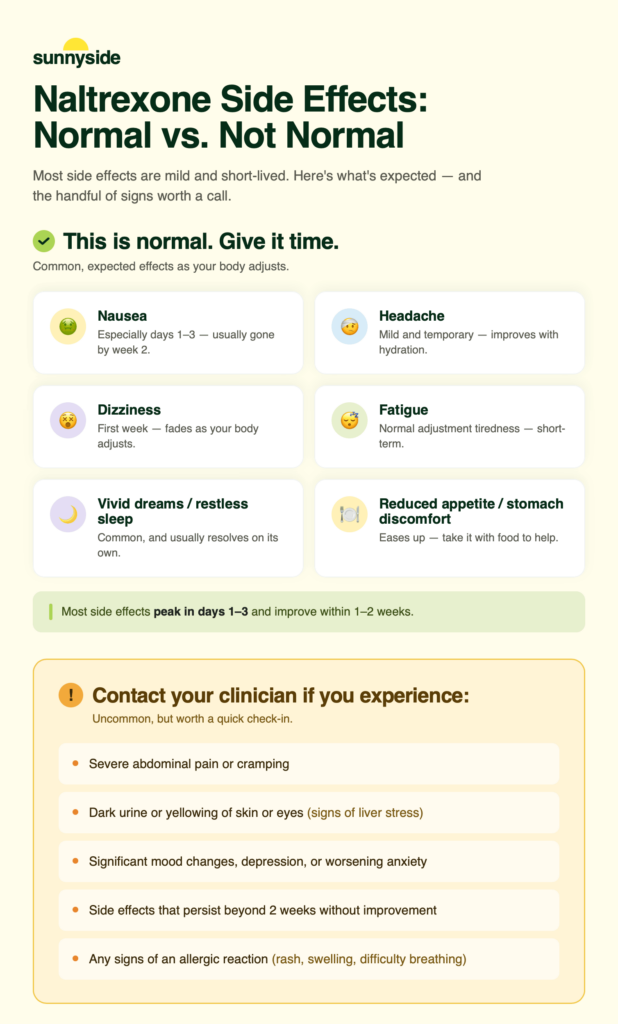
If you feel a little off when you first start naltrexone, you’re not necessarily imagining it. Nausea is one of the most commonly reported side effects, and headache, dizziness, fatigue, trouble sleeping, and vomiting can happen too.
The numbers can help put that into perspective. In an open-label safety study of about 570 people included in the current naltrexone prescribing information, 10% reported new-onset nausea, 7% reported headache, and 4% each reported dizziness and fatigue. Post-marketing data also suggest that many reported side effects happen early in treatment and are temporary.
So if the first few doses aren’t totally seamless, that doesn’t necessarily mean naltrexone isn’t going to work for you. But you also don’t need to grit your teeth through side effects without saying anything.
If nausea is the problem, taking your medication with food may help. Your clinician may also have suggestions about dose timing or other ways to make the adjustment period easier. If a side effect is severe, isn’t improving, or just makes you miserable, check in rather than changing your dose or stopping the medication on your own.
The goal is to find a medication routine you can actually stick with, and your clinician can help you figure out what that looks like.
Know When Naltrexone Might Not Be a Good Fit
Naltrexone works well for many people, but there are a few situations where it may not be the right medication.
The biggest one goes back to opioids. According to the FDA prescribing information for oral naltrexone, you shouldn’t take it if you’re currently using opioid medications, are physically dependent on opioids, or are experiencing opioid withdrawal.
Your liver health matters, too. Certain serious liver problems may affect whether naltrexone is appropriate for you, although having elevated liver enzymes or a history of liver disease doesn’t automatically rule it out. Your clinician can look at your individual situation and decide whether testing or additional monitoring makes sense.
Pregnancy, breastfeeding, other medications, and your broader health history are also things to discuss before starting. This is one reason it’s worth being thorough when your clinician asks what you take, including medications you only use occasionally and supplements that may not feel like “real” medications.
And if something changes after you start naltrexone, tell them. Needing surgery, getting a new prescription, or developing a new health problem doesn’t necessarily mean you have to stop naltrexone, but your care team needs the full picture to give you good advice.
Don’t Expect Naltrexone to Change Every Drinking Habit for You
Naltrexone can make alcohol feel less rewarding and cravings easier to manage. What it can’t do is magically rearrange your Friday night plans, remove the wine from your kitchen, or decide what you’ll order when everyone else gets another round.
Those parts still take some practice.
This is where tracking and planning can be surprisingly helpful. Maybe you realize you almost always go past your goal when you haven’t decided on a limit ahead of time. Maybe Thursday is consistently harder than Tuesday. Or maybe the drinks you pour at home are bigger than you thought. Once you can actually see those patterns, you have something concrete to work with.
There’s research behind pairing medication with support, too. In the large COMBINE study, naltrexone combined with structured medical management improved drinking outcomes compared with placebo plus the same medical support.
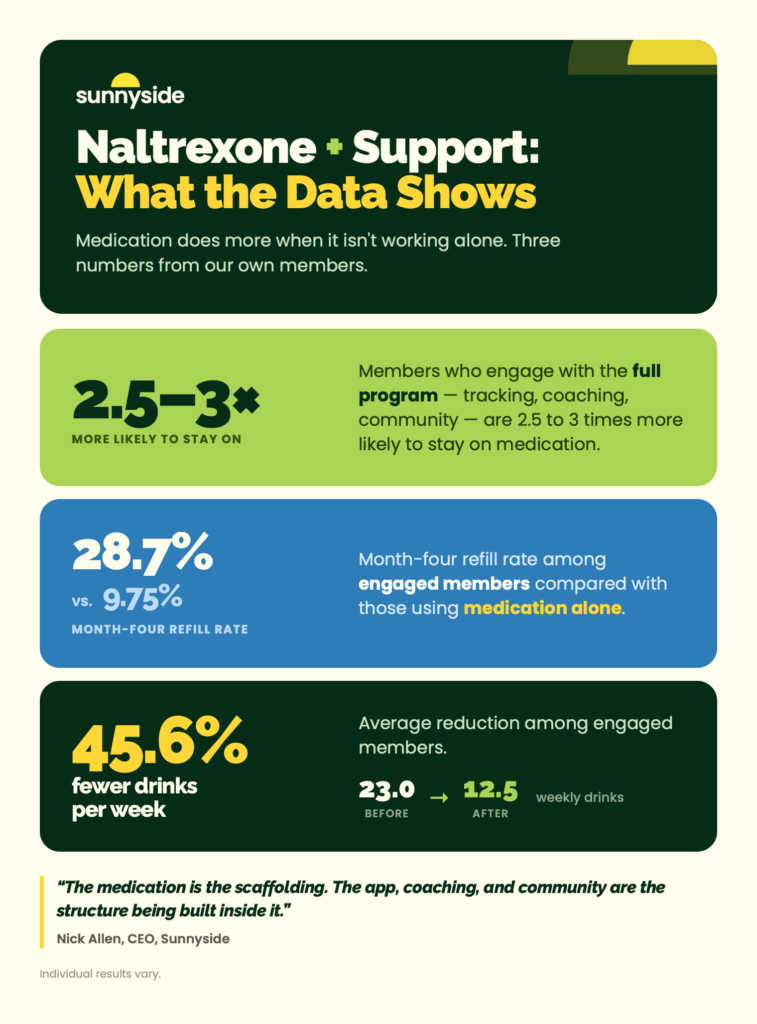
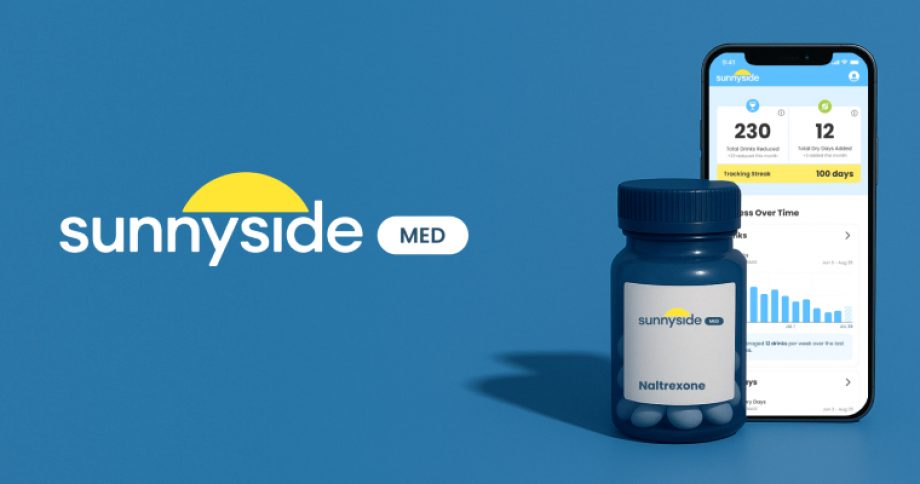
Sunnyside Med is built with both sides of this in mind. Members who are prescribed medication receive compounded naltrexone with Vitamin B6, along with drink tracking, weekly planning, human coaching, and community support.
You might use naltrexone to make stopping after two drinks feel easier, while using Sunnyside to figure out why two tends to become four on certain nights in the first place. The medication and the habit work are doing different jobs, and you don’t have to rely on either one alone.
“We want to take willpower out of the equation as much as possible,” said Sunnyside co-founder and CEO Nick Allen.
Frequently Asked Questions (FAQ): What to Avoid When Taking Naltrexone
Can you drink alcohol while taking naltrexone?
Yes. Naltrexone doesn’t make you sick if you drink alcohol, and it can be used by people whose goal is moderation rather than abstinence. You can still become intoxicated, though, so naltrexone doesn’t make heavy drinking risk-free.
What happens if you take opioids while on naltrexone?
Naltrexone blocks opioid receptors, so opioid medications may not have their usual effects. It can also trigger sudden withdrawal if you’re physically dependent on opioids when you start taking it. Never try to overcome naltrexone’s effects by taking more opioids.
What are the most common side effects of naltrexone?
Nausea is one of the most common. Headache, dizziness, fatigue, trouble sleeping, and vomiting can also occur. Side effects are often temporary, but talk to your clinician if they’re severe or aren’t improving.
Are there foods to avoid while taking naltrexone?
Generally, no. Naltrexone doesn’t require a special diet, and taking it with food may help if you experience nausea.
Can you take Tylenol while taking naltrexone?
You don’t automatically need to avoid acetaminophen (Tylenol) while taking naltrexone. However, excessive acetaminophen can damage the liver, so follow dosing instructions and ask your clinician if you have liver problems or other concerns.
Sunnyside Med Is the Perfect Companion for Your Mindful Drinking Journey
Taking naltrexone can come with questions, especially when you’re figuring out side effects, other medications, or how drinking fits into your plan. With Sunnyside Med, you don’t have to navigate those questions alone.
If naltrexone is appropriate for you, Sunnyside Med gives you access to compounded naltrexone, ongoing clinical care, drink tracking and planning tools, human coaching, and a private community. Whether you want to cut back, have more alcohol-free days, or eventually quit, your plan can be built around your goals.
Take the quick 3-minute quiz to learn more about Sunnyside Med and see if it could be a good fit for you.
Naltrexone is a prescription medication. This content is educational and should not be taken as medical advice. A licensed clinician reviews every Sunnyside Med application.