

Naltrexone and Pregnancy: What We Know About Safety
Research on naltrexone use during pregnancy is limited, particularly among people taking it for alcohol use disorder. What...

Oral naltrexone has a half-life of about 4 hours, while its active metabolite, 6-beta-naltrexol, has a half-life of about 13 hours. Most of the parent drug is eliminated from the bloodstream within roughly 20 hours, while most of its active metabolite is eliminated within 2 to 3 days. However, naltrexone’s effects can last longer than these estimates suggest. Extended-release injectable naltrexone stays in the body much longer, with measurable levels for more than a month.
If you’re taking naltrexone, you might wonder how long it stays in your system after your last dose. Maybe you’ve missed a dose, are experiencing side effects, or need to know whether the medication could interfere with an upcoming medical procedure.
How long naltrexone stays in your system depends partly on which form of naltrexone you’re taking. Oral naltrexone, the form prescribed through Sunnyside Med, clears much faster than the monthly injection.
Here’s what the research tells us about both timelines and their implications for your treatment.
Most oral naltrexone is eliminated from the bloodstream within about a day, although its active metabolite remains for approximately two to three days.
According to the prescribing information for oral naltrexone, the medication has an average elimination half-life of about four hours. Its active metabolite, 6-beta-naltrexol, has a longer half-life of approximately 13 hours.
A medication’s half-life is the time it takes for its concentration in the bloodstream to decrease by half. After approximately five half-lives, about 97% has been eliminated.
For oral naltrexone, that works out to approximately:
These are estimates based on average half-lives, not exact deadlines. Individual clearance times vary, and small amounts may remain detectable longer.
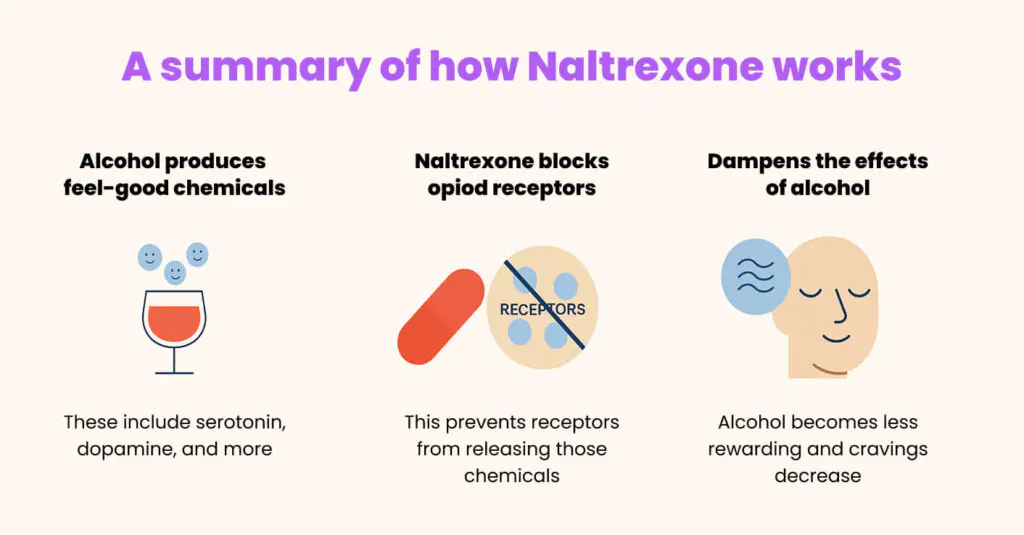
Naltrexone blocks opioid receptors involved in alcohol’s rewarding effects. That blockade can persist even after blood levels of the medication have fallen substantially.
In a small 1988 PET study, researchers examined opioid receptor blockade in five healthy volunteers who had taken oral naltrexone. They estimated that the blockade declined by half over approximately 72 to 108 hours, considerably longer than the drug’s four-hour elimination half-life.
That doesn’t mean a single dose will reliably reduce alcohol cravings for three or four days. The study measured opioid receptor occupancy, not changes in drinking behavior, and involved only five participants.
Follow your prescribed dosing schedule rather than using these findings to decide when to take your next dose. The persistence of opioid receptor blockade is also important if you need opioid pain medication, as we’ll discuss below.
Extended-release injectable naltrexone stays in the body substantially longer than oral naltrexone. The injection is designed to release medication gradually over approximately one month.
According to the prescribing information for extended-release injectable naltrexone, the medication has an elimination half-life of approximately 5 to 10 days, and measurable blood levels can persist for more than a month.
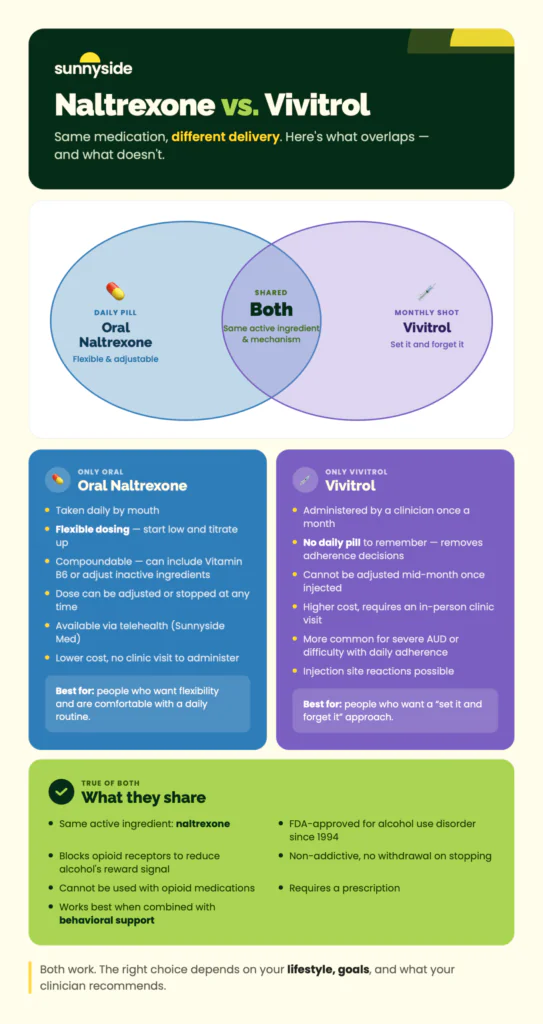
Here’s how the two formulations compare:
| Oral naltrexone | Extended-release injection | |
| Typical dosing schedule | Daily | Every 4 weeks |
| Naltrexone half-life | About 4 hours | About 5–10 days |
| Active metabolite half-life | About 13 hours | Not directly comparable to the oral formulation |
| General elimination timeline | Most parent drug eliminated within about 20 hours; most active metabolite within 2–3 days | Measurable blood levels for more than a month |
These differences matter when discussing medication changes, upcoming procedures, or possible interactions with other drugs. Make sure your healthcare team knows which form of naltrexone you’ve taken and when you last received it. The longer release schedule is one of the key differences between oral naltrexone and Vivitrol.
The half-life figures above are averages. How your body processes naltrexone can depend on several factors, including your health, the formulation you’re taking, and your other medications.
Your liver helps metabolize naltrexone, while your kidneys are involved in eliminating the medication and its metabolites. According to the oral prescribing information, people with liver cirrhosis can have substantially higher exposure to naltrexone, and caution is recommended for people with kidney impairment.
That doesn’t mean there’s a predictable number of extra hours naltrexone will remain in your body if you have liver or kidney disease. Research in people with severe impairment is limited, and your individual circumstances matter.
If you have a liver or kidney condition, abnormal laboratory results, or concerns about medication interactions, ask your prescribing clinician how these factors may affect your treatment.
If you’re taking naltrexone and need surgery, dental work, or treatment for serious pain, tell your healthcare team. Naltrexone blocks opioid receptors, which means opioid pain medications may not work as expected while the medication is active.
Do not use naltrexone’s half-life to calculate when it’s safe to take opioids.
Trying to overcome naltrexone’s effects by taking larger amounts of opioids can cause serious injury, coma, or death. There’s also an increased overdose risk after stopping naltrexone because opioid tolerance may be reduced. Both risks are described in the oral naltrexone prescribing information.
For planned procedures, your surgeon, anesthesiologist, dentist, and prescribing clinician can coordinate whether naltrexone needs to be paused and how your pain will be managed. The timing differs between oral and injectable naltrexone, so it’s important to tell them which form you use and when you last took it.
If you need emergency treatment, tell the medical team about your naltrexone use as soon as possible. Don’t delay seeking care while trying to determine whether the medication has cleared your system. Because naltrexone can interact with other medications, it’s important that your healthcare team has a complete list of everything you’re taking.
Knowing how long naltrexone stays in your system can help you understand your medication, but it won’t necessarily answer questions about missed doses, side effects, or whether your treatment is working as expected. Those are questions worth discussing with your prescribing clinician.
Sunnyside Med is a fully online alcohol health program that combines prescription medication with ongoing clinical care and practical support for changing your drinking habits.
After completing an online assessment, you’ll meet with a licensed clinician who reviews your health history, drinking patterns, and goals to determine whether naltrexone is appropriate for you. Eligible members receive compounded oral naltrexone with vitamin B6, delivered discreetly to their door.
Naltrexone works by blocking opioid receptors involved in alcohol’s rewarding effects and can help reduce cravings and heavy drinking in people with alcohol use disorder. Sunnyside Med uses a daily dosing approach, with ongoing clinical support to help members address questions about their medication and treatment.
But medication is only part of the process. Sunnyside Med also provides drink tracking, weekly planning, progress insights, medication reminders, text coaching seven days a week, and a private community. These resources can help you recognize patterns, stay consistent, and work toward drinking less or quitting altogether.
In Sunnyside’s member data, 78% of active Sunnyside Med members achieved a meaningful reduction in drinking over 12 weeks. Individual results vary.
If you’re interested in medication and ongoing support for changing your drinking, take Sunnyside Med’s brief online assessment to see whether the program may be right for you.
This content is for educational purposes and isn’t a substitute for medical advice. Naltrexone is a prescription medication, and a licensed clinician determines whether it’s appropriate for each individual.
Naltrexone isn't typically included in standard drug screening panels, but specialized tests can detect naltrexone and its active metabolite, 6-beta-naltrexol. A 2022 study described a targeted urine test capable of detecting these substances for medication monitoring. However, it doesn't establish a universal detection window. If you're undergoing drug testing, ask which substances the test screens for rather than assuming naltrexone will or won't appear.
Follow your prescription instructions, and don't take a double dose to make up for one you've missed. General MedlinePlus guidance recommends taking a missed dose when you remember unless it's nearly time for your next scheduled dose. If you're unsure what to do, contact your clinician or pharmacist rather than trying to adjust your schedule based on the medication's half-life. Other common questions about taking naltrexone include what to expect when starting treatment and how to manage side effects.
Naltrexone doesn't cause physical dependence, so stopping it doesn't produce a naltrexone withdrawal syndrome. Unlike some medications, it generally doesn't require tapering to prevent withdrawal. However, you should always talk with your prescribing clinician before discontinuing naltrexone so you can decide how to manage that change.
Common naltrexone side effects, such as nausea, headache, or dizziness, often improve during the first days or weeks of treatment. However, there's no exact timeline that applies to everyone. Side effects don't necessarily disappear when most of the medication has left your bloodstream. If symptoms are severe, worsening, persistent, or interfering with daily life, contact your prescribing clinician.
Ian has a family deeply hurt by alcohol, and is on his own personal journey to drink less and live his healthiest life. He’s took naltrexone daily for two years and saw incredible results. As Sunnyside Med’s first customer, he’s deeply entrenched in alcohol health and naltrexone.
Research on naltrexone use during pregnancy is limited, particularly among people taking it for alcohol use disorder. What...
Although naltrexone eventually became an established treatment for alcohol use disorder (AUD), getting it into routine clinical practice...

Naltrexone and Antabuse differ in how they work, what taking them is like, their safety considerations, and the...

Naltrexone is not addictive or habit-forming. It blocks opioid receptors rather than activating them, so it doesn't produce...