
Medication-Assisted Treatment for Alcohol: How It Works and Who It Helps
Certain medications can reduce cravings or change how rewarding alcohol feels, making it easier for some people to...

Maybe you rarely think about drinking during the workday. But after a difficult meeting, an argument, or an especially long afternoon, the idea of a drink starts to sound appealing.
If alcohol has become your usual way to unwind, changing that habit can be difficult. Stress may trigger the urge to drink even when you’ve decided to cut back.
Naltrexone may help by making alcohol less rewarding. Whether it helps with your particular drinking pattern depends on several factors, including what motivates you to drink and how you respond to the medication.
Stress drinking often develops because alcohol provides temporary relief from uncomfortable feelings. You might drink to relax after work, take your mind off an argument, or make an anxious evening feel more manageable.
Researchers distinguish between two common drinking motives:
These motives often overlap. You might initially reach for a drink because you’re stressed, then continue drinking because you enjoy how alcohol feels.
Then, over time, certain situations can become closely associated with drinking. Finishing work, arriving home, or sitting down to watch TV may trigger the urge for alcohol before you’ve given much thought to whether you actually want it.
Alcohol may provide short-term relief, but relying on it to manage difficult feelings can reinforce the habit. (Our guide to alcohol and stress explores this relationship and ways to change it.)
Naltrexone is a prescription medication used to treat alcohol use disorder (AUD). It blocks opioid receptors involved in alcohol’s rewarding effects, which can reduce cravings and heavy drinking for some people.
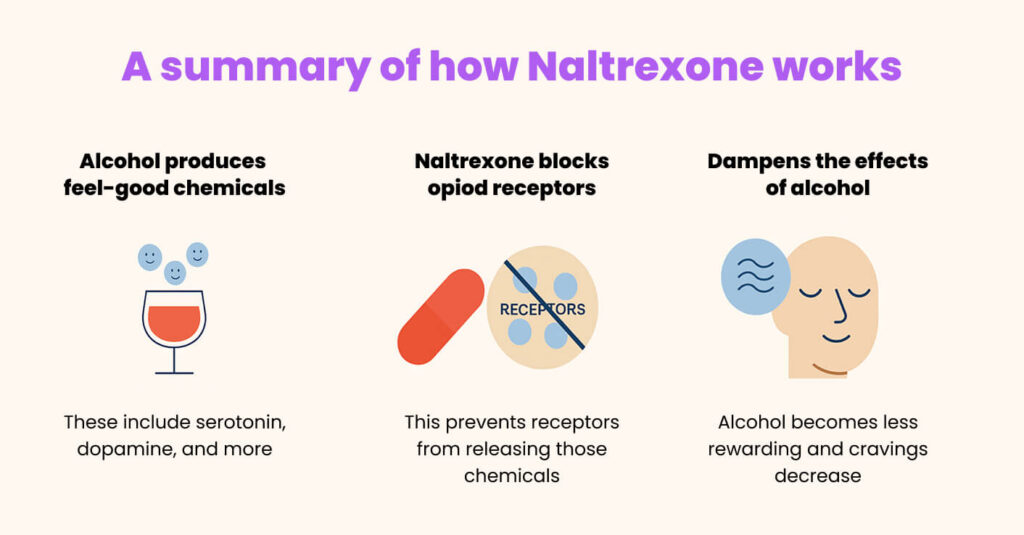
If you typically drink after a stressful day, naltrexone may make the prospect of alcohol less appealing. You might experience fewer cravings or find it easier to stop after your planned number of drinks.
However, naltrexone doesn’t directly reduce stress. You may still feel anxious after work or want to drink when something upsetting happens. The medication can change how rewarding alcohol feels without eliminating the circumstances that make you reach for it.
Some people notice that their drinking habits persist even after alcohol becomes less satisfying. This is one reason medication is often combined with behavioral support, which can help address the situations and routines associated with drinking.
Several studies have investigated whether people’s reasons for drinking influence their response to naltrexone.
The findings suggest that people who drink primarily for alcohol’s rewarding effects may respond particularly well to the medication. The evidence is less consistent for people whose drinking is driven mainly by emotional relief.
A 2018 analysis of the PREDICT trial examined treatment outcomes among 426 adults with alcohol dependence.
Researchers classified participants according to their drinking motives, including whether they drank primarily for reward or relief.
Among participants identified as predominantly reward drinkers, those receiving naltrexone had an 83% lower likelihood of any heavy drinking during treatment compared with those receiving a placebo. The researchers didn’t find the same significant benefit among predominantly relief-driven drinkers.
This was a secondary analysis of subgroups within a clinical trial, so the result shouldn’t be interpreted as an expected outcome for everyone taking naltrexone. It also doesn’t establish that naltrexone is ineffective for people who drink to manage stress.
A 2019 replication study also examined whether reward and relief drinking motives predicted response to naltrexone.
Participants who reported high reward motivation and relatively low relief motivation showed particularly favorable drinking outcomes with naltrexone compared with placebo.
One caveat: this subgroup included only 10 participants. The small sample limits how confidently the findings can be applied to other populations.
A 2021 study of 128 young adults who drank heavily also examined naltrexone response across different reward and relief drinking profiles.
The findings suggested that drinking motives may influence treatment outcomes, with some of the clearest benefits among participants motivated primarily by reward.
Taken together, these studies suggest that naltrexone may be particularly helpful when alcohol’s pleasurable effects are an important part of someone’s drinking pattern.
They don’t establish a reliable way to predict individual treatment response. People often drink for several reasons, and those reasons can change depending on the situation.
You may notice that alcohol feels less rewarding on naltrexone but still want a drink after a difficult day.
For example, you might come home from work, open the refrigerator, and reach for a beer out of habit. Even if you’re less interested in having a second or third drink, the first one may remain part of your evening routine.
Changing that pattern may require paying attention to when cravings appear and what you’re hoping alcohol will do for you.
A few strategies can help:
These approaches can complement medication by addressing habits that may continue even when alcohol feels less rewarding. Combining naltrexone with behavioral strategies may help people work on both cravings and established drinking routines.
If you’re considering treatment while continuing to drink, it’s also important to understand what drinking on naltrexone may feel like. The medication doesn’t prevent intoxication or make heavy drinking safe.
Naltrexone may help reduce alcohol consumption among people who also experience anxiety, PTSD, or other mental health concerns. However, it isn’t a treatment for those conditions.
If you’re using alcohol to cope with persistent anxiety or traumatic experiences, addressing those symptoms may be an important part of changing your drinking.
A 2013 randomized clinical trial studied 165 adults with both PTSD and alcohol dependence. Participants received naltrexone or placebo alongside either prolonged-exposure therapy or supportive counseling.
Participants receiving naltrexone had fewer drinking days than those receiving placebo. Prolonged-exposure therapy did not worsen alcohol outcomes, and participants receiving both naltrexone and exposure therapy had the smallest increase in drinking during the six months after treatment ended.
The findings support considering medication and appropriate mental health care together for people with co-occurring PTSD and alcohol dependence. They don’t establish that the same treatment combination is necessary for everyone who drinks in response to stress.
If anxiety and alcohol have become closely connected in your life, a mental health professional can help you address the underlying causes. People already taking psychiatric medication should also discuss potential interactions when considering naltrexone and antidepressants.
If stress regularly leads you to drink more than you intended, Sunnyside Med can help you work toward drinking less or stopping altogether.
Sunnyside Med is a 100% online program that combines prescription medication, clinical care, and behavioral support for eligible adults who want to change their drinking habits. After completing an online assessment, you’ll meet with a licensed clinician who will determine whether treatment is appropriate. Eligible members may receive compounded naltrexone with vitamin B6.
Naltrexone can help reduce alcohol cravings and its rewarding effects, while Sunnyside’s drink-tracking app, personalized planning, human coaching, and private community provide support for changing established habits.
For someone who tends to drink after work, that might mean tracking when cravings appear, setting a plan for the evening, and using coaching to find other ways to manage stressful situations.
Sunnyside Med member Erica C. described her experience in a Trustpilot review: “The daily pill makes the noise/cravings around drinking quieter, and the tracking gives me a daily reminder to be aware.”
Naltrexone isn’t appropriate for people currently using opioids and doesn’t treat acute alcohol withdrawal. Sunnyside Med also doesn’t treat anxiety, depression, or PTSD. If you’re experiencing persistent mental health symptoms, you may benefit from additional care alongside support for changing your drinking.
Complete a brief online assessment to find out whether Sunnyside Med may be right for you.
Naltrexone is a prescription medication. This article is for educational purposes only and should not be considered medical advice. Every Sunnyside Med prescription is based on an evaluation by a licensed clinician.
Naltrexone isn't approved to treat anxiety and shouldn't be expected to relieve anxious thoughts or physical symptoms of stress. It may help reduce alcohol cravings for some people who drink in response to anxiety, but the anxiety itself may require separate treatment.
Stress can continue to trigger cravings even when naltrexone reduces alcohol's rewarding effects. This doesn't necessarily mean the medication has stopped working. Tracking drinking patterns and discussing persistent cravings with your clinician can help determine whether your treatment plan needs adjustment.
Some people notice changes in cravings or drinking relatively early in treatment, while others need more time to assess the effects. Response varies, and your prescribing clinician can help you evaluate progress over the first several weeks.
Often, yes. Oral naltrexone can frequently be started without requiring complete alcohol abstinence first. However, a clinician must review your medical history, opioid use, and withdrawal risk. If you're physically dependent on alcohol, suddenly cutting back or stopping can cause dangerous withdrawal symptoms.
Consider speaking with a healthcare professional if you're regularly drinking more than intended, finding it difficult to cut back, or relying on alcohol to manage persistent distress. If you drink heavily and experience shaking, sweating, or other symptoms when alcohol wears off, seek medical guidance before reducing your intake. Seizures, hallucinations, or severe confusion during withdrawal require emergency medical care.
Ian has a family deeply hurt by alcohol, and is on his own personal journey to drink less and live his healthiest life. He’s took naltrexone daily for two years and saw incredible results. As Sunnyside Med’s first customer, he’s deeply entrenched in alcohol health and naltrexone.
Certain medications can reduce cravings or change how rewarding alcohol feels, making it easier for some people to...
How long naltrexone stays in your system depends partly on which form of naltrexone you're taking. Oral naltrexone,...

Research on naltrexone use during pregnancy is limited, particularly among people taking it for alcohol use disorder. What...
Although naltrexone eventually became an established treatment for alcohol use disorder (AUD), getting it into routine clinical practice...