

Why Naltrexone Is Not Addictive
Naltrexone is not addictive or habit-forming. It blocks opioid receptors rather than activating them, so it doesn't produce...
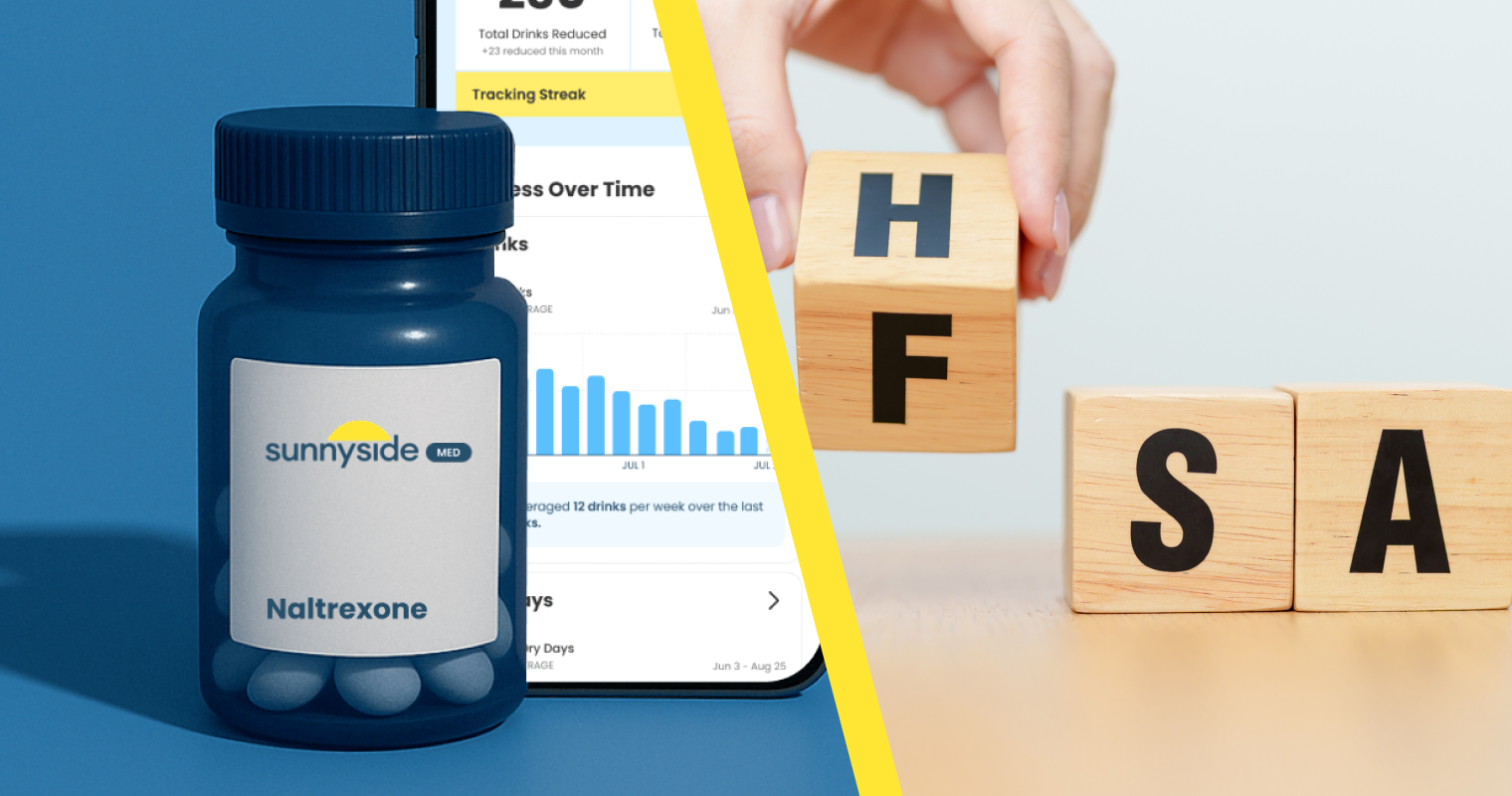
Yes. Prescription naltrexone is generally an HSA/FSA-eligible medical expense, including when it’s prescribed through Sunnyside Med. You may need to keep a receipt, prescription information, or other documentation for your records, and individual plan procedures can vary.
You’ve been meaning to drink less for a while. Maybe you tried Dry January, attempting to switch exclusively to seltzer, or made rules about when you would and wouldn’t drink. Now you’re looking at naltrexone and wondering whether the pre-tax money already sitting in your HSA or FSA can help cover it.
In most cases, it can. The IRS includes prescription medications among qualified medical expenses, and getting that prescription through telehealth doesn’t inherently change that.
You also don’t need to fit a particular stereotype of someone with an alcohol problem to consider medication. Plenty of people who take naltrexone are gray-area drinkers who want to cut back.
The details are mostly practical: what documentation to keep, when you might need additional paperwork, and how HSA/FSA payment works with Sunnyside Med.
Generally, yes. The IRS includes prescribed medicines among qualified medical expenses. Naltrexone requires a prescription, whether you get it through an in-person clinician or a telehealth provider.
That means getting naltrexone online doesn’t inherently change its eligibility. If a licensed clinician determines that naltrexone is appropriate and writes a prescription, the fact that the visit happened virtually doesn’t make the medication a different type of medical expense.
Standard HSAs and healthcare FSAs can generally be used for eligible prescription expenses. There are a couple of important exceptions. Limited-purpose FSAs are generally restricted to dental and vision expenses, while dependent care FSAs are designed for eligible care expenses rather than medical treatment.
It also helps to know what you’re paying for. Naltrexone reduces the brain’s reward response to alcohol, rather than making you sick if you drink. It has been FDA-approved for alcohol dependence since 1994 and is not addictive.
Research supports its effectiveness for reducing heavy drinking. A major 2023 systematic review and meta-analysis found that oral naltrexone was associated with a lower risk of returning to heavy drinking compared with placebo (McPheeters et al., 2023).
The medication may be eligible, but it’s still a good idea to keep records of the expense. What you need depends partly on the type of account and your plan’s procedures.
For naltrexone, useful records can include:
FSA claims generally require third-party documentation showing that an eligible medical expense was incurred and how much it cost. HSA recordkeeping works somewhat differently, but you should still keep documentation showing that distributions were used for qualified medical expenses.
The Sunnyside Med program provides documentation members can keep for their records. If your administrator asks for something additional, find out exactly what it needs before requesting paperwork from your clinician.
One practical difference between the two accounts is what happens to money you don’t spend.
HSA funds stay in your account from year to year, so you don’t have to use your balance by an annual deadline.
FSAs generally follow a use-it-or-lose-it model. Depending on your employer’s plan, you may have a grace period or be allowed to carry over a limited amount into the following plan year. If you’re planning to use FSA funds for naltrexone, check your plan’s rules and deadlines first.
Usually, a prescription medication does not need a Letter of Medical Necessity (LMN) simply to qualify as a medical expense. Naltrexone is a prescription medication, and the IRS includes prescribed medicines among qualifying medical expenses.
Still, an HSA or FSA administrator may ask for additional documentation when reviewing a particular expense. If yours requests an LMN, it’s a short document from your clinician explaining the medical reason for the treatment.
An LMN commonly includes information such as:
If your administrator requests one, ask the clinician who prescribed your naltrexone. Some benefits administrators provide their own LMN forms, like the HealthEquity Letter of Medical Necessity form, which can make the process more straightforward.
You can keep the request simple: “I’d like a Letter of Medical Necessity for my naltrexone prescription for HSA/FSA documentation.”
An LMN provides supporting documentation for an expense. It does not guarantee that a particular claim will be approved, so follow your administrator’s instructions if one is requested.
The main financial advantage of using an HSA or FSA is that these accounts offer tax advantages for qualified medical expenses. That can make the effective cost of treatment lower than paying the same expense entirely with after-tax income.
Sunnyside Med costs $99 a month, billed quarterly, plus a one-time intake fee. HSA/FSA funds can help you use money already set aside for healthcare toward that cost.
Your actual tax savings depend on factors such as your income, tax situation, account type, and how the funds were contributed. But in simpler terms, here’s the benefit: eligible healthcare dollars in an HSA or FSA receive tax advantages that ordinary spending money does not.
Using HSA/FSA funds can also be useful if you prefer to pay for treatment without submitting a claim to your health insurer. Your HSA or FSA administrator may still receive information needed to process or substantiate the expense, but the purchase does not have to be billed through your health insurance.
For a fuller breakdown of treatment costs, see how naltrexone telehealth costs add up.
A denied claim does not necessarily mean the expense itself is ineligible. Sometimes the administrator needs additional documentation.
Start by checking the reason for the denial and what information is missing. You may need to provide an itemized receipt, prescription information, or other supporting documentation. If the administrator specifically requests a Letter of Medical Necessity, ask your clinician to complete one and resubmit the claim.
If the claim is still denied, check your plan documents or contact the administrator to find out whether you can appeal the decision and what additional information it requires.
Keep copies of your receipts and other documentation throughout the process. HSA and FSA rules and procedures are not identical, so follow the instructions for your specific account rather than assuming the reimbursement process will be the same for both.
Using HSA/FSA funds with Sunnyside Med is straightforward. The program costs $99 a month, billed quarterly, plus a one-time intake fee. No insurance is required.
The process is short:
Sunnyside Med uses Stripe, a trusted payment platform that supports HSA and FSA debit cards. If you have an HSA/FSA card, you can enter it at checkout just as you would another payment card. Your card issuer still makes the final authorization decision, so individual transactions may occasionally require additional documentation or another payment method.
That price also covers more than prescription naltrexone. Members get ongoing clinical support, access to the Sunnyside app, human coaching, community, and group support. The program is designed to help members use medication consistently while changing habits around drinking.
“Sunnyside provides scaffolding around the medication to allow folks to be as successful as possible,” said Sunnyside co-founder Nick Allen.
Among engaged, active Sunnyside Med members, 78% achieved a meaningful reduction in drinking over 12 weeks. (Individual results vary.) Engaged Sunnyside Med members are also 2.5x more likely to refill their medication.
If naltrexone feels like the right next step, complete Sunnyside Med’s short assessment to see if you’re eligible. HSA/FSA card payment is available at checkout.
Naltrexone is a prescription medication. This content is educational and should not be taken as medical advice. A licensed clinician reviews every Sunnyside Med application. Individual results vary.
Generally, yes. Prescription medicines are qualified medical expenses under IRS rules, so prescribed naltrexone can generally be paid for with HSA or health FSA funds. Your plan may have its own procedures for documenting the expense.
Generally, yes. Receiving your prescription through telehealth does not inherently make an otherwise qualified prescription expense ineligible. Eligible telehealth medical care may also qualify for HSA/FSA funds.
Usually not simply because naltrexone is a prescription medication. However, your administrator may request additional documentation for a particular expense. If it specifically asks for a Letter of Medical Necessity, your prescriber can help you complete one.
Ask the clinician who prescribed your naltrexone and explain that you need the letter for HSA/FSA documentation. If your administrator provides its own form, send that to your clinician so they know exactly what information is required.
A compounded medication prescribed to treat a medical condition may qualify as a medical expense. Keep your prescription and receipts, and check with your HSA/FSA administrator if you have questions about documentation or reimbursement.
Start by finding out why the claim was denied. You may simply need to provide an itemized receipt, prescription information, or other documentation. If the administrator requests additional information, submit it and resubmit the claim or follow your plan's appeal process.
Ian has a family deeply hurt by alcohol, and is on his own personal journey to drink less and live his healthiest life. He’s took naltrexone daily for two years and saw incredible results. As Sunnyside Med’s first customer, he’s deeply entrenched in alcohol health and naltrexone.
Naltrexone is not addictive or habit-forming. It blocks opioid receptors rather than activating them, so it doesn't produce...

Getting a prescription for naltrexone doesn't have to mean a long sit in a doctor's waiting room. With...

Naltrexone eligibility is determined through an individual clinical evaluation, not a single pass-or-fail test. You don't need to...

If you’re interested in trying naltrexone to help you drink less, the natural next question is where to...