
Last Updated on July 20, 2026

Naltrexone for alcohol is a prescription medication that helps reduce the rewarding effects of drinking, making it easier for many people to cut back or stop. FDA-approved for alcohol use disorder since 1994, it works by blocking opioid receptors involved in alcohol’s reward pathway. Unlike medications that make you sick if you drink, naltrexone can be prescribed for people who want to moderate their drinking as well as those who want to quit entirely.
If you’ve ever promised yourself you’d have just one drink, only to find yourself reaching for another, you might assume that’s a failure of willpower. In reality, repeated alcohol use changes the way the brain learns from rewards, making certain situations, emotions, and routines strongly associated with drinking.
But that doesn’t mean those patterns can’t change.
Naltrexone for alcohol is one of the most studied medications available for reducing alcohol consumption. By making alcohol feel less rewarding, it helps weaken the learned connection between drinking and pleasure over time. For many people, that creates enough space to learn new habits and make different choices without relying on willpower alone.
Whether your goal is to drink less, take a break from alcohol, or stop altogether, understanding how naltrexone works can help you decide whether it’s a good option for you.
What Is Naltrexone?
Naltrexone is a prescription medication used to help people reduce or stop drinking alcohol. It belongs to a class of medications called opioid receptor antagonists. Rather than causing an unpleasant reaction if you drink, it works by reducing alcohol’s rewarding effects, which can lead to fewer cravings and less heavy drinking over time.
The FDA approved oral naltrexone for alcohol use disorder in 1994, and decades of research have found it to be one of the most effective medications available for reducing heavy drinking. It has been studied both in people who want to become abstinent and in people whose goal is simply to drink less.
Importantly, you don’t have to feel like your drinking has reached a crisis point before talking with a healthcare professional about naltrexone. Many people seek naltrexone for social drinking, because they’ve noticed alcohol is taking up more mental space than they’d like, or because moderation has become harder than it used to be. Those concerns are worth tackling, even if you don’t identify with a diagnosis like alcohol use disorder.
Unlike disulfiram (Antabuse), naltrexone does not make you sick if you drink alcohol. Instead, it impacts how rewarding alcohol feels, making it easier for many people to change longstanding drinking habits gradually.
How Naltrexone for Alcohol Works in the Brain
When you drink alcohol, your brain releases a variety of chemical messengers involved in reward and reinforcement. One important part of that process involves the body’s natural opioid system, including the release of endorphins. Those endorphins activate opioid receptors in the brain, contributing to alcohol’s rewarding effects and reinforcing the desire to drink again in similar situations.
Naltrexone works by temporarily blocking those opioid receptors. As a result, alcohol tends to feel less rewarding than it otherwise would. Many people describe this as taking some of the “pull” out of drinking. They may still enjoy spending time with friends or having a drink, but they feel less compelled to keep going once they start.
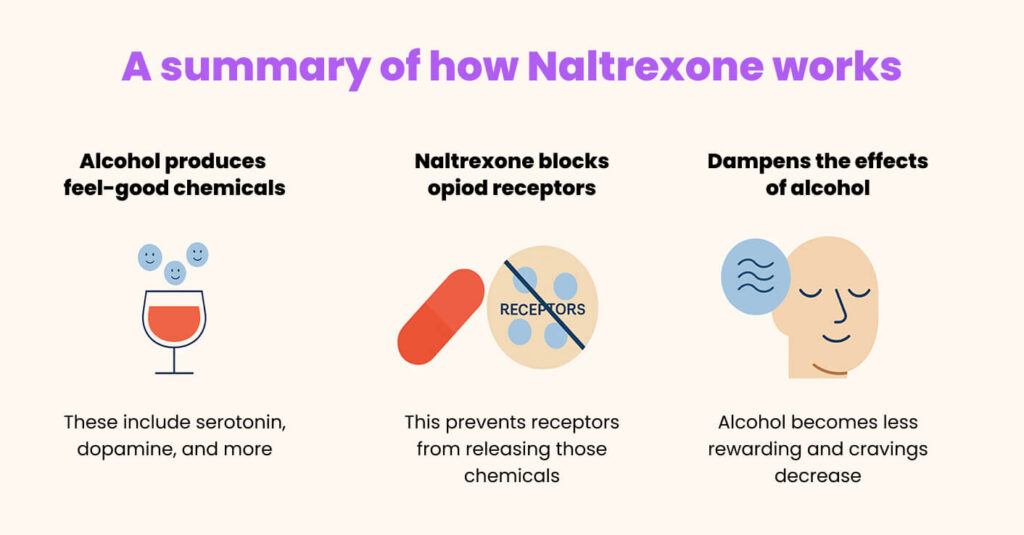
With consistent use, many people find that alcohol gradually occupies less mental space. Cravings may become less frequent or less intense, and habits that once felt automatic can become easier to interrupt. Naltrexone doesn’t erase the routines, emotions, or environments associated with drinking, but it can make those patterns easier to change as you build new habits.
Like any medication, naltrexone works best as part of a broader approach to changing drinking habits. Pairing it with strategies like tracking, coaching, and counseling can help you build on the momentum the medication creates and solidify lasting changes over time.
“Now that I have medication to help, I feel even more confident in implementing the coping skills that I’ve learned,” said one Sunnyside Med member.
Who Is Naltrexone For?
Naltrexone is prescribed for adults who want help changing their relationship with alcohol. While it’s FDA-approved for treating alcohol use disorder, healthcare providers may also prescribe it for people who don’t identify with that diagnosis but consistently find themselves drinking more than they intend to.
One important thing to remember is that you don’t have to wait until drinking has caused major consequences before asking about treatment. If alcohol is taking up more space in your life than you’d like, that’s reason enough to have a conversation with your doctor or explore options like Sunnyside Med.
You might be a good candidate for naltrexone if you:
- regularly drink more than you planned,
- find it difficult to cut back on your own, or
- feel like alcohol has become more automatic than intentional.
Many people also consider naltrexone after trying moderation on their own and realizing they could use additional support to make the changes they want.
Naltrexone isn’t appropriate for everyone. Because it blocks opioid receptors, it can’t be used by people who are currently taking opioid medications or who have opioid dependence. If you fall into either category, it’s absolutely critical to mention it to your doctor.
Talking to Your Doctor About Naltrexone for Alcohol
Some people worry their concerns won’t be taken seriously because they don’t identify as having alcohol use disorder. But if drinking is becoming harder to control than you’d like, that’s a valid reason to start the conversation.
Be sure to tell your healthcare provider everything you’re currently taking so they can help prevent and navigate naltrexone interactions. You’ll need to disclose:
- Prescription medications
- Over-the-counter medications
- Vitamins
- Herbal supplements
- Recreational substances
If your primary care provider doesn’t prescribe naltrexone or isn’t familiar with using it for alcohol, there are also telehealth services that specialize in alcohol moderation medication. Sunnyside Med connects eligible members with licensed clinicians who can determine whether naltrexone is appropriate and pairs medication with other tools to help people build healthier drinking habits.
What to Expect When Taking Naltrexone for Alcohol
Naltrexone isn’t an overnight solution. Some people notice a difference within the first week, while for others it takes several weeks before drinking feels meaningfully different. It’s also common to continue having cravings early in treatment. That doesn’t necessarily mean the medication isn’t working. Taking it consistently, setting realistic naltrexone expectations, staying in touch with your healthcare provider, and pairing it with practical behavior changes gives you the best chance of success.
How Long Should You Take Naltrexone for Alcohol?
There’s no single timeline that works for everyone. How long you stay on naltrexone depends on your goals, how well the medication is working, whether you’re experiencing side effects, and what you and your healthcare provider decide is appropriate.
Current guidance doesn’t recommend a fixed treatment duration. A 2024 review from the University of Illinois Chicago Drug Information Group, which summarizes recommendations from multiple clinical guidelines, notes that many experts recommend continuing naltrexone for at least 3 to 6 months, with longer treatment individualized based on a person’s response and goals. Research also suggests that staying on treatment longer may improve outcomes. For example, a 2022 systematic review and meta-analysis by Murphy and colleagues found that studies lasting more than three months showed greater reductions in heavy drinking days than shorter trials. A key conclusion: “Reductions are larger with a longer duration of treatment.”
What If I Want to Stop Naltrexone?
If you’re thinking about stopping naltrexone, it’s worth considering questions like whether cravings have become more manageable, whether your drinking habits have changed, and whether you feel confident maintaining those changes without medication.
Before making any decisions about stopping naltrexone or naltrexone dosage, talk with your healthcare provider first. Together, you can decide whether it’s the right time or whether continuing treatment may help you maintain your progress.
Potential Side Effects of Naltrexone for Alcohol
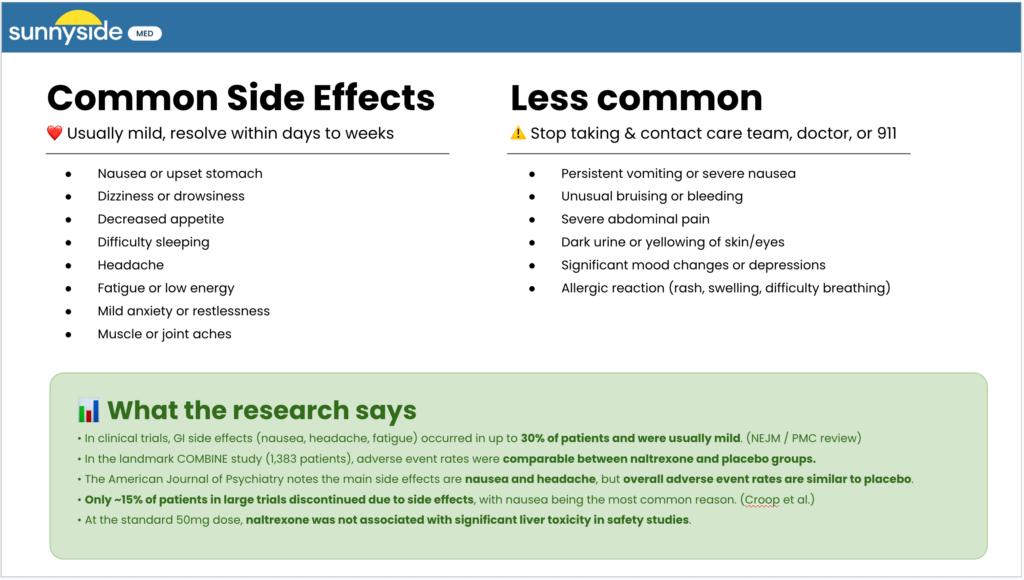
Most people tolerate naltrexone well, and not everyone experiences naltrexone side effects. When side effects do occur, they’re often mild and improve as your body adjusts to the medication.
The most commonly reported side effects include:
- Nausea, particularly during the first few days
- Headache
- Dizziness
- Fatigue
- Difficulty sleeping or changes in sleep for some people
If side effects are severe, persistent, or concerning, contact your healthcare provider.
Before starting naltrexone, your healthcare provider will review your medical history and current medications. Because naltrexone is processed by the liver, they may also recommend liver function testing before or during treatment, particularly if you have a history of liver disease or other risk factors. While naltrexone has historically been used cautiously in people with liver disease, more recent research suggests it can often be used safely with appropriate monitoring. Your healthcare provider can help determine whether it’s a good option for your individual situation.
How Effective Is Naltrexone for Alcohol?
Naltrexone is one of the most well-studied medications for reducing alcohol consumption. Decades of research have found that it can help people drink less, reduce heavy drinking days, and lower the risk of returning to heavy drinking after they’ve cut back or stopped.
A 2023 systematic review and meta-analysis published in JAMA analyzed 118 clinical trials and found that oral naltrexone was associated with significant reductions in heavy drinking compared with placebo. The researchers concluded that naltrexone remains one of the most effective first-line medications for alcohol use disorder.
As mentioned, naltrexone doesn’t remove every craving overnight. Instead, it helps reduce alcohol’s rewarding effects, making it easier for many people to follow through on the changes they’re already trying to make. For that reason, many healthcare providers recommend using naltrexone as one part of a broader treatment plan that may also include regular follow-ups, counseling, coaching, or other behavior-change strategies, depending on a person’s goals and preferences.
“The medication alone has been shown to reduce bounce-back behavior, but especially when coupled with behavior change, that’s when you get the most effective results for the long term,” said Sunnyside co-founder and CEO Nick Allen.
Naltrexone for Alcohol and the Sunnyside Med Approach
Medication can make it easier to change your relationship with alcohol, but it’s only one piece of the picture. Drinking habits are shaped by routines, emotions, environments, and social situations that don’t disappear overnight.
That’s why Sunnyside Med combines daily compounded naltrexone with practical tools that help members build lasting habits. Eligible members connect with licensed clinicians to determine whether medication is appropriate, while also using features like drink tracking, personalized coaching, and guided behavior-change tools to support their progress over time.
Whether your goal is to drink less or stop altogether, the most effective approach is the one you stick with. For many people, that means combining evidence-based treatment with ongoing support that helps healthy changes become sustainable.
“I’m honestly shocked in the best way by how this medication is making me feel,” said one Sunnyside Med member. “For the first time in a long time, I don’t feel that constant pull to reach for a glass of wine.”
If you’re curious whether naltrexone could be your next step, Sunnyside Med‘s free online assessment can help you determine whether you may be eligible. If appropriate, you’ll be matched with a licensed clinician who can discuss your goals and whether naltrexone is right for you. Take the free 3-minute assessment to get started today.
Frequently Asked Questions (FAQ): Naltrexone for Alcohol
How long does naltrexone take to work?
There’s no universal timeline. Some people notice a difference within the first week, while others need several weeks before alcohol feels meaningfully different. Naltrexone works gradually by reducing alcohol’s rewarding effects over time, and research suggests it’s most effective when it’s taken consistently as prescribed and paired with ongoing support and behavior change strategies.
Can you still drink alcohol while taking naltrexone?
Yes. Unlike disulfiram (Antabuse), naltrexone doesn’t make you sick if you drink alcohol. It’s commonly prescribed for people who want to reduce their drinking as well as those who want to stop completely. Even so, it’s important to follow your healthcare provider’s instructions and discuss your drinking goals before and during treatment.
Can you take naltrexone with GLP-1 medications like Ozempic or Wegovy?
Yes, in many cases. There are no known direct drug interactions between naltrexone and GLP-1 medications such as semaglutide (Ozempic, Wegovy) or tirzepatide (Zepbound, Mounjaro). Because both medications may reduce interest in alcohol for some people, researchers are studying whether they could have complementary effects. If you’re taking a GLP-1 medication and are interested in naltrexone, talk with your healthcare provider about whether the combination is appropriate for you.
Do you need a prescription for naltrexone for alcohol?
Yes. In the United States, naltrexone is available only with a prescription from a licensed healthcare provider. They will review your medical history, current medications, and treatment goals to determine whether it’s an appropriate option. If you’re interested in exploring medication, Sunnyside Med’s free online assessment can help you determine whether you may be eligible to connect with a licensed clinician and discuss whether naltrexone is right for your goals.
Naltrexone is a prescription medication. This content is educational and should not be taken as medical advice. A licensed clinician reviews every Sunnyside Med application.
Sunnyside Is the Perfect Companion for Your Naltrexone Journey
Sunnyside is the #1 mindful drinking app. Since 2020, we’ve been honing our harm-reduction approach and have helped over 400,000 people cut out 22 million drinks from their baseline habits. 96.7% of our members report success in drinking less, and in a third-party study, our approach was demonstrated to reduce weekly drinking by 33% after 12 weeks.
Think of Sunnyside as the front door for anyone who wants to change their relationship with alcohol. If you want to drink less, we can help you get there. If you want to eventually quit, but want to take a gradual approach, we can make that happen.
When you sign up for Sunnyside, you’ll take a quick 3-minute quiz, then hop into the app. It’s as simple and quick as that.
We’ll give you weekly plans to gradually reach your drinking goals, and we’ll provide nudges, coaching, exercises, and advice to help you get there.
We have daily tracking and journaling tools, including the option to chat with a real human coach at any time. And our state-of-the-art analytics help you track your progress over time.
If you choose to stop taking naltrexone, the Sunnyside app remains a tool you can keep using to maintain your healthy habits.
Everyone who signs up for Sunnyside gets a free 15-day trial. After that, the subscription is $8.25/month.
Whether you’re currently taking naltrexone or just doing some research on alcohol moderation, we’d love to have you sign up for our 15-day free trial today.