
Last Updated on August 17, 2026
Is “alcoholic” an outdated term? In clinical settings, yes. Today, healthcare professionals use alcohol use disorder (AUD), a spectrum diagnosis ranging from mild to severe. “Alcoholic” is not a medical diagnosis and can reinforce the idea that drinking only becomes a problem once it reaches a crisis point. You don’t need to identify with a label to take a closer look at your drinking or decide you want to drink less.
At some point, you may have wondered whether your drinking is “bad enough” to be a problem. Maybe you’ve counted the drinks, compared your habits to other people’s, or asked yourself the bigger question: Am I an alcoholic?
But that question relies on an outdated way of thinking about alcohol use. Clinically, there’s no clear line separating “alcoholics” from everyone else. Alcohol use disorder (AUD) exists on a spectrum, and you don’t need to identify with a label or reach a crisis point to decide you want to drink less.
So, is “alcoholic” an outdated term? In clinical settings, yes. And understanding why it fell out of use can give you a much more useful way to think about your own relationship with alcohol.
What “Alcoholic” Used to Mean Clinically (And Why It Was Retired)
For decades, drinking problems were often understood in all-or-nothing terms: you were an “alcoholic,” or you weren’t. The stereotype tended to center on severe consequences, which made it easy for people who were still working, maintaining relationships, and handling their responsibilities to assume their drinking wasn’t a problem.
Clinical thinking has changed considerably. In the DSM-III and DSM-IV, alcohol-related problems were divided into two diagnoses: “alcohol abuse” and the more severe “alcohol dependence.” Then, in 2013, the DSM-5 replaced those categories with a single diagnosis called alcohol use disorder (AUD).
As Hasin et al. (2013) explained when the new criteria were introduced, AUD is measured along a continuum rather than divided into abuse and dependence. That shift better reflects the fact that problems with alcohol can vary widely in severity.
“Alcoholic,” meanwhile, isn’t a DSM-5 diagnosis. While people may still use the word to describe themselves, current clinical terminology gives us a much more precise way to talk about drinking and its effects.
What Alcohol Use Disorder (AUD) Actually Measures
Alcohol use disorder isn’t a yes-or-no category. It’s diagnosed based on 11 criteria that describe how alcohol is affecting your behavior, health, and daily life. Meeting 2 to 3 criteria within a 12-month period is considered mild AUD, 4 to 5 is moderate, and 6 or more is severe.
And those criteria aren’t limited to dramatic consequences. They include things like drinking more than you intended, trying unsuccessfully to cut back, experiencing alcohol cravings, or spending a lot of time drinking or recovering from alcohol.
That means someone can meet the criteria for AUD while having a job, raising a family, maintaining relationships, and otherwise feeling like their life is going pretty well. In a nationally representative survey of more than 36,000 U.S. adults, Grant et al. (2015) estimated that 13.9% had met the criteria for AUD in the previous year. Yet only a minority of people with lifetime AUD had ever received treatment.
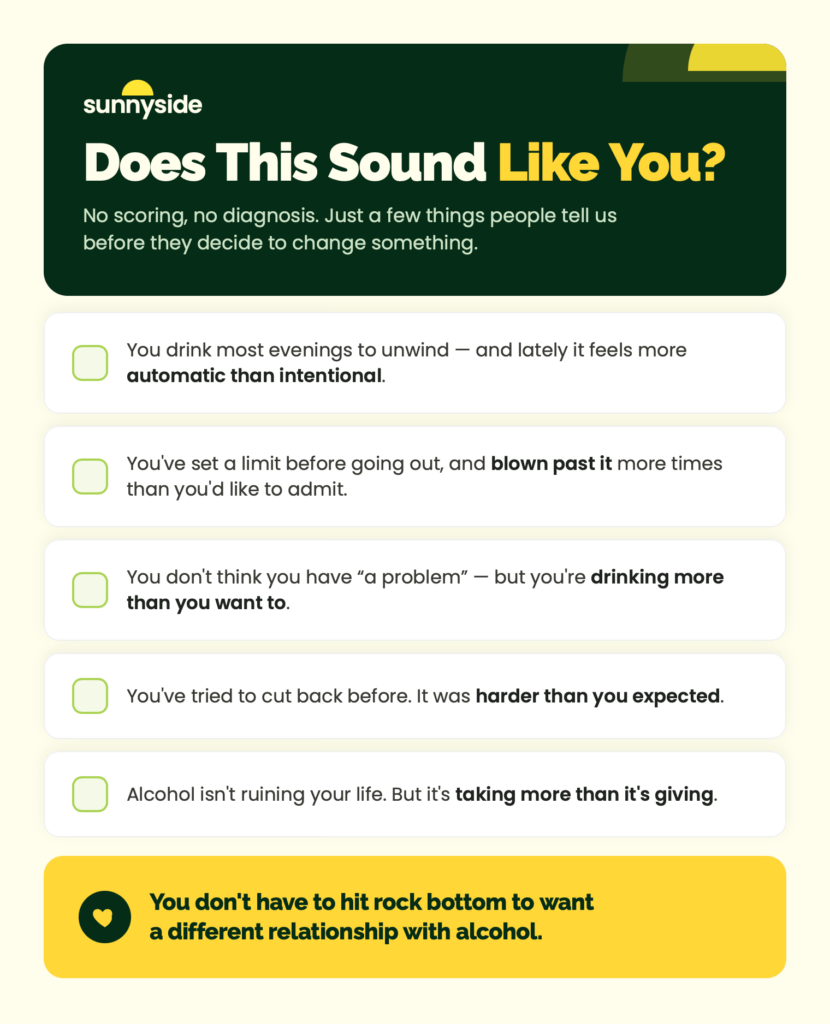
This is where the spectrum model can be especially useful for people who think of themselves as gray-area drinkers. You don’t have to decide whether you fit the stereotype of an “alcoholic.” You can look at what alcohol is actually doing in your life and decide whether you’d like something to change.
How the Word “Alcoholic” Can Deter People From Getting Help
The problem with “alcoholic” isn’t simply that the word can feel harsh. It can also affect how people think about themselves and whether they believe they need help.
If your picture of an alcoholic is someone who has lost a job, damaged relationships, or experienced serious health consequences, it’s easy to look at your own life and think, That’s not me, so I must be fine. You can keep making that comparison even when you’re drinking more than you want to.
Research suggests that stigmatizing language matters. In a randomized study, Kelly and Westerhoff (2010) gave mental health and addiction professionals identical descriptions of a person, changing only whether that person was called a “substance abuser” or described as having a “substance use disorder.” Professionals who saw the stigmatizing label were more likely to view the person as personally responsible and deserving of punitive measures.
Stigma can also make people less likely to seek support. A national study by Keyes et al. (2010) found that perceived alcohol-related stigma was associated with lower treatment seeking among people with AUD.
Neither study specifically tested the word “alcoholic,” so we shouldn’t overstate what they show. But together, they help explain why clinical language has increasingly moved away from labels that turn a health condition into an identity.
When “alcoholic” becomes the threshold you have to cross before your drinking deserves attention, it gives you an easy reason to wait: I’m not one of those people.
The “Rock Bottom” Myth — And Why It’s a Roadblock to Care
The old stereotype also comes with another idea: that drinking has to get really bad before it makes sense to do something about it.
In reality, waiting for “rock bottom” can mean waiting through years of drinking more than you want to. Research on barriers to AUD treatment shows that people often don’t seek help precisely because they don’t think their drinking is serious enough. In a European primary-care study, Probst et al. (2015) found that not perceiving a need for treatment was a major barrier, particularly among people with less severe AUD. Shame and stigma were barriers, too.
That makes sense when you consider the cultural picture of an “alcoholic.” If that’s your benchmark, there’s always someone drinking more than you, experiencing worse consequences, or looking more like they “really” have a problem.
But you don’t have to wait until alcohol has caused major damage to change your relationship with it. Wanting to drink less is reason enough to start looking at your options.
That’s also the thinking behind a more proactive approach to alcohol health: giving people tools to make a change earlier, rather than treating a crisis as the price of admission.
Why “Alcohol Use Disorder” Is the Preferred Clinical Term
Today, the preferred clinical term is alcohol use disorder, or AUD. When referring to someone with the condition, organizations like the National Institute on Alcohol Abuse and Alcoholism (NIAAA) recommend person-first language: “a person with alcohol use disorder” rather than “an alcoholic.”
NIAAA specifically identifies “alcoholic” as stigmatizing language and recommends AUD because it describes a treatable health condition rather than defining a person by it.
That doesn’t mean people can’t call themselves alcoholics. Some people find the term useful in recovery communities or as part of their own identity. But you don’t have to accept that label before you’re “allowed” to question your drinking or ask for support.
That shift matters because there are options at every point on the spectrum. You can take a preventative approach to alcohol health before drinking becomes severe or disruptive.
Sunnyside Med Will Meet You Where You Are
If “Am I an alcoholic?” isn’t a particularly useful question, a better one might be: Am I drinking more than I want to, and would I like some help changing that?
Sunnyside Med is designed for people who answer yes, including those who don’t identify with traditional ideas about alcoholism. You don’t have to wait for your drinking to reach a crisis point, and your goal doesn’t have to be abstinence.
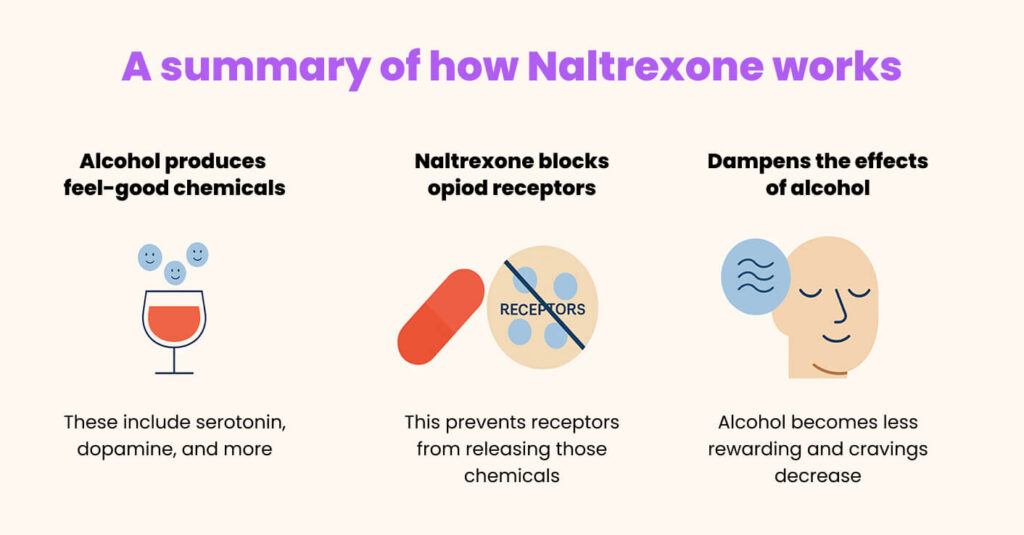
Sunnyside Med combines naltrexone with Sunnyside’s drink-tracking tools, coaching, and community support. Naltrexone works by reducing some of the rewarding effects of alcohol and can help reduce heavy drinking. It’s also well studied: a 2014 systematic review in JAMA included 53 naltrexone studies, and a more recent 2023 systematic review and meta-analysis found that oral naltrexone improved alcohol-consumption outcomes compared with placebo.
Medication is only one part of the program. The Sunnyside app helps you track your drinking and notice patterns, while human coaching and community support can help you work on the routines and situations surrounding it.
Your goal can be drinking less, taking a break, or quitting. The point is to start from where you are, rather than waiting until you fit someone else’s definition of what a drinking problem is.
As Sunnyside co-founder Nick Allen has said, “This isn’t only for people at or approaching rock bottom. We’re building Sunnyside Med to provide proactive and preventive access to medication.”
If you’re wondering about your drinking, you don’t have to settle the question of whether you’re an “alcoholic” first. You can simply decide that you’d like something to change.
A licensed clinician can review your information and determine whether Sunnyside Med is appropriate for you. Get started with a brief quiz.
Frequently Asked Questions (FAQ): Is “Alcoholic” an Outdated Term?
Is “alcoholic” a medical diagnosis?
No. “Alcoholic” is not a diagnosis in the current DSM-5-TR. The clinical diagnosis is alcohol use disorder (AUD), which can be mild, moderate, or severe.
What is the preferred term instead of “alcoholic”?
In clinical settings, the preferred phrasing is “person with alcohol use disorder.” The NIAAA recommends person-first language and identifies terms like “alcoholic” and “alcohol abuse” as stigmatizing.
What is the difference between alcoholism and alcohol use disorder?
“Alcoholism” is an informal term commonly associated with problematic or compulsive drinking. AUD is a specific medical diagnosis based on 11 criteria. Meeting 2 to 3 criteria within a year is considered mild AUD, 4 to 5 is moderate, and 6 or more is severe.
Can you have a drinking problem without being an “alcoholic”?
Absolutely. You don’t need to identify as an alcoholic or even meet the criteria for AUD to decide that alcohol is having an effect on your life. If you’re regularly drinking more than you intend to or having trouble cutting back, those are good reasons to take a closer look at your drinking.
Is it okay to call yourself an alcoholic?
Yes. Some people find the term meaningful, particularly in recovery communities, and how you describe yourself is a personal choice. The shift in clinical language is about avoiding labels that may carry stigma, not telling individuals which words they can use for themselves.
Naltrexone is a prescription medication. This content is educational and should not be taken as medical advice. A licensed clinician reviews every Sunnyside Med application.