How the DSM-5 Defines Alcohol Use Disorder — And What That Means for Gray-Area Drinkers
August 9, 2026
How the DSM-5 Defines Alcohol Use Disorder — And What That Means for Gray-Area Drinkers
Last Updated on August 9, 2026
The DSM-5 defines alcohol use disorder (AUD) as meeting at least 2 of 11 diagnostic criteria within the past 12 months. Mild AUD is 2-3 criteria, moderate is 4-5, and severe is 6 or more. These criteria measure how alcohol affects control, behavior, health, and daily life, not whether someone fits a stereotype.
Maybe you poured more than you planned last night, or you’ve tried cutting back and found it surprisingly difficult. You aren’t in crisis, but you’re wondering whether your drinking is something you should take more seriously.
Understanding the DSM-5 criteria for AUD can help answer that question. The DSM-5 doesn’t decide whether you’re an “alcoholic.” Instead, it places alcohol use disorder on a spectrum based on 11 specific criteria. For many people, recognizing mild or moderate AUD is the first indication that their relationship with alcohol may be worth reevaluating.
What AUD Actually Is — and What It Isn’t
AUD stands for alcohol use disorder. It replaced the older terms “alcohol abuse” and “alcohol dependence” when the DSM-5 was published in 2013, measuring severity on a spectrum rather than sorting people into rigid boxes. The word “alcoholic” does not appear anywhere in the DSM-5.
That relatively low diagnostic threshold means AUD is more common than many people realize. In a nationally representative survey of more than 36,000 US adults, nearly 3 in 10 met criteria for alcohol use disorder at some point in their lives, yet fewer than 1 in 5 had ever received treatment (Grant et al., 2015).
The DSM-5 also captures more people at the milder end of the spectrum than the DSM-IV did. Self-reported data suggest that the change nearly doubled the measured prevalence, in part because the newer criteria identify people that the older system missed (Bailey, Quinn & McHugh, 2025). If you’ve wondered whether your drinking counts as gray-area drinking, the DSM-5 offers a more useful framework than older, all-or-nothing labels.
The 11 DSM-5 Criteria for Alcohol Use Disorder
The DSM-5 groups the 11 criteria for alcohol use disorder into four categories: impaired control, social impairment, risky use, and pharmacological effects. You don’t need symptoms from every category. Any 2 of the 11 criteria within 12 months meet the threshold for mild AUD.
Impaired control:
Drinking more, or for longer, than you intended
Wanting to cut back or stop but finding it difficult
Spending a lot of time drinking, thinking about drinking, or recovering afterward
Experiencing cravings or a strong urge to drink
Social impairment:
Drinking that interferes with responsibilities at work, school, or home
Continuing to drink even though it’s causing problems with family or other relationships
Giving up hobbies, social activities, or interests because drinking has become more important
Risky use:
Drinking in situations where it’s physically dangerous, such as before driving
Continuing to drink even though you know it’s contributing to a physical or mental health problem
Pharmacological effects:
Needing more alcohol than you used to for the same effect (tolerance)
Experiencing withdrawal symptoms when you stop or significantly reduce drinking
Research suggests these criteria fall along a spectrum of severity, with some tending to appear earlier and others associated with more severe AUD (Saha, Chou & Grant, 2020). For many people, early signs they recognize are behavioral: drinking more than intended, trying unsuccessfully to cut back, or experiencing cravings.
What the AUD Severity Levels Actually Mean
Once a clinician determines how many criteria you meet, AUD is classified as mild (2-3 criteria), moderate (4-5), or severe (6+). These describe your current symptoms, not a permanent identity.
Mild AUD (2-3 criteria): You may drink more than intended, struggle to cut back, or think about alcohol more than you’d like.
Moderate AUD (4-5 criteria): Drinking may be affecting more areas of your life, and changing your habits can become harder without support.
Severe AUD (6+ criteria): Alcohol may play a much larger role in daily life. Physical dependence is more common, though not universal, and more comprehensive medical and behavioral support may be appropriate.
Importantly, physical dependence is not required for an AUD diagnosis. Withdrawal is only one of the 11 criteria, so someone can have mild or moderate AUD without ever experiencing it.
For many people, the experience feels like realizing they’re tired of repeatedly breaking promises they’ve made to themselves — that it’s time to make a lasting change. And that change is possible: “For the first time in years I’ve been waking up clear-headed and feeling good,” said one Sunnyside Med member. “I still plan to drink some, but I don’t miss feeling like I have to drink.”
Why the DSM-5 Criteria Include More People Than the Old System Did
Before 2013, the DSM-IV divided alcohol problems into two separate diagnoses: alcohol abuse and alcohol dependence. Some people experienced meaningful alcohol-related problems but met the criteria for neither, a group researchers sometimes called “diagnostic orphans.”
The DSM-5 replaced those categories with a single spectrum. A review of 12 studies found that the newer framework generally identified more people with AUD than the DSM-IV, although results varied across studies (Bartoli et al., 2015). One reason is that the DSM-5 captures people with symptoms that didn’t fit neatly into the older diagnostic categories.
The Gray-Area Drinker and the DSM-5 for AUD
Gray-area drinking describes the space between low-risk social drinking and more severe alcohol problems. It’s not a clinical diagnosis, but some gray-area drinkers may meet the DSM-5 threshold for mild AUD.
For example, someone might regularly drink more than intended, experience cravings, and repeatedly struggle to cut back. Those experiences may not look like the cultural stereotype of alcohol addiction, but each corresponds to a DSM-5 criterion.
That’s one reason understanding the DSM criteria can be useful. Instead of asking whether your drinking is “bad enough,” you can look at specific patterns and evaluate how they’re affecting your life.
What Meeting AUD Criteria Actually Means
Meeting criteria for mild or moderate AUD isn’t a verdict. It’s information you can use to decide whether you want to change your relationship with alcohol.
As Ian Andersen, co-founder of Sunnyside Med, puts it: “AUD exists on a wide spectrum, and the sooner you take charge, the less likely alcohol will pull you down further.”
Options aren’t limited to abstinence-only programs or support groups. Behavioral tools such as drink tracking, coaching, and accountability can support change, and medications are available for people who need additional help. Naltrexone, for example, has been FDA-approved for AUD since 1994 and is non-addictive (SAMHSA, TIP 49).
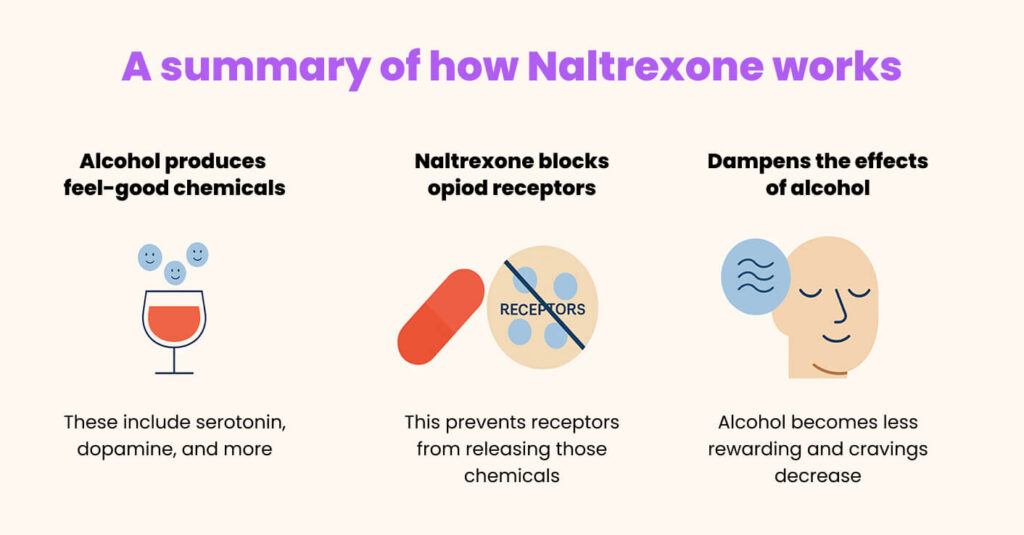
Naltrexone reduces some of alcohol’s rewarding effects and can be used by people who are still drinking. Research supports oral naltrexone as an effective treatment for AUD, including for reducing heavy drinking (McPheeters et al., 2023).
“I wasn’t a huge problem drinker, but I was someone who couldn’t have just one drink,” said one Sunnyside Med member. “I’m proud to say that I am now.”
Among active Sunnyside Med members with at least 50% app engagement, 78% achieved a meaningful reduction in drinking over 12 weeks. Individual results vary.
Can AUD Be Solved? Can My Diagnosis Change?
An AUD diagnosis isn’t necessarily a permanent description of your relationship with alcohol. Because diagnosis is based on symptoms within a specific period, your status can change as your drinking patterns change.
The DSM-5 also recognizes remission, so meeting AUD criteria doesn’t mean you’re locked into an identity for life. The spectrum-based approach focuses on the symptoms you’re experiencing and their severity, giving you a way to measure where you are and recognize when things improve.
“I wasn’t a huge problem drinker, but I was someone who couldn’t have just one drink. I’m proud to say that I am now.”
-Sunnyside Med member
A Quick and Private Assessment with Sunnyside Med
This article is educational, not diagnostic. Only a licensed clinician can diagnose AUD. But if you read the criteria and found yourself relating to them, that’s worth a second look.
Sunnyside Med offers a private online assessment reviewed by a licensed clinician, with no waiting room or insurance required. If appropriate, your clinician can prescribe naltrexone, while the Sunnyside app provides drink tracking, coaching, and other tools to help you change your habits. See if you’re eligible with a 2-minute quiz.
Frequently Asked Questions (FAQ): DSM-5 for Alcohol Use Disorder
How many DSM-5 criteria do you need for an AUD diagnosis?
You need at least 2 of the 11 criteria within a 12-month period. Meeting 2-3 criteria is classified as mild AUD, 4-5 as moderate, and 6 or more as severe.
Can you have AUD without physical dependence or withdrawal?
Yes. Withdrawal is only one of the 11 DSM-5 criteria. Someone can meet the threshold for mild or moderate AUD without experiencing withdrawal or physical dependence.
Is gray-area drinking the same as mild AUD?
Not necessarily. Gray-area drinking isn’t a clinical diagnosis. Some gray-area drinkers may meet 2-3 DSM-5 criteria and qualify for mild AUD, while others may not meet the diagnostic threshold.
What changed from DSM-IV to DSM-5 for alcohol?
The DSM-5 combined the separate diagnoses of “alcohol abuse” and “alcohol dependence” into one spectrum called alcohol use disorder. It also added craving as a criterion, removed legal problems as a criterion, and introduced mild, moderate, and severe classifications.
Do you have to be an alcoholic to have alcohol use disorder?
No. “Alcoholic” isn’t a DSM-5 diagnosis. AUD is diagnosed based on specific symptoms, and someone can have mild AUD without fitting cultural stereotypes about alcohol addiction.
What are my options if I only meet 2 or 3 criteria?
Meeting 2-3 criteria indicates mild AUD. Options can include changing your drinking habits, drink tracking, behavioral support, and medications such as naltrexone. A healthcare professional can help you determine which approach is appropriate.
Can you still drink if you have mild AUD?
Some people with mild AUD choose moderation rather than abstinence. Naltrexone is one treatment option that does not require someone to already be abstinent, although a clinician should help determine whether it’s appropriate for you.
Is meeting 2 DSM-5 criteria serious?
Two criteria meet the threshold for mild AUD. It doesn’t necessarily mean you’re in crisis, but it does indicate that alcohol is causing symptoms worth paying attention to. Recognizing those patterns can allow you to make changes earlier.
Sunnyside Is the Perfect Companion for Your Mindful Drinking Journey
Sunnyside is the #1 mindful drinking app. Since 2020, we’ve helped more than 400,000 people change their relationship with alcohol and cut more than 22 million drinks from their baseline habits. In a third-party study, Sunnyside members reduced their weekly drinking by 33% after 12 weeks.
Recognizing yourself in some of the DSM-5 criteria for AUD doesn’t mean you have to wait for your drinking to get worse before making a change. Whether your goal is to drink less, take more alcohol-free days, or eventually quit, Sunnyside gives you practical tools to start where you are.
When you sign up, you’ll take a quick 2-minute quiz and receive a personalized weekly plan based on your goals. You’ll also get drink tracking, daily reminders, coaching, exercises, and a supportive community to help you build healthier habits over time.
And if you’re interested in medication support, Sunnyside Med offers access to licensed clinicians who can determine whether naltrexone may be appropriate for you. It’s another option for people who want help changing their drinking without assuming that abstinence has to be the only goal.
Naltrexone is a prescription medication. This content is educational and should not be taken as medical advice. A licensed clinician reviews every Sunnyside Med application. Individual results vary.