

Naltrexone vs. Willpower: Why “Trying Harder” Isn’t Always Enough (And Why That’s OK)
When you decide over breakfast that you'll have one drink at dinner, you're making a deliberate plan. Hours...


People hide their drinking for different reasons, including fear of judgment, shame, conflict with loved ones, or concern about how much they’re consuming. Secret drinking doesn’t automatically mean you have alcohol use disorder (AUD), but it can be a sign that your relationship with alcohol deserves a closer look. Recognizing what you’re hiding and why can help you decide what to do next.
Maybe you’ve started having a drink before your partner gets home. Or you tell your doctor you drink a few times a week, leaving out the nights when you have more than you intended. You might even find yourself keeping track of which bottles need replacing so nobody notices how much is missing.
There are plenty of reasons someone might hide their drinking. You might be trying to avoid an argument, worried about how someone will react, or uncomfortable admitting how much you’ve been drinking, even to yourself.
Whatever the reason, keeping two versions of your drinking habits can make it harder to understand what’s actually happening.
Secret drinking means deliberately hiding, minimizing, or misrepresenting how much or how often you drink. It’s an informal term, not a medical diagnosis.
It can take several forms:
Drinking alone isn’t necessarily secret drinking. You can enjoy a glass of wine by yourself without hiding anything. The difference is whether you’re simply drinking on your own or deliberately concealing it from someone else.
Privacy isn’t the same as secrecy, either. You’re entitled to decide what you share about your drinking and with whom, especially if you’re worried about someone’s reaction. But if you’re regularly changing the story, hiding evidence, or avoiding an accurate accounting of how much you drink, it may be worth asking what makes being honest feel so difficult.
Hiding your drinking can seem easier than dealing with someone else’s reaction or confronting a habit you’re not entirely comfortable with. Sometimes it’s a way to avoid conflict. Other times, you may not be sure what your drinking means or whether you want to change it.
Maybe your partner has commented on how much you drink, or a friend has expressed concern. Rather than having the same conversation again, you start leaving out certain drinks or downplaying how often you drink.
In the short term, that might help you avoid an argument. But if the drinking continues, the secrecy can become another source of conflict. Now there’s the original concern about alcohol, along with the question of why you weren’t being honest about it.
Of course, not every relationship is safe or supportive. If you’re hiding your drinking because someone is controlling, threatening, or abusive, your safety comes first. You don’t owe that person a disclosure that could put you at risk.
It’s easy to associate problematic drinking with a particular image: someone who’s visibly intoxicated, missing work, or struggling to meet their responsibilities. If you’re doing well at work, maintaining relationships, and generally keeping your life together, you might have trouble reconciling that image with your own drinking habits.
But alcohol-related problems don’t always look dramatic from the outside. You can meet your responsibilities and still feel uncomfortable with how much you drink or how difficult it has become to stick to your limits.
If your drinking feels harder to manage than it appears to others, you might recognize yourself in the idea of gray-area drinking. It’s not a clinical diagnosis, but it describes a range of drinking habits that may be concerning even when they don’t obviously disrupt everyday life.
Alcohol carries plenty of social judgment, particularly when someone is perceived as drinking too much. If you’re worried about what your drinking says about you, admitting the actual amount can feel uncomfortable.
There’s also a difference between guilt and shame. Guilt generally involves feeling bad about something you’ve done, while shame involves feeling bad about who you are. Both can affect how you respond to your drinking, but shame may make it especially difficult to ask for help.
That reluctance isn’t unusual. In a six-country primary-care study, 28.6% of 251 untreated patients with past-year alcohol use disorder who provided a reason for not seeking treatment cited stigma or shame. The study doesn’t establish why people conceal their drinking, but it illustrates how concerns about judgment can discourage people from discussing alcohol-related problems.
If you’ve experienced guilt or shame after drinking, hiding what happened may offer temporary relief. It can also make it harder to talk openly about what you’d like to change.
Sometimes people hide their drinking because they’ve already told someone, or themselves, that they’re going to cut back.
You might plan to have two drinks, then have four. Or decide not to drink during the week, only to make an exception on Wednesday. Rather than explain the change, you keep it to yourself.
Occasionally changing your plans doesn’t necessarily indicate a drinking problem. But if you repeatedly drink more than you intended and feel compelled to conceal it, that’s worth paying attention to. The difficulty sticking to a limit may be more important than the particular rule you broke.
Say you’ve planned to have two drinks but end up having four. You conceal the extra drinks, avoid an uncomfortable conversation, and decide you’ll stick to your limit next time. But because nobody else knows what happened, and you may not be keeping an accurate record yourself, it’s easier to repeat the same pattern.
The secrecy can also get in the way of receiving appropriate support. If you tell your doctor you have two drinks a night when you’re actually having six, for example, they may underestimate your risk of withdrawal or miss an important factor affecting your sleep, medications, or overall health.
You don’t have to share every detail of your drinking with everyone in your life. But having an accurate picture yourself, and sharing it with a healthcare professional when it’s relevant, can help you make more informed decisions.
Hiding alcohol doesn’t automatically mean you have alcohol use disorder (AUD). Still, certain patterns can suggest that drinking, or the effort involved in concealing it, is becoming harder to manage.
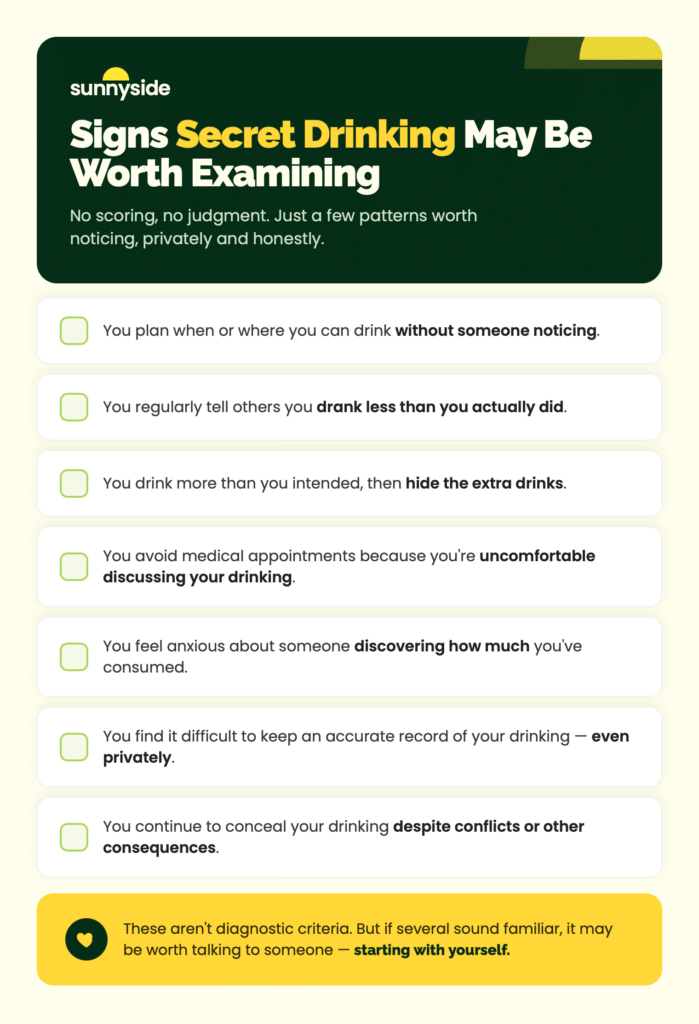
Some signs worth paying attention to include:
These behaviors aren’t diagnostic criteria on their own. Clinicians assess AUD using a broader set of symptoms, including difficulty controlling alcohol consumption, cravings, drinking despite negative consequences, tolerance, and withdrawal.
If several of these experiences sound familiar, it may be useful to review the NIAAA’s explanation of alcohol use disorder or discuss your drinking with a healthcare professional. You don’t need to determine whether you meet the criteria for AUD before asking for help.
If you’ve been concealing how much you drink, you don’t have to figure out everything about your relationship with alcohol at once. A useful place to start is getting an accurate picture of your habits and identifying what makes you want to hide them.
Try keeping an honest record of your drinking for a week or two, including drinks you wouldn’t normally tell anyone about. Record how much you have, when you drink, and what was happening beforehand.
Be mindful of serving sizes, too. A generous pour of wine or spirits may contain more alcohol than you think. The NIAAA recommends measuring your drinks and recording them as you go, rather than trying to remember everything the following morning.
You can use a notebook or a drink tracking app. The important thing is to include everything, even on days when you drink more than you intended.
After a week or two, look for patterns. Do you tend to drink more after a stressful day? Are you having drinks before social events? Does your drinking increase once everyone else has gone to bed?
You may find that your actual consumption is different from what you assumed. That’s useful information, not a reason to abandon the exercise.
Along with tracking your drinks, notice when you’re tempted to conceal them.
For example, you might be comfortable telling your partner you had wine with dinner but reluctant to mention the drinks you had while cooking. Or you might report your weekend drinking accurately while minimizing what happens during the week.
Ask yourself what you’re worried would happen if someone knew. Are you anticipating an argument? Concerned about disappointing someone? Or uncomfortable with the amount yourself?
Understanding what prompts the secrecy can help you decide what to address. You might need clearer drinking limits, a conversation about your habits, or support with cravings. In some cases, the concern may be how another person responds to your drinking rather than the drinking itself.
If you’ve noticed that you regularly exceed your intended limits, try planning for the circumstances in which that happens.
Maybe you tend to pour another glass after a difficult workday, or drink more than expected when you’re home alone. You might try measuring your pours, keeping nonalcoholic alternatives available, eating before drinking, or deciding on a limit before the evening begins.
You don’t have to tell everyone about your drinking, but talking openly with someone you trust can make it easier to understand what’s happening and decide what to do next.
That might be a friend, partner, therapist, or healthcare professional. You might start like this:
“I’ve been hiding how much I’ve been drinking, and I want to be more honest about it. I’m still figuring out what I want to change.”
You don’t need to promise that you’ll never drink again or have a complete plan ready before starting the conversation. You can explain what you’ve noticed and what kind of support would be helpful.
If you’re worried that disclosing your drinking could put you at risk of threats, coercion, or violence, prioritize your safety and seek confidential professional support instead.
Depending on your needs, support might include tracking, coaching, therapy, peer groups, or medical treatment. The NIAAA Alcohol Treatment Navigator can help you find evidence-based professional care.
A note about withdrawal: If you drink heavily or regularly, have experienced withdrawal before, or develop symptoms such as shaking, sweating, nausea, or agitation when alcohol wears off, speak with a healthcare professional before suddenly stopping or substantially reducing your drinking. Alcohol withdrawal can be dangerous and sometimes life-threatening. Seizures, hallucinations, or severe confusion require emergency medical attention.
If you’ve been hiding your drinking, you may also be wondering whether you can cut back on your own or would benefit from additional support.
Sunnyside Med is a fully online alcohol health program that combines clinical care with practical tools for changing your drinking habits. You’ll complete an online assessment and meet with a licensed clinician who reviews your health history, drinking patterns, and goals to determine whether the medication naltrexone is appropriate for you.
Naltrexone works by blocking opioid receptors involved in alcohol’s rewarding effects and can help reduce cravings and heavy drinking in people with alcohol use disorder. Eligible members receive compounded naltrexone with vitamin B6, delivered discreetly to their door.
Medication is only one part of changing your relationship with alcohol. Sunnyside Med also offers drink tracking, weekly planning, progress insights, daily reminders, text coaching seven days a week, and a private community. These resources can help you recognize patterns, work toward your goals, and get support when things don’t go as planned.
In Sunnyside’s member data, 78% of active Sunnyside Med members achieved a meaningful reduction in drinking over 12 weeks. Individual results vary.
Whether your goal is to drink less or stop drinking, Sunnyside Med can help you explore your options with clinical guidance and ongoing support.
Take Sunnyside Med’s brief online assessment to get started.
This content is for educational purposes and isn’t a substitute for medical advice. Naltrexone is a prescription medication, and a licensed clinician determines whether it’s appropriate for each individual.
Not necessarily. Hiding your drinking isn't one of the diagnostic criteria for alcohol use disorder (AUD), although it can occur alongside symptoms such as difficulty controlling how much you drink, cravings, tolerance, or continued drinking despite negative consequences. A healthcare professional can help you assess your overall drinking pattern rather than drawing conclusions from secrecy alone.
Choose a time when you're both sober and able to talk without distractions. Explain what you've been hiding, why you're bringing it up now, and what you're considering doing next. If you're concerned about your partner's reaction or safety, consider speaking privately with a therapist or another trusted professional first.
It's worth correcting the information you've previously given. Your clinician needs an accurate picture of how much and how often you drink to assess your health, potential medication interactions, and any withdrawal risks. You can say that you previously underestimated your consumption and would like to give a more accurate account. Include your typical drinking days, approximate amounts, heavier drinking occasions, and any symptoms you experience when alcohol wears off.
Ian has a family deeply hurt by alcohol, and is on his own personal journey to drink less and live his healthiest life. He’s took naltrexone daily for two years and saw incredible results. As Sunnyside Med’s first customer, he’s deeply entrenched in alcohol health and naltrexone.
When you decide over breakfast that you'll have one drink at dinner, you're making a deliberate plan. Hours...

Maybe you drink more than you want to, but the idea of taking medication for it feels like...

So, does naltrexone actually cause emotional blunting? The research doesn't give us a simple yes or no. Naltrexone...

At some point, you may have wondered whether your drinking is “bad enough” to be a problem. Maybe...