

GLP-1s and Alcohol: Can They Help With Cravings And Drinking Less?
If you regularly find yourself drinking more than you intended, cutting back can be easier said than done....

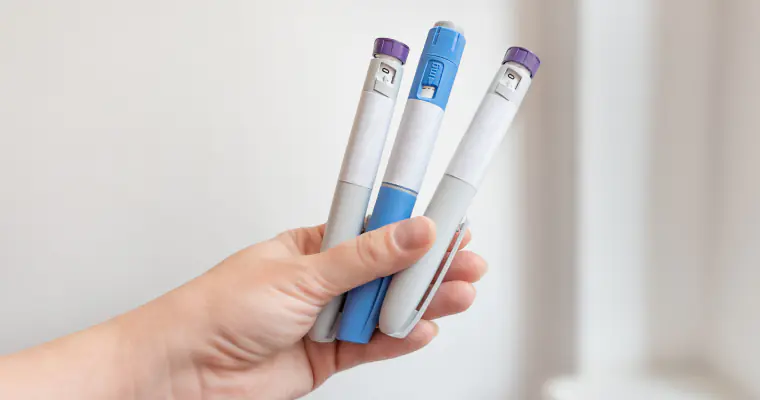
Some people taking medications like Ozempic and Wegovy have reported an unexpected change: they don’t feel like drinking as much anymore.
Some lose interest in their usual evening glass of wine. Others still enjoy drinking but find it easier to stop after one or two drinks. The persistent thoughts about alcohol that once occupied their evenings seem to have quieted down.
These experiences have attracted considerable attention from researchers. Could medications developed for diabetes and weight management also help people change their relationship with alcohol?
The early findings are encouraging, particularly for semaglutide. Several clinical trials suggest that it may reduce alcohol cravings and certain measures of drinking, although the results aren’t consistent across every outcome.
Here’s what the research tells us about GLP-1 medications and alcohol, including what scientists have learned, what they’re still trying to understand, and what the findings might mean for people who want to drink less.
GLP-1 medications were originally developed to help manage blood sugar in people with type 2 diabetes. Some are also approved for weight management. They work by mimicking glucagon-like peptide-1 (GLP-1), a hormone involved in blood sugar regulation, appetite, and digestion.
But GLP-1 receptors aren’t limited to the digestive system. They’re also found in areas of the brain involved in motivation and reward, which is where the connection to alcohol gets interesting.
Alcohol activates brain pathways involved in reinforcement, including dopamine signaling. Over time, these pathways can contribute to cravings and the desire to drink in certain situations. Animal research suggests that GLP-1 medications may influence some of these pathways, potentially making alcohol feel less rewarding.
That could help explain why some people taking these medications report experiencing less alcohol noise, or fewer persistent thoughts about drinking.
Of course, the brain’s reward system isn’t the only possible explanation. GLP-1 medications can also affect appetite and digestion, and side effects like nausea may make alcohol less appealing. Someone who’s losing weight or changing their eating habits might also find that their drinking habits change along the way.
Researchers are still working out how much of the effect comes from changes in the brain’s response to alcohol and how much might be explained by these other factors.
The most useful evidence comes from randomized controlled trials, which compare people taking a medication with those receiving a placebo.
Several trials have now investigated GLP-1 medications for alcohol use disorder (AUD). Semaglutide has produced the most encouraging results, although the studies also show why it’s important to distinguish between drinking less often, drinking less heavily, and experiencing fewer cravings.
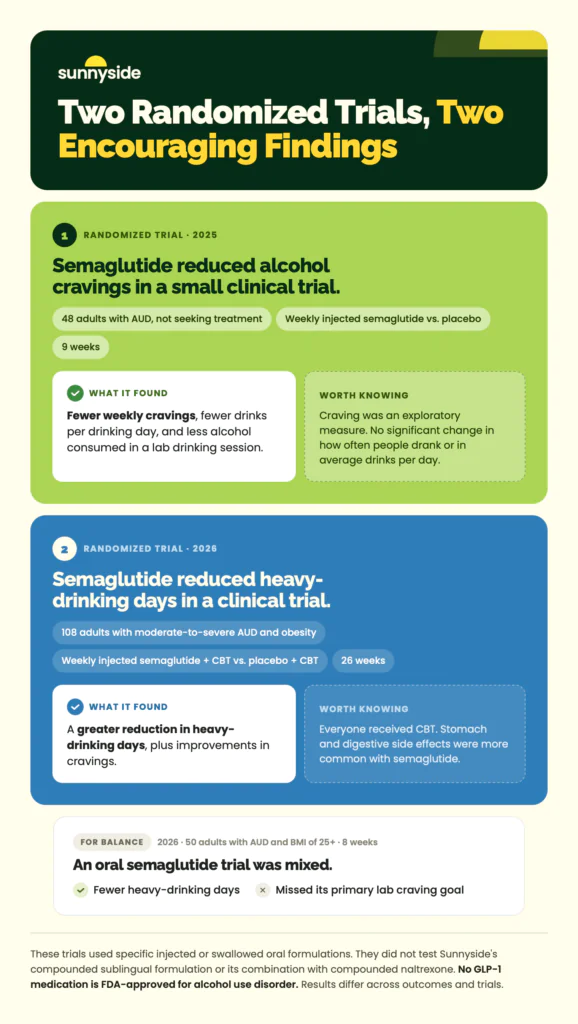
One of the first major human trials was published in JAMA Psychiatry in 2025. Researchers enrolled 48 adults with AUD who weren’t actively seeking treatment for their drinking and assigned them to receive weekly semaglutide injections or a placebo for nine weeks.
The results were promising. Participants taking semaglutide consumed less alcohol during a laboratory drinking session and had lower peak breath-alcohol concentrations. They also reported fewer weekly cravings and fewer drinks per drinking day, with reductions in heavy drinking becoming more pronounced over time.
Interestingly, semaglutide didn’t significantly change how often participants drank or their average number of drinks per calendar day.
That distinction matters. Imagine someone who usually drinks four glasses of wine on Friday night but starts stopping after two. They may still drink every Friday, but their overall drinking pattern has changed in a meaningful way.
The study was small, and its primary laboratory analysis included just 25 participants. Still, it offered some of the first randomized human evidence that semaglutide might affect alcohol consumption directly.
A larger trial published in The Lancet in 2026 offered another encouraging result.
This time, researchers followed 108 adults with moderate-to-severe AUD and obesity. Everyone received cognitive behavioral therapy (CBT) alongside either weekly semaglutide injections or a placebo.
After 26 weeks, participants taking semaglutide had experienced a greater reduction in heavy-drinking days, with an adjusted difference of 13.7 percentage points between groups. They also reported improvements in alcohol cravings, although gastrointestinal side effects were more common.
The study adds weight to the earlier findings, particularly because it followed participants for longer and included people who were actively seeking alcohol treatment.
It also raises an interesting question about how medication and behavioral support might work together. Because everyone in the trial received CBT, the results show the additional benefit of semaglutide in that treatment setting rather than what would happen with medication alone.
Researchers have also investigated whether semaglutide taken as a tablet might affect drinking.
A 2026 study in the American Journal of Psychiatry followed 50 adults with moderate-to-severe AUD and a BMI of at least 25. Participants received oral semaglutide or placebo for eight weeks.
The study didn’t meet its primary endpoint: semaglutide didn’t significantly reduce alcohol cravings triggered by cues in a laboratory.
But the everyday drinking results told a somewhat different story. Participants taking semaglutide reported fewer heavy-drinking days, fewer drinks per drinking day, and lower cravings outside the laboratory. The medication didn’t significantly reduce average drinks per day or the number of days participants drank.
This is one reason alcohol research can be tricky to interpret. Someone might report fewer cravings during an ordinary week without responding differently to alcohol-related cues during a laboratory test. And a reduction in heavy drinking doesn’t necessarily mean someone is drinking less frequently.
It’s worth looking at an earlier study that didn’t produce the same encouraging results.
In a 2022 randomized trial, researchers tested exenatide, another GLP-1 medication, in 127 adults receiving treatment for AUD. Participants also received CBT.
After 26 weeks, exenatide hadn’t significantly reduced heavy-drinking days compared with placebo. An exploratory analysis suggested that participants with obesity might have benefited more, but the overall result was negative.
The difference between these findings and the semaglutide trials is important. Medications in the GLP-1 category share certain mechanisms, but that doesn’t mean they’ll necessarily have identical effects on alcohol use.
Clinical trials aren’t the only source of evidence. Researchers have also looked at medical records to see whether people taking GLP-1 medications experience fewer alcohol-related problems.
These studies involve much larger groups, although they can’t establish cause and effect in the same way randomized trials can.
A 2024 Nature Communications study examined records from 83,825 patients with obesity and found that semaglutide use was associated with a lower risk of new or recurrent AUD diagnoses compared with several other obesity medications.
Researchers in Sweden also found fewer alcohol-related hospitalizations during periods when patients were taking semaglutide or liraglutide. A separate 2026 BMJ Open study, involving more than 40,000 adults across several treatment comparisons, linked newer GLP-1 medications to fewer alcohol-related emergency visits and hospital admissions.
Taken together, these findings suggest that the potential benefits might extend beyond the changes in cravings measured during clinical trials.
One question remains particularly interesting, though: Are GLP-1 medications directly changing people’s interest in alcohol, or are some of the benefits related to weight loss and other lifestyle changes?
A 2026 Cooper Center study offers a reason to keep investigating. Researchers initially found that GLP-1 users reduced their weekly alcohol consumption more than nonusers. But after accounting for weight changes, the difference was no longer statistically significant.
There’s also considerable variation in what people experience. In a 2026 national survey of 242 GLP-1 users who drank alcohol when they started treatment:
So while reduced drinking is a fairly common experience among GLP-1 users, it’s not universal.
If you’ve been following the research on GLP-1s and alcohol, you’ve probably noticed that semaglutide comes up a lot. There’s a reason for that: it’s been studied more extensively than other medications in the category, and several randomized trials have produced encouraging results.
But that doesn’t necessarily make it the best option for everyone; that’s because researchers haven’t conducted the large head-to-head alcohol trials needed to determine which medication works best.
Here’s where the evidence currently stands:
The formulation matters, too. Semaglutide studies involving injected or swallowed medications don’t necessarily tell us how other formulations, including compounded products, will affect drinking.
For a closer look at the individual medications, our guides to semaglutide and alcohol cravings and GLP-1s and alcohol explore the research in more detail.
Most randomized trials have focused on people with diagnosed AUD, often alongside overweight or obesity. But plenty of people interested in GLP-1s and alcohol fall outside those categories.
Maybe you’ve gotten into the habit of having several glasses of wine most evenings. You’re not necessarily looking to quit drinking altogether, but you’d like to sleep better, have more energy, or stop feeling like a drink is the default way to end your day.
This is sometimes described as gray-area drinking, and it’s an area where the research hasn’t caught up with public interest.
It’s possible that someone in this situation could notice fewer cravings while taking a GLP-1 medication for an approved indication. But the existing trials don’t tell us how likely that is, or whether the benefits would be similar to those observed in people with AUD.
One thing the research does reinforce is the value of behavioral support. Two of the randomized trials included CBT, helping participants work on their drinking habits alongside medication treatment.
There’s no established timeline for when GLP-1 medications might begin affecting alcohol cravings.
The semaglutide trials lasted approximately eight to 26 weeks, with doses generally increasing gradually. Some people report noticing changes relatively early, while others experience little or no difference.
Researchers also haven’t established how long any reduction in cravings might last after someone stops taking a medication.
A 2026 Swedish registry analysis found that GLP-1 treatment was associated with fewer alcohol-related hospitalizations during the first 182 days after treatment stopped, but not during days 183 through 364.
That’s an interesting finding, although hospitalizations aren’t the same thing as cravings. It doesn’t tell us whether someone who experiences less interest in alcohol while taking a GLP-1 will continue feeling that way after discontinuing it.
GLP-1 medications can have significant side effects, so they’re not appropriate for everyone.
Common semaglutide side effects include nausea, vomiting, diarrhea, constipation, and abdominal pain. According to the FDA prescribing information for Wegovy, other important risks include pancreatitis, gallbladder disease, dehydration-related kidney injury, severe gastrointestinal reactions, and low blood sugar when combined with certain diabetes medications.
Labeled semaglutide products also carry a boxed warning about thyroid C-cell tumors. They’re contraindicated for people with a personal or family history of medullary thyroid carcinoma or multiple endocrine neoplasia syndrome type 2 (MEN 2).
A prescribing clinician should review your medical history, current medications, and drinking habits before determining whether treatment is appropriate.
Finally, GLP-1 medications aren’t a treatment for alcohol withdrawal. If you’ve developed physical alcohol dependence, suddenly cutting back or stopping can cause dangerous withdrawal symptoms, including seizures or delirium. Speak with a medical professional before making a major change to your drinking if you’re concerned about withdrawal.
GLP-1 medications and naltrexone affect different pathways in the brain, which has raised interest in whether they might complement each other in alcohol treatment.
Naltrexone has been used to treat AUD for decades. It’s FDA-approved for the condition and works by blocking opioid receptors involved in alcohol’s rewarding effects. For some people, this makes drinking less satisfying and helps reduce cravings or heavy drinking.
GLP-1 medications may influence alcohol-related reward through different mechanisms. That makes the combination an interesting area for further research, although no published randomized human trial has established whether semaglutide and naltrexone work better together for alcohol outcomes than either medication alone.
The two medications also have different safety considerations. Naltrexone, for example, isn’t appropriate for people currently using opioids. A clinician needs to review medical history and potential contraindications before recommending either treatment.
Even when cravings become less intense, drinking habits don’t necessarily disappear.
You might reach for a drink after a stressful workday because that’s what you’ve done for years. Or maybe you automatically order another round when you’re out with friends, even if you weren’t particularly interested in having a second drink.
Those routines can stick around regardless of how much you’re craving alcohol.
Having a plan for when and how much you want to drink can make it easier to recognize when you’re slipping into autopilot. Tracking your drinks can also show you whether you’re drinking less often, having fewer drinks on a typical occasion, or making progress toward another goal.
Coaching can help you identify drinking triggers and figure out what to do differently when familiar situations come up.
Medication may make some of these changes easier, but the habits themselves still deserve attention.
The growing research on GLP-1 medications has opened up new possibilities for people who want to change their drinking. Sunnyside Med brings together medication, clinical care, and practical support to help members work toward that goal.
Sunnyside Med‘s GLP-1 + Naltrexone Program combines two separate compounded medications: semaglutide administered under the tongue and naltrexone capsules.
Semaglutide has shown promise for reducing alcohol cravings and certain drinking outcomes in clinical trials, while naltrexone has an established role in AUD treatment. The medications affect different pathways, although their combined effectiveness for alcohol outcomes hasn’t yet been established in a randomized human trial.
Sunnyside Med is a 100% online alcohol health program for people who want to drink less or quit. After completing an online assessment, eligible members receive a treatment plan from a licensed clinician, along with ongoing clinical care and access to the care team seven days a week.
The program also includes 1:1 coaching, daily habit-change tools, and drink and medication tracking through the Sunnyside app. Members can participate in live online meetings and connect with others who are working toward similar goals.
The idea is to give members support for both sides of the process: managing cravings and making lasting changes to their drinking habits.
Sunnyside Med uses compounded medications. The semaglutide trials discussed above didn’t study Sunnyside’s compounded formulation or its combination with naltrexone. Compounded medications aren’t FDA-approved, and semaglutide isn’t FDA-approved to treat AUD.
Take a brief online assessment to find out whether Sunnyside Med might be a good fit for you. A licensed clinician determines eligibility, and completing the assessment doesn’t guarantee a prescription.
This content is for educational purposes and isn’t medical advice. No GLP-1 medication is FDA-approved for alcohol use disorder. Prescription treatment requires an assessment by a qualified clinician.
Some clinical trials have found that semaglutide reduces alcohol cravings and certain measures of drinking, including heavy-drinking days and drinks per drinking day. The findings are encouraging, although the effects vary across studies and individuals.
Ozempic contains semaglutide, which has the strongest randomized human evidence for alcohol-related outcomes so far. However, researchers haven't established that Ozempic is more effective than other GLP-1 medications for reducing drinking.
Alcohol isn't universally prohibited while taking GLP-1 medications, but drinking may worsen nausea or other gastrointestinal side effects. Alcohol can also affect blood sugar, particularly for people taking certain diabetes medications. Your prescribing clinician can help you understand the risks.
No. GLP-1 medications don't treat acute alcohol withdrawal. People who are physically dependent on alcohol may need medical supervision when reducing or stopping drinking, and severe withdrawal symptoms require emergency care.
Ian has a family deeply hurt by alcohol, and is on his own personal journey to drink less and live his healthiest life. He’s took naltrexone daily for two years and saw incredible results. As Sunnyside Med’s first customer, he’s deeply entrenched in alcohol health and naltrexone.
If you regularly find yourself drinking more than you intended, cutting back can be easier said than done....

GLP-1 medications have attracted plenty of attention for their potential to reduce alcohol cravings. But if you're interested...
Tirzepatide is a prescription medication that activates two types of hormone receptors: glucagon-like peptide-1 (GLP-1) and glucose-dependent insulinotropic...
Stress drinking often develops because alcohol provides temporary relief from uncomfortable feelings. You might drink to relax after...