
Can GLP-1s Reduce Alcohol Cravings? What the Research Shows
Here's what the research tells us about GLP-1 medications and alcohol, including what scientists have learned, what they're...


If you regularly find yourself drinking more than you intended, cutting back can be easier said than done. But changing your relationship with alcohol doesn’t have to come down to willpower alone. Medication is increasingly part of the conversation, and emerging research on GLP-1 drugs is opening up promising possibilities.
Whether you’re hoping to drink a little less or quit altogether, it’s worth understanding what these medications might offer and what scientists are still working to figure out.
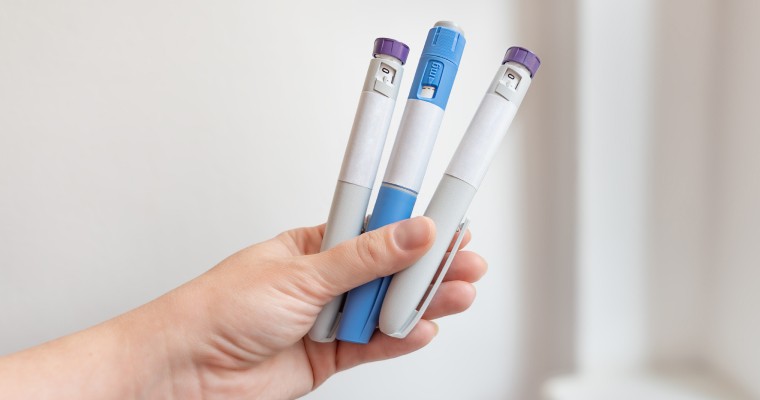
GLP-1 stands for “glucagon-like peptide-1,” which is a hormone involved in blood sugar regulation, appetite, and digestion. GLP-1 receptor agonists are medications that activate its receptors. Semaglutide is one example; Ozempic is a brand of semaglutide.
These medications became widely known through diabetes and weight-management care. Researchers are now investigating their potential in alcohol care, too.
GLP-1 receptor agonists are a medication class, while semaglutide is an individual drug within that class. Ozempic and Wegovy are branded semaglutide products with their own approved indications and prescribing information.
Tirzepatide, sold under brands including Mounjaro and Zepbound, activates both GIP and GLP-1 receptors. It is often included in everyday conversations about “GLP-1s,” but it is a different molecule. Zepbound’s prescribing information describes that dual action.
The formulation matters as well as the medication name. An injection, a swallowed tablet, and a compounded tablet used under the tongue can differ in absorption and evidence. Compounded drugs are not FDA-approved and do not undergo its premarket review for safety, effectiveness, or quality.
Early semaglutide results suggest they may. In a 2025 randomized trial involving 48 adults with alcohol use disorder (AUD), weekly semaglutide injections reduced alcohol consumption during a laboratory drinking session. Participants also drank less on days when they did consume alcohol, although this was an exploratory finding. The medication didn’t significantly reduce the number of days participants drank or their average daily alcohol consumption.
Still, the findings are promising. Semaglutide may help people drink less when they do drink, even if it doesn’t necessarily change how often they reach for alcohol. Because the study was small and focused on people with AUD, a condition characterized by difficulty controlling alcohol use despite negative consequences, more research is needed to understand whether GLP-1 medications could also benefit people who simply want to cut back.
There’s some early evidence that semaglutide may help reduce alcohol cravings. In the same 48-person trial, participants receiving weekly semaglutide injections reported fewer cravings than those taking a placebo. However, cravings were an exploratory outcome in this small study, so more research is needed to confirm the results.
It’s good to distinguish between cravings and actual drinking habits. Someone might feel less tempted to drink but still pour a glass of wine every evening out of habit. Others might find themselves drinking less even though their cravings haven’t changed much. Paying attention to both can help you understand whether a medication is making a difference.
There is encouraging evidence in specific groups that GLP-1s can help reduce heavy drinking. A 2026 trial in The Lancet studied 108 adults with moderate-to-severe AUD and obesity for 26 weeks. Every participant received cognitive behavioral therapy. The researchers found that those assigned to weekly semaglutide injections had a greater reduction in the proportion of heavy drinking days than those assigned to placebo.
This gives researchers a concrete reason to keep testing semaglutide in alcohol care. Questions remain about people without obesity, longer-term outcomes, and other formulations. Results also differ across medications: an earlier exenatide trial did not significantly reduce heavy-drinking days across the full study group.
If you’re interested in trying a GLP-1 medication to help you drink less, the first step is to talk with a licensed clinician. Be prepared to discuss your drinking habits, medical history, current medications, and what you’ve already tried. A clinician can help you understand whether medication makes sense for your goals, including options that are already FDA-approved for alcohol use disorder.
Sunnyside Med offers a 100% online GLP-1 + Naltrexone Program for people who want to cut back or quit drinking. The program combines access to two separate compounded prescriptions for eligible members with ongoing clinical care, coaching, and daily tools to help change drinking habits.
Neither compounded medication is FDA-approved, and the semaglutide studies discussed here did not test Sunnyside’s under-the-tongue tablet or this medication combination. Alcohol treatment with an FDA-approved GLP-1 product is off-label, meaning outside its approved uses.
“Early evidence surrounding GLP-1 efficacy for reducing heavy drinking is promising, especially in people with obesity,” said Dr. Hrishikesh Belani, Primary Care Physician with a focus on Substance Use Disorders and member of Sunnyside’s Clinical Advisory Board. “Alcohol treatment providers are starting to prescribe GLP-1 off-label. As with all medications targeting heavy alcohol use, the key to achieving lasting outcomes is ongoing support around the medication. This is where Sunnyside Med excels.”
Some people taking GLP-1 medications for diabetes or weight management began reporting an unexpected change: alcohol seemed less appealing. Those accounts raised a question researchers could test.
In a 2023 study, researchers analyzed Reddit discussions about GLP-1 and GLP-1/GIP medications, then separately surveyed adults with obesity who drank alcohol. Participants taking semaglutide or tirzepatide reported changes in drinking and its effects. These were self-reports, not randomized treatment results, but they helped draw attention to the question.
You’ve probably heard of “food noise,” the constant thoughts about food that some people taking GLP-1 medications say have quieted down. Now, a similar term is gaining traction: “alcohol noise.” It describes the mental energy that can go into thinking about drinking, whether that’s looking forward to your evening glass of wine, bargaining with yourself over how many drinks you’ll have, or debating whether to pour another.
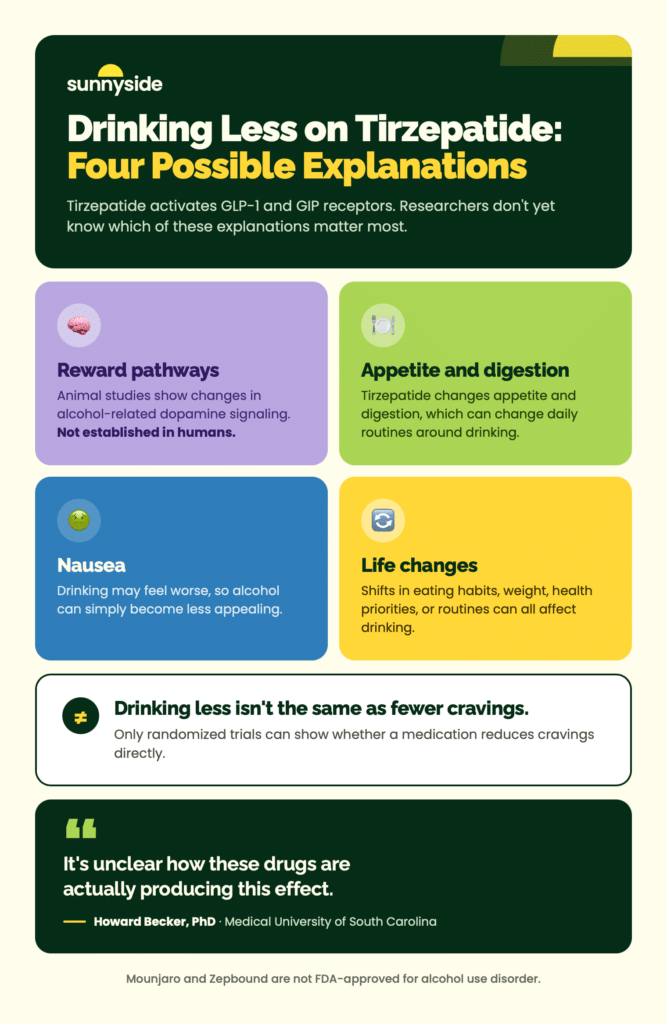
For some people, drinking takes up a surprising amount of headspace, even if they aren’t consuming large quantities of alcohol. “Alcohol noise” can be a useful way to describe that experience, although it isn’t a medical diagnosis or a standardized measure. And while some self-reported research suggests that GLP-1 medications may change people’s interest in alcohol, it’s still unclear exactly why. Changes in the brain’s reward system, nausea, established habits, and even expectations about the medication could all play a role.
GLP-1 medications do more than regulate appetite. They also act on pathways in the brain involved in reward and motivation, which has researchers wondering whether these drugs might make alcohol feel less appealing, too.
There’s some evidence to support that possibility. In a 2022 trial of exenatide, brain scans suggested that the medication reduced activity in reward-related regions in response to alcohol cues. Interestingly, though, the study didn’t find a significant reduction in heavy drinking across the full group. In other words, changes in how the brain responds to alcohol don’t necessarily translate into changes in drinking habits.
Researchers are still working to understand exactly what’s happening. GLP-1 medications can also slow stomach emptying, change appetite, and cause gastrointestinal side effects, all of which might influence someone’s desire to drink. The idea that these medications simply switch off alcohol’s rewarding effects is appealing, but the reality is likely more complicated.
Research into GLP-1 medications and alcohol is growing, but not all studies tell us the same things. Some test whether medications actually change drinking behavior, while others look for patterns in health records or ask people about their experiences.
Randomized trials offer some of the strongest evidence for whether a medication works. By assigning participants to receive either a medication or a comparison treatment, usually a placebo, researchers can more reliably determine whether the medication itself makes a difference.
Several trials have investigated GLP-1 medications for alcohol use, with mixed but promising results.
Clinical trials aren’t the only source of evidence. Observational studies examine what happens to people receiving medications as part of their usual care. They can involve much larger populations, but they can’t establish cause and effect as reliably as randomized trials.
In a health-record study by Wang and colleagues, people with obesity who used semaglutide were less likely to receive a new or recurrent AUD diagnosis. Researchers found a similar pattern among people with diabetes. However, the study tracked diagnoses rather than actual alcohol consumption, so it couldn’t tell us how much participants were drinking.
A separate Swedish study examined approximately 228,000 people with AUD. Researchers found that periods of semaglutide or liraglutide use were associated with fewer AUD-related hospitalizations. Only a subset of participants received these medications, generally for metabolic conditions, and the results don’t establish that GLP-1s are more effective than established AUD treatments such as naltrexone.
Then there are the experiences people share outside clinical settings. Anecdotal reports of losing interest in alcohol while taking GLP-1 medications have helped spark scientific interest.
“Many of my own patients [taking GLP-1s] tell me their ‘food noise’ quieted down and their interest in alcohol dropped too,” said Dr. Harsha Moole, an Internal medicine physician-scientist and the founder of FindMyDirectDoctor. “That is not a controlled trial. But it is what doctors are hearing at the bedside every week.”
A study by Quddos and colleagues analyzed social media posts and conducted a separate survey of 153 adults with obesity. The findings suggested that some people taking GLP-1 medications noticed changes in their alcohol consumption or desire to drink.
However, participants weren’t randomly assigned to treatment, and expectations, memory, and other factors can influence self-reported experiences. The findings raise interesting questions for researchers to explore rather than provide definitive answers.
Much of the current research suggests that GLP-1 medications, particularly semaglutide, may help some people reduce their alcohol consumption. But there are still important questions about who benefits most, how long the effects last, and what happens when someone stops taking the medication.
Researchers also need to determine how GLP-1s compare with existing alcohol treatments and whether different formulations produce similar results. Larger, longer trials will help clarify where these medications might fit into alcohol care.
Early research suggests that semaglutide may make alcohol less appealing for some people. In a 2025 clinical trial, adults with alcohol use disorder (AUD) who received weekly semaglutide injections reported fewer cravings than those taking a placebo. The findings help explain why researchers are increasingly interested in GLP-1 medications as a potential treatment for problematic drinking.
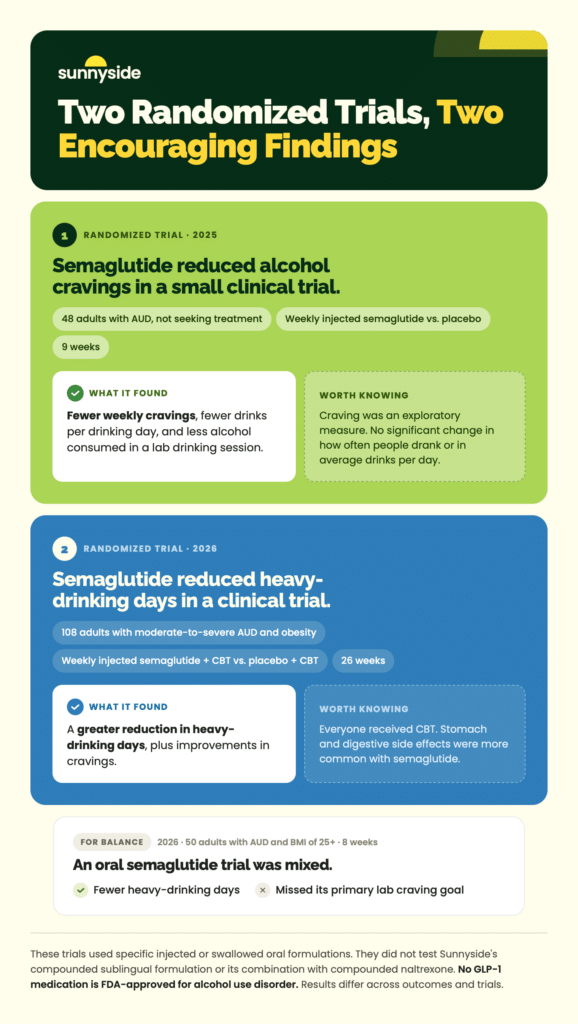
But there’s still plenty we don’t know. A 2026 trial of oral semaglutide didn’t find a significant improvement in its primary measure of alcohol cravings, suggesting that the effects may vary depending on the formulation and how cravings are measured. And because much of the research has focused on people with diagnosed AUD, it’s less clear what these findings mean for someone who simply wants to drink a little less.
Our guide to semaglutide and alcohol takes a closer look at the research, including how semaglutide compares with more established options like naltrexone.
Early research suggests that tirzepatide may help some people drink less, although the evidence is still limited. In a 2023 study, researchers surveyed 153 adults with obesity and found that those taking tirzepatide or semaglutide reported lower alcohol consumption than those who weren’t taking either medication.
The findings are promising, but the study relied on self-reported drinking habits rather than a randomized clinical trial. It’s also unclear whether tirzepatide’s dual action on GLP-1 and GIP receptors offers any additional benefit for alcohol cravings. While semaglutide has shown encouraging results in clinical trials, we can’t assume tirzepatide will have the same effects. More research is needed to understand its potential role in alcohol treatment.
There’s no blanket rule against drinking alcohol while taking a GLP-1 medication, but that doesn’t necessarily mean it’s safe for everyone. Whether you should drink depends on your medical history, other medications, and how you’re responding to treatment.
It’s especially important to talk with your prescriber if you take diabetes medications, have a history of pancreatitis, or experience significant nausea or vomiting. And if you find that alcohol suddenly seems less appealing, there’s no reason to push yourself to drink more just to see whether your tolerance has changed.
GLP-1 medications can cause digestive side effects, including nausea, vomiting, diarrhea, constipation, and abdominal pain. Alcohol may make some of these symptoms harder to manage, particularly if you’re already feeling nauseated. Severe vomiting or diarrhea can also cause dehydration, which may lead to kidney problems.
There are a few other risks worth discussing with your clinician. Low blood sugar can be a concern for people taking GLP-1 medications alongside insulin or certain other diabetes drugs, particularly sulfonylureas. Approved semaglutide medications also carry warnings about pancreatitis. Severe, persistent abdominal pain, especially if it spreads to your back or comes with vomiting, requires prompt medical attention. You can find more information in the official semaglutide prescribing information.
If you’re considering a GLP-1 medication to help you drink less, come prepared to discuss your drinking habits, medical history, and what you’re hoping to change. Some useful questions include:
Be sure to mention any medications you’re already taking, particularly opioids or diabetes medications, as well as whether you’re pregnant, breastfeeding, or planning to become pregnant. These details can affect which treatments are appropriate for you.
If you’ve spent any time browsing GLP-1 discussions on Reddit, you’ve probably come across people describing an unexpected side effect: losing interest in alcohol.
These experiences have even attracted researchers’ attention. In a 2023 analysis, researchers identified 1,580 alcohol-related posts in a larger collection of GLP-1 discussions. About 71% described reduced cravings, less interest in drinking, or unpleasant effects from alcohol.
Of course, Reddit isn’t a clinical trial. People who post about their experiences may be more likely to have noticed something unusual, and there’s no way to verify their medical histories or drinking habits. Still, the conversations offer an interesting look at how differently people respond to these medications.
Here’s what some r/Semaglutide users have shared:
These stories illustrate both the potential and the uncertainty surrounding GLP-1 medications and alcohol. Some people describe dramatic changes in their desire to drink, while others notice little difference or find that the effects fade over time. If you’re taking a GLP-1, paying attention to changes in your cravings, drinking habits, and side effects can help you have a more informed conversation with your clinician.
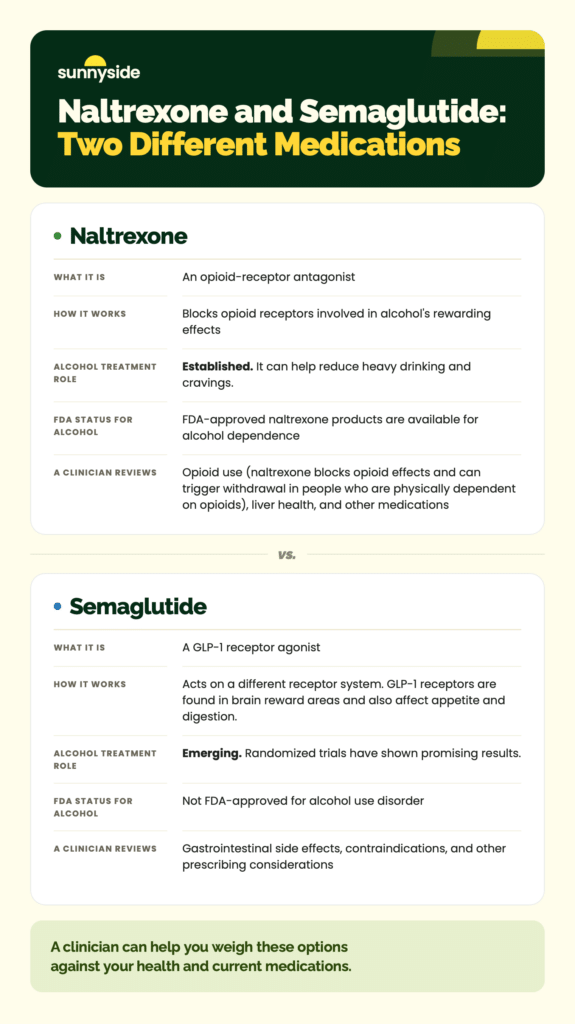
Naltrexone has an established role in alcohol treatment. It blocks opioid receptors involved in alcohol’s rewarding effects and can help reduce heavy drinking and cravings. FDA-approved naltrexone products are available for alcohol dependence; GLP-1 medications do not have an FDA-approved alcohol indication.
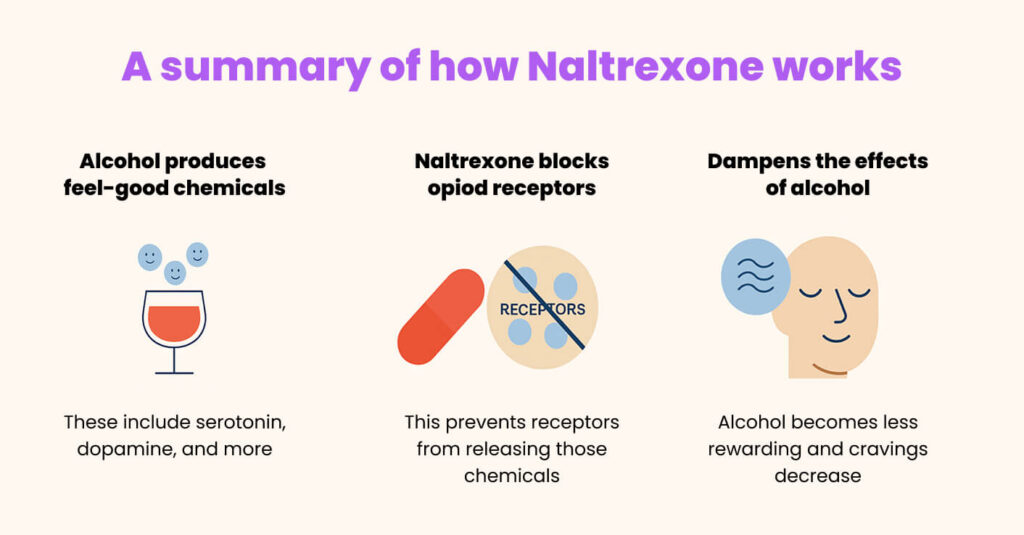
Semaglutide brings a newer research direction, acting on a different receptor system. Naltrexone’s established alcohol-treatment role and semaglutide’s emerging evidence are distinct reasons to discuss medication with a clinician. The studies discussed here do not establish that semaglutide is better than naltrexone or that taking both produces a stronger result.
A clinician can help you weigh those options against your health and current medications. Naltrexone requires careful review of opioid use because it blocks opioid effects and can trigger withdrawal in people who are physically dependent on opioids. Semaglutide has its own gastrointestinal side effects, contraindications, and prescribing considerations.
Our guides to naltrexone and other medication options can help you prepare for that conversation.
Even when the urge to drink changes, the situations around drinking remain. A familiar routine may still begin when you close your laptop. Friends may still order another round. You may still need a way to unwind that does not start with a drink.
Those are useful places to work on behavior alongside medication. You might plan before going out, track your drinks, or talk with a coach about the moment a limit became difficult to follow. Tracking gives you something specific to bring to a clinical review: whether drinking days, amounts, or cravings are changing.
In a podcast conversation about food noise and alcohol noise, Sunnyside co-founder Nick Allen described the importance of human connection in the program: “So we like to think that people come for that kind of planning and tracking loop, but they stay for the community.”
Allen was describing Sunnyside’s broader approach before the GLP-1 + Naltrexone Program launched. But the same philosophy applies: Alongside tools for planning and tracking, people need support from others who understand what they’re working toward.
Sunnyside’s position is that wanting to change your drinking is enough reason to ask for support. The growing interest in GLP-1s is an opportunity to make that conversation easier to start. Clinical care, help practicing new habits, and people who understand can all play a role as you figure out what change looks like for you.
If you want alcohol to take up less space in your life, the Sunnyside Med GLP-1 + Naltrexone Program gives you a place to work on that goal with medical and everyday support. It’s a 100% online alcohol-health program for eligible adults who want to drink less or quit, with prescribed medication, ongoing clinical care, and tools you can use each day.
A licensed provider reviews your health and decides whether the program is appropriate. Eligible members receive separate compounded semaglutide and naltrexone prescriptions within one coordinated care plan. Your clinical team helps with treatment questions and follow-up, while coaching and daily app tools help you work on the routines around drinking.
The program offers compounded semaglutide as a dissolvable tablet used under the tongue according to your prescribed care plan. Your clinical team explains the prescription, helps with treatment questions, and reviews how you are doing.
This tablet is not Ozempic or Wegovy. The clinical research in this article studied injected or swallowed semaglutide, not Sunnyside’s compounded under-the-tongue formulation, so those findings do not establish its effectiveness. Your clinical team can discuss the treatment rationale, uncertainties, side effects, and follow-up with you.
Naltrexone adds an established alcohol-treatment approach to the program. The medication blocks opioid receptors involved in alcohol’s reward response; Sunnyside provides it as a separate compounded capsule. Your clinician guides the prescription and reviews opioid use, liver health, and other medications.
Both of Sunnyside’s prescribed medications are compounded and are not FDA-approved as finished products, although naltrexone itself is an FDA-approved treatment for alcohol dependence. The exact medication combination has not been established as more effective than either medicine alone. (Our Sunnyside Med program starter guide explains the medications and support included.)
Use the Sunnyside app to turn a drinking goal into something you can work on each day. Plan your week, log drinks and medication, use daily routines and reminders, and review dry days and trends. Before Friday dinner, for example, you can decide what you want the evening to look like; afterward, you have a record to discuss with your coach.
You also have real people to turn to. One-on-one coaching gives you space to work through goals, routines, and occasions when you drank more than intended. Your licensed clinical team handles treatment and side-effect questions. In the community and live online member meetings, you can ask questions, share progress, or listen to people working on similar changes.
You can contact the Sunnyside team seven days a week for encouragement, practical program questions, and help reaching the right person. Clinical care continues after prescribing, with your provider guiding medication decisions.
Start with Sunnyside Med’s brief online assessment to explore support for drinking less or quitting. A licensed clinician will review your information and determine whether medication is appropriate.
GLP-1 medications are not FDA-approved to treat alcohol use disorder. Early semaglutide research is promising but inconclusive, and the studies discussed here did not test Sunnyside Med’s compounded under-the-tongue formulation or its combination with naltrexone. Both medications prescribed through Sunnyside Med are compounded and are not FDA-approved. This article is for informational purposes only and does not replace professional medical advice.
Among the medications covered here, semaglutide has the most developed clinical trial evidence in adults with AUD. The tirzepatide findings discussed here come primarily from self-reports. For your own care, the more useful question is which findings apply to the formulation being considered and to your health—not simply which medication has the most studies.
Look for a program that supports the everyday work of drinking less as well as the prescription. That includes a licensed clinical assessment, follow-up for medication and side-effect questions, a clear explanation of the formulation and costs, and practical tools and human support. Sunnyside Med brings these together through ongoing clinical care, daily planning and tracking, one-on-one coaching, and community.
The promising results include reductions in drinking, not just abstinence. Trials have measured fewer drinks per drinking day and fewer heavy-drinking days. However, many participants had AUD, and some also had obesity, so these findings don't predict results for everyone hoping to cut back. Tell your clinician whether your goal is moderation or sobriety so you can discuss an appropriate treatment approach.
Yes, a clinician may prescribe both within an individualized care plan. Sunnyside Med's program offers eligible members separate compounded semaglutide and naltrexone prescriptions, with one clinical team guiding care. However, the combination has not been established as more effective than either medication alone.
Possibly. Ozempic contains semaglutide, which has shown promise for reducing alcohol cravings in early clinical research. In a 2025 randomized trial, adults with AUD who received weekly semaglutide injections reported fewer cravings than those receiving a placebo. However, Ozempic is FDA-approved for specific medical indications, not alcohol treatment.
Sunnyside Med spreads the cost of each three-month program across three payments. Its published programs list the Sunnyside Med GLP-1 + Naltrexone Microdose Program at $199 per installment and the Sunnyside Med GLP-1 + Naltrexone Full Program at $299 per installment. Both include medication when prescribed, ongoing clinical care, coaching, app tools, and community support.
Ian has a family deeply hurt by alcohol, and is on his own personal journey to drink less and live his healthiest life. He’s took naltrexone daily for two years and saw incredible results. As Sunnyside Med’s first customer, he’s deeply entrenched in alcohol health and naltrexone.
Here's what the research tells us about GLP-1 medications and alcohol, including what scientists have learned, what they're...

GLP-1 medications have attracted plenty of attention for their potential to reduce alcohol cravings. But if you're interested...
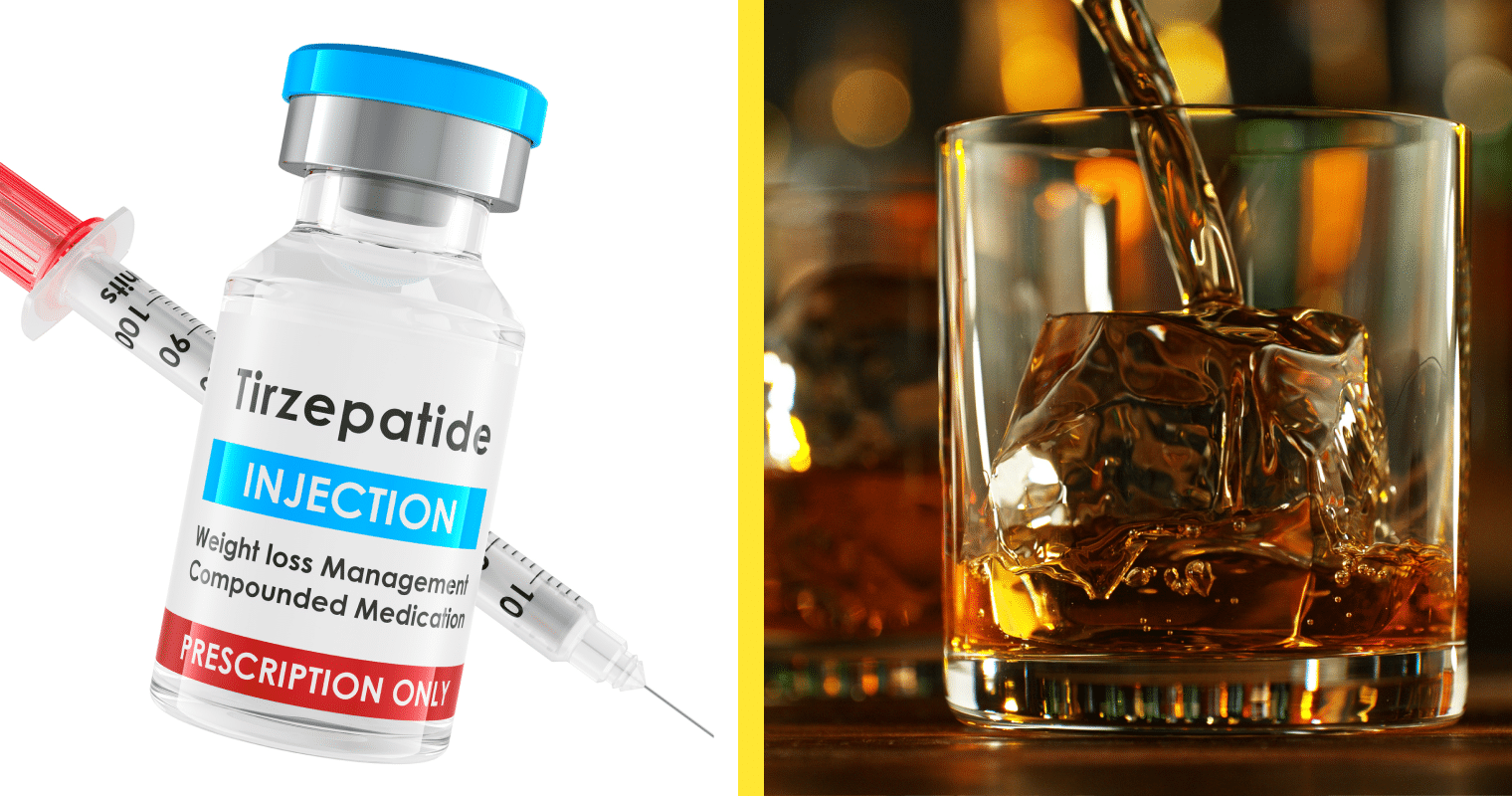
Tirzepatide is a prescription medication that activates two types of hormone receptors: glucagon-like peptide-1 (GLP-1) and glucose-dependent insulinotropic...
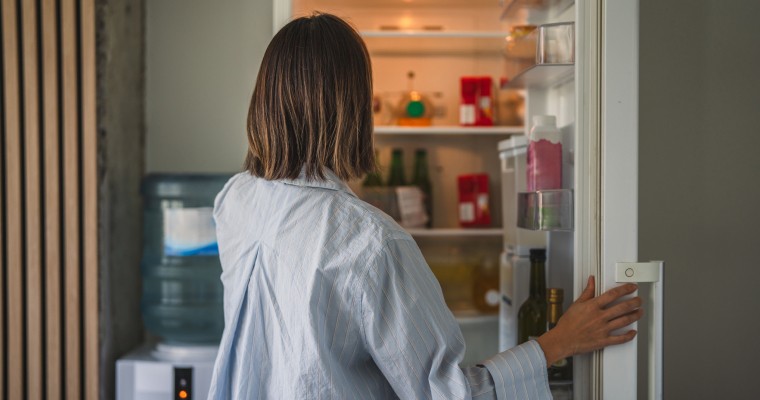
Stress drinking often develops because alcohol provides temporary relief from uncomfortable feelings. You might drink to relax after...