Last Updated on August 16, 2026

If you’re looking for a medication to stop drinking or drink less, naltrexone is one of the most well-studied options. This prescription medication reduces alcohol’s rewarding effects and can help reduce cravings and heavy drinking. Unlike some medications for alcohol use, naltrexone can support moderation as well as abstinence, so you don’t necessarily have to quit drinking completely to benefit.
Maybe you’ve tried setting a two-drink limit, taking weeknights off, or promising yourself you’ll call it a night earlier. You know what you want to do. The frustrating part is how much harder that plan can become once you actually start drinking.
Medication can help with that part of the equation.
Naltrexone has been FDA-approved for alcohol use disorder for decades, and you don’t have to wait until drinking has seriously disrupted your life to ask a healthcare provider about it. In fact, research increasingly supports naltrexone for people who want to cut back, including people whose goal is moderation rather than complete abstinence.
At Sunnyside Med, we don’t think that changing your relationship with drinking has to be an all-or-nothing decision. Naltrexone can help turn down some of the pull alcohol has on your brain, while behavioral tools can help you change the habits that have built up around it.
“Sunnyside provides scaffolding around the medication to allow folks to be as successful as possible,” said Nick Allen, the co-founder and CEO of Sunnyside.
Here’s how naltrexone works, what the research tells us, and what to know if you’re considering medication to stop drinking and/or to drink less.
How Does Naltrexone Help You Drink Less?
Naltrexone is a prescription medication that belongs to a class of drugs called opioid receptor antagonists. It works by blocking opioid receptors involved in alcohol’s reward pathway, which can make drinking feel less rewarding and reduce the urge to keep going.
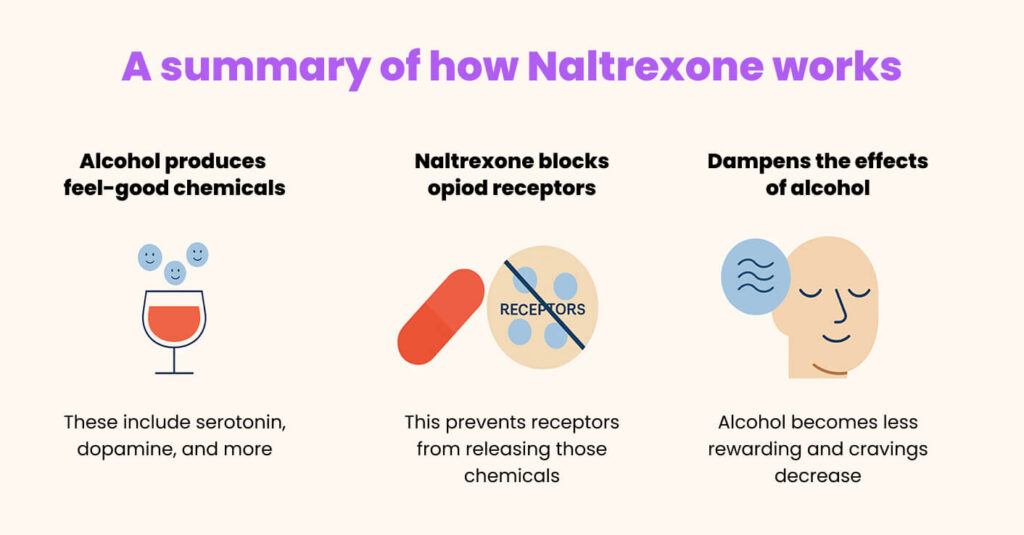
In other words, naltrexone doesn’t make alcohol physically impossible to drink, and it doesn’t make you sick if you have a drink. Instead, it can turn down the reinforcement that makes one drink lead so easily to another.
That distinction is especially useful if your goal is moderation. Maybe you don’t want to give up wine with dinner or drinks with friends. You just want it to feel easier to stop when you planned to stop. Naltrexone can be used by people who want to cut back, not only those whose goal is complete abstinence.
The medication itself isn’t new. Oral naltrexone has been FDA-approved for alcohol use disorder since 1994, and its effects have been studied for decades. If you want to go deeper into the science, here’s a closer look at how naltrexone works for alcohol.
How Is This Medication to Stop Drinking Taken?
Naltrexone is available as an oral medication as well as a longer-acting injection. Sunnyside Med uses daily oral naltrexone, which makes it possible to incorporate the medication into your regular routine at home.
Unlike medications that are intended to help people maintain complete abstinence, naltrexone can be used as part of a plan to reduce drinking. It doesn’t create an aversive reaction to alcohol, so taking it doesn’t mean that drinking will suddenly make you sick.
That also means naltrexone isn’t a substitute for paying attention to how much you drink. You can still become intoxicated while taking it, and alcohol can still impair your judgment, coordination, and reaction time. If you continue drinking, the usual risks of drinking still apply.
At Sunnyside Med, the medication is paired with tools designed to help you change the behavioral side of drinking, too. You can track your drinks, set weekly goals, identify patterns, and get support as you figure out what drinking less looks like in your actual life. A licensed clinician determines whether naltrexone is appropriate for you and provides guidance on how to take it.
What Does the Research Say About Naltrexone?
Naltrexone has been studied for decades, and there’s strong evidence that it can help people change their drinking.
A large 2023 systematic review and meta-analysis looked at 118 clinical trials involving more than 20,000 participants. Researchers found that oral naltrexone was associated with better alcohol-related outcomes than placebo, including a lower likelihood of returning to heavy drinking.
The landmark COMBINE study also found that participants who received naltrexone with medical management had better drinking outcomes than those who did not receive the medication. Behavioral support was effective, too, reinforcing an idea that remains important today: medication and behavior change can both play a role in helping people drink less.
And you don’t necessarily need to have the most severe drinking patterns to benefit. Research has also explored naltrexone in people who drink heavily but don’t meet criteria for alcohol dependence, making it particularly relevant for people who feel somewhere in the gray area between “my drinking is fine” and “I need to quit completely.”
That’s part of what makes naltrexone different from the way many people imagine a medication to stop drinking. The goal doesn’t have to be making alcohol completely off-limits. For some people, it’s about making drinking easier to control.
Side Effects and Limitations of Naltrexone
Like any prescription medication, naltrexone may cause side effects, though they don’t happen for everyone. Common naltrexone side effects can include nausea, headache, dizziness, tiredness, and sleep changes. Nausea is one of the better-established side effects in clinical research, but side effects vary from person to person.
Naltrexone also isn’t appropriate for everyone. Because it blocks opioid receptors, it can interfere with opioid medications and can trigger withdrawal in someone who is physically dependent on opioids. Your clinician needs to know about any medications you take, including opioid-containing pain or cough medications, before you start naltrexone.
Liver health is another consideration. Naltrexone is processed by the liver, so your clinician will review your health history and determine whether it’s appropriate for you.
Importantly, naltrexone does not prevent intoxication. You can still get drunk while taking it, and drinking can still affect your coordination, judgment, and reaction time. The medication can help change the reward and craving side of drinking, but it doesn’t cancel out alcohol’s other effects on your body.
That’s why getting naltrexone through a licensed healthcare provider matters. With Sunnyside Med, a clinician will review your medical history, medications, drinking goals, and other factors to determine whether naltrexone is a safe option for you.
Why Medication Alone Isn’t Enough
Naltrexone can make it easier to drink less, but it can’t decide what you want your Friday night to look like. It won’t automatically change the habit of pouring a drink after work, help you plan for a wedding, or show you which situations tend to throw your goals off track.
That’s where behavior change comes in.
At Sunnyside Med, naltrexone is paired with tools designed to help you work on the habits around drinking, too. You can track your drinks and dry days, set weekly goals, see your progress over time, and get support from human coaches and the Sunnyside community.
“The buzz is different for me on naltrexone,” said one Sunnyside Med member. “I feel like the naltrexone gives me back my ‘brake pedal’ on drinking.”
The goal isn’t to hand all the work over to a pill. It’s to make the work you’re already trying to do feel more manageable. Medication can address some of the biological pull of alcohol, while tracking, planning, and support help you build habits that make it easier to drink less alcohol over time.
Is Oral Naltrexone Right for You?
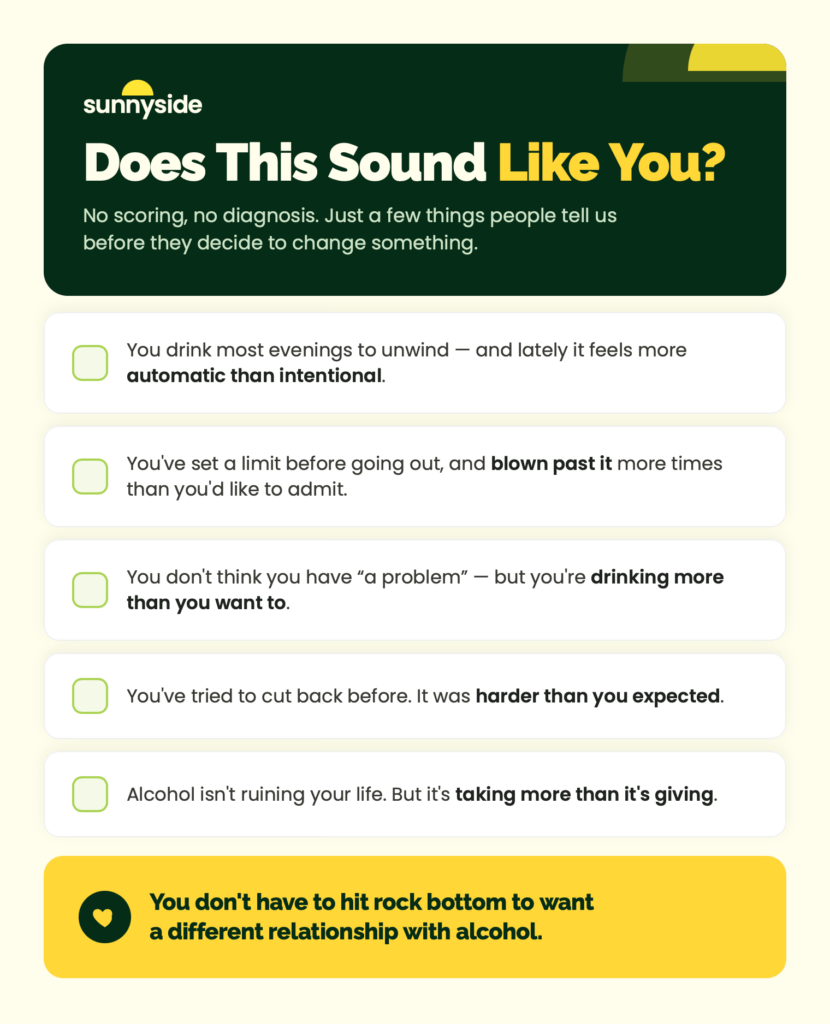
You don’t have to wait until alcohol has caused major problems in your life to ask about medication.
If you regularly drink more than you planned, struggle to stop once you start, or find that cravings keep overriding the goals you set for yourself, it may be worth talking with a healthcare provider about naltrexone. That can be true whether your goal is to stop drinking or simply gain more control over it.
Naltrexone isn’t appropriate for everyone. A clinician will consider your medical history, current medications, liver health, and any opioid use when determining whether it’s a safe and appropriate option for you.
You also don’t necessarily need to find a local specialist. You can get naltrexone online through telehealth after an evaluation with a licensed clinician.
With Sunnyside Med, you complete an online assessment that a licensed clinician reviews to determine whether naltrexone is appropriate for you. If you qualify, your medication is delivered to your home, and you can use Sunnyside’s tracking, coaching, community, and other tools alongside it.
For many people, considering a medication to stop drinking doesn’t mean things have gotten out of control. It can simply be another way to make changing your relationship with alcohol more manageable.
Are There Other Medications to Help You Stop Drinking?
Naltrexone isn’t the only prescription medication used to help people change their drinking. The FDA has approved three medications for alcohol use disorder: naltrexone, acamprosate, and disulfiram.
They work in different ways, so the best option depends partly on what you’re trying to accomplish.
Acamprosate is primarily used to help people maintain abstinence after they’ve stopped drinking. It works differently from naltrexone and doesn’t cause an unpleasant reaction if alcohol is consumed.
Disulfiram takes another approach. It interferes with the way your body processes alcohol, causing unpleasant physical symptoms if you drink while taking it. Because of that, it’s intended to support abstinence rather than moderation.
There are also medications that clinicians sometimes prescribe off-label for alcohol use disorder. But if you’re looking specifically for a medication to help you drink less rather than making alcohol completely off-limits, naltrexone has an important advantage: drinking doesn’t trigger an intentionally unpleasant reaction.
Sunnyside Med Is the Perfect Companion for Drinking Less
If you’re looking for a medication to stop drinking or simply make it easier to cut back, Sunnyside Med brings medication and behavior change together.
A licensed clinician can determine whether naltrexone is appropriate for you, while the Sunnyside app helps you track your drinking, set realistic goals, and get support from human coaches and a community of people working toward similar changes.
See if Sunnyside Med is right for you with a brief quiz.
Frequently Asked Questions (FAQ): Medication to Stop Drinking
Can you still drink while taking naltrexone?
Yes. Naltrexone does not cause the same alcohol-aversive reaction as disulfiram, so you don’t necessarily need to stop drinking before using it for alcohol reduction. However, naltrexone does not prevent intoxication. Alcohol can still impair your judgment, coordination, and reaction time while you’re taking it.
How long does it take for naltrexone to work for alcohol?
Naltrexone begins blocking opioid receptors after you take it, but changes in cravings and drinking patterns may be more gradual. Your experience can vary, so your clinician can help you assess how the medication is working over time.
Does naltrexone make you stop wanting alcohol completely?
Not necessarily. Naltrexone can help reduce cravings and make alcohol feel less rewarding, but the experience varies from person to person. For some people, the biggest change is simply that stopping after one or two drinks feels easier than it did before.
What are the most common side effects of naltrexone?
Common naltrexone side effects include nausea, headache, dizziness, tiredness, and sleep changes. Not everyone experiences them, and your healthcare provider can help you decide what to do if side effects are bothering you.
Do you need to have alcohol use disorder to get naltrexone?
A licensed healthcare provider determines whether naltrexone is medically appropriate based on your individual situation. You don’t need to identify as having a severe drinking problem before asking about options for cutting back. If you regularly drink more than you intend or find alcohol harder to control than you’d like, that conversation may be worth having.
Naltrexone is a prescription medication. This content is educational and should not be taken as medical advice. A licensed clinician reviews every Sunnyside Med application.