
Last Updated on July 23, 2026
Naltrexone can often be prescribed alongside antidepressants, including SSRIs and SNRIs, because the medications work through different primary mechanisms and aren’t known to directly interfere with one another. Clinical research supports this combination in many people, although treatment should always be individualized by a healthcare professional.
You’re thinking about drinking less and considering naltrexone as an option to help. But you’ve also finally found the right antidepressant for you—whether it’s Lexapro (escitalopram), Zoloft (sertraline), Prozac (fluoxetine), or another medication—and you’re worried that adding naltrexone could undo the progress you’ve made.
It’s a reasonable question. Many people worry that treating one issue will make the other worse.
Fortunately, naltrexone and commonly prescribed antidepressants work through different primary mechanisms, and there are no well-established direct drug interactions between naltrexone and SSRIs or SNRIs. Researchers have also studied these medications together in people living with both depression and alcohol use disorder.
The more important conversation isn’t whether the medications cancel each other out. It’s how alcohol itself affects mood, how reducing alcohol can change the way you feel, and what to expect if you take both medications together.
Is It Safe to Take Naltrexone If You Take Antidepressants?
For many people, yes. Naltrexone can often be prescribed alongside SSRIs and SNRIs, although the decision depends on your medical history, current medications, and a clinician’s judgment.
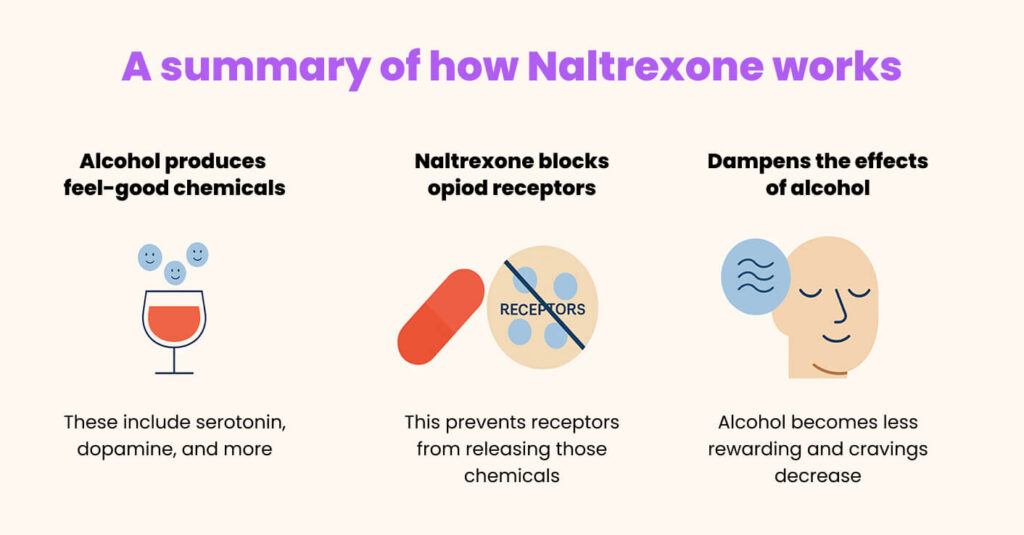
The two medications work through different primary mechanisms. Naltrexone reduces alcohol’s rewarding effects by blocking opioid receptors involved in the brain’s reward system, while antidepressants such as SSRIs and SNRIs primarily affect serotonin or norepinephrine signaling. Because they target different systems, they aren’t known to directly interfere with one another’s intended effects.
Naltrexone also isn’t metabolized through the cytochrome P450 enzyme system responsible for many medication interactions. That reduces the potential for certain drug interactions, although it doesn’t guarantee that every medication combination is appropriate.
The major exception is opioids. Naltrexone blocks opioid medications and can trigger sudden withdrawal in people who are physically dependent on them. If you take prescription opioids or use opioids in any form, talk with your healthcare provider before starting naltrexone.
Like any prescription medication, naltrexone isn’t right for every person. But for many people taking antidepressants, it’s a well-studied option that can be prescribed safely under medical supervision.
What the Research Shows About Naltrexone and Antidepressants
Several clinical trials have studied naltrexone alongside antidepressants in people with alcohol use disorder, including many with co-occurring depression.
One study, published by Pettinati and colleagues in 2010, followed 170 people with both depression and alcohol dependence. Participants taking sertraline plus naltrexone had better drinking outcomes than those taking either medication alone.
More recently, a 2025 meta-analysis by Mandaji and colleagues concluded that the strongest evidence for combination therapy is with sertraline plus naltrexone in people living with both alcohol use disorder and depression.
Researchers have also looked at safety. A 2012 trial by Petrakis and colleagues combined naltrexone with antidepressants in veterans with alcohol use disorder and PTSD without identifying a new safety signal, although the study population was narrow and mostly male.
How Naltrexone Interacts with Common Antidepressants
The details depend on which antidepressant you’re taking, but the overall picture is reassuring. Here’s a quick overview.
(Remember: Always disclose anything you’re taking to your provider, including prescriptions, over-the-counter medications, vitamins, and recreational substances.)
Naltrexone and SSRIs (Zoloft, Lexapro, Prozac, Celexa)
SSRIs are the most commonly prescribed antidepressants, and there are no well-established direct interactions between SSRIs and naltrexone. Sertraline (Zoloft) is the best-studied combination and was the antidepressant used in the Pettinati trial.
Naltrexone and SNRIs (Effexor, Cymbalta)
SNRIs such as venlafaxine (Effexor) and duloxetine (Cymbalta) affect serotonin and norepinephrine. They haven’t been studied in combination with naltrexone as extensively as SSRIs, but there isn’t an established contraindication to prescribing them together.
Naltrexone and Wellbutrin
Wellbutrin (bupropion) is sometimes confused with Contrave, but they aren’t the same medication. Contrave is a prescription weight-loss drug that combines naltrexone and bupropion in fixed doses for obesity management. Taking Wellbutrin and naltrexone as separate prescriptions is not the same thing.
Even so, make sure your prescriber knows you’re taking both medications, since bupropion has its own precautions, including an increased risk of seizures in some people.
Will Naltrexone Affect How You Feel Day-to-Day?
Depression and anxiety have both been reported by people taking oral naltrexone, but they’ve also been reported in people taking placebo. Current FDA labeling doesn’t establish that naltrexone causes depression, and anxiety was uncommon in clinical studies of oral naltrexone.
That said, it’s still worth paying attention to how you feel after starting any new medication. If you notice meaningful changes in your mood, anxiety, sleep, or energy, let your clinician know.
Alcohol itself can worsen mood symptoms and make it harder to tell how well an antidepressant is working. After starting naltrexone, some people notice their mood improves, while others experience a temporary adjustment period. Either way, the first couple of weeks are a good time to check in with your care team if something doesn’t feel right.
Your Clinician Needs the Complete Picture
Treating anxiety and depression and reducing your drinking don’t have to be competing goals, but your healthcare provider needs to know about both.
Tell your clinician every medication you take, including the name and dose of your antidepressant, as well as any opioid medications. Opioids are the most important safety consideration with naltrexone because the medication blocks their effects and can trigger withdrawal in people who are physically dependent.
It’s also worth asking about timing. Some people find that taking naltrexone and their antidepressant at different times of day helps minimize overlapping side effects when they’re first getting started.
Starting Naltrexone Safely and Responsibly with Sunnyside Med
If you’re already taking medication for your mental health, adding treatment for your drinking can be another proactive step toward feeling better overall.
Sunnyside Med combines clinician-guided compounded naltrexone with:
- Daily reminders: Get daily nudges to stay up to date with your medication, with personalized reminders about goals and progress.
- Coaching: Text with a real human coach when you need extra support, 7 days a week. Our peer coaches have been on the journey, too.
- Community: Give and get support in the vibrant Sunnyside community, a place to cultivate a positive mindset every day.
- Progress: Whether it’s sleep, dry days, or drinks cut, Sunnyside shows you your progress in the terms that matter most to you.
- Resources: Access videos, exercises, and readings to help you get the most out of your medication and ingrain new habits over time.
- Drink tracking: Track your drinks and dry days via text message or in the app to get real-time feedback about where you are relative to your goals.
Among active Sunnyside Med members with at least 50% app engagement, 78% report a meaningful reduction in drinking over 12 weeks. (Individual results vary.)
“I prescribe naltrexone regularly as a safe, effective way to curb heavy drinking,” says Sunnyside medical advisor Dr. Hrishikesh Belani. “I highly recommend pairing with a behavioral health program like Sunnyside.”
If you’re wondering whether naltrexone fits with your current antidepressant, you don’t have to figure it out on your own. Take a three-minute quiz to find out if naltrexone—and Sunnyside Med—might be right for you.
Frequently Asked Questions (FAQ): Naltrexone and Antidepressants
Is it safe to take naltrexone with antidepressants?
For many people, yes. There are no well-established direct interactions between naltrexone and most commonly prescribed antidepressants, including SSRIs and SNRIs. Whether the combination is appropriate depends on your medical history, current medications, and your clinician’s judgment.
What’s the difference between naltrexone and Contrave?
Naltrexone is a medication used to help reduce alcohol’s rewarding effects. Contrave is a prescription weight-loss medication that combines naltrexone and bupropion (Wellbutrin) in fixed doses for a different purpose. Taking naltrexone and Wellbutrin as separate prescriptions is not the same as taking Contrave.
Do I need to stop my antidepressant before starting naltrexone?
Usually not, but speak to your doctor about your particular situation. Naltrexone is often prescribed alongside antidepressants, and stopping an antidepressant that’s working can carry its own risks. Don’t make changes to your medication on your own—talk with your prescribing clinician first.
How long do naltrexone side effects last if I’m already taking an antidepressant?
Many common side effects, such as nausea, improve during the first week or two as your body adjusts, although the timeline varies from person to person, and not everyone experiences side effects.
“I’m typically not one to turn to a med as a magic fix, but it certainly has helped,” said one Sunnyside Med member. “Once you can get past the nausea, you’ll find you have less cravings and less urge to binge.”
If you notice meaningful changes in your mood, anxiety, sleep, or energy after starting naltrexone, let your clinician know so they can decide whether adjustments are needed.
Naltrexone is a prescription medication. This content is educational and should not be taken as medical advice. A licensed clinician reviews every Sunnyside Med application.
Sunnyside Is the Perfect Companion for Your Mindful Drinking Journey
Sunnyside is the #1 mindful drinking app. Since 2020, we’ve been honing our harm-reduction approach and have helped over 400,000 people cut out 22 million drinks from their baseline habits. 96.7% of our members report success in drinking less, and in a third-party study, our approach was demonstrated to reduce weekly drinking by 33% after 12 weeks.
Think of Sunnyside as the front door for anyone who wants to change their relationship with alcohol. If you want to drink less, we can help you get there. If you want to eventually quit, but want to take a gradual approach, we can make that happen.
When you sign up for Sunnyside, you’ll take a quick quiz, then hop into the app. It’s as simple and quick as that.
We’ll give you weekly plans to gradually reach your drinking goals, and we’ll provide nudges, coaching, exercises, and advice to help you get there.
We have daily tracking and journaling tools, including the option to chat with a real human coach at any time. And our state-of-the-art analytics help you track your progress over time.
Sunnyside is a full-featured mindful drinking app. Naltrexone will actively help you reduce cravings around alcohol, and Sunnyside will help you understand your triggers and patterns, giving you a healthy system for habit change.
If you choose to stop taking naltrexone, the Sunnyside app remains a tool you can keep using to maintain your healthy habits.
Everyone who signs up for Sunnyside gets a free 15-day trial. After that, the subscription is $8.25/month.
Whether you’re currently taking naltrexone or just doing some research on alcohol moderation, we’d love to have you sign up for our 15-day free trial today.