
Why Naltrexone Is Not Addictive
Naltrexone is not addictive or habit-forming. It blocks opioid receptors rather than activating them, so it doesn't produce...

Your first naltrexone dose experience may be surprisingly uneventful. Some people notice mild side effects or an early change in cravings, while others feel nothing different at all. Naltrexone starts working quickly in the body, but noticeable changes can take time (and every person’s experience is different), so your first day isn’t necessarily an indicator of how well the medication will work for you.
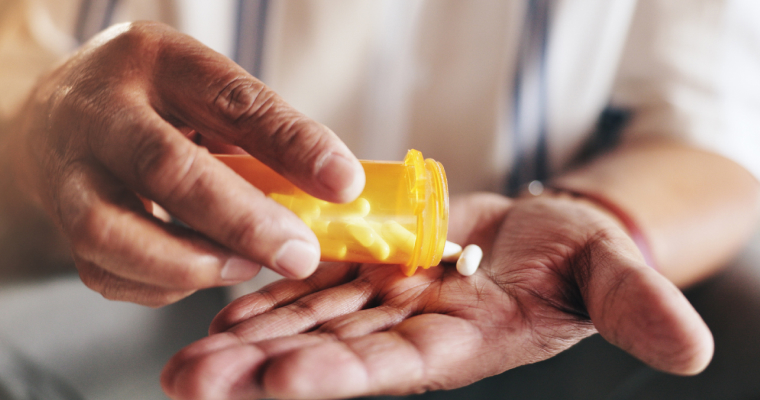
You’ve finally got the prescription. The pill is in your hand. And even if you’re ready to start naltrexone, it’s normal to wonder what happens next. Will you feel sick? Will you notice a difference right away? Will the first night feel really different than your normal?
For many people, the answer to that last question is no. Your first naltrexone dose is the beginning of a process, not a test of whether the medication works for you. Some people notice a change quickly, while others need days or weeks before cravings or drinking start to feel different.
Don’t read too much into day one. Feeling nothing doesn’t mean naltrexone isn’t working, and a few early side effects don’t necessarily predict what the rest of your experience will be like.
Give your first day some breathing room. If possible, start when you don’t have a packed schedule or a long drive ahead of you. That way, if you feel a little off, you have room to rest and see how your body responds.
Then, keep your expectations loose. You may notice something after your first naltrexone dose, or you may feel completely normal. Neither outcome tells you much about how well naltrexone will work for you over time.
Your clinician should review your medical history before you start naltrexone and give you recommendations accordingly, but a few precautions are especially important:
If you’re not sure whether one of these applies to you, ask your prescriber or your Sunnyside Med care team before taking your first dose.
Naltrexone is absorbed quickly, reaching peak levels in the blood within about an hour. It works by blocking opioid receptors involved in alcohol’s rewarding effects.
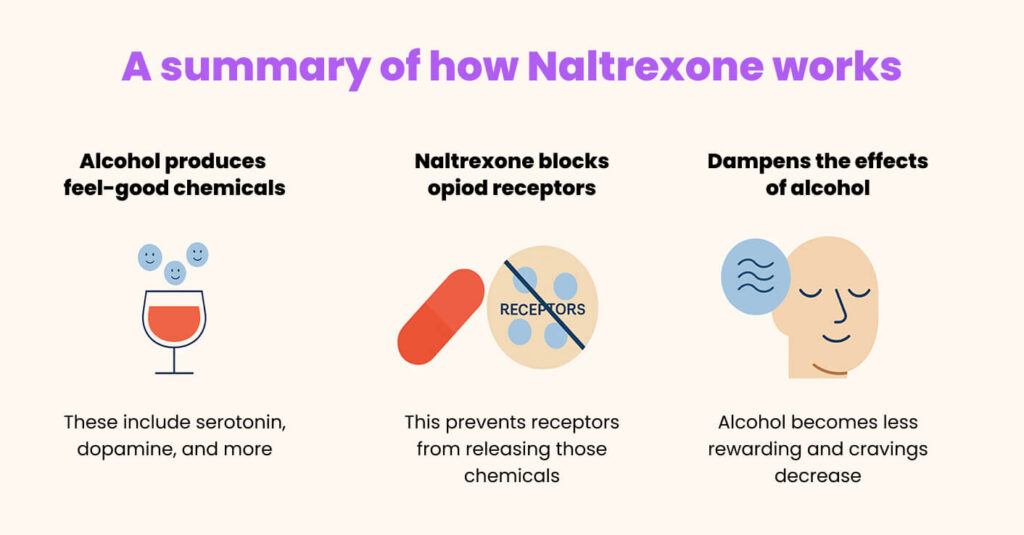
Brain-imaging research has found substantial opioid receptor blockade after naltrexone, helping explain why alcohol may eventually feel less rewarding. That’s the biological basis for how naltrexone can change your response to alcohol.
But “active within your body” and “something you can feel” aren’t the same thing. While naltrexone gets to work quickly, noticeable changes in cravings or your response to alcohol may take longer.
Studies have found that naltrexone can reduce alcohol cravings and alcohol’s rewarding effects. Those changes aren’t necessarily dramatic, especially at first. And naltrexone doesn’t prevent intoxication or impairment: you can still get drunk while taking it, and it doesn’t make drinking safer.
Your first naltrexone dose experience may fall into one of a few broad categories, and none of them tells you exactly how you’ll respond in the long term. Here are some potential “first day profiles”:
Whatever happens on day one, give the medication time. Even people who respond quickly can have ups and downs, and feeling nothing at first doesn’t mean naltrexone won’t work for you.
If you’re curious about what drinking on naltrexone feels like, that experience can change gradually too. Alcohol may start to feel less rewarding, you may find yourself drinking more slowly, or the usual pull toward another drink may become less noticeable over time.
The most common early side effects include nausea, headache, dizziness, and fatigue. Some people also report vivid dreams or changes in sleep. Side effects tend to be most noticeable early on and often improve as your body adjusts.
Nausea is one of the most common side effects of naltrexone and was reported more often with the medication than placebo in clinical research. If nausea is an issue, taking naltrexone with food may help. (Our guide to naltrexone nausea has more tips for getting through the adjustment period.)
One Sunnyside Med member found that food and timing made a difference:
“I have noticed some nausea since starting it this week… especially since I was taking it in the morning on an empty stomach… Today I’m going to try taking it after dinner instead.”
There’s no universally best time of day to take naltrexone, so follow your clinician’s instructions and pay attention to what works for you.
Sleep changes can settle with time too, as another member experienced:
“I just finished the first seven days… Negative side effect has been impact to sleep; however, that has started to dissipate.”
People can respond differently to naltrexone, both in how quickly they notice a change and how strong that change feels.
One reason: oral naltrexone is metabolized differently from person to person, which can affect how much reaches the bloodstream. Timing matters too. If you tend to experience cravings or drink later in the day, for instance, when you take naltrexone may affect how noticeable its effects feel in the initial days.
Researchers have also studied whether genetics could help explain differences in response. Some studies have linked a variation in the OPRM1 gene to a stronger response to naltrexone, but the evidence remains mixed, and genetic testing isn’t part of standard care.
In general, give your own response time to unfold. Your experience doesn’t need to look like someone else’s for the medication to be useful.
Sunnyside Med co-founder Ian Andersen remembers noticing a change fairly quickly when he started taking naltrexone:
“I took my first dose on a Saturday afternoon. I never take medication, so I wanted a day when I was relaxed and not hungover at all.
I felt stoned about an hour in. It was unexpected but not terrible, and that feeling was gone by day two.
I remember trying to think about drinking, and my brain just didn’t light up. The anticipation had been one of my strongest triggers, so watching it fade on day one felt intriguing.
The first time I drank on naltrexone, I went slow. I had one beer and didn’t want any more. The beer just wasn’t very enjoyable.”
Most early side effects are manageable and improve as your body adjusts—and not everyone experiences them in the first place. Still, it’s helpful to know when something deserves a call to your clinician.
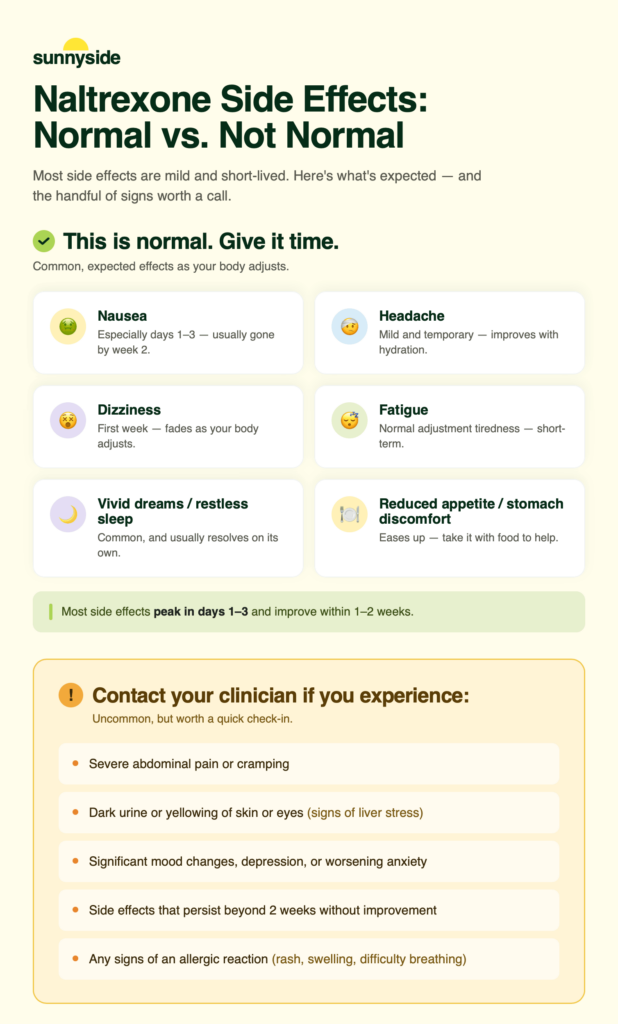
Common early experiences include:
Contact your clinician if you experience:
Naltrexone is a prescription medication, so when in doubt, check in with your prescriber or Sunnyside Med care team.
Starting naltrexone is one thing. Sticking with it long enough to see how it works for you is another.
Research has repeatedly identified adherence as a challenge with oral naltrexone. That’s one reason Sunnyside Med pairs medication with ongoing support rather than treating the prescription as the finish line.
The program combines clinician-guided naltrexone treatment with drink tracking, a habit-change app, human coaching seven days a week, and a private community. Your care team can also help you navigate early side effects or questions as you adjust.
Among active Sunnyside Med members, those who engage with the app are 2.5x more likely to stay on their medication at month four than less-engaged members. (Note that this is observational data, not a randomized trial, and individual results vary.)
One member described the relief of simply getting started: “I feel renewed. I made a decision. A weight has been lifted.”
You don’t have to navigate your first naltrexone dose experience alone. Sunnyside Med is 100% online, with clinician-guided care and support throughout the process. Take the short assessment at joinsunnysidemed.com to learn more and see if you’re eligible.
Naltrexone is a prescription medication. This content is educational and should not be taken as medical advice. A licensed clinician reviews every Sunnyside Med application.
Maybe, but you may feel completely normal. Naltrexone starts working in your body quickly, while noticeable changes in cravings or your response to alcohol can take longer. Some people notice a subtle shift early on, while others don't.
Yes. Feeling nothing doesn't mean naltrexone isn't working. Your response can develop over time with consistent use.
Taking naltrexone with food may help if you experience nausea. There's no universally best time of day to take it, so follow your clinician's instructions and ask your care team if side effects are making your routine difficult.
Early side effects, such as naltrexone nausea, headache, dizziness, and fatigue, often improve as your body adjusts. Contact your clinician if symptoms are severe, worsening, or aren't improving.
Naltrexone is used to help reduce drinking and doesn't cause an adverse reaction simply because you drink alcohol while taking it, though many people notice alcohol feels less rewarding. Importantly, naltrexone doesn't prevent intoxication or impairment, so you can still get drunk while taking it.
Contact your clinician about severe or persistent vomiting, significant mood changes, upper-right abdominal pain, signs of an allergic reaction, or other severe or worsening symptoms.
Ian has a family deeply hurt by alcohol, and is on his own personal journey to drink less and live his healthiest life. He’s took naltrexone daily for two years and saw incredible results. As Sunnyside Med’s first customer, he’s deeply entrenched in alcohol health and naltrexone.
Naltrexone is not addictive or habit-forming. It blocks opioid receptors rather than activating them, so it doesn't produce...

Getting a prescription for naltrexone doesn't have to mean a long sit in a doctor's waiting room. With...

Naltrexone eligibility is determined through an individual clinical evaluation, not a single pass-or-fail test. You don't need to...
If you’re interested in trying naltrexone to help you drink less, the natural next question is where to...