
How Long Does Naltrexone Stay in Your System?
How long naltrexone stays in your system depends partly on which form of naltrexone you're taking. Oral naltrexone,...

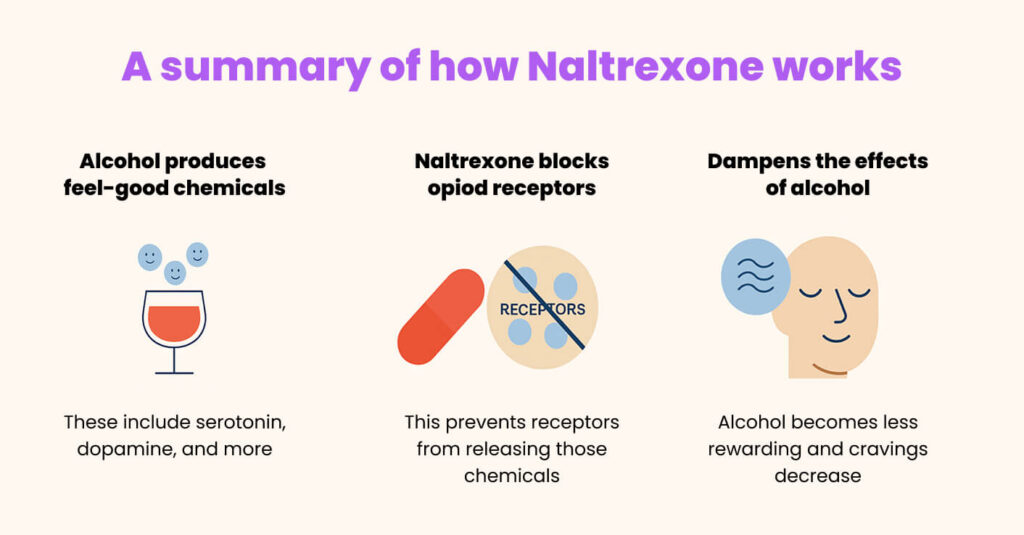
Naltrexone does not treat alcohol withdrawal, and taking naltrexone does not cause alcohol withdrawal. Withdrawal occurs when someone who is physically dependent on alcohol suddenly stops or significantly reduces their drinking. Naltrexone works differently, blocking opioid receptors involved in alcohol’s rewarding effects to help reduce heavy drinking over time. Most people don’t need to detox or be sober before starting naltrexone, but anyone at risk for withdrawal may need that risk addressed separately first.
If you drink more than you’d like, you may have two different concerns about naltrexone and alcohol withdrawal: Can naltrexone help with withdrawal, and can taking it cause withdrawal?
The answer to both is no. Naltrexone doesn’t treat acute alcohol withdrawal, and it doesn’t trigger alcohol withdrawal on its own. Withdrawal happens when someone who is physically dependent on alcohol suddenly stops drinking or substantially cuts back. Naltrexone works differently, reducing the reward and reinforcement associated with drinking.
That leaves another important question: Do you need to detox before starting naltrexone? Not necessarily. Most people don’t need to be sober before starting, but if you’re at risk for withdrawal, a clinician may recommend managing that risk first.
Severe alcohol withdrawal can be dangerous and potentially life-threatening. If you’re concerned that you may be at risk, talk to a medical professional before abruptly cutting back or stopping alcohol.
Severe shaking, hallucinations, confusion, or seizures require urgent medical attention. You can also reach SAMHSA’s National Helpline at 1-800-662-4357, or call 911 in an emergency.
Alcohol withdrawal occurs when a nervous system that has adapted to sustained alcohol use suddenly has much less alcohol. The brain’s GABA and glutamate systems are central to this process (Dharavath et al., 2023).
Naltrexone acts on a different system. It’s an opioid-receptor antagonist that reduces alcohol’s rewarding effects. It doesn’t prevent intoxication or make you feel sick when you drink, and it doesn’t treat the neurological changes responsible for alcohol withdrawal. (Learn more about drinking on naltrexone and what to expect.)
Acute alcohol withdrawal is treated separately from naltrexone. If withdrawal is occurring or likely, it needs to be addressed first. But withdrawal isn’t a prerequisite that has to exist before taking naltrexone.
Sunnyside Med is a 100% online alcohol health program for people who want to cut back or quit drinking. A licensed clinician reviews your drinking patterns, medical history, current medications, and potential withdrawal risk to determine whether naltrexone is appropriate.
Many members don’t need medically supervised withdrawal before starting naltrexone. If there is significant withdrawal risk, however, a clinician may recommend a different level of care first.
For those who are eligible, medication is only one part of the program. Sunnyside Med pairs naltrexone with drink tracking, behavioral tools, coaching, clinical support, and a community of people working toward similar goals. The idea is to use the reduction in cravings and reward from naltrexone as an opportunity to work on the habits and patterns around drinking.
As Sunnyside co-founder and CEO Nick Allen puts it, “The medication alone has been shown to reduce bounce-back behavior, but especially when coupled with behavior change, that’s when you get the most effective results for the long term.”
Physical dependence isn’t the same as simply drinking heavily or having alcohol use disorder. Some people can reduce or stop drinking without withdrawal, while others develop symptoms when their alcohol intake drops.
Possible signs of withdrawal include:
Risk of severe or complicated withdrawal is higher in people with a history of withdrawal seizures or delirium, repeated previous withdrawal episodes, or a long history of heavy, regular drinking. Other health conditions and medications can affect risk too.
Quantity alone can’t tell you whether withdrawal will occur, which is why a clinician should assess your individual history. Severe shaking, hallucinations, confusion, or seizures require urgent medical attention.
Not necessarily. There’s no universal requirement to stop drinking or complete detox before starting naltrexone. People who aren’t physically dependent on alcohol can often start while they’re still drinking, with clinician guidance.
If you are physically dependent or already experiencing withdrawal, that’s different. The immediate concern is safely managing withdrawal, and a clinician can determine when naltrexone fits into your treatment.
This is also why naltrexone shouldn’t be confused with disulfiram, or Antabuse. Drinking while taking naltrexone doesn’t inherently cause an aversive physical reaction.
In short, whether you need detox depends on your withdrawal risk, not simply on whether you want to take naltrexone.
If you start naltrexone around the same time you cut back on alcohol, it isn’t always obvious what’s causing a new symptom. Nausea, anxiety, sleep changes, headache, and dizziness can overlap.
Alcohol withdrawal is more likely to involve symptoms such as shaking, sweating, a racing heart, or marked agitation following a reduction in alcohol. Severe symptoms can include hallucinations, confusion, or seizures.
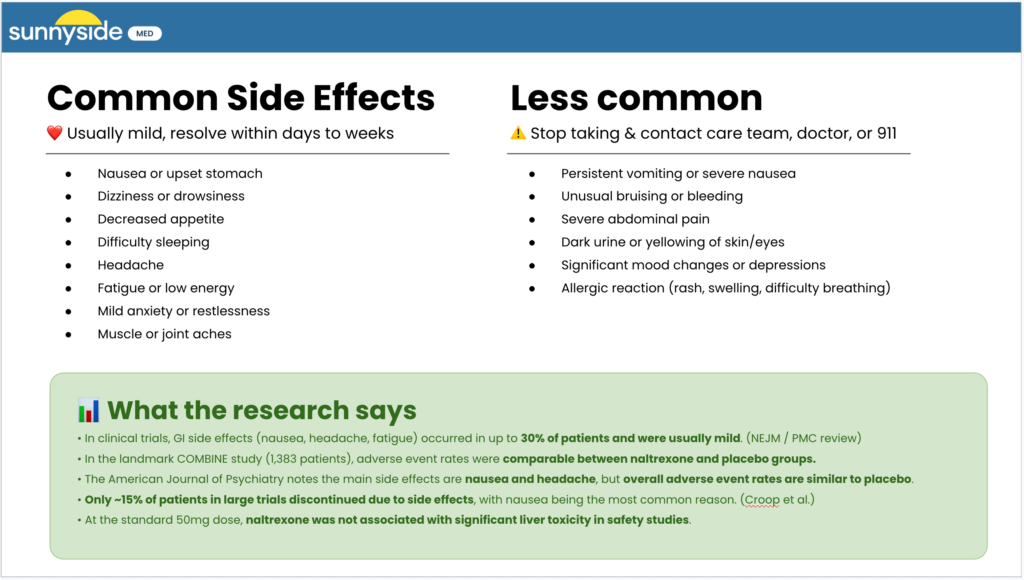
Naltrexone, meanwhile, can cause early side effects such as nausea, headache, dizziness, fatigue, and GI symptoms. Early naltrexone side effects often improve as your body adjusts.
The important thing is to monitor how you feel and keep lines of communication open with your clinician. If symptoms are severe, worsening, or you’re concerned about withdrawal, seek medical evaluation.
Naltrexone doesn’t cause alcohol withdrawal. If withdrawal begins after someone substantially cuts back on alcohol, it’s the reduction in alcohol that’s responsible, not the medication.
There is one separate issue that matters: opioid withdrawal. Because naltrexone blocks opioid receptors, it can trigger sudden, severe withdrawal in someone who is physically dependent on opioids. That’s why clinicians screen for opioid use, including prescription opioid pain medications, methadone, and buprenorphine, before prescribing naltrexone.
There’s no comparable alcohol-free interval required simply because of how naltrexone works. Naltrexone doesn’t block alcohol itself, so continuing to drink while taking it won’t trigger alcohol withdrawal. Opioids are different: naltrexone directly blocks opioid receptors, and taking it while opioids are still in your system can abruptly displace their effects and precipitate withdrawal. That’s why clinicians require an opioid-free period before starting naltrexone.
Naltrexone is not safe for people currently using opioids.
Naltrexone isn’t a withdrawal medication. Instead, it can help reduce alcohol’s reward and reinforcement, making it easier for some people to cut back on heavy drinking.
For some people, that means alcohol feels less compelling over time. The urge to keep drinking after the first drink may become easier to resist, or cravings may feel less intense. Naltrexone doesn’t make you sick if you drink, and it doesn’t eliminate the effects of alcohol. Rather, it changes part of the reward response that can reinforce the cycle of drinking.
A 2023 systematic review and meta-analysis of 118 clinical trials found strong evidence supporting oral naltrexone for alcohol use disorder. Compared with placebo, it was associated with a lower likelihood of returning to heavy drinking, as well as improvements in measures including drinking days and heavy drinking days.
Naltrexone can support either drinking reduction or abstinence. That’s a key distinction: withdrawal treatment addresses acute symptoms and immediate safety, while naltrexone can support longer-term changes in drinking. Someone who needs withdrawal care may still benefit from naltrexone afterward, once the immediate withdrawal risk has been addressed.
Sunnyside Med is a 100% online alcohol health program for people who want to cut back or quit drinking. If a licensed clinician determines that naltrexone is appropriate for you, treatment includes 1:1 clinical care, coaching, drink tracking and behavioral support, and access to a private community.
Among active Sunnyside Med members, 78% achieved a meaningful reduction in drinking over 12 weeks. Individual results vary, and this is observational member data rather than the result of a clinical trial.
Medication is only part of the program. Members who engage with Sunnyside Med are also about 2.5 times more likely to stay on their medication, combining naltrexone with ongoing behavioral support.
“For the first time in years I’ve been waking up clear headed and feeling good,” said one Sunnyside Med member. “I still plan to drink some but I don’t miss feeling like I have to drink.”
Want to see if Sunnyside Med is right for you? Get started with a three-minute online quiz.
Naltrexone is a prescription medication. This content is educational and should not be taken as medical advice. A licensed clinician reviews every Sunnyside Med application.
No. Naltrexone doesn't treat acute alcohol withdrawal or prevent complications such as seizures or delirium. It works on opioid receptors involved in alcohol's rewarding effects, not the mechanisms responsible for withdrawal.
Not necessarily. People who aren't physically dependent on alcohol can often start naltrexone while they're still drinking. If you're at risk for withdrawal, however, that risk may need to be managed separately first.
For many people, yes. Naltrexone isn't Antabuse, so drinking while taking it doesn't inherently cause an aversive reaction. A clinician can determine whether it's appropriate for you to start while you're still drinking.
No. Naltrexone doesn't precipitate alcohol withdrawal. Withdrawal after cutting back is caused by the reduction in alcohol in someone who has developed physical dependence.
There can be overlap, including nausea, anxiety, and sleep changes. Shaking, sweating, a racing heart, and marked agitation after reducing alcohol may point toward withdrawal. Severe symptoms such as hallucinations, confusion, or seizures require urgent medical attention.
Yes. In someone physically dependent on opioids, naltrexone can trigger sudden, severe withdrawal. Naltrexone is not safe for people currently using opioids, including opioid pain medications, methadone, or buprenorphine.
Benzodiazepines are first-line medications for moderate and severe alcohol withdrawal. Depending on withdrawal severity and the clinical setting, medications such as gabapentin, carbamazepine, or phenobarbital may also be used. Naltrexone does not treat alcohol withdrawal.
Ian has a family deeply hurt by alcohol, and is on his own personal journey to drink less and live his healthiest life. He’s took naltrexone daily for two years and saw incredible results. As Sunnyside Med’s first customer, he’s deeply entrenched in alcohol health and naltrexone.
How long naltrexone stays in your system depends partly on which form of naltrexone you're taking. Oral naltrexone,...
Research on naltrexone use during pregnancy is limited, particularly among people taking it for alcohol use disorder. What...
Although naltrexone eventually became an established treatment for alcohol use disorder (AUD), getting it into routine clinical practice...

Naltrexone and Antabuse differ in how they work, what taking them is like, their safety considerations, and the...