How Long Does Naltrexone Stay in Your System?
How long naltrexone stays in your system depends partly on which form of naltrexone you're taking. Oral naltrexone,...

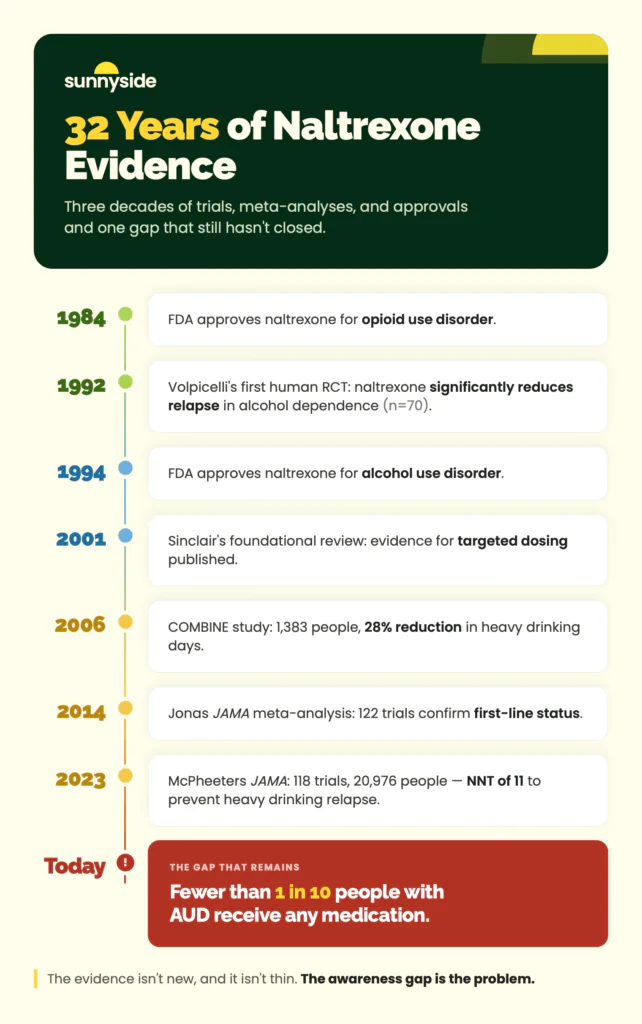
Although naltrexone was approved for opioid dependence in 1984 and alcohol dependence in 1994, it struggled to gain traction for decades. Barriers included resistance to medication-based addiction treatment, concerns about liver safety, and difficulties with patient education and adherence. Today, naltrexone is an established treatment for alcohol use disorder (AUD), but medications for AUD remain underused.
When Percy Menzies joined DuPont Pharma in 1981, he thought naltrexone had the potential to change addiction treatment. A pharmacist by training, he helped introduce the medication under its original brand name, Trexan, for opioid dependence. (When its alcohol-dependence indication followed, the brand became ReVia.)
What he didn’t anticipate was how difficult it would be to convince the addiction-treatment establishment to use it.
“I almost felt that I was a knight in shining armor going out to help people,” Menzies recalled on Journey to the Sunnyside. “The hostility that we encountered was absolutely shocking.”
Four decades later, the resistance Menzies encountered remains an important part of naltrexone’s history. Although the medication eventually became an established treatment for alcohol use disorder, getting it into routine clinical practice proved far more difficult than he anticipated.
When Menzies began talking to clinicians about naltrexone, he expected questions about the medication itself. Instead, he said, he often encountered resistance to the idea that physicians should be treating addiction at all.
In Menzies’s telling, people with drug or alcohol problems were often directed away from ordinary medical practices and into a separate treatment system. That separation created a basic problem for naltrexone: Prescribing it required clinicians to treat addiction as a health condition within healthcare itself.
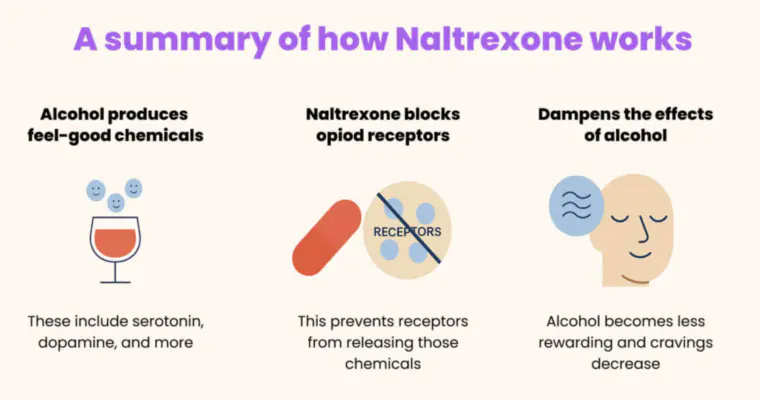
The treatment menu was narrow, too. Disulfiram had been the only FDA-approved medication for alcohol dependence for more than four decades when oral naltrexone received its alcohol indication in 1994. But the two medications work very differently. Rather than causing an adverse reaction when someone drank, naltrexone targets opioid receptors involved in alcohol’s reinforcing effects.
Menzies remembers trying the usual approaches to getting clinicians interested in a new medication.
“Can I leave you some clinical studies? Not interested. Can I leave you some samples? Sorry. Not interested.”
That response wasn’t universal, and addiction treatment has changed substantially since then. But Menzies’s experience points to one of the barriers naltrexone faced: Before patients could benefit from medication, clinicians and treatment programs had to be willing to incorporate it into care.
Resistance from clinicians and treatment programs wasn’t the only challenge. Even when naltrexone was prescribed, patients still had to understand why they were taking it and take it consistently.
Menzies recalls seeing patients receive prescriptions with little explanation of what naltrexone did or why consistency mattered. Some never filled the prescription. Others picked it up and never used it. He also recalls counselors and treatment programs discouraging patients from using medication.
“All these things combined to scuttle [naltrexone],” he said. “We could not even give it away. I mean, we tried everything—stock bottles, samples, nothing.”
Adherence became a recognized problem with oral naltrexone. An FDA medical review later noted that poor adherence was widely believed to limit its effectiveness in addiction treatment. Making an effective medication available doesn’t guarantee that people will take it consistently enough to benefit from it.
Naltrexone can reduce cravings and blunt some of alcohol’s rewarding effects, but it doesn’t change the routines or circumstances surrounding someone’s drinking.
Menzies understood that patients needed more than a prescription. He eventually built his own clinic, where directly observed treatment was accompanied by regular contact, education, food, and conversation. Each visit was an opportunity to check in with patients and help them stay engaged with treatment.
“Each time you come in, that becomes a teachable moment,” he said.
His approach addressed a problem that had followed naltrexone since its introduction: Getting medication into patients’ hands was only the beginning. Helping them continue treatment required attention to what happened afterward.
Another obstacle was concern about liver injury. Naltrexone once carried an FDA boxed warning about hepatotoxicity, the agency’s most prominent type of safety warning. Menzies says the warning contributed to clinicians’ reluctance to prescribe the medication and later advocated for it to be reconsidered.
In 2013, the FDA removed the boxed warning and a related contraindication from naltrexone labeling. For Menzies, however, the warning had already shaped perceptions of the medication.
Removing the boxed warning didn’t mean that naltrexone suddenly became appropriate for everyone. Clinical review was still important, including consideration of liver health. But the change removed a particularly prominent warning that had been attached to the medication for years.
Naltrexone’s standing in addiction medicine has changed considerably since Menzies first began promoting it. In 2023, the World Health Organization added naltrexone and acamprosate to its Model List of Essential Medicines, making them the first medications for alcohol use disorders included on the list.
But medications for alcohol use disorder have remained underused. A JAMA Psychiatry analysis of nationally representative 2019 survey data found that 7.3% of U.S. adults with past-year alcohol use disorder received any alcohol treatment. Just 1.6% reported using medication for the condition.
Near the end of his conversation with Sunnyside, Menzies recalled asking patients why they had waited so long to seek help. One answer kept coming back:
“I didn’t know there’s a treatment for that.”
That answer speaks to a problem that medication approval alone can’t solve. People have to know treatment exists before they can ask whether it might be right for them.
And treatment doesn’t have to begin only after alcohol has disrupted every part of someone’s life. Someone can be functioning at work and showing up for their family while still feeling that alcohol takes up more space than they want. They may want to quit completely, or they may simply want help drinking less.
Menzies believes naltrexone should be much easier to access. He has even advocated for making it available over the counter.
That remains his policy position, not the current reality. Naltrexone is a prescription medication in the United States, and a licensed clinician must determine whether it is appropriate for an individual. But his frustration reflects a problem that has persisted throughout naltrexone’s history.
“Here is a medication that was developed almost sixty years ago,” Menzies said. “It has been used clinically for the last forty years, and we are still hesitant.”
An effective medication can be available for decades without reaching everyone who might benefit from it. Expanding access means making treatment easier to discover and helping people follow through once they begin.
Sunnyside Med combines access to medication with ongoing behavioral support. The process begins with an online health assessment and clinical review. If a licensed clinician determines that treatment is appropriate, eligible members can receive compounded naltrexone with vitamin B6 alongside Sunnyside’s behavior-change program.
Members can use drink tracking, weekly planning, progress insights, text coaching seven days a week, a private community, educational resources, and optional group calls while working toward drinking less or quitting completely.
Sunnyside co-founder Nick Allen has described that support as “scaffolding around the medication.” While naltrexone can help reduce cravings and some of alcohol’s rewarding effects, Sunnyside’s behavioral tools help members recognize patterns, navigate difficult situations, and establish new routines.
“Now that I have medication to help, I feel even more confident in implementing the coping skills that I’ve learned,” one Sunnyside Med member reported.
This approach addresses two challenges that have followed naltrexone throughout its history: helping people access treatment and giving them the support to follow through.
If you’re curious about whether Sunnyside Med is right for you, get started with a brief online assessment.
Naltrexone is a prescription medication. This article is educational and is not medical advice. A licensed clinician determines whether treatment is appropriate.
Ian has a family deeply hurt by alcohol, and is on his own personal journey to drink less and live his healthiest life. He’s took naltrexone daily for two years and saw incredible results. As Sunnyside Med’s first customer, he’s deeply entrenched in alcohol health and naltrexone.
How long naltrexone stays in your system depends partly on which form of naltrexone you're taking. Oral naltrexone,...

Research on naltrexone use during pregnancy is limited, particularly among people taking it for alcohol use disorder. What...

Naltrexone and Antabuse differ in how they work, what taking them is like, their safety considerations, and the...

Naltrexone is not addictive or habit-forming. It blocks opioid receptors rather than activating them, so it doesn't produce...