

Why Naltrexone Is Not Addictive
Naltrexone is not addictive or habit-forming. It blocks opioid receptors rather than activating them, so it doesn't produce...


President, Assisted Recovery Centers of America (ARCA)

Naltrexone for special-occasion drinking may help people who tend to overdrink on weekends, holidays, weddings, and other social events, even if they rarely drink during the week. Naltrexone reduces alcohol’s rewarding effects, which can make it easier to slow down or stop after one or two drinks. You don’t have to drink every day to potentially benefit.
You told yourself you’d have two drinks at the wedding. By the end of the reception, you’d lost count. Now it’s the morning after, and you’re wondering why it was so hard to stop.
Maybe during the work week, you barely think about alcohol. But then the weekend comes, or a holiday party, a friend’s birthday, or a work event, and something shifts. One drink turns into four. The night you planned to enjoy becomes a night you regret.
Because you don’t drink every day, you might assume medication for alcohol isn’t meant for you. But naltrexone has also been studied in people whose drinking is concentrated around binges or higher-risk occasions. A 2022 randomized trial in the American Journal of Psychiatry, for example, found that naltrexone reduced binge-drinking days and drinks per month among men with mild-to-moderate alcohol use disorder who binge drank.
You don’t have to drink every day to consider naltrexone. If you’re generally happy with how little you drink during the week but wish weddings, weekends, vacations, or nights out went differently, naltrexone for special-occasion drinking may be worth discussing with a clinician.
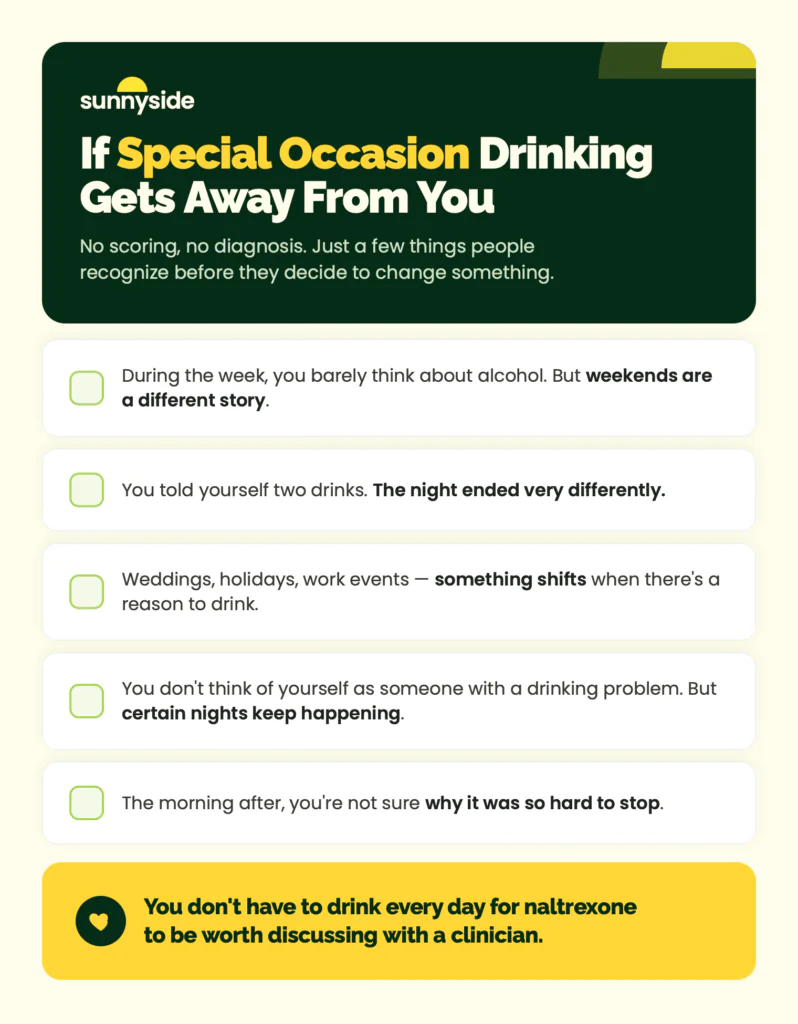
If you rarely drink on a Tuesday but struggle to stop at two on Saturday, the setting itself may be partially to blame.
Over time, the brain can learn to associate certain people, places, and routines with drinking. Arriving at a party, seeing drinks on the table, or getting together with the same group of friends can become a cue that triggers a craving. This can help explain why drinking feels easy to control in one setting and much harder in another.
People describe the experience this way:
Sometimes the pattern grows, too. What started as an occasional blowout becomes most weekends. That doesn’t mean it inevitably will, but consistently drinking more than you intend can be one sign of gray-area drinking, and it may be worth addressing before the pattern becomes harder to change.
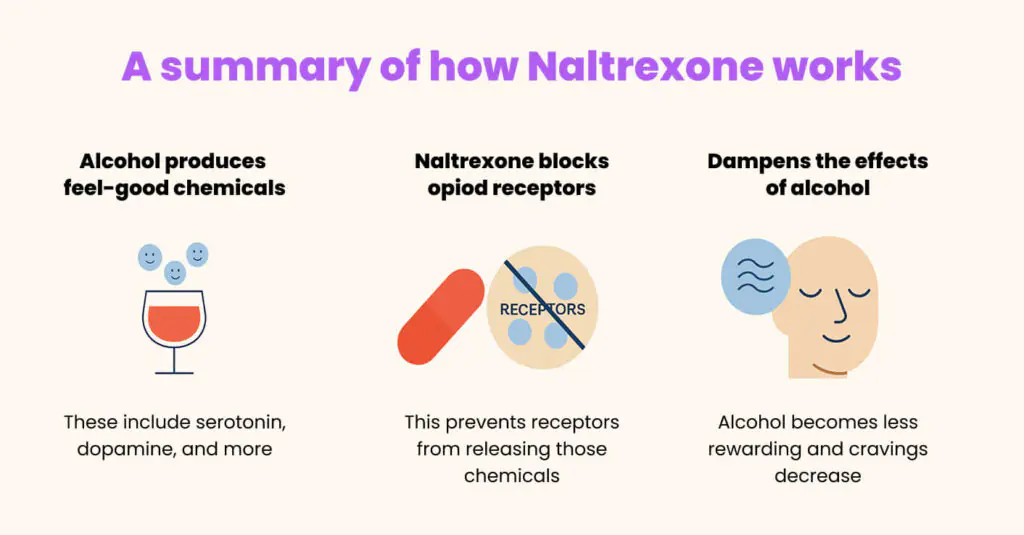
Naltrexone works by blocking opioid receptors involved in alcohol’s rewarding effects. In practice, that may mean the urge to keep going feels less intense. The drink itself still tastes like alcohol, and you can still get intoxicated, but for some people, the second drink is less likely to call for a third.
Ian Andersen, Co-Founder of Sunnyside Med, said:
“I specifically took naltrexone to help with ‘special occasion drinking.’ I was already not drinking on weekdays, but if I drank on a weekend, it had a way of getting away from me. Naltrexone helped me slow down when I did drink, drink less overall, and even start to add weekends with no drinking, since it just made drinking less enticing. I stayed on naltrexone for two years and stopped when I felt like I had made real, lasting changes. But it’s always here for me if I need it.”
Naltrexone doesn’t prevent you from drinking. You can still have a glass of champagne at a wedding or a cocktail on vacation. But drinking on naltrexone may feel different because alcohol can become less rewarding and the urge to keep drinking may be less intense. For someone who has spent years wanting to stop at two and struggling to do it, that can be a meaningful shift.
You don’t have to drink every day for naltrexone to be a good resource. Several studies have specifically looked at people trying to cut back on heavy or binge drinking rather than quit alcohol completely.
In a 2003 study of 153 early problem drinkers, researchers compared naltrexone with placebo using either daily dosing or targeted dosing around situations participants identified as high risk for heavy drinking. Naltrexone was associated with a lower likelihood of heavy drinking, although the effects changed over the course of the study.
A 2009 trial of 163 problem drinkers also compared daily and targeted naltrexone. By the end of the 12-week study, men assigned to targeted naltrexone drank fewer drinks per day than participants in the other groups. Across men and women, the targeted naltrexone group also drank fewer drinks per drinking day at week 12.
More recently, a 2022 randomized trial studied 120 sexual and gender minority men who binge drank and had mild-to-moderate alcohol use disorder. Compared with placebo, targeted naltrexone was associated with fewer binge-drinking days, fewer drinks per month, and lower alcohol cravings. Some reductions in drinking were still present six months after treatment ended.
These studies don’t tell us that everyone who occasionally overdrinks should take naltrexone, and several were conducted in specific populations. But they do challenge the idea that naltrexone is only useful for people who drink every day or want to stop drinking completely.
The research above shows that targeted naltrexone can help some people reduce their drinking. Sunnyside Med takes a different approach and prescribes naltrexone for daily use.
One reason is simple: drinking isn’t always planned. You may know about the wedding next month or the vacation you’ve had on the calendar all year. But you don’t necessarily know about the spontaneous happy hour, the friend who asks you to grab a drink, or the work dinner where everyone orders cocktails.
Daily dosing removes the need to predict every drinking occasion. Instead of having to remember medication before a higher-risk situation, naltrexone is already part of your routine.
That consistency was important for one Sunnyside Med member:
“At one point I got a little confident and thought, maybe I don’t need this every day. Then I went on vacation and decided to skip it altogether. Once the vacation ended, I slipped right back into my old drinking levels. And that’s when it hit me: I have to take it every day, because it really is that effective for me.”
That’s one person’s experience, and targeted dosing remains a research-backed approach. But for people whose drinking opportunities can be unpredictable, Sunnyside Med’s daily approach is designed to make adherence simpler and provide consistent coverage rather than requiring you to decide which occasions count as high risk.
The first few drinking occasions on naltrexone may feel a little different. Your drink will still taste normal, and you can still feel alcohol’s intoxicating effects. What may change is the pull toward the next drink. Some people describe it as the volume being turned down on the urge to keep going.
Naltrexone won’t make alcohol taste terrible or make you sick when you drink. It also won’t prevent intoxication if you drink enough. Instead, by reducing alcohol’s rewarding effects, it may make stopping after one or two drinks feel more achievable.
That shift can be particularly noticeable in situations where you’re used to losing control. One Sunnyside Med member shared this after a girls’ weekend:
“Last year I came and had way too much to drink, and in the morning I was so embarrassed. Last night I had one glass of wine and woke up refreshed and ready to go on a hike with my friends! I really do feel like the medication takes the edge off, and one really did feel like enough.”
Experiences vary, and naltrexone isn’t a magic pill. But research supports oral naltrexone as an effective treatment for reducing heavy drinking, particularly when medication is paired with behavioral support. (JAMA, 2023)
Naltrexone blocks opioid receptors. If you currently use opioid medications, including certain prescription pain medications, methadone, or buprenorphine, tell your clinician before starting naltrexone. Taking it while physically dependent on opioids can trigger sudden withdrawal.
Your clinician will also consider your liver health before prescribing. Liver concerns don’t automatically rule out treatment, but naltrexone may not be appropriate for people with severe liver problems. The evidence around naltrexone and liver safety is more reassuring than many people assume, and your clinician can assess your individual situation.
Finally, naltrexone does not treat alcohol withdrawal. If you drink heavily enough to experience withdrawal symptoms when you stop, talk to a clinician before making a sudden change to your drinking.
You don’t have to wait until your drinking becomes an everyday problem to ask for help. If most weeks are fine but weddings, vacations, weekends, or nights out keep getting away from you, wanting more control is reason enough to explore your options.
Sunnyside Med is designed for people who want to drink less, whether or not abstinence is their goal. After a short online assessment, a licensed clinician reviews your information to determine whether naltrexone is appropriate for you. If prescribed, medication is shipped discreetly to your door.
But the program doesn’t stop at the prescription. Sunnyside Med pairs naltrexone with the Sunnyside habit-change app, drink tracking and weekly planning, human coaching, weekly group calls, and access to a care team seven days a week. That support gives you a way to work on the habits surrounding alcohol while the medication addresses the rewarding effects that can make it difficult to stop.
The goal isn’t to tell you that you can never have a drink at a wedding again. It’s to help you have the night you actually planned on, and wake up the next morning feeling good about how it went.
Sunnyside Med costs $99 per month and is HSA/FSA eligible, with no insurance required. Naltrexone is a prescription medication, and a licensed clinician reviews every application to determine whether it’s appropriate for you. Take the 2-minute quiz to see if Sunnyside Med could be a fit.
Naltrexone is a prescription medication. This content is educational and is not medical advice. A licensed clinician reviews every Sunnyside Med application.
It can. Naltrexone has been studied in people who want to reduce heavy drinking rather than quit completely. Trials have found benefits among early problem drinkers and people who take naltrexone around situations where they’re at higher risk of drinking heavily. (Kranzler et al., 2009)
Not necessarily. Research has studied both daily and targeted naltrexone, taken in anticipation of higher-risk drinking situations. (Kranzler et al., 2003) Sunnyside Med prescribes naltrexone daily so the medication is already part of your routine when an unexpected drinking occasion comes up. Your clinician can help determine the appropriate approach for you.
No. Naltrexone doesn’t physically prevent you from drinking, and alcohol can still intoxicate you. Instead, it reduces alcohol’s rewarding effects, which may make the urge to continue drinking feel less intense. Individual experiences vary.
No. Studies of naltrexone have included people trying to reduce their drinking, including “early problem drinkers” and people who did not have severe alcohol dependence. In one randomized trial, participants specifically had a goal of reducing their drinking to safer levels rather than stopping completely. (Kranzler et al., 2009)
Yes. Unlike disulfiram, naltrexone does not cause an aversive reaction when alcohol is consumed. You can still feel alcohol’s effects and become intoxicated, but naltrexone may reduce the rewarding feeling that makes you want to keep drinking. It’s important to follow your clinician’s instructions while taking it.
Ian has a family deeply hurt by alcohol, and is on his own personal journey to drink less and live his healthiest life. He’s took naltrexone daily for two years and saw incredible results. As Sunnyside Med’s first customer, he’s deeply entrenched in alcohol health and naltrexone.
Naltrexone is not addictive or habit-forming. It blocks opioid receptors rather than activating them, so it doesn't produce...

Getting a prescription for naltrexone doesn't have to mean a long sit in a doctor's waiting room. With...

Naltrexone eligibility is determined through an individual clinical evaluation, not a single pass-or-fail test. You don't need to...
If you’re interested in trying naltrexone to help you drink less, the natural next question is where to...