How Long Does Naltrexone Stay in Your System?
How long naltrexone stays in your system depends partly on which form of naltrexone you're taking. Oral naltrexone,...

The best online alcohol treatment depends on the kind of support you want. Options range from medication and online therapy to alcohol-reduction apps and virtual peer-support groups. Sunnyside Med is our best overall pick, pairing clinical care and naltrexone with ongoing behavioral support in one program.
Online alcohol treatment looks very different than it did even a few years ago. You can meet with a clinician or therapist, explore medications like naltrexone, use a structured behavior-change app, join a virtual peer-support group, or combine several approaches without physically setting foot in a clinic.
The thing to figure out isn’t which option is universally “best.” It’s which kind of help fits your drinking, your goals, and the amount of support you want.
This guide compares the major approaches and where Sunnyside Med fits. Your goal might be drinking less, taking a break, or stopping altogether. (If you already know you’re interested in medication, our guide to the best online naltrexone providers compares those options specifically.)
Online alcohol treatment is a broad category. Some programs focus on one approach, while others combine several. Here are a few you might come across.
Licensed clinicians can evaluate patients remotely and prescribe medication for alcohol use disorder when medically appropriate. Evidence-supported options include naltrexone and acamprosate. Some telehealth services focus primarily on medication access, while others pair it with ongoing clinical or behavioral support.
Medication doesn’t necessarily mean committing to abstinence. Depending on the medication and treatment plan, reducing your drinking may also be a viable goal.
Licensed therapists can provide alcohol-focused treatment remotely. Evidence-based approaches might include cognitive behavioral therapy and motivational enhancement therapy, which can help people identify drinking patterns, develop coping strategies, and work toward individual goals.
Alcohol apps (like Sunnyside!) range from simple drink trackers to structured programs with goal setting, education, coaching, and other behavior-change tools. An app’s specific features and research matter more than the fact that it’s digital.
Virtual groups can provide community, accountability, and shared experience. Options include 12-step programs such as AA as well as secular or moderation-focused alternatives like SMART Recovery and Moderation Management.
Peer support isn’t the same as professional medical or mental-health treatment, but it can be used on its own or alongside professional care.
You don’t necessarily have to choose just one category. Some online programs combine medical care with behavioral support, while people can also build their own mix of medication, therapy, digital tools, and peer support.
With Sunnyside Med, you’ll take the integrated approach, combining clinical care and medication when appropriate with coaching, drink tracking, goal setting, and community.
Sunnyside Med is a 100% online alcohol health program for people who want to drink less or quit. It combines naltrexone, when prescribed by a licensed clinician, with Sunnyside’s established behavior-change platform.
Members get human coaching seven days a week, drink tracking and weekly goal setting, weekly group calls, a private community, and ongoing clinical support. The program supports moderation, taking an extended break, or quitting altogether.
That support can be particularly useful with a medication like naltrexone, because getting a prescription is only the beginning. A study of prescription persistence found that many patients who initially filled naltrexone did not continue taking it over subsequent months (Kranzler et al., 2008).
Sunnyside’s own member data also provides some context for how people fare within the program. Among active Sunnyside Med members, 78% achieved a meaningful reduction in drinking. (These are observational member outcomes rather than randomized clinical-trial results, and individual results vary.)
“I always struggled with the black-and-white approach to drinking. All or nothing does not work for me,” said one Sunnyside Med member. “This is a more approachable way to enjoy my favorite wines.”
Sunnyside Med may be a particularly good fit if you’ve tried cutting back before and want medication plus regular accountability, or if traditional abstinence-focused treatment doesn’t match your goals.
Medication can be part of online alcohol treatment when a licensed clinician determines it’s appropriate. Three medications are FDA-approved for alcohol use disorder in the U.S.: naltrexone, acamprosate, and disulfiram (McPheeters et al., JAMA, 2023). They work differently, so the right choice depends on your goals, medical history, other medications, and a clinician’s assessment.
Naltrexone blocks opioid receptors involved in alcohol’s rewarding effects and can help reduce heavy drinking. Unlike medications intended specifically to support abstinence, it can be used when the goal is to drink less.
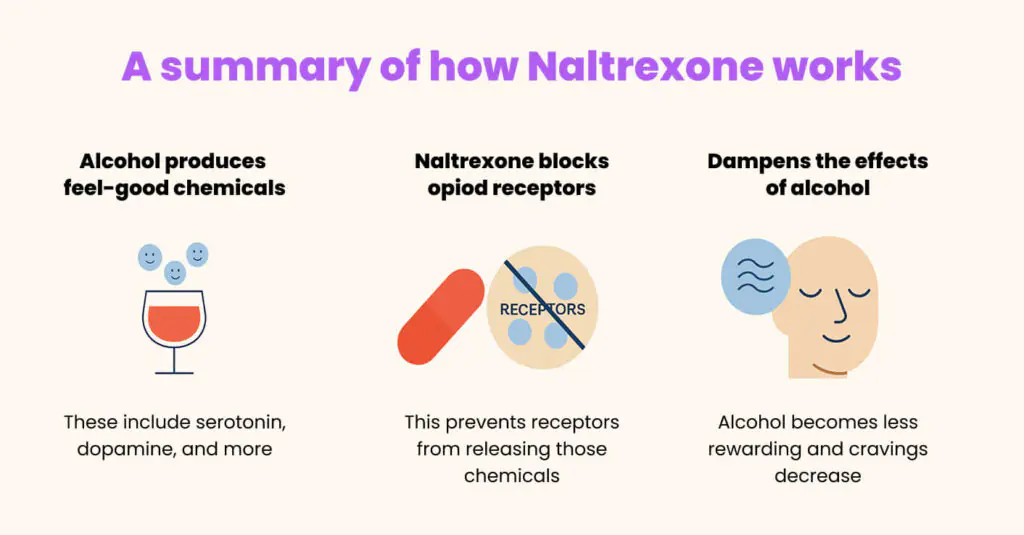
A large 2023 systematic review of 118 clinical trials found moderate-strength evidence that oral naltrexone reduces return to any drinking and heavy drinking (McPheeters et al., JAMA, 2023). There’s plenty of other evidence backing up naltrexone’s effectiveness, too: Check out our guide to naltrexone research to learn more.
There are a few other medications that can be used in the treatment of AUD. Acamprosate, for instance, is primarily used to help maintain abstinence after someone has stopped drinking. Disulfiram is also used with an abstinence goal and causes an unpleasant physical reaction if alcohol is consumed.
Online medication services vary in what they offer. Some focus mainly on evaluation and prescription access, while others add coaching, tracking, therapy, or community. If you already know you’re interested in naltrexone, our guide to the best online naltrexone programs compares specific providers.
Therapy offers a different route for people who want to focus on the thoughts, behaviors, emotions, and circumstances surrounding their drinking. It can be used alone or alongside medication, peer support, or digital tools.
Hazelden Betty Ford offers virtual intensive outpatient treatment for people who need more structured alcohol or substance-use care. Its virtual programs include group therapy and individual counseling within an abstinence-oriented treatment model.
This is a considerably more intense level of care than a moderation app or medication-focused telehealth service, making it a better fit for someone who wants structured addiction treatment rather than help simply changing a drinking habit.
General therapy platforms such as BetterHelp and Talkspace may also connect you with therapists who have experience with alcohol-related concerns. They aren’t purpose-built alcohol programs, however. The experience depends heavily on the individual therapist and doesn’t include the alcohol-specific tracking or community found in dedicated programs.
Apps can be a low-barrier way to track drinking, set goals, and build new habits. Research suggests some structured digital interventions can help people reduce their alcohol use, although results vary considerably by program.
A randomized trial of a structured alcohol-reduction app, for example, found reductions in weekly alcohol consumption among people drinking at hazardous or harmful levels (Cunningham et al., 2024).
Sunnyside’s non-medication program includes drink tracking, weekly planning, daily check-ins, coaching, and community. It can be used on its own by people who want a behavior-change approach without medication.
Reframe is an alcohol-reduction app built around daily educational content, tracking, exercises, and community. It’s another option for people who want a structured digital program rather than medication or formal treatment.
Reframe also now offers Reframe Med+, a separate telehealth service that adds clinician-reviewed medication when appropriate. If medication is what you’re looking for, that offering belongs closer to the integrated-treatment category than app-only care.
Free tools are available too. NIAAA’s Rethinking Drinking provides self-assessment, drink tracking, and planning resources for people who want to evaluate or change their drinking.
Peer support can provide connection and accountability without the cost of professional treatment. These groups differ substantially in philosophy, particularly around abstinence and moderation.
SMART Recovery offers free mutual-support meetings, including online options, built around a secular approach informed by cognitive behavioral and motivational techniques. Its program focuses on changing addictive behaviors and developing practical coping skills.
AA offers online meetings through its 12-step, abstinence-based program. Research supports AA and Twelve-Step Facilitation as effective options for many people seeking abstinence, particularly for helping people maintain continuous abstinence over time.
AA isn’t the right fit for everyone, especially people who want to moderate rather than quit, but its scale and accessibility make it one of the most widely available free support options.
Moderation Management is specifically designed for people who want to reduce their drinking rather than necessarily stop altogether. It offers online meetings and peer support around moderation goals.
Peer support isn’t a substitute for medical care when medical treatment is needed. But for someone primarily looking for community and accountability, these groups can be useful on their own or alongside another approach.
These approaches aren’t mutually exclusive. You might use an app alongside therapy, take medication while attending a peer-support group, or choose a program that combines several forms of support in one place.
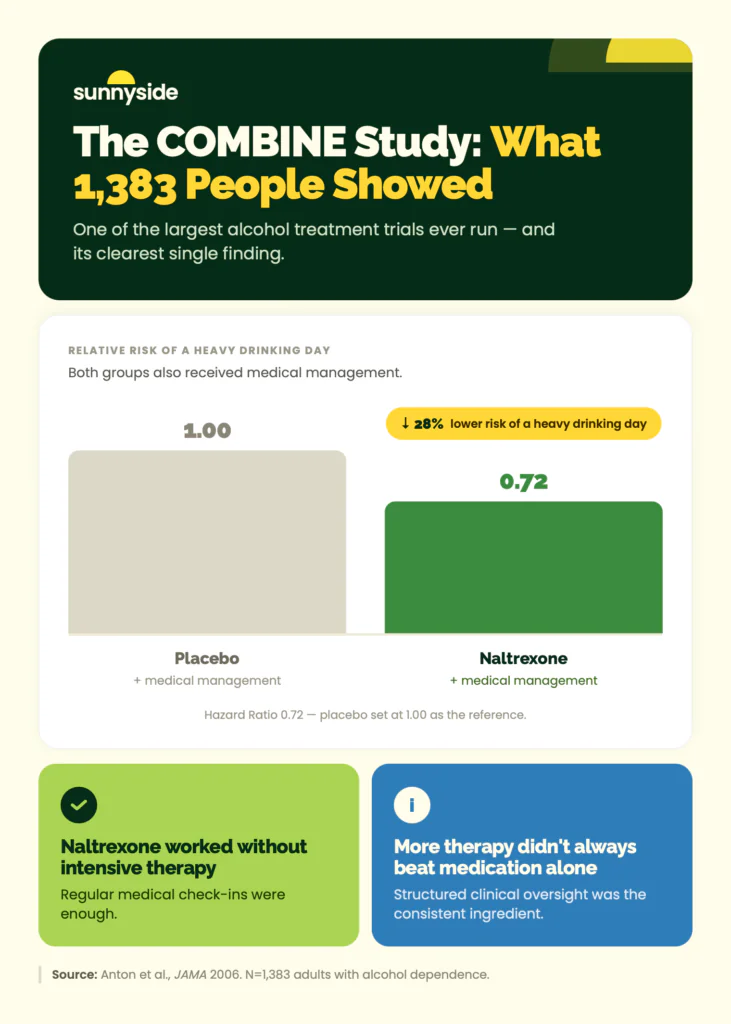
Naltrexone can reduce alcohol’s reinforcing effects and lower the risk of returning to heavy drinking. Behavioral interventions can help with patterns, triggers, coping strategies, and goals. In the COMBINE study, naltrexone delivered with structured medical management improved some drinking outcomes compared with placebo plus medical management.
That doesn’t mean medication plus any particular app or coaching program will work better for everyone. Some people do well with one form of support; others prefer a combination.
The advantage of an integrated program is partly practical: you don’t have to assemble all those pieces yourself. That’s one reason Sunnyside Med is our best overall pick for people who want medication alongside ongoing behavioral support.
Sunnyside Med combines naltrexone, when prescribed by a licensed clinician, with an established behavior-change program rather than treating the prescription as the whole solution.
Members get drink tracking and weekly planning, human coaching seven days a week, group calls, community support, and ongoing clinical care. They can work toward drinking less, taking a break, or quitting.
That can make Sunnyside Med a good fit for gray-area drinkers exploring naltrexone who want more help changing their drinking but don’t feel abstinence-focused treatment fits.
Sunnyside Med costs $99 per month plus a one-time $50 intake fee. It’s HSA/FSA eligible and doesn’t require insurance. A licensed clinician reviews your health information and determines whether naltrexone is medically appropriate.
If medication plus regular behavioral support matches what you’re looking for, you can see if Sunnyside Med may be right for you with a brief quiz.
Naltrexone is a prescription medication. This content is educational and should not be taken as medical advice. A licensed clinician reviews every Sunnyside Med application.
It depends on the kind of help you want. Sunnyside Med is our best overall pick for medication plus behavioral support, while therapy, apps, and peer support may better fit other needs.
Yes. Some programs support people who want to change their drinking without requiring an AUD diagnosis or label. Medication still requires evaluation by a licensed clinician.
Look for options that support moderation. Sunnyside Med supports drinking less, taking a break, or quitting, while Moderation Management offers peer support specifically for people interested in moderation.
Costs vary widely. Peer-support meetings may be free, while apps, medication programs, therapy, and intensive treatment cost more. Sunnyside Med costs $99 per month plus a one-time $50 intake fee and is HSA/FSA eligible.
For some people, yes. Structured digital programs can help with tracking and behavior change, while others may benefit from medication, therapy, peer support, or a combination.
Ian has a family deeply hurt by alcohol, and is on his own personal journey to drink less and live his healthiest life. He’s took naltrexone daily for two years and saw incredible results. As Sunnyside Med’s first customer, he’s deeply entrenched in alcohol health and naltrexone.
How long naltrexone stays in your system depends partly on which form of naltrexone you're taking. Oral naltrexone,...

Research on naltrexone use during pregnancy is limited, particularly among people taking it for alcohol use disorder. What...
Although naltrexone eventually became an established treatment for alcohol use disorder (AUD), getting it into routine clinical practice...
Naltrexone and Antabuse differ in how they work, what taking them is like, their safety considerations, and the...