
How Long Does Naltrexone Stay in Your System?
How long naltrexone stays in your system depends partly on which form of naltrexone you're taking. Oral naltrexone,...


Naltrexone can help some high-functioning drinkers cut back without requiring complete abstinence. It reduces alcohol’s rewarding effects and can help reduce heavy drinking. “High-functioning drinker” isn’t a medical diagnosis, so whether naltrexone is appropriate depends on your drinking, health history, and goals.
You’re doing well at work. Your relationships are solid. Nobody in your life seems particularly worried about your drinking.
But maybe that drink at the end of the day has started to feel less optional than it used to. You’ve tried cutting back, and it works for a while. Then you find yourself right back where you started.
It can be hard to know what to do with that when most of the help available seems aimed at people in crisis. If your drinking hasn’t cost you a job or damaged your relationships, it’s easy to feel like: Do I have any real options to help me make a change?
But you don’t need a crisis to want something to change. You can function perfectly well and still feel like you’re drinking more than you want to.
“High-functioning drinker” isn’t a medical diagnosis. It’s an informal term for someone who drinks more than they want to, or has trouble cutting back, while continuing to function well in everyday life.
That’s part of what makes the pattern easy to overlook. You may be keeping up at work, maintaining your relationships, and handling your responsibilities without much trouble. But you might also be thinking about alcohol more than you’d like, drinking more than you planned, or repeatedly trying to cut back without much success.
There’s some overlap with what’s often called gray-area drinking, another informal term for drinking that falls somewhere between casual use and the severe, “rock bottom” moments people tend to picture when they think about getting help.
Naltrexone is an opioid receptor antagonist. It blocks receptors involved in alcohol’s rewarding effects, which can make drinking feel less reinforcing and reduce the pull toward another drink.
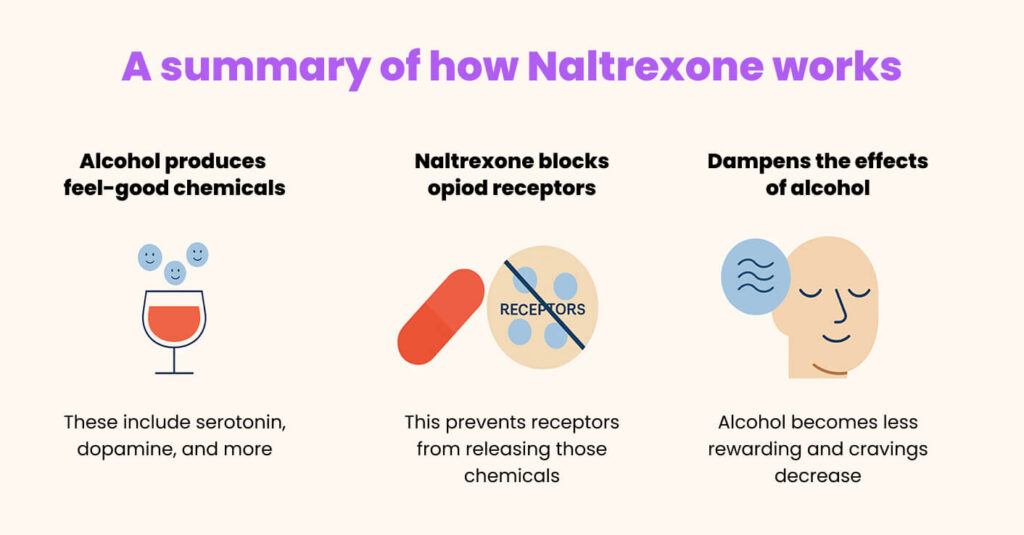
Unlike another medication you may have heard about, disulfiram, naltrexone doesn’t make you sick if you drink alcohol while taking it. You can still drink, but you may find that alcohol feels less rewarding or that it’s easier to stop after fewer drinks. Our guide to how naltrexone works explains the mechanism in more detail—keep in mind that individual experiences will vary on any medication.
There’s also some evidence that the reason you drink may influence how well naltrexone works. A 2021 study analyzed data from a randomized trial of 128 young adult heavy drinkers. Researchers found particularly pronounced effects on some risky-drinking outcomes among “reward drinkers,” or people who drank primarily for alcohol’s (temporary) positive emotional effects.
That’s potentially relevant if drinking is something you associate with unwinding after work, going out, celebrating, or making an enjoyable evening feel even better. However, it’s worth noting that the study was exploratory, involved adults ages 18 to 25, and didn’t specifically study “high-functioning drinkers.” It tells us something interesting about who may respond to naltrexone, not that everyone who functions well while drinking fits the reward-drinking profile.
When your drinking hasn’t caused an obvious crisis, it’s easy to keep moving the line for what would count as a reason to get help. You still go to work. You pay your bills. Maybe nobody else even knows you’ve been thinking about cutting back.
That’s one reason the term “high-functioning” can be misleading. It describes what you’re still able to do, not necessarily how you feel about your drinking or how alcohol may be affecting your health.
The author Celeste Yvonne described the slow climb this way: “By the time we realize we are drinking 3-4 glasses of wine each night, our tolerance is so built up that it doesn’t feel dangerous. It doesn’t feel unsafe. It feels like we still have control.” (Substack)
Drinking can creep up gradually. What started as an occasional weeknight drink can become a nightly routine without any single moment when things suddenly feel “bad enough” to address.
That doesn’t mean everyone who drinks regularly has an alcohol problem. But if you’re consistently drinking more than you mean to or finding it harder than expected to cut back, you don’t need to wait for the rest of your life to fall apart before taking that evidence seriously.
Even if you’ve decided you want to drink less, talking to someone about it can be a daunting step. You may have been thinking about your drinking privately for months or years without mentioning it to friends, family, or even your doctor.
Stigma is part of the problem. So is the feeling that you should be able to handle your drinking on your own. And if the treatment options you’re familiar with seem much more intensive than what you’re looking for, it’s easy to put off asking about other choices.
For some people, an online option like Sunnyside Med makes that first step easier. Telehealth can offer more privacy and flexibility while still connecting you with professional care.
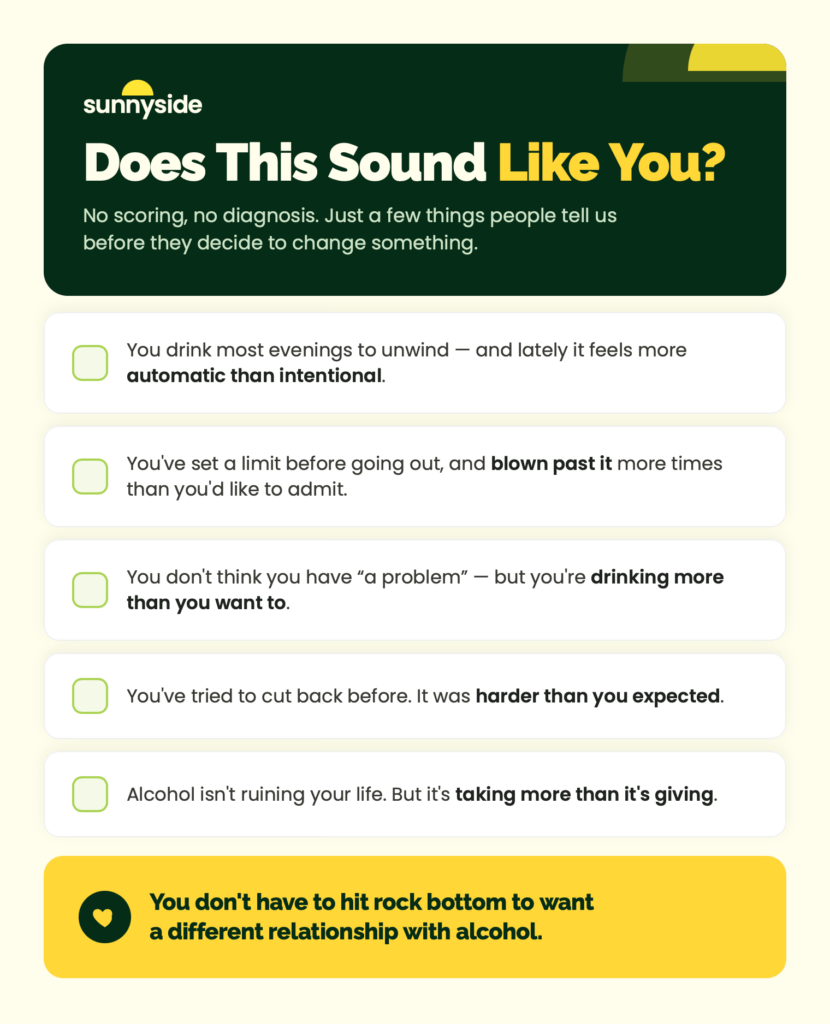
Alcohol use disorder isn’t an all-or-nothing diagnosis. It ranges from mild to severe, and treatment isn’t reserved for people with the most severe drinking problems.
Naltrexone also isn’t limited to people whose goal is complete abstinence. A 2023 systematic review and meta-analysis found strong evidence supporting oral naltrexone for reducing heavy drinking and other alcohol-related outcomes.
Some trials have looked specifically at people who wanted to cut back. In a 2022 randomized controlled trial, naltrexone was associated with fewer binge-drinking days and other reductions in alcohol use among sexual and gender minority men with mild-to-moderate alcohol use disorder who wanted to reduce their drinking.
An earlier randomized trial also studied people whose goal was to drink less rather than quit. Targeted naltrexone was associated with fewer drinks per day in men, although the same primary outcome wasn’t significant in women.
These studies don’t tell us whether naltrexone will work for someone simply because they consider themselves a “high-functioning drinker.” But they do show that naltrexone has been studied in people with less severe alcohol problems and in people whose goal is to drink less rather than stop completely.
If you’ve spent years assuming alcohol treatment wasn’t meant for someone like you, Sunnyside Med offers a private, online way to find out whether medication makes sense.
You start with a short assessment, which a licensed clinician reviews to determine whether naltrexone is appropriate for you. If prescribed, medication is shipped to your door where available. No insurance is required.
The program also includes drink tracking, weekly goal-setting, text coaching seven days a week, group calls, a private community, and ongoing clinical support. The idea is to address both sides of the equation: the medication can help reduce alcohol’s pull, while the behavioral tools help you change the habits that have built up around drinking.
According to internal data, 78% of active Sunnyside Med members achieve a meaningful reduction in drinking over 12 weeks. Active members average a 45.6% reduction in daily drinks over the same period. Individual results vary.
Co-founder Ian Andersen, who takes naltrexone himself, says this:
“If you’re reading this and questioning your own drinking, whether or not you identify as a high-functioning drinker, you might be at a point where some support could help. Sunnyside Med is a private, online program that combines medication with behavior-change support to help you start getting control of your drinking. Then you can decide if you want to quit or just cut back. Don’t worry so much about the final outcome; just focus on getting support right now, in the moment, then go from there.”
Sunnyside Med starts at $99/month, is HSA/FSA eligible, and doesn’t require insurance. If you’re curious whether naltrexone could fit your situation, you can see if you’re eligible with a short online assessment.
Naltrexone is a prescription medication. This content is educational and should not be taken as medical advice. A licensed clinician reviews every Sunnyside Med application.
No. "Alcoholic" isn't a medical diagnosis or a requirement for treatment. Naltrexone is used to treat alcohol use disorder, which ranges from mild to severe. Whether it's appropriate for you is a clinical decision based on your drinking, health history, and other factors.
Yes. Unlike disulfiram, naltrexone doesn't cause an unpleasant reaction if you drink alcohol while taking it. Many people continue drinking while using naltrexone, particularly when their goal is to cut back rather than quit.
It can. Clinical trials have found that naltrexone can reduce heavy drinking among people whose goal is moderation rather than abstinence. A clinician can help determine whether naltrexone is appropriate for your goals.
Naltrexone doesn't require residential treatment. Depending on where you live and your medical history, it may be prescribed through primary care, addiction medicine, or telehealth.
"Gray-area drinking" is an informal term for drinking that feels problematic or difficult to control but may not fit someone's idea of severe alcohol dependence. It isn't a medical diagnosis. Some people who identify with the term may be candidates for naltrexone, but the label itself doesn't determine whether the medication is appropriate. That's something to discuss with a clinician.
There's no single timeline. Some people notice changes in cravings or how rewarding alcohol feels relatively early, while for others the change is more gradual. How well naltrexone works also varies from person to person, so it's better to evaluate your progress with your clinician than expect a particular change by a particular week.
Ian has a family deeply hurt by alcohol, and is on his own personal journey to drink less and live his healthiest life. He’s took naltrexone daily for two years and saw incredible results. As Sunnyside Med’s first customer, he’s deeply entrenched in alcohol health and naltrexone.
How long naltrexone stays in your system depends partly on which form of naltrexone you're taking. Oral naltrexone,...

Research on naltrexone use during pregnancy is limited, particularly among people taking it for alcohol use disorder. What...
Although naltrexone eventually became an established treatment for alcohol use disorder (AUD), getting it into routine clinical practice...

Naltrexone and Antabuse differ in how they work, what taking them is like, their safety considerations, and the...