
30 Years of Naltrexone Research: What the Evidence Actually Shows
Naltrexone isn't a new or experimental drug. Researchers began studying its potential for alcohol use in the 1980s,...


Alcoholism can be chronic, but it isn’t necessarily permanent. Alcohol use disorder (AUD) is considered a chronic condition because symptoms can persist or recur, but many people reach remission and no longer meet the criteria for active AUD. Research also suggests that some alcohol-related brain changes can improve after drinking stops. Recovery looks different for everyone and can include abstinence or, for some people, lower-risk drinking.
Alcohol use disorder (AUD) is often described as a chronic condition. That can sound pretty final, especially if you’re already worried about your drinking.
But a chronic condition isn’t necessarily one that stays the same forever. AUD can improve substantially, and many people who once met the criteria for alcohol dependence no longer do later in life. Recovery can include abstinence, lower-risk drinking, or remission from AUD symptoms.
So if you’re wondering whether alcoholism is permanent, the answer is more complicated than “once an alcoholic, always an alcoholic.” What happens over time varies considerably from person to person.
The NIAAA describes alcohol use disorder as a medical condition that can range from mild to severe. It’s commonly treated as a chronic condition because symptoms can persist or recur over time. But “chronic” doesn’t mean that someone will always have active symptoms or that AUD will always remain at the same severity.
In fact, the DSM-5 includes remission specifiers for people who previously met the criteria for AUD but no longer meet most of them. Someone can be in early or sustained remission while still having a history of the disorder.
That distinction is useful when talking about whether AUD is permanent. A history of AUD doesn’t disappear, but neither does it tell you exactly what your drinking or symptoms will look like years from now. Some people experience recurrence, while others maintain long periods of remission.
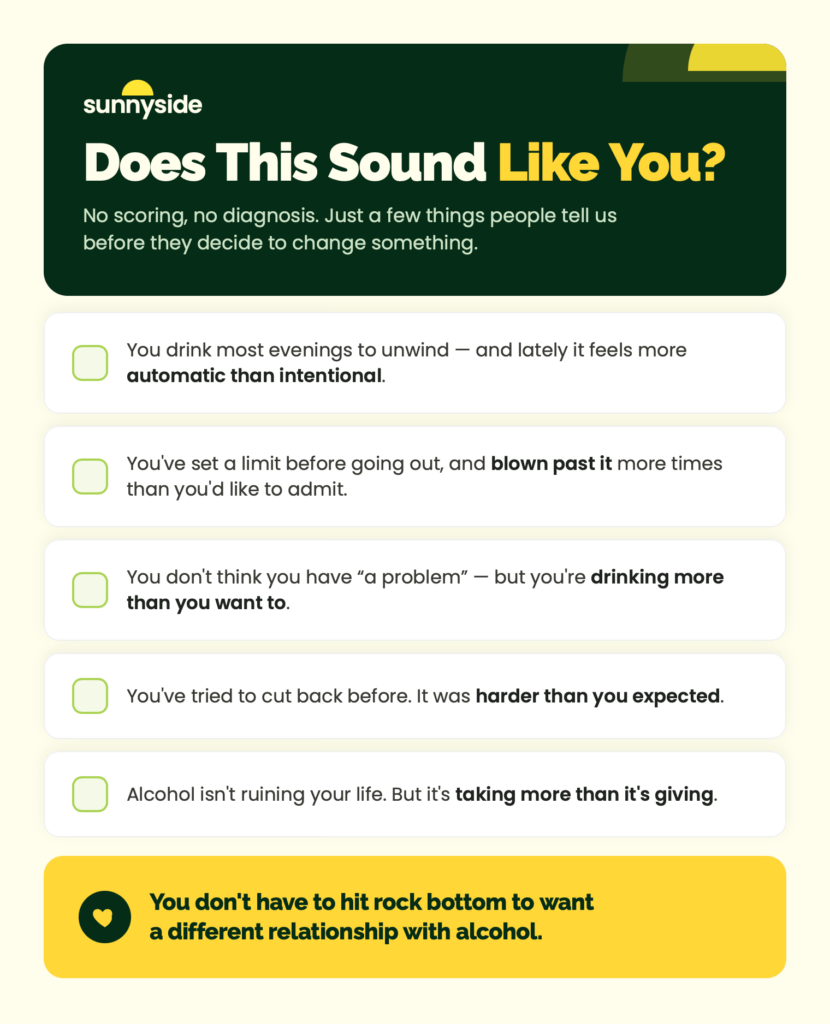
You don’t have to wait until drinking causes a crisis to make a change. And getting support doesn’t require committing to abstinence forever.
Sunnyside Med is a 100% online alcohol health program for people who want to cut back or quit drinking. A licensed clinician determines whether naltrexone, a prescription medication that can reduce heavy drinking and alcohol cravings, is appropriate. Members also get access to coaching, tracking tools, and behavioral support.
One Sunnyside Med member said: “Feeling really good! If anyone has been on the fence about taking naltrexone, please don’t be. For me this is life-changing. Wish I had started a long time ago when I first started thinking about it.”
If you’re concerned about your drinking but don’t necessarily identify with AUD, naltrexone can be an excellent option for some gray-area drinkers.
Long-term research makes it clear that active alcohol dependence isn’t necessarily permanent. In a national study of 4,422 U.S. adults who had experienced alcohol dependence at some point before the previous year, about 25% were still dependent.
The remaining participants had a range of outcomes. About 18% were abstinent, while another 18% were drinking at low-risk levels without symptoms of alcohol dependence or abuse. Others continued to drink without meeting criteria for dependence, although some still had symptoms or drank at higher-risk levels.
These findings are important because they show that a history of alcohol dependence doesn’t guarantee lifelong active dependence. They don’t, however, mean that everyone can safely return to moderate drinking or that every form of improvement is equally stable over time.
Recovery also doesn’t always begin with formal treatment. A 2020 review of population research found that many people resolve alcohol problems without using alcohol-focused treatment services. That doesn’t make treatment unnecessary; it shows that the course of alcohol problems is more varied than a simple progression from dependence to lifelong dependence.
There’s one important limitation to keep in mind: these studies looked at people with a history of alcohol dependence. Their findings shouldn’t automatically be applied to everyone who occasionally drinks more than they intended or identifies with gray-area drinking.
Heavy alcohol use can affect the brain, but research suggests that at least some structural changes can improve after drinking stops.
A small imaging study followed people with alcohol use disorder during about seven months of abstinence. Researchers found increases in cortical thickness across most of the brain regions they measured, with much of the change occurring during the first month (Durazzo et al., 2023).
Earlier imaging research has found a similar pattern, with some structural changes occurring within the first several weeks of abstinence and others continuing over a longer period (Durazzo et al., 2015).
These studies were small and measured brain structure, not whether every aspect of brain function returned to a previous state. They don’t show that all effects of heavy drinking are reversible. But they do challenge the idea that alcohol-related brain changes are necessarily fixed.
Many people recognize concerns about their drinking long before they seek treatment. Research on barriers to alcohol treatment points to reasons including stigma, wanting to handle the problem alone, and simply not believing that treatment is necessary yet.
That last barrier matters when people think alcohol problems have to become severe before support makes sense. In reality, you can talk with a clinician or start changing your drinking well before it reaches that point.
Long-term research also suggests that seeking help can improve the odds of maintaining change. In one study following people with alcohol problems, those who obtained help were more likely to achieve stable remission, while remission without help was associated with a greater risk of relapse (Moos & Moos, 2006).
Not necessarily. The NIAAA’s current definition of recovery focuses on remission from AUD and stopping heavy drinking rather than requiring complete abstinence.
Population research also shows that some people with a history of alcohol dependence later drink at lower-risk levels without symptoms. In the 2005 national survey discussed above, about 18% were abstinent and another 18% were drinking at low-risk levels without symptoms.
That doesn’t mean moderation is the right goal for everyone. A three-year follow-up study found that abstinent recovery was generally more stable than some forms of non-abstinent recovery.
Whether moderation is appropriate depends on the individual. Abstinence is recommended in situations where drinking carries particular risks, including during pregnancy and with certain medical conditions or medications. But the research doesn’t support the idea that every person who has ever met criteria for AUD will necessarily have active symptoms forever.
There isn’t one path that works for everyone. Behavioral treatment, mutual-support groups, structured programs, and medication are all evidence-based options for changing alcohol use.
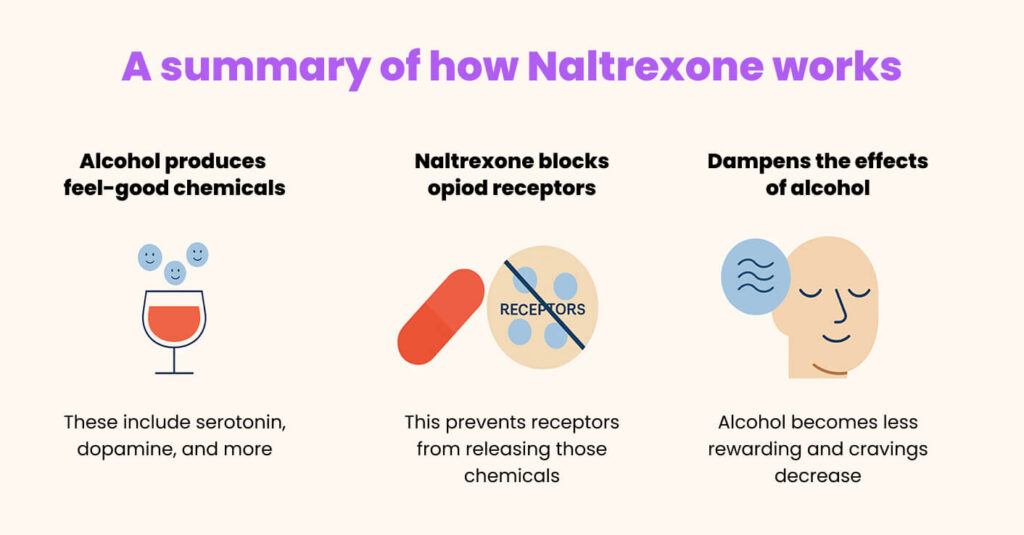
One medication option is naltrexone, which has been FDA-approved for alcohol use disorder since 1994. It isn’t addictive and works by blocking opioid receptors involved in alcohol’s reinforcing effects. A 2023 systematic review and meta-analysis found that oral naltrexone reduced the risk of returning to any drinking and returning to heavy drinking compared with placebo.
Medication can also be used alongside behavioral support. In the large COMBINE trial, participants receiving naltrexone with medical management had better drinking outcomes than those receiving placebo with medical management.
Sunnyside Med combines naltrexone with tracking, coaching, and community support. It can support people who want to quit as well as those whose goal is cutting back on alcohol.
For co-founder Ian Andersen, making that support available before someone reaches a crisis is personal. His mother died from alcohol when he was 11, and three of his grandparents also died from drinking. He now takes naltrexone daily himself.
One Sunnyside Med member described the change this way: “My best decision lately was to start Sunnyside Med. For the first time in years I have control over my drinking and my cravings. For me, the medication reduced the desire to drink. I know I can have a drink, but I just don’t really want one.”
In Sunnyside Med’s observational member data, 78% of active members achieved a meaningful reduction in drinking over 12 weeks. (Individual results vary.)
Sunnyside Med costs $99 per month, billed quarterly, and is HSA/FSA eligible. No insurance is required. A licensed clinician determines whether naltrexone is appropriate for each member.
If you’re ready to change your drinking, Sunnyside Med offers a private, online way to get started. Begin with a brief online quiz.
Naltrexone is a prescription medication. This content is educational and should not be taken as medical advice. A licensed clinician reviews every Sunnyside Med application.
Yes. Many people with a history of AUD reach remission and no longer have active symptoms. Recovery can involve abstinence or, for some people, drinking without returning to heavy drinking.
Some alcohol-related structural brain changes can improve during abstinence. Small imaging studies have found measurable changes within weeks, with additional improvement over several months. Not every alcohol-related effect is necessarily reversible.
Some people with a history of alcohol dependence do return to lower-risk drinking without symptoms. However, non-abstinent recovery isn't appropriate or equally stable for everyone, and abstinence is safer in some circumstances.
“Chronic” means a condition can persist or recur over time. It doesn't mean symptoms are always present or that recovery isn't possible.
There's no universal timeline. Drinking patterns, cravings, health effects, and other aspects of recovery can change at different rates.
Remission is a clinical term describing a period in which someone who previously met criteria for AUD no longer meets most of those criteria. Clinicians generally use terms such as remission and recovery rather than “cure” when describing AUD.
Ian has a family deeply hurt by alcohol, and is on his own personal journey to drink less and live his healthiest life. He’s took naltrexone daily for two years and saw incredible results. As Sunnyside Med’s first customer, he’s deeply entrenched in alcohol health and naltrexone.
Naltrexone isn't a new or experimental drug. Researchers began studying its potential for alcohol use in the 1980s,...
Early research suggests semaglutide may reduce alcohol cravings and some measures of drinking in people with alcohol use...

AA has strong evidence behind it for helping people with alcohol use disorder achieve abstinence, but the studies...

At some point, you may have wondered whether your drinking is “bad enough” to be a problem. Maybe...