
How Long Does Naltrexone Stay in Your System?
How long naltrexone stays in your system depends partly on which form of naltrexone you're taking. Oral naltrexone,...

No, naltrexone is not addictive or habit-forming. It blocks opioid receptors rather than activating them, so it doesn’t produce a high or create physical dependence. Stopping naltrexone also doesn’t cause a withdrawal syndrome, and most people don’t need to taper off the medication.
If you’re considering naltrexone to help you drink less, you might wonder whether taking a daily medication means trading one dependency for another. It’s a reasonable question, especially if you’re unfamiliar with how naltrexone works.
Fortunately, naltrexone doesn’t carry substantial risks of addiction and dependence. Here’s what you should know about its effects, what happens when you stop taking it, and how it can fit into your long-term drinking goals.
Naltrexone is an opioid antagonist, meaning it binds to opioid receptors in the brain and blocks their activity. It doesn’t activate these receptors or produce euphoric effects.
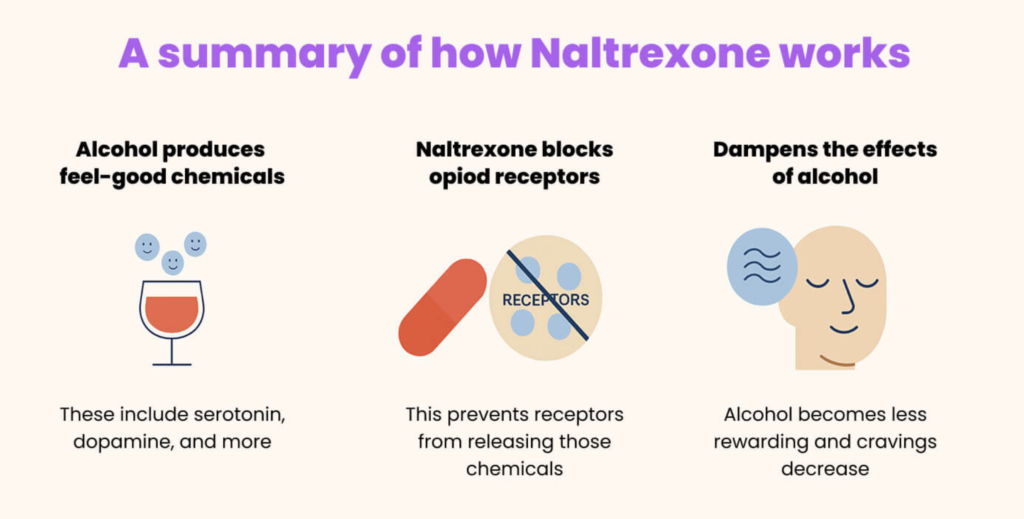
This distinction is central to understanding why naltrexone isn’t addictive. It doesn’t produce the rewarding high associated with opioid misuse, and it has no recognized potential for abuse. Naltrexone is also not classified as a controlled substance.
When prescribed for alcohol use disorder (AUD), naltrexone helps reduce the rewarding effects of alcohol, which can make it easier to cut back or stop drinking. It does this without creating a new substance dependency.
The Substance Abuse and Mental Health Services Administration (SAMHSA) confirms that naltrexone is not addictive and does not cause withdrawal symptoms when treatment stops.
For more information about the medication’s effects, see our guide to how naltrexone works.
Although these terms are often used interchangeably, they describe different experiences.
Physical dependence and addiction aren’t necessarily the same thing. For example, someone can develop physical dependence on certain prescription medications without experiencing addiction.
Naltrexone doesn’t cause addiction or physical dependence. It doesn’t produce the euphoric effects associated with opioid misuse, and taking it regularly doesn’t cause your body to become physically dependent on it.
Stopping naltrexone itself does not cause a withdrawal syndrome. Because the medication doesn’t create physical dependence, most people can discontinue it without gradually reducing their dose.
However, it’s still important to discuss stopping treatment with your clinician. If naltrexone has been helping you manage your drinking, discontinuing it may mean that alcohol cravings or previous drinking patterns return.
There’s also an important distinction between stopping naltrexone and starting it while physically dependent on opioids. Because naltrexone blocks opioid receptors, taking it while physically dependent on opioids can trigger sudden, potentially severe opioid withdrawal. This is known as precipitated withdrawal, and it occurs because naltrexone displaces opioids from their receptors. The withdrawal is caused by preexisting opioid dependence, not dependence on naltrexone itself.
Before starting treatment, it’s vital to tell your clinician about any current or recent opioid use, including prescription pain medications, tramadol, codeine, and medications used to treat opioid use disorder. Your clinician will determine the appropriate opioid-free interval before you begin taking naltrexone.
Yes, in many cases. Naltrexone may be prescribed for several months or longer when it’s medically appropriate.
How long you should continue treatment depends on your mindful drinking goals, your response to the medication, and your clinician’s recommendations.
Some people find that naltrexone helps them establish healthier drinking habits over several months. Others may benefit from continuing treatment for a longer period, particularly if they experience persistent cravings or find that the medication helps them maintain their progress.
As with any prescription medication, ongoing treatment should include appropriate clinical follow-up. Your clinician can help you assess how well naltrexone is working, address any side effects, and determine when it may be appropriate to discontinue treatment.
If you decide to stop taking naltrexone, you generally won’t need to taper your dose to prevent withdrawal. However, it’s worth discussing how you’ll maintain your progress after stopping medication, particularly if naltrexone has been an important part of your approach to drinking less or quitting. That’s where a comprehensive program like Sunnyside Med can be invaluable.
Although naltrexone isn’t addictive, its effects on opioid receptors come with some important safety considerations.
Because naltrexone blocks opioid receptors, opioid pain medications may not work as expected while you’re taking it. This can complicate pain management during surgery or after an injury, so make sure your healthcare providers know you’re taking naltrexone.
Trying to overcome the medication’s blocking effects by taking large amounts of opioids is particularly dangerous and can lead to a fatal overdose. The Substance Abuse and Mental Health Services Administration (SAMHSA) also cautions that opioid overdose risk can increase after stopping naltrexone, particularly if someone returns to opioid use after their tolerance has decreased.
These risks don’t mean naltrexone is addictive. They reflect how the medication interacts with opioids, which is why it’s important to discuss any current or anticipated opioid use with your clinician.
If you’re considering naltrexone to help you drink less, understanding that it isn’t addictive may address one of your concerns. The next step is finding out whether it’s medically appropriate for you and how it might fit into your drinking goals.
Sunnyside Med is a 100% online alcohol health program that combines medication with behavioral support for people who want to cut back or quit drinking.
The process starts with a short online assessment. A licensed clinician reviews your drinking patterns, medical history, and current medications to determine whether naltrexone is appropriate for you. If prescribed, Sunnyside’s compounded oral naltrexone with vitamin B6 is shipped discreetly to your door.
Alongside daily medication, members receive access to drink tracking, medication reminders, human coaching seven days a week, weekly group Zoom calls, and a private member community. Ongoing clinical care is also available to help you manage side effects, discuss your progress, and determine how long to continue treatment.
Sunnyside Med costs $99 per month, plus a one-time intake fee. No insurance is required, and the program is HSA/FSA eligible and available in all 50 states.
Interested in finding out whether naltrexone could help you reach your drinking goals? Take Sunnyside Med’s short online assessment to get started.
This content is for educational purposes and should not be taken as medical advice. Naltrexone is a prescription medication, and a licensed clinician determines whether it is appropriate for each individual.
No. Naltrexone is a prescription medication, but it isn't classified as a controlled substance because it has no recognized abuse potential. Unlike opioid medications, it blocks opioid receptors rather than activating them.
Stopping naltrexone doesn't cause a withdrawal syndrome, and you generally don't need to taper your dose. However, alcohol cravings or previous drinking patterns may return after treatment ends. Talk with your clinician about when to stop taking naltrexone and how to maintain your progress.
Medications used to treat addiction don't necessarily have addictive properties themselves. Naltrexone is an opioid antagonist, meaning it blocks opioid receptors without producing the euphoric effects associated with opioid misuse. It doesn't create physical dependence or cause a withdrawal syndrome when treatment stops.
Yes. Starting naltrexone while physically dependent on opioids can trigger sudden, potentially severe withdrawal. This is called precipitated withdrawal and results from preexisting opioid dependence, not dependence on naltrexone. An appropriate opioid-free interval is required before starting treatment.
Generally, no. Naltrexone doesn't cause physical dependence, so gradually reducing the dose isn't necessary to prevent withdrawal. However, you should absolutely discuss discontinuing treatment with your clinician before taking any action.
Ian has a family deeply hurt by alcohol, and is on his own personal journey to drink less and live his healthiest life. He’s took naltrexone daily for two years and saw incredible results. As Sunnyside Med’s first customer, he’s deeply entrenched in alcohol health and naltrexone.
How long naltrexone stays in your system depends partly on which form of naltrexone you're taking. Oral naltrexone,...

Research on naltrexone use during pregnancy is limited, particularly among people taking it for alcohol use disorder. What...
Although naltrexone eventually became an established treatment for alcohol use disorder (AUD), getting it into routine clinical practice...

Naltrexone and Antabuse differ in how they work, what taking them is like, their safety considerations, and the...