How Long Does Naltrexone Stay in Your System?
How long naltrexone stays in your system depends partly on which form of naltrexone you're taking. Oral naltrexone,...

Board-Certified Internal & Addiction Medicine Physician

Naltrexone 50 mg is a commonly prescribed oral dose of naltrexone for alcohol use disorder (AUD). The medication blocks opioid receptors involved in alcohol’s rewarding effects, which can reduce cravings and heavy drinking. Your dose and treatment plan should always be determined by a healthcare provider.
If you’ve looked into naltrexone to help you drink less, you’ve probably seen 50 mg mentioned. That’s because 50 mg is the standard oral dose used to treat alcohol use disorder.
But it isn’t the only formulation available. Sunnyside Med, for example, provides eligible members with compounded naltrexone 45 mg plus vitamin B6 rather than the available 50 mg tablet.
Here’s what the 50 mg dose means, how naltrexone works, and what to know if you’re exploring naltrexone as an option.
Naltrexone is a prescription medication approved by the FDA to treat alcohol dependence and opioid dependence. It’s an opioid antagonist, meaning it binds to and blocks opioid receptors in the brain.
For alcohol dependence, the FDA-approved prescribing information recommends 50 mg (milligrams) once daily for most patients. Clinical trials supporting its effectiveness also used 50 mg daily in combination with psychosocial treatment.
Alcohol activates several systems in the brain, including the body’s endogenous opioid system. Naltrexone blocks opioid receptors involved in alcohol’s rewarding effects.
As a result, drinking may feel less rewarding, and cravings may become less intense. This can make it easier for some people to drink less and avoid episodes of heavy drinking.
Importantly, naltrexone doesn’t make you sick if you drink alcohol while taking it. (That’s a different medication called disulfiram.) Instead, naltrexone changes how the brain responds to alcohol.
Sunnyside Med uses a slightly different formulation from the standard 50 mg naltrexone tablet. Through the 100% online alcohol health program, eligible members receive compounded naltrexone 45 mg with vitamin B6, along with drink tracking, coaching, community, and other behavioral support. A licensed clinician will review your health history and determine whether naltrexone is appropriate for you, whether your goal is to cut back or quit drinking altogether (and both are valid goals).
Like any medication, naltrexone can cause side effects. According to SAMHSA, common side effects of oral naltrexone can include nausea, headache, dizziness, fatigue, vomiting, decreased appetite, and anxiety.
Not everyone experiences side effects, and some may improve as your body adjusts.
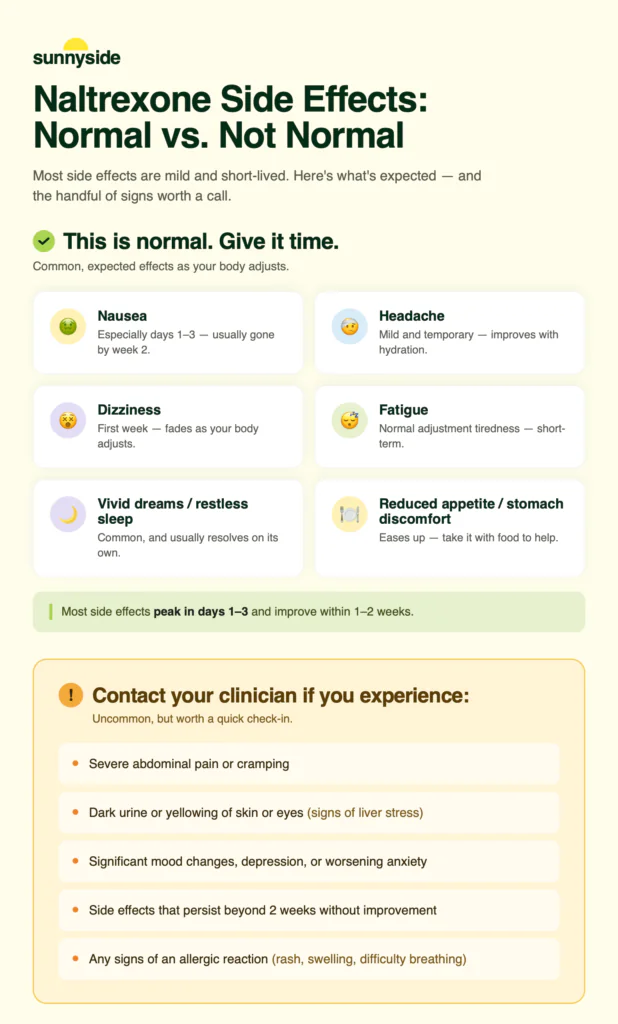
Naltrexone blocks the effects of opioids. Taking it while physically dependent on opioids can trigger sudden and potentially severe opioid withdrawal.
Tell your healthcare provider about any opioid use before starting naltrexone, including prescription pain medications. The prescribing information recommends an opioid-free interval of at least seven to 10 days for people previously dependent on short-acting opioids. People transitioning from buprenorphine or methadone may be vulnerable to precipitated withdrawal for longer.
Naltrexone has also been associated with liver injury, so your clinician should know about your medical history, medications, and any liver problems before you start treatment.
Naltrexone can help address the cravings and rewarding effects that make drinking less difficult. But medication is only one part of changing your relationship with alcohol. Sunnyside Med combines access to naltrexone with the behavioral tools and support that can help you turn that biological boost into lasting change.
With Sunnyside Med, the entire process is online. You’ll complete an assessment and meet with a licensed clinician who reviews your health history, drinking patterns, and goals to determine whether naltrexone is appropriate for you. Eligible members receive Sunnyside’s compounded naltrexone with vitamin B6, along with drink tracking, coaching, community, and other behavioral support to help them work toward cutting back or quitting.
“Sunnyside provides scaffolding around the medication to allow folks to be as successful as possible,” says Sunnyside co-founder Nick Allen. “The medication alone has been shown to reduce bounce-back behavior, but especially when coupled with behavior change, that’s when you get the most effective results for the long term.”
Whether you want to drink a little less, avoid heavy drinking, or stop drinking altogether, your plan can adapt to the goals you set for yourself.
Ready to see if naltrexone could be a fit? Take the quick online assessment to get started.
Yes. For alcohol dependence, 50 mg once daily is the standard oral dose described in FDA-approved naltrexone labeling. However, clinicians may use different doses or formulations depending on the individual and treatment program.
Low-dose naltrexone (LDN) generally refers to naltrexone taken at doses much lower than the standard 50 mg dose used for alcohol use disorder, often around 1 to 5 mg per day. A 45 mg or 50 mg dose of naltrexone isn’t considered low-dose naltrexone.
Yes, many people can drink alcohol while taking naltrexone. Naltrexone doesn’t cause an adverse reaction when combined with alcohol, so you don’t necessarily have to stop drinking before or while taking it. Instead, naltrexone blocks opioid receptors involved in alcohol's rewarding effects, which can help reduce cravings and heavy drinking. Follow your clinician's guidance based on your health and treatment goals.
No. Naltrexone isn't addictive, doesn't produce a high, and doesn't cause physical dependence. This article isn’t a substitute for medical advice. Naltrexone is a prescription medication. Individual results vary, and all treatment decisions are made by a licensed clinician.
Ian has a family deeply hurt by alcohol, and is on his own personal journey to drink less and live his healthiest life. He’s took naltrexone daily for two years and saw incredible results. As Sunnyside Med’s first customer, he’s deeply entrenched in alcohol health and naltrexone.
How long naltrexone stays in your system depends partly on which form of naltrexone you're taking. Oral naltrexone,...

Research on naltrexone use during pregnancy is limited, particularly among people taking it for alcohol use disorder. What...
Although naltrexone eventually became an established treatment for alcohol use disorder (AUD), getting it into routine clinical practice...

Naltrexone and Antabuse differ in how they work, what taking them is like, their safety considerations, and the...