

GLP-1s and Alcohol: Can They Help With Cravings And Drinking Less?
If you regularly find yourself drinking more than you intended, cutting back can be easier said than done....

Board-Certified Internal & Addiction Medicine Physician
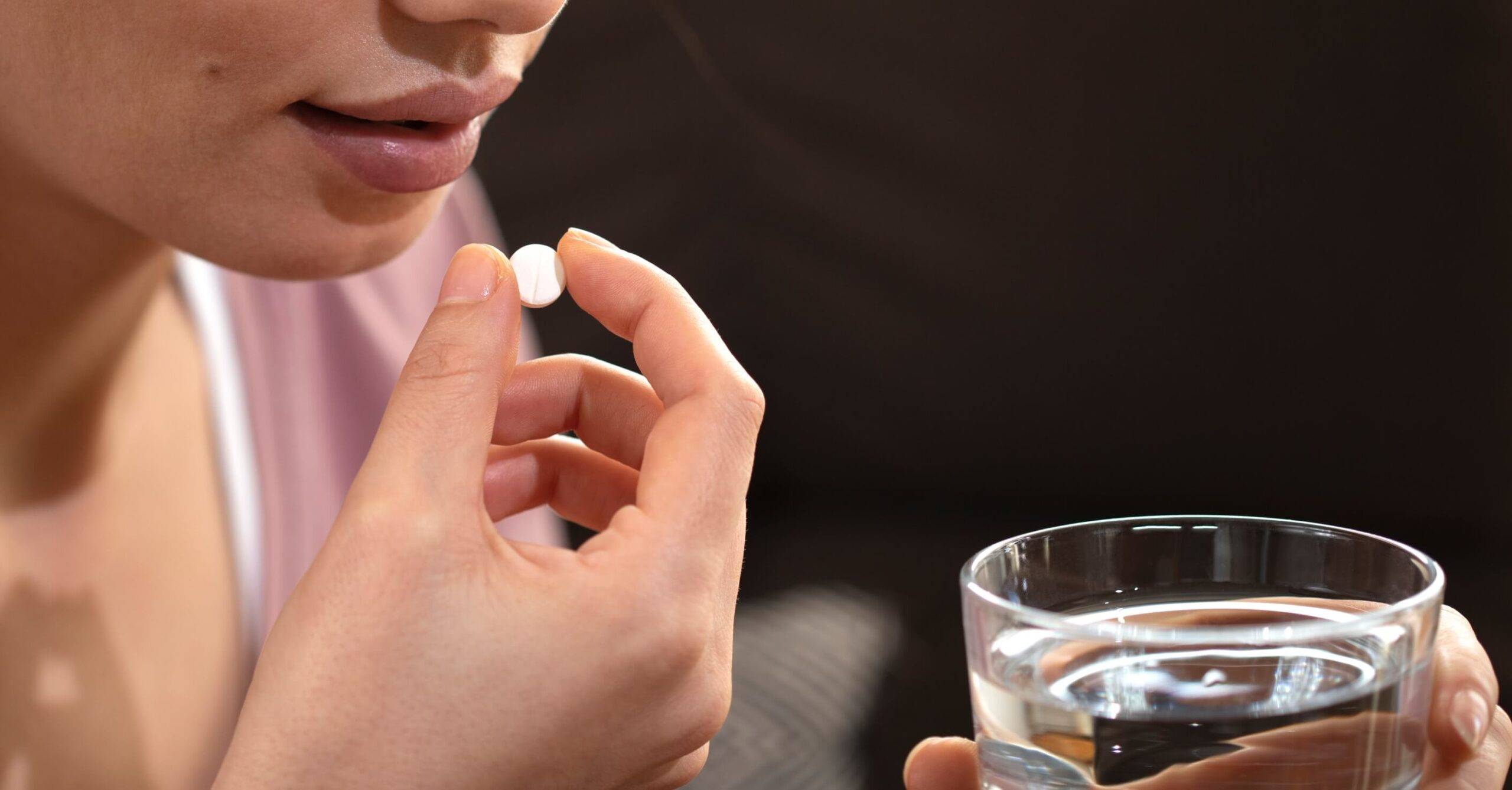
Naltrexone side effects are usually mild and temporary, most often including nausea, headache, dizziness, fatigue, sleep changes, and digestive discomfort. For most people, side effects are strongest during the first few days and improve within one to two weeks. While side effects often appear immediately, naltrexone’s benefits build over time, making adherence one of the biggest predictors of success for reducing cravings, heavy drinking days, and overall alcohol consumption.
Naltrexone is one of the most well-studied medications available for people who want to drink less. Whether your goal is moderation, abstinence, or simply getting out of a cycle of gray-area drinking, it’s FDA-approved (since 1994), non-addictive, and backed by decades of research showing it can reduce cravings, heavy drinking days, and overall alcohol consumption.
Like any medication, though, naltrexone can cause side effects.
The good news is that most naltrexone side effects are mild and temporary, and they improve as your body adjusts to the medication. Knowing what to expect can make the first few weeks easier and—together with support from Sunnyside Med—help you stay on naltrexone long enough to experience its benefits.
Naltrexone works by reducing the brain’s reward response to alcohol. Normally, alcohol triggers the release of endorphins, which activate opioid receptors and contribute to the pleasurable “reward” signal that reinforces drinking. Naltrexone dampens that response.
Over time, many people notice:
“Drinking might feel different, and that’s the point. Less exciting. Less rewarding. Sometimes just… less fun,” says Sunnyside co-founder Ian Andersen. “That’s the medication doing its job.”
Research consistently supports these effects. In the landmark COMBINE study, one of the largest alcohol treatment studies ever conducted, participants taking naltrexone experienced significantly better drinking outcomes than those receiving a placebo, particularly when the medication was paired with behavioral support.
Naltrexone is available in two forms:
Most people using naltrexone for alcohol reduction take the oral form. That’s what we offer at Sunnyside Med.
For most people, yes.
A 2023 systematic review and meta-analysis published in JAMA analyzed 118 clinical trials involving more than 20,000 participants and found that oral naltrexone was generally safe and well-tolerated.
That said, you should definitely talk with a healthcare provider before taking it, especially if you:
Your clinician can help you determine whether naltrexone is appropriate for your situation.
Nervous about side effects? That’s understandable when starting a new medication.
Naltrexone tends to be on the milder side when it comes to side effects, though they are definitely possible. Most side effects occur during the first few days or weeks of treatment and improve with time.
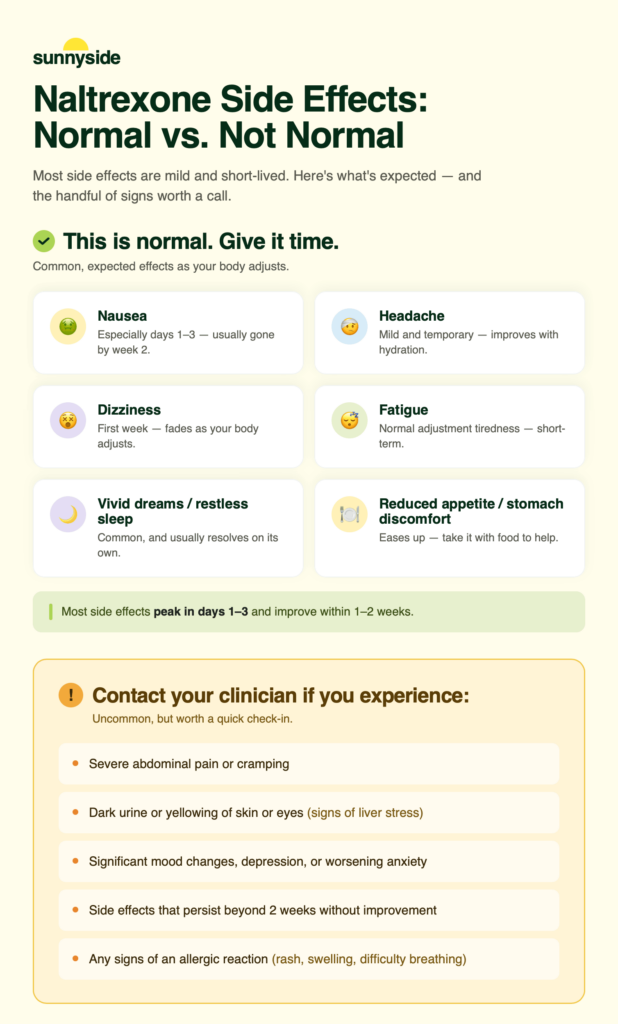
Nausea is the most commonly reported side effect of oral naltrexone, affecting between 10-20% of patients. There’s a chance you might not experience it at all, but if you do, it’s likely to be relatively short-lived. For example, in one clinical trial conducted by Dr. Glenn-Milo Santos et al, all participants who experienced nausea while taking naltrexone found that it was “mild to moderate,” and that it resolved as they became used to the medication.
Some people notice mild stomach upset during their first several doses, particularly if they take the medication on an empty stomach. Taking naltrexone with food can often reduce or eliminate nausea.
Headaches are relatively common when starting naltrexone. They’re usually mild and temporary. Staying hydrated and giving your body time to adjust can help.
Some people experience mild dizziness or lightheadedness during the first week of treatment. This typically improves as your body adapts to the medication.
It’s not unusual to feel slightly more tired than normal during the adjustment period. For most people, this also resolves within the first couple of weeks.
Some people report:
Sleep-related side effects tend to improve over time. If they persist, your healthcare provider may recommend adjusting the timing of your dose.
Some people experience:
These symptoms are usually temporary and often improve within the first few weeks.
For most people, side effects are strongest during the first several days and begin improving within one to two weeks.
This adjustment period can be frustrating, especially because naltrexone’s benefits tend to build more gradually. While side effects often show up right away, meaningful changes in cravings, drinking patterns, and alcohol’s pull tend to emerge over weeks and months of consistent use.
That timing mismatch creates a challenge. Some people stop taking naltrexone before they’ve had a chance to experience its full benefits. Studies have found that many patients never refill their initial prescription despite strong evidence supporting the medication. In one study led by Dr. Henry Kranzler, more than half of patients who filled an initial prescription did not continue treatment long term.
Research suggests that people who stay on naltrexone longer often experience larger reductions in cravings, heavy drinking days, and overall alcohol consumption. In other words, one of the biggest challenges with naltrexone isn’t whether it works. It’s staying on it long enough to find out how well it works for you.
That’s one reason programs that combine medication with behavioral support tend to produce stronger outcomes. The same principle guides the Sunnyside Med approach today, combining medication with coaching, accountability, and habit-change tools designed to help people stay engaged through the early adjustment period and beyond.
“Tracking my drinks and starting the medication has been a game changer,” said one Sunnyside Med member. “This is the first time in many years I’m starting to take control.”
Here are a few methods you can use to navigate naltrexone side effects. Remember, your Sunnyside Med care team is available to answer questions and provide support throughout the process.
Taking naltrexone with a meal or snack is one of the simplest ways to reduce nausea and stomach discomfort.
Adequate hydration may help reduce headaches, dizziness, and fatigue.
If you’re taking naltrexone as part of a moderation program, your provider may recommend taking it one to two hours before your typical drinking window or strongest cravings.
Many side effects improve naturally as your body adjusts. If symptoms aren’t debilitating, it may be worth giving yourself a week or two before deciding whether the medication is a good fit.
Serious side effects are uncommon but can occur. You should contact your healthcare provider immediately if you experience any of the following.
Because naltrexone blocks opioid receptors, taking it while opioids are still in your system can trigger sudden withdrawal symptoms.
Seek medical attention if you experience:
Reach out to your Sunnyside Med care team or other provider if:
The challenge for many people isn’t whether naltrexone works. It’s staying on it long enough to experience the benefits. That’s where support becomes especially vital.
At Sunnyside Med, members receive care from licensed medical providers who can help determine whether naltrexone is a good fit, answer questions about side effects, and make adjustments to dosing or titration schedules when appropriate. Starting with a lower dose, changing when you take the medication, or simply knowing what to expect can make the adjustment period much easier.
Members also receive coaching, tracking tools, and a personalized plan designed to help them build sustainable drinking habits while the medication does its work. Research has consistently shown that support can help people stay engaged with treatment and behavior change efforts over time, and Sunnyside’s results back this up: Internal data shows that engaged members are 3x more likely to refill their medication.
The first week on naltrexone isn’t always the easiest. But for many people, a few days of temporary side effects can lead to lasting changes in cravings, drinking patterns, and overall health.
“I’m honestly shocked in the best way by how this medication is making me feel,” said one Sunnyside Med member. “For the first time in a long time, I don’t feel that constant pull to reach for a glass of wine.”
If you’re interested in learning more, check out our complete Naltrexone 101 guide or take a quick assessment to find out whether Sunnyside Med might be a good fit for your goals.
Naltrexone is a prescription medication. This content is educational and should not be taken as medical advice. A licensed clinician reviews every Sunnyside Med application.
Sunnyside is the #1 mindful drinking app. Since 2020, we’ve been honing our harm-reduction approach and have helped over 400,000 people cut out 22 million drinks from their baseline habits. 96.7% of our members report success in drinking less, and in a third-party study, our approach was demonstrated to reduce weekly drinking by 33% after 12 weeks.
Think of Sunnyside as the front door for anyone who wants to change their relationship with alcohol. If you want to drink less, we can help you get there. If you want to eventually quit, but want to take a gradual approach, we can make that happen.
When you sign up for Sunnyside, you’ll take a quick 3-minute quiz, then hop into the app. It’s as simple and quick as that.
We’ll give you weekly plans to gradually reach your drinking goals, and we’ll provide nudges, coaching, exercises, and advice to help you get there.
We have daily tracking and journaling tools, including the option to chat with a real human coach at any time. And our state-of-the-art analytics help you track your progress over time.
Sunnyside is a full-featured mindful drinking app. Naltrexone will actively help you reduce cravings around alcohol, and Sunnyside will help you understand your triggers and patterns, giving you a healthy system for habit change.
If you choose to stop taking naltrexone, the Sunnyside app remains a tool you can keep using to maintain your healthy habits.
Everyone who signs up for Sunnyside gets a free 15-day trial. After that, the subscription is $8.25/month.
Whether you’re currently taking naltrexone or just doing some research on alcohol moderation, we’d love to have you sign up for our 15-day free trial today.
Nausea is the most commonly reported side effect, especially during the first few days of treatment. Some people also experience headaches, fatigue, dizziness, or sleep changes as their body adjusts. The encouraging news is that these side effects are usually mild and temporary.
For most people, side effects are strongest during the first several days and improve within one to two weeks. Many of naltrexone's benefits also build over time, so the first week doesn't necessarily predict your long-term experience with the medication.
No. Some people notice several side effects when they start naltrexone, while others notice almost none. Factors like dose, timing, and whether you take the medication with food can also influence the experience.
It can. Some people report vivid dreams, restless sleep, or difficulty falling asleep when they first start taking naltrexone. These effects often improve as the body adjusts.
Yes. Unlike Antabuse (disulfiram), naltrexone doesn’t make you sick if you drink alcohol. Many people use naltrexone specifically to help reduce drinking rather than quit completely. Whether your goal is moderation or abstinence, the medication works by reducing alcohol's rewarding effects over time.
Not necessarily. Many side effects improve during the first couple of weeks. Before stopping the medication, talk with your healthcare provider. Small adjustments can often make side effects much more manageable; just be sure to consult with your clinician before making any changes.
Ian has a family deeply hurt by alcohol, and is on his own personal journey to drink less and live his healthiest life. He’s took naltrexone daily for two years and saw incredible results. As Sunnyside Med’s first customer, he’s deeply entrenched in alcohol health and naltrexone.
If you regularly find yourself drinking more than you intended, cutting back can be easier said than done....
Here's what the research tells us about GLP-1 medications and alcohol, including what scientists have learned, what they're...

GLP-1 medications have attracted plenty of attention for their potential to reduce alcohol cravings. But if you're interested...
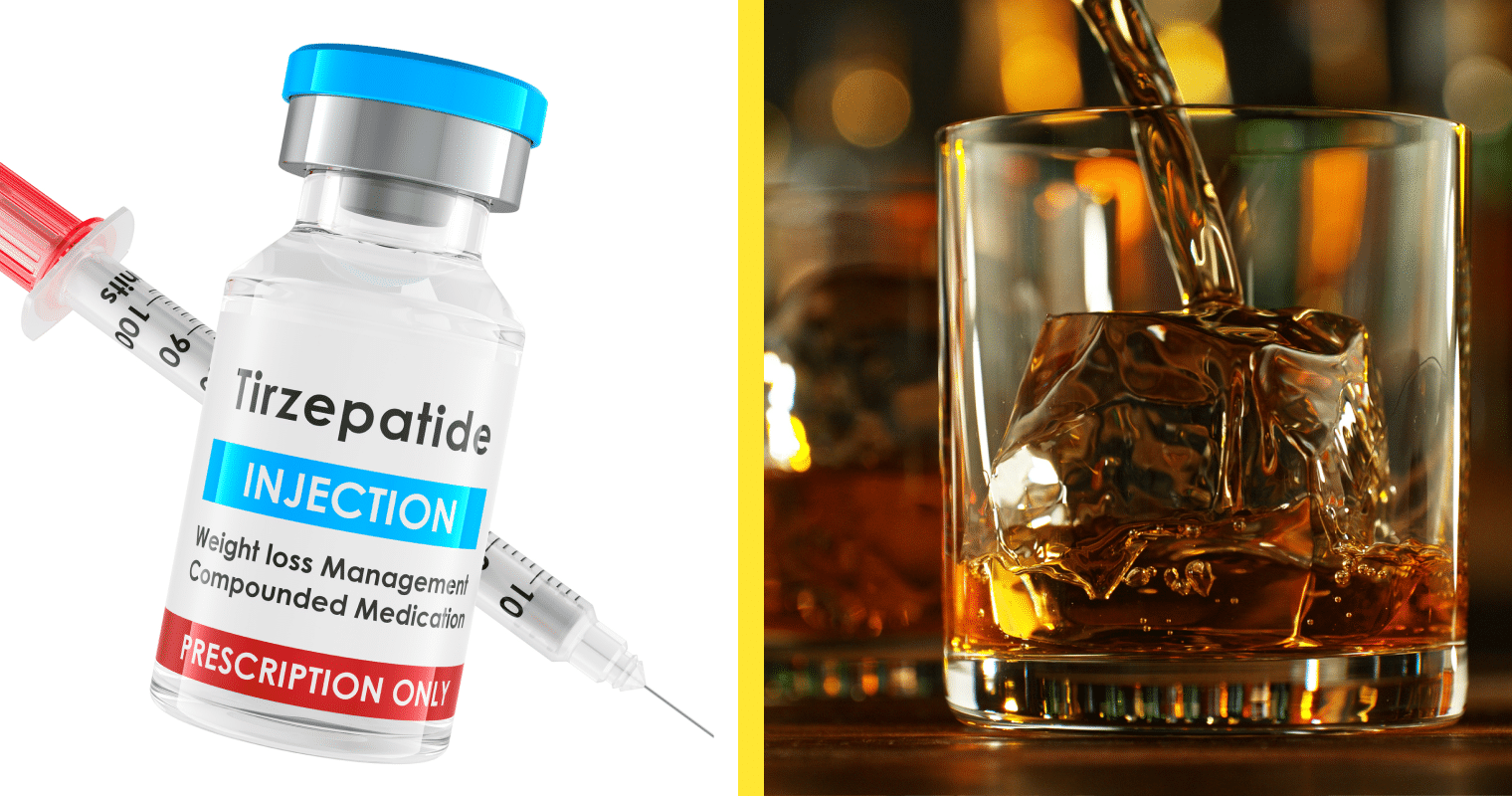
Tirzepatide is a prescription medication that activates two types of hormone receptors: glucagon-like peptide-1 (GLP-1) and glucose-dependent insulinotropic...