
Last Updated on June 2, 2026
Even low-to-moderate alcohol intake is associated with reduced brain blood flow and cortical thinning, according to a 2026 Stanford study published in the journal Alcohol. The findings suggest that alcohol and brain health are more closely linked than previous guidance has implied, with effects intensifying as we age.
You’re keeping it to a glass or two most nights; your relationships and job feel unaffected, and nobody seems worried about you. You’re a low-to-moderate drinker. And yet… It’s possible that even “moderate” drinking is having more of an effect than you thought.
A study out of Stanford, covered in May by Medical News Today, found that even relatively low levels of lifetime alcohol intake were associated with reduced blood flow across 68% of brain regions scanned. This included areas involved in memory, focus, emotional regulation, and decision-making.
The 45 participants in this study weren’t heavy drinkers. They were healthy adults, ages 22 to 70, with no history of alcohol use disorder. The results surprised even the researchers.
Sunnyside co-founder Ian Andersen saw the article, and he had a lot to say about it. Check it out:
What the Stanford Study Actually Found About Alcohol and Brain Health
Researchers led by Dr. Timothy C. Durazzo, a professor of psychiatry and behavioral science at Stanford, used MRI scans to measure brain blood flow, cortical thickness, and brain volume in 45 healthy adults. What they found was striking: Higher lifetime alcohol intake was associated with lower blood flow across the cortex, particularly in the frontal and parietal lobes. (Those are the regions responsible for planning, focus, and emotional regulation.)
The effect got dramatically stronger when age was factored in. Older adults with higher lifetime intake also showed thinner brain cortices.
Dr. Durazzo told Medical News Today, “We did not expect the strength of the associations to be as high as we observed.”
The study was observational and small, and these results show association, not causation. More research is needed to shed additional light on this study’s findings. But the findings do add to a growing body of evidence, including WHO data, that links any level of alcohol consumption to increased risk of at least six types of cancer. This is a signal that “low risk” drinking may be riskier than we’ve been told.
Who This Research Is Really For
As Ian mentions in the video above, the people most at risk aren’t the ones who frequently drink to excess or go beyond their capabilities. They’re the ones who feel like they’re doing everything right according to current guidelines. A glass or two of wine with dinner, a few beers on the weekend, nothing that feels like it would be seriously compromising.
But this breeziness may be preventing people from identifying health risk factors earlier on. Leading medical academic Dr. Joe Volpicelli has written extensively about this pattern. In a Substack essay from 2025, for example, he uses heart disease as an example of a condition that could be better treated.
“The biggest advances in the treatment of heart disease are identifying risk factors … and aggressively treating these symptoms before structural pathology,” he writes.
NIH data shows a 10-year gap between the onset of alcohol dependence and accessing treatment. A preventive approach to alcohol health, which includes identifying potential risk factors before they reach a fever-pitch, “emergency” status, could change that trajectory entirely.
You don’t need a diagnosis to pay attention to this research. If you’re someone who drinks within the guidelines but wonders whether it’s still too much, this study was literally about you. And you’re not alone: A lot of people live in that grey area of keeping it together, but also wondering if alcohol is taking more away from life than it’s giving. Taking this research seriously now, before you feel like you need to, is exactly the kind of proactive thinking this study supports.
How Sunnyside Med and Naltrexone Can Help
Naltrexone, which has been an FDA-approved medication since 1994, works by reducing the neurological reward signal that alcohol triggers. In practice, it turns down the volume on the craving itself, so drinking — especially after that first drink — loses some of its luster.
The members who join Sunnyside Med don’t usually describe their experience in clinical terms. They talk about what changes mentally and emotionally. One member put it this way:
“I’m honestly shocked in the best way by how this medication is making me feel. For the first time in a long time, I don’t feel that constant pull to reach for a glass of wine just to get through the evening.”
Another said:
“Thanks to the Naltrexone, the cravings have subsided significantly, and the mental chatter is much quieter.”
When a once-daily naltrexone pill is paired with behavior change tools, coaching, and a plan (like we do at Sunnyside), the results are likely to compound. Among active members with 50%+ app engagement, 78% achieved a meaningful reduction in their drinking. Members are three times more likely to stay on medication compared to industry averages.
What to Do if This Sounds Like You
Studies like this Stanford research keep confirming what a lot of people already feel in their gut. The relationship between alcohol and brain health matters more than we may have previously believed.
If you’ve been thinking about cutting back on drinking or are just curious about what medication-assisted moderation might look like, consider giving Sunnyside Med a try. Take a quick, private assessment to see if it could be a fit.
Naltrexone is a prescription medication. This content is educational and should not be taken as medical advice. A licensed clinician reviews every Sunnyside Med application.
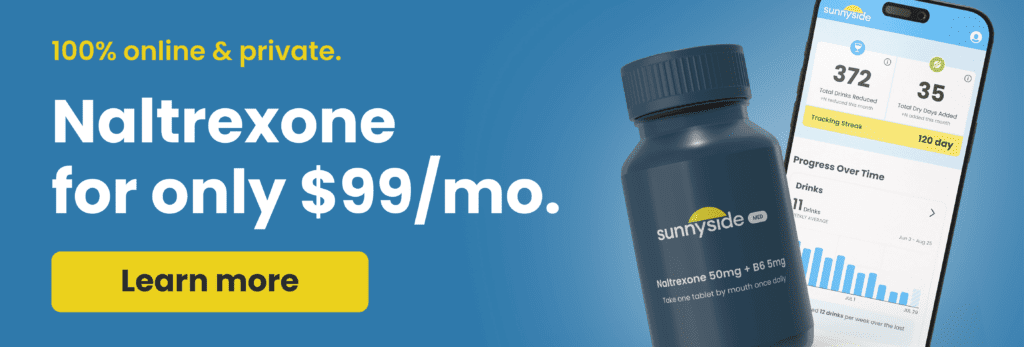
Sunnyside is the Perfect Companion for Your Naltrexone Journey
Sunnyside is the #1 mindful drinking app. Since 2020, we’ve been honing our harm-reduction approach and have helped over 400,000 people cut out 22 million drinks from their baseline habits. 96.7% of our members report success drinking less, and in a third-party study, our approach was demonstrated to reduce weekly drinking by 33% after 12 weeks.
Think of Sunnyside as the front door for anyone who wants to change their relationship with alcohol. If you want to drink less, we can help you get there. If you want to eventually quit, but want to take a gradual approach, we can make that happen.
When you sign up for Sunnyside, you’ll take a quick 3-minute personalization quiz, then hop into the app. It’s as simple and quick as that.
We’ll give you weekly plans to gradually reach your drinking goals, and we’ll provide nudges, coaching, exercises, and advice to help you get there.
We have daily tracking and journaling tools, including the option to chat with a real human coach. And, of course, we have great analytics so you can track your progress over time.
Sunnyside is a full-featured mindful drinking app, and thus the perfect companion for your Naltrexone journey. Naltrexone will actively help you reduce cravings around alcohol, and Sunnyside will help you understand your triggers and patterns, giving you a healthy system for habit change.
Everyone who signs up for Sunnyside gets a free 15-day trial, then the subscription is $8.25/month, less than the cost of a fancy drink. And the best part is our members save an average of $50 per month, easily paying for the cost of the subscription.
Whether you’re currently taking naltrexone or just doing some research on alcohol moderation, we’d love to have you sign up for our 15-day free trial today.