
Last Updated on February 18, 2026
If you’ve ever poured a drink at the end of the day and thought, “I didn’t even decide — it just happened,” you’re not alone.
For a lot of people, stress drinking has very little to do with parties, celebrations, or even liking alcohol that much. It’s about relief. About flipping a switch. About finally feeling like you can exhale after holding everything together all day.
And that’s exactly why it can feel so automatic.
The thing is, cravings don’t show up because you’re failing. Most of the time, they’re your nervous system asking for help. When you start there, the urge doesn’t need to be wrestled into submission. It just needs to be understood.
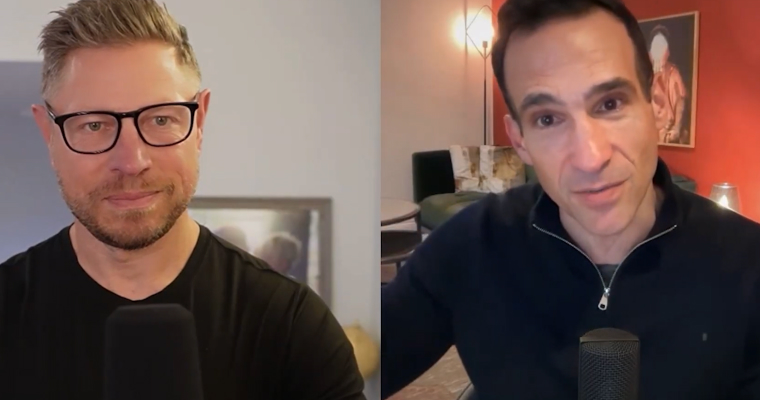
Watch The Related Podcast
Why Stress Drinking Can Feel Almost Unconscious
Stress drinking isn’t really a willpower issue. It’s a regulation issue.
After a long day of emails, decisions, emotional labor, and background stress, your body wants a state change. Alcohol happens to be very good at that. Fast, predictable, familiar.
As Thrive Yoga and Wellness founder and movement specialist Rachel Lundberg explains it:
“Alcohol is one of the quickest ways to change how you feel internally. When someone’s stressed or overwhelmed, the body isn’t looking for rules — it’s looking for regulation.”
That urge makes sense. It’s functional. It’s doing a job.
The problem isn’t that it works. It’s that it works temporarily, and then asks you to pay it back later — often with worse sleep, lower mood, and stronger cravings the next day.
Stress Drinking Isn’t a Flaw; It’s a Feedback Loop
Your nervous system is constantly adjusting. Ideally, it moves up when you need energy and down when you need rest. But under chronic stress, that flexibility starts to narrow.
Rachel uses this metaphor:
“Think of it like riding a mountain bike. You need to go uphill sometimes and coast downhill other times. But if you’re stuck pedaling hard all the time, or never able to slow down, things get uncomfortable fast.”
Alcohol forces a downhill moment. But it doesn’t actually teach your system how to get there on its own. That’s why the same urge shows up again… and again… and again.
A More Realistic Way to Interrupt Stress Drinking
Instead of trying to stop cravings, this approach focuses on creating a pause. Just a small one. It’s called the ABC method, and it’s meant for real life, not perfect conditions.
A: Awareness (or just noticing)
This part is simple, but not always easy. Awareness doesn’t mean fixing the craving. It doesn’t mean journaling about it or asking where it came from. It just means noticing it’s there.
“Oh. There’s that urge.”
That’s it.
“Awareness isn’t about changing anything,” Rachel says. “It’s about not being swept away by it.”
The moment you notice the craving, you’re already doing something different. You’ve stepped out of autopilot — even if only slightly.
B: Breathing
Once you’ve noticed the urge, breathing helps signal safety to your nervous system.
This doesn’t need to be formal. No timers, counting, or perfect technique.
Even one or two slower breaths can help, especially if the exhale is a little longer than the inhale.
“The slower exhale tells the body it doesn’t have to brace,” Rachel explains. “You’re not forcing calm. You’re letting it happen.”
You might:
- put a hand on your chest
- take a breath in through your nose
- sigh it out through your mouth
That’s enough. You can do it standing in your kitchen or sitting in your car. Nobody else needs to know.
C: Choice
This is where things really start to change.
Choice doesn’t mean you have to say no. It just means you decide — consciously — instead of reacting.
“The habit loop shifts the moment there’s choice,” Rachel says. “Even if the choice is to drink, the experience is different.”
That part matters. A lot.
Sometimes the choice is to wait ten minutes. Sometimes it’s to pour one and see how it feels. Other times, it’s realizing you actually want food, rest, or quiet instead.
None of those is wrong. They all weaken the automatic pattern over time.
Why Physical Input Can Calm Cravings Faster
Stress lives in the body. So it helps to meet it there.
Simple physical cues can interrupt cravings quickly:
- resting a hand over your heart or stomach
- rubbing your neck or jaw
- lightly bouncing or tapping your feet
- pressing your feet into the floor
“The nervous system responds to sensation,” Rachel says. “You don’t have to understand it. You just have to give it something else to register.”
These aren’t meant to replace alcohol forever. They’re meant to buy you a little space. Space is where choice lives.
Why Stress Drinking Often Shifts in Midlife
A lot of people notice that stress drinking changes as life changes.
More responsibility. Less margin. A sense that the old ways of unwinding don’t land the same anymore.
Alcohol might still “work,” but something about it feels off.
“Sometimes cravings aren’t just about stress,” Rachel explains. “They’re about misalignment; living in a way that doesn’t quite fit anymore.”
That doesn’t mean anything dramatic needs to change overnight. It just means your body might be asking for something different now.
Progress Still Counts When It’s Messy
Changing stress drinking habits doesn’t require perfection. Or streaks. Or a clean start. It requires repetition and a little compassion.
“Every conscious choice matters,” Rachel says. “That’s how patterns shift.”
If you’re trying to figure out how to stop stress drinking, the answer might lie in slowing down to hear what your nervous system is asking for. The ABC method helps you regain your choice. And over time, those small pauses add up to something that feels steadier, calmer, and more intentional.
Get started on your mindful drinking journey with a 15-day free trial of Sunnyside.
What is Sunnyside?
Sunnyside is a mindful drinking and alcohol moderation app that can help change your habits around alcohol using a proven, science-backed method. Whether you want to become a more mindful drinker, drink less, or eventually quit drinking, Sunnyside can help you reach your goals. We take a positive, friendly approach to habit change, so you never feel judged or pressured to quit.
When you join Sunnyside, you’ll start by completing a 3-minute private assessment so we can learn a bit about you. Once that’s done, you’ll get a 15-day free trial to test out everything, including our daily habit change tools, tracking and analytics, community and coaching, and education and resources. It’s a full package designed specifically to adapt to your goals and help you reach them gradually, so you can make a huge impact on your health and well-being.
Sunnyside is a digital habit and behavior-change program that is incredibly effective on its own, but can also be the perfect complement to other work you’re doing to cut down on drinking, whether that includes talk therapy or medication such as Naltrexone.
Get your 15-day free trial of Sunnyside today, and start living your healthiest life.