
Why Naltrexone Is Not Addictive
Naltrexone is not addictive or habit-forming. It blocks opioid receptors rather than activating them, so it doesn't produce...


Some people report feeling emotionally “flat” while taking naltrexone. However, emotional blunting has not emerged as a significant adverse effect in large clinical-trial reviews. Research does suggest that naltrexone can affect certain aspects of reward and pleasure, although individual experiences vary. There also isn’t enough evidence to say how long a flat feeling might last if it does occur.
You’ve read the reviews. Someone says naltrexone made them feel “flat,” “numb,” or less interested in things they normally enjoy. If you’re considering naltrexone to help you drink less, that can be a pretty significant concern.
So, does naltrexone actually cause emotional blunting? The research doesn’t give us a simple yes or no. Naltrexone changes the way the brain processes reward, and small experimental studies suggest it can dampen some pleasurable responses. But emotional blunting and anhedonia haven’t emerged as significant side effects in large clinical trials.
Here’s what we know about naltrexone and emotional blunting, what the research still can’t tell us, and when a change in mood or pleasure is worth bringing up with your clinician.
Naltrexone is an opioid receptor antagonist. It primarily blocks mu-opioid receptors, which play a role in the rewarding effects of alcohol. That’s part of how naltrexone reduces the brain’s reward response to drinking.
This doesn’t mean naltrexone simply shuts down your brain’s pleasure system. Reward involves several interacting systems, including opioid and dopamine signaling. Naltrexone doesn’t directly block dopamine receptors, although its effects on opioid receptors can indirectly influence dopamine signaling.
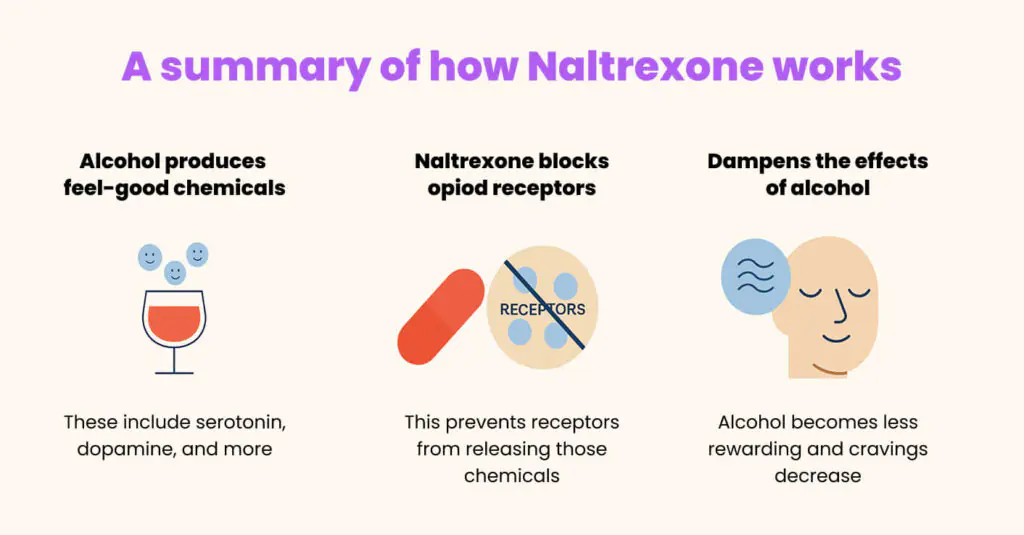
Research helps show how specific those effects can be. In a 2018 fMRI study, researchers found that blocking opioid receptors reduced pleasure from certain high-value rewards when participants received them. The study used intravenous naloxone rather than oral naltrexone, so it tells us more about opioid blockade generally than about what someone taking naltrexone long-term will experience.
A 2021 randomized trial looked specifically at naltrexone and found something slightly different. A single dose reduced participants’ reported “wanting” of rewards but didn’t significantly change how much they said they “liked” them.
Both studies were conducted in healthy volunteers after a single dose, so neither tells us exactly what happens over weeks or months of treatment in people who are cutting back on alcohol. But they do show why it’s too simplistic to say that naltrexone blocks pleasure across the board.
Percy Menzies, M.Pharm., of the Sunnyside Expert Network, offers a different way of describing the effect:
“I describe naltrexone as a medication that restores ‘endorphinic homeostasis.’ There is a lot of misinformation that naltrexone turns patients into zombies by triggering anhedonia. Naltrexone does just the opposite. It restores the pleasures of everyday living. Patients now enjoy a meal, exercise, companionship, sex. Patients finally start feeling normal because the endorphins are now functioning normally and the body is not dependent on exogenous opioids or substances like alcohol that suppress the body’s endogenous opiates.”
If you’re worried about emotional blunting, having access to a clinician matters. It can be difficult to tell on your own whether feeling different is related to naltrexone, changes in your drinking, or something else.
Sunnyside Med pairs compounded naltrexone with ongoing clinical support. A licensed clinician reviews each application before medication is prescribed, and members can reach out with questions about side effects or changes in mood during treatment.
That gives you a way to discuss what you’re actually experiencing rather than trying to interpret it through online reviews. If a change is persistent or bothersome, your clinician can help you decide what to do next.
If you’re considering naltrexone, you can see if you’re eligible with a short assessment reviewed by a licensed clinician.
There is some evidence that naltrexone can change how intensely certain rewards feel. But most of this research comes from small experiments in healthy volunteers, not people taking naltrexone long-term to cut back on alcohol.
One frequently cited example is a 2017 double-blind crossover study that looked at how people responded to music they found especially pleasurable. After taking naltrexone, participants showed less intense positive and negative emotional responses to the music.
Other studies have found a more complicated picture. In a 2021 study, naltrexone reduced a physiological response associated with peak musical pleasure, but participants’ self-reported enjoyment of the music didn’t change. A later randomized controlled trial similarly found changes in physiological arousal without a significant change in reported pleasure.
So naltrexone may affect some aspects of how we respond to rewarding experiences, but that’s different from becoming broadly unable to enjoy food, music, exercise, relationships, or other parts of everyday life. These studies also looked at the short-term effects of naltrexone in controlled settings, so they can’t tell us how common emotional blunting is during ongoing treatment.
Individual experiences vary, too. In WebMD patient reviews, one reviewer wrote, “I seem to have less depression, but also less emotions overall.” Another wrote, “I don’t dwell on anything, overthink things, I feel whole.”
Those experiences are useful for understanding what naltrexone can feel like for different people, but they can’t tell us how likely either response is.
Genetics may be one reason people respond differently to naltrexone. A 2016 study found that variation in the OPRM1 gene, which encodes the mu-opioid receptor, was associated with differences in how naltrexone affected responses to rewarding stimuli.
That doesn’t mean a genetic test can tell you whether naltrexone will make you feel emotionally flat. Research in this area is still limited, and genetic variation isn’t currently used to predict emotional blunting or determine how naltrexone should be taken.
Small experimental studies can tell us how naltrexone affects specific aspects of reward. Larger clinical trials give us a better idea of which side effects actually show up during treatment.
A 2023 systematic review evaluated 118 trials involving nearly 21,000 participants taking medications for alcohol use disorder. For naltrexone, nausea and vomiting were among the adverse effects that occurred significantly more often than with placebo. Emotional blunting and anhedonia did not emerge as significant adverse effects.
Another review of 89 randomized controlled trials, involving more than 11,000 participants taking naltrexone or placebo for a range of conditions, found no significant increase in serious adverse events with naltrexone.
Some research has measured anhedonia directly, although not in people taking naltrexone for alcohol use disorder. In a six-month randomized trial of people with opioid dependence, researchers regularly measured anhedonia, depression, and anxiety. Anhedonia was elevated when participants entered treatment but improved over time, with no significant differences between the naltrexone and placebo groups.
That doesn’t rule out emotional blunting as an individual experience. Most alcohol-related naltrexone trials weren’t designed to measure anhedonia specifically, and research focused on emotional blunting in people cutting back on alcohol is limited. What we can say is that large clinical-trial datasets haven’t identified it as a prominent adverse effect.
If you start naltrexone around the same time you begin drinking less, it isn’t always easy to know what’s behind a change in how you feel.
Naltrexone changes opioid-mediated reward processing, which is part of why alcohol can start to feel less rewarding. Cutting back on alcohol can also affect mood, motivation, and reward, particularly if your brain has adapted to frequent or heavy drinking.
Think of it a little like cutting back on very sweet foods. Fruit may taste less intense by comparison at first, even though there’s nothing wrong with the fruit itself. In a similar way, experiences that don’t produce the same strong reward as alcohol may feel different while your expectations are shifting.
One Sunnyside Med member described a first cocktail after starting naltrexone as “just kinda ‘meh,'” but said the change didn’t extend to the rest of life: “I feel so damn good when I don’t drink or I drink very little. I enjoy wine with my meal or a cold beer after a long hike, but I don’t need alcohol to sit and talk with my husband after work.”
Of course, that’s one person’s experience, and the food analogy isn’t a literal description of what happens in the brain. We also don’t have good evidence showing that naltrexone-related flatness follows a predictable timeline. The important thing is how you’re actually feeling. If alcohol seems less exciting, that may be consistent with the intended effect of naltrexone. If you’re losing interest in things you normally enjoy or experiencing a broader change in mood, that’s worth discussing with your clinician.
You don’t need to wait for a mood change to become severe before mentioning it to your prescribing clinician. If you feel noticeably flatter, less interested in things, or simply unlike yourself, bring it up, especially if the change is persistent or affecting your quality of life.
Persistent low mood, a significant loss of interest or pleasure, hopelessness, major changes in sleep or functioning, or thoughts of self-harm deserve prompt attention.
If you’re concerned that naltrexone is affecting your mood, talk with your clinician before changing how you take your medication.
If you notice a change in your mood or emotions while taking naltrexone, you shouldn’t have to figure out what it means on your own. Sunnyside Med members have ongoing access to a licensed care team for questions about side effects, mood changes, and treatment.
Sunnyside Med is a 100% online program, and a licensed clinician determines whether naltrexone is appropriate for each member. For those who are prescribed medication, the program also includes a habit-change app, human coaching seven days a week, weekly group calls, and a private community.
That combination can be especially useful because drinking on naltrexone can feel different. Co-founder Ian Andersen, who takes naltrexone daily, describes the change this way: “Drinking might feel different, and that’s the point. Less exciting. Less rewarding. Sometimes just less fun. That’s the medication doing its job.”
For some people, that shift can coexist with feeling better overall. As one Sunnyside Med member put it: “I just feel so much better not drinking all the time. Somehow my brain feels different.”
Sunnyside Med members who engage with the full program are 2.5x more likely to stay on their medication at month four than less-engaged members. And 78% of active members achieved a meaningful reduction in drinking over 12 weeks. Individual results vary.
Sunnyside Med costs $99 per month, is HSA/FSA eligible, and doesn’t require insurance. You can learn more about Sunnyside Med and take a short assessment to see if you’re eligible.
Naltrexone is a prescription medication. This content is educational and should not be taken as medical advice. A licensed clinician reviews every Sunnyside Med application.
If you’re in crisis or thinking about harming yourself, call or text 988 to reach the Suicide & Crisis Lifeline.
Emotional blunting and anhedonia haven't emerged as significant adverse effects in large clinical-trial reviews of naltrexone for alcohol use disorder. However, small experimental studies show that naltrexone can affect certain aspects of reward and pleasure, and individual experiences vary.
Research doesn't suggest that naltrexone broadly eliminates everyday pleasure. Small studies in healthy volunteers have found changes in some measures of reward, while others found no significant change in self-reported "liking." For example, one randomized study found that naltrexone reduced participants' "wanting" of rewards without significantly changing how much they reported liking them.
There isn't a reliable, evidence-based timeline. Research hasn't specifically established how long emotional flatness lasts in people taking naltrexone to cut back on alcohol. If the feeling persists or bothers you, talk with your prescribing clinician.
Anhedonia refers to a reduced ability to experience pleasure and can occur as part of depression, but the two aren't interchangeable. Persistent low mood, hopelessness, or a significant loss of interest in things you normally enjoy are reasons to check in with your clinician.
Research specifically examining naltrexone and libido is limited. Opioid signaling plays a role in reward and pleasure, but we don't have strong evidence showing how commonly naltrexone affects sex drive. Changes in alcohol use can also affect sexual function, so bring up any persistent or bothersome change with your clinician.
No. Naltrexone primarily works by blocking opioid receptors, not dopamine receptors. Opioid and dopamine systems interact, so blocking opioid receptors can indirectly affect dopamine signaling and reward processing. But that is very different from shutting down dopamine or making you unable to experience pleasure.
Talk with your clinician about any mood or emotional change that's persistent, bothersome, or affecting your quality of life. Seek prompt help for significant loss of interest or pleasure, persistent low mood, hopelessness, or thoughts of self-harm. If you're in crisis or thinking about harming yourself, call or text 988 to reach the Suicide & Crisis Lifeline. Worry about emotional blunting doesn't have to be something you sort through alone. Sunnyside Med combines naltrexone with ongoing clinical care, coaching, and tools for tracking how your drinking changes over time. Take a three-minute assessment to see if you're eligible.
Ian has a family deeply hurt by alcohol, and is on his own personal journey to drink less and live his healthiest life. He’s took naltrexone daily for two years and saw incredible results. As Sunnyside Med’s first customer, he’s deeply entrenched in alcohol health and naltrexone.
Naltrexone is not addictive or habit-forming. It blocks opioid receptors rather than activating them, so it doesn't produce...

Getting a prescription for naltrexone doesn't have to mean a long sit in a doctor's waiting room. With...
Naltrexone eligibility is determined through an individual clinical evaluation, not a single pass-or-fail test. You don't need to...
If you’re interested in trying naltrexone to help you drink less, the natural next question is where to...