
Why Naltrexone Is Not Addictive
Naltrexone is not addictive or habit-forming. It blocks opioid receptors rather than activating them, so it doesn't produce...


Naltrexone does not appear to consistently lower sex drive. Sexual changes have been reported, but research hasn’t established decreased libido as a common effect. Alcohol can also affect sexual function, making it difficult to attribute changes to naltrexone alone.
You started taking naltrexone to cut down on drinking. Now you’ve noticed something different about your sex drive, or you’re wondering whether sexual side effects are something you should expect.
The research here is limited, but it doesn’t show a clear or consistent effect of naltrexone on libido. Changes in sexual interest have been reported, but they don’t appear to be a common or predictable response to the medication.
There’s another factor to consider, too: alcohol itself can affect desire, arousal, erections, orgasm, mood, and sleep. If you’re taking naltrexone and drinking less at the same time, changes in your sexual health aren’t necessarily caused by the medication.
If you do notice a meaningful or persistent change after starting naltrexone, talk with your clinician rather than stopping the medication on your own.
Here’s what to know about naltrexone and sexual side effects.
Changes in sexual interest have been reported with naltrexone, but the available evidence doesn’t show that decreased libido is a common or predictable effect.
Prescribing information provides some context, although the data have limitations. In clinical trials involving people treated for opioid addiction, increased or decreased sexual interest was reported in fewer than 1% of participants. Delayed ejaculation and decreased potency were also reported, but the label places them in a broader group of events occurring in fewer than 10% of participants rather than providing individual rates.
Controlled research hasn’t established a clear link either. In a 2017 analysis of 88 veterans with PTSD and alcohol use disorder, participants received antidepressant treatment with either naltrexone or placebo. Sexual side effects were common overall, but adding naltrexone did not significantly change how often they were reported.
Because these participants were also taking antidepressants, this wasn’t a clean test of naltrexone alone. Still, it adds to the limited evidence suggesting that a drop in sex drive isn’t a typical response to the medication.
Sexual side effects don’t appear to be a typical response to naltrexone, but that doesn’t mean you should ignore a change that happens after you start taking it.
Sunnyside Med members have ongoing access to a clinical care team, so changes in libido, erections, orgasm, or mood can be discussed with a clinician. This can be particularly useful early in treatment, when you may be starting naltrexone and reducing your alcohol intake at the same time.
Sunnyside Med pairs clinician-prescribed naltrexone with drink tracking, coaching, and community support, including human coaching seven days a week. That broader support can help you look at changes in context rather than automatically attributing them to the medication.
As one member put it, “My best decision lately was to start Sunnyside Med. For the first time in years I have control over my drinking and my cravings. I know I can have a drink, but I just don’t really want one.”
Among active Sunnyside Med members, 78% achieved a meaningful reduction in drinking over 12 weeks. Individual results vary.
The limited research on naltrexone and sexual response doesn’t show a consistent decrease in sexual function. In fact, several small studies have found effects in the opposite direction.
In a 1993 double-blind study of 20 men with idiopathic erectile dysfunction, naltrexone increased the frequency of spontaneous morning erections compared with placebo. However, libido, erection quality, and frequency of intercourse didn’t significantly change.
An earlier study by Fabbri and colleagues in 1989 involved 30 men with idiopathic erectile dysfunction. Researchers reported increases in successful intercourse and spontaneous erections during naltrexone treatment, without significant changes in testosterone and related hormones.
And in a small randomized crossover study from 2001, 20 participants reported greater sexual arousal and orgasm intensity and had more orgasms during the naltrexone condition than during placebo.
These findings don’t mean naltrexone improves sex drive or sexual function. The studies were small, mostly decades old, male-only, and none involved people taking naltrexone to reduce their drinking. They do, however, make it difficult to support the simpler claim that blocking opioid receptors routinely suppresses sexual response.
Percy Menzies, an addiction specialist in Sunnyside’s Expert Network, has observed something similar in his own practice: “Naltrexone restores the sex drive.” That’s a clinical observation, not evidence that everyone taking naltrexone will experience an increase in libido—but it is encouraging.
There’s no good evidence that naltrexone routinely lowers testosterone.
The studies in men with erectile dysfunction above found no significant changes in testosterone during naltrexone treatment. That’s notably different from opioids themselves, which can suppress the hormonal system involved in testosterone production.
This doesn’t mean naltrexone does not affect hormones. Because it blocks opioid receptors, researchers have used naltrexone experimentally to study hormone regulation. Studies in healthy adults have found short-term changes in hormones such as LH, prolactin, and cortisol after a dose of naltrexone. But based on the available evidence, low testosterone isn’t an established explanation for changes in sex drive while taking naltrexone.
If your sex drive changes after starting naltrexone, the medication may not be the only thing that’s changed.
You may also be drinking less, sleeping differently, spending less time intoxicated, or noticing changes in your mood, stress, energy, relationships, or routines around drinking and sex. Any of those can affect sexual desire or function.
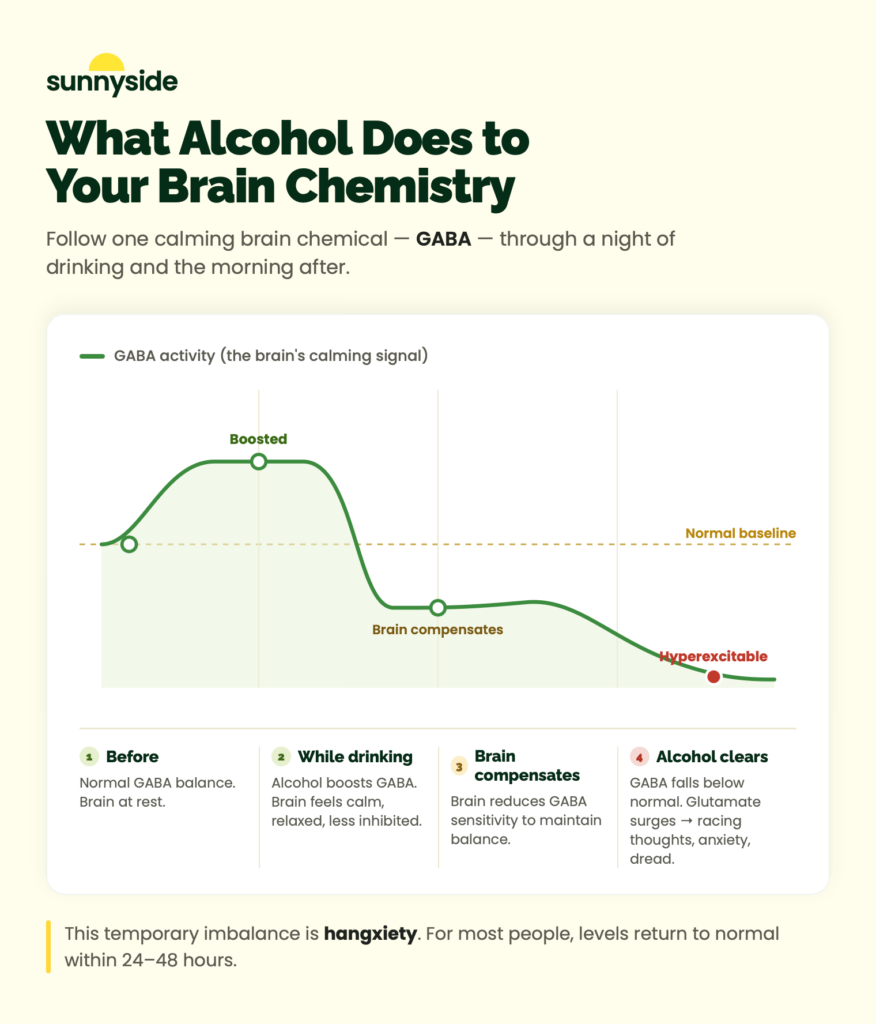
Alcohol itself makes the before-and-after comparison particularly complicated. It can lower inhibitions in the short term while interfering with physical sexual response, especially with heavier use. So timing alone can’t tell you whether naltrexone caused a change in your sex drive. Looking at what else changed around the same time can give you and your clinician a better starting point.
Alcohol can lower inhibitions and make desire feel stronger in the moment. But heavier, longer-term drinking can interfere with sexual function, including erectile function.
There’s also evidence that sexual function can improve when drinking changes. In a 2022 prospective study by Karunakaran and Michael, researchers followed 104 men with alcohol use disorder and erectile dysfunction through three months of abstinence. By the end of the study, 88.5% showed improvement in erectile function.
The study can’t tell us that abstinence caused every improvement. There was no comparison group, the follow-up lasted only three months, and all participants were men with both AUD and erectile dysfunction. But it does suggest that alcohol itself is an important part of the picture when sexual function changes.
For someone starting naltrexone and drinking less at the same time, that’s an important distinction. An improvement in sexual function shouldn’t automatically be credited to naltrexone, just as a new problem shouldn’t automatically be blamed on it.
Even though decreased libido isn’t a common or predictable naltrexone side effect, a change that begins after you start treatment is still worth paying attention to.
Try to identify what’s actually changed. Is it sexual desire, physical arousal or erections, lubrication, orgasm, ejaculation, or your overall enjoyment of sex? Those aren’t interchangeable symptoms, and getting specific can make it easier to figure out what may be happening.
It’s also worth considering what else changed around the same time, including your alcohol intake, sleep, stress, mood, relationships, and other medications. A clinician can help determine whether naltrexone may be involved or whether another explanation deserves attention.
Important: Don’t stop taking naltrexone on your own to test the connection. If a sexual change persists, worsens, or is disruptive, talk with your prescribing clinician.
Sometimes a drop in sex drive is part of a broader change in mood or interest rather than an isolated sexual symptom. If you notice low mood or a loss of interest in things you normally enjoy alongside a change in libido, tell your clinician.
Research hasn’t shown that naltrexone routinely worsens mood. In a 2006 randomized controlled trial involving people treated for opioid dependence, participants receiving naltrexone did not become more depressed on average.
An earlier double-blind placebo-controlled study in healthy participants similarly found no significant overall increase in dysphoria with naltrexone, although a small subgroup experiencing greater life stress did report dysphoric symptoms.
These findings are reassuring at the group level, but they can’t predict how any one person will respond. A noticeable change in both mood and libido is worth discussing with your clinician.
Research doesn’t show that naltrexone consistently lowers sex drive. Changes in sexual interest have been reported, but the evidence is limited, and small controlled studies haven’t found a consistent decline in desire or sexual response.
Alcohol can complicate the picture. If you’re taking naltrexone and drinking less at the same time, changes in libido or sexual function may be related to the medication, the change in your drinking, or something else entirely. Heavy alcohol use itself is associated with sexual dysfunction, and sexual function may improve after stopping or reducing alcohol use.
If something changes after you start naltrexone, you don’t have to figure out the cause on your own. Sunnyside Med combines clinical care with drink tracking, coaching, and community support for people using naltrexone to drink less.
Sunnyside Med is $99 a month, HSA/FSA eligible, with no insurance required. If a proactive, preventive approach to your drinking sounds like a fit, see if you’re eligible with a short quiz.
Not usually, based on the limited evidence available. Changes in sexual interest have been reported, but controlled research hasn’t consistently shown that naltrexone lowers desire. If your libido changes after starting treatment, talk with your clinician rather than assuming naltrexone is the cause.
Erectile problems aren’t a common or predictable effect of naltrexone. Some small, older studies in men actually found increased erectile activity during naltrexone treatment, although these studies don’t establish naltrexone as a treatment for erectile dysfunction.
Alcohol itself is another consideration. Heavy or chronic drinking is associated with erectile dysfunction, so changes in drinking can affect sexual function too.
Delayed ejaculation has been reported with naltrexone, although the prescribing information doesn’t provide a specific rate for it. Small experimental studies haven’t shown a consistent negative effect on orgasm or arousal. If you notice a persistent change, talk with your clinician.
There’s no good evidence that naltrexone routinely lowers testosterone. Small studies in men haven’t found significant reductions in testosterone during treatment. That’s different from opioids themselves, which can suppress the hormonal system involved in testosterone production.
It’s possible for someone’s sex drive or sexual function to change while taking naltrexone, but there’s not enough evidence to say that naltrexone reliably increases libido. A few small studies found increases in some measures of sexual response, but they weren’t conducted in people taking naltrexone to drink less.
If sexual health improves while you’re also reducing your alcohol intake, the change in drinking may be an important part of the explanation.
It may. Heavy alcohol use is associated with sexual dysfunction, and research has found improvements after abstinence. In a 2022 study of men with alcohol use disorder and erectile dysfunction, 88.5% showed improvement in erectile function after three months without alcohol.
That study looked at abstinence rather than simply drinking less, so it can’t tell us exactly how much someone’s drinking needs to change before sexual function may improve.
There isn’t enough research to give a specific timeline for sexual side effects. Many naltrexone side effects occur early in treatment and improve over time, but that doesn’t mean a change in libido, erections, or orgasm will necessarily follow the same timeline.
If a sexual change persists or bothers you, talk with your clinician rather than waiting for a particular number of days or weeks.
Reach out if a sexual change is persistent, worsening, or disruptive, or if it occurs alongside changes in mood or a broader loss of interest.
Your clinician can help consider naltrexone alongside your drinking, sleep, stress, other medications, and other possible factors. Don’t stop naltrexone on your own to troubleshoot the change.
Naltrexone is a prescription medication. This content is educational and should not be taken as medical advice. A licensed clinician reviews every Sunnyside Med application.
Ian has a family deeply hurt by alcohol, and is on his own personal journey to drink less and live his healthiest life. He’s took naltrexone daily for two years and saw incredible results. As Sunnyside Med’s first customer, he’s deeply entrenched in alcohol health and naltrexone.
Naltrexone is not addictive or habit-forming. It blocks opioid receptors rather than activating them, so it doesn't produce...

Getting a prescription for naltrexone doesn't have to mean a long sit in a doctor's waiting room. With...

Naltrexone eligibility is determined through an individual clinical evaluation, not a single pass-or-fail test. You don't need to...
If you’re interested in trying naltrexone to help you drink less, the natural next question is where to...