Last Updated on March 18, 2026
A funny thing happens when people start paying attention to their drinking habits.
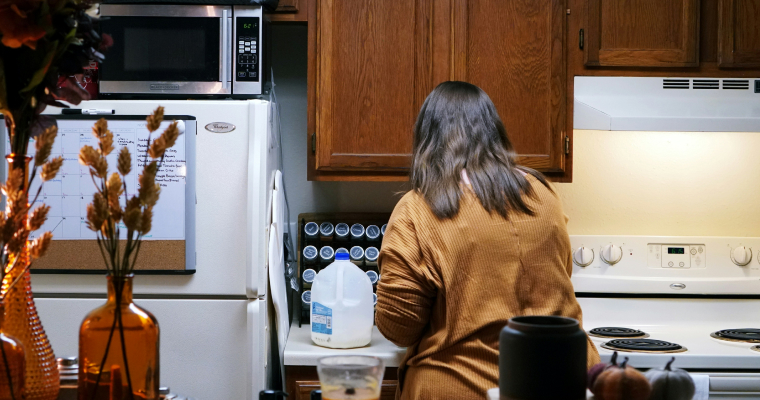
The person making decisions at 7 a.m. and the person standing in the kitchen at 7 p.m. don’t always seem like the same person.
In the morning, everything feels straightforward. You’re thinking about sleep, energy, maybe the workout you want to squeeze in before work. Cutting back on alcohol seems like an easy call.
Later that evening, though, the calculation shifts. The day has been long. Your brain feels a little cooked. And suddenly the idea of a drink—something relaxing, familiar—starts sounding pretty reasonable.
It’s easy to look at that and think: Why can’t I just stick to what I decided earlier?
A lot of people interpret the difference as a willpower problem. But it’s usually something simpler than that. Your brain just isn’t operating in the same mode all day.
Watch The Related Podcast
Your Brain Changes “Modes” Throughout the Day
We like to imagine there’s one steady decision-maker inside our heads, calmly evaluating everything. In reality, the brain works more like a shifting set of systems taking turns at the wheel.
Sometimes the part of the brain focused on planning and long-term goals is in charge. Other times, the systems responsible for comfort and immediate reward step forward.
Morning tends to favor the first group.
Evening often favors the second.
Part of this comes down to mental bandwidth. Early in the day, your brain has more resources available for long-range thinking. The prefrontal cortex—the region tied to planning, restraint, and goal-directed behavior—has plenty of energy.
By evening, that same system has been working all day.
Stress accumulates. Decision fatigue sets in. Even small physiological shifts, like lower blood sugar, can nudge the brain toward a different priority: relief now rather than benefits later.
And that’s where evening alcohol cravings often show up.
Why the Future Suddenly Feels Less Important
Psychologists sometimes talk about something called temporal discounting. It sounds technical, but the basic idea is simple.
Humans tend to value immediate rewards more than those that come later, even if the later reward is objectively better.
When you’re rested and thinking clearly, the future still feels pretty vivid. Better sleep tomorrow morning is easy to imagine.
When you’re tired, though, the future starts to feel fuzzy. Abstract.
Meanwhile the drink in front of you is very real.
Your brain doesn’t necessarily interpret that as a bad trade.
It just interprets it as the most immediate form of relief.
Why Willpower Feels So Unpredictable
This is why relying purely on discipline can feel frustrating.
Willpower assumes there’s one stable decision-maker who should be able to enforce the same rule at all times. But the brain doesn’t really operate that way. Different systems become more or less influential depending on your state.
By the time evening rolls around, the part of your brain responsible for restraint is often running on fumes.
So when people say their willpower “collapses” at night, that description isn’t far off. The brain system doing the restraining is simply more tired than it was earlier in the day.
None of that means the morning version of you was lying. And it doesn’t mean the evening version lacks discipline.
It just means they’re operating under different conditions.
A Small Mental Shift That Can Interrupt Evening Alcohol Cravings
Even though the brain shifts states during the day, there’s one ability humans have that’s surprisingly powerful: we can notice our own thinking.
Neuroscientists call this metacognition, but it’s really just the ability to step back for a moment and observe what’s happening in your mind.
That might sound subtle, but it changes the way urges move through the brain.
When a craving shows up, it usually begins in faster emotional circuitry. Regions like the limbic system and the amygdala react quickly because they’re designed for survival. Their job is to regulate discomfort as efficiently as possible.
The prefrontal cortex—the part involved in planning and restraint—works more slowly. It also needs energy and attention to function well.
By evening, that system is often already taxed.
One of the simplest ways to bring it back online is something researchers call affect labeling, which basically means putting words to what you’re feeling.
Instead of thinking:
“I need a drink.”
Try shifting the sentence slightly:
“I’m noticing an urge to drink.”
That tiny difference matters. Studies show that when people label an emotion or urge, activity in the amygdala tends to decrease while activity in the prefrontal cortex increases.
You’re not suppressing the craving. You’re creating a little space between the feeling and the action.
And sometimes that space is enough to change what happens next.
Why Environment Matters More Than Motivation
Another reason evening alcohol cravings feel so powerful is that the brain pays close attention to what’s physically around you.
We tend to think habits come purely from internal motivation, but environment quietly shapes a lot of our decisions.
If the wine bottle is on the counter, the brain registers it as an available reward. The cue itself increases the salience of drinking.
Future rewards—like sleeping better or waking up with more energy—are harder to visualize in that moment.
Researchers studying something called episodic future thinking have found that when people vividly imagine a future outcome, it can reduce the tendency to prioritize immediate rewards. The future stops feeling quite so abstract.
But imagination alone doesn’t always compete well with visible cues.
That’s where small environmental shifts come in.
Running shoes by the door can activate the version of you who plans to work out in the morning. A water bottle sitting where a glass of wine usually goes changes the decision landscape a little.
These cues aren’t dramatic. They just make tomorrow’s version of you slightly more present in the room.
A Simple Experiment for Tonight
If evenings tend to be the tricky part of the day, it can help to run a small experiment.
Before your usual drinking window arrives, place one visible reminder of tomorrow’s priorities somewhere you’ll see it later.
Just one. Not five.
It could be workout clothes laid out for the morning. It could be filling the water bottle you normally take to the gym. Some people even leave a short note on the counter—something like a sentence from “tomorrow you.”
Then when that familiar moment arrives, pause for a second and name what’s happening.
You might think something like:
“Okay, I’m noticing some evening alcohol cravings right now.”
Or even:
“The tired version of me wants relief.”
You’re not trying to force the urge away. The goal is simply to observe it.
When that pause happens—and when tomorrow’s version of you is already visible in the room—the decision can start to feel a little different.
Not dramatically different. But different enough.
And those small shifts, repeated often enough, tend to compound over time.
You Don’t Need a New Identity
A lot of habit-change advice suggests you need to become a completely different person in order to change your behavior.
In reality, most people already have the intentions they need.
The morning version of you probably does care about sleep, energy, and long-term health. The evening version of you is simply responding to fatigue and a desire for relief.
Learning how the brain moves between those states can make the whole process feel less like a personal failure and more like something understandable.
Once you start seeing that pattern, it becomes easier to work with it instead of fighting it.
And that’s often where real change begins.
Learn more about mindful drinking with a 15-day free trial of Sunnyside.
What is Sunnyside?
Sunnyside is a mindful drinking and alcohol moderation app that can help change your habits around alcohol using a proven, science-backed method. Whether you want to become a more mindful drinker, drink less, or eventually quit drinking, Sunnyside can help you reach your goals. We take a positive, friendly approach to habit change, so you never feel judged or pressured to quit.
When you join Sunnyside, you’ll start by completing a 3-minute private assessment so we can learn a bit about you. Once that’s done, you’ll get a 15-day free trial to test out everything, including our daily habit change tools, tracking and analytics, community and coaching, and education and resources. It’s a full package designed specifically to adapt to your goals and help you reach them gradually, so you can make a huge impact on your health and well-being.
Sunnyside is a digital habit and behavior-change program that is incredibly effective on its own, but can also be the perfect complement to other work you’re doing to cut down on drinking, whether that includes talk therapy or medication such as Naltrexone.
Get your 15-day free trial of Sunnyside today, and start living your healthiest life.