Last Updated on March 28, 2026
Most of us have a working theory about why our drinking habits are the way they are. Maybe it’s stress. Maybe it’s habit. Maybe it’s just what happens at the end of the day.
But when you zoom out and look at the research, the story doesn’t line up as neatly as we’d expect. A lot of what’s driving the behavior isn’t loud or obvious—it’s subtle, repetitive, and sometimes already in motion before you even notice it.
Here are seven findings that tend to shift how people think about their own patterns (sometimes uncomfortably so).
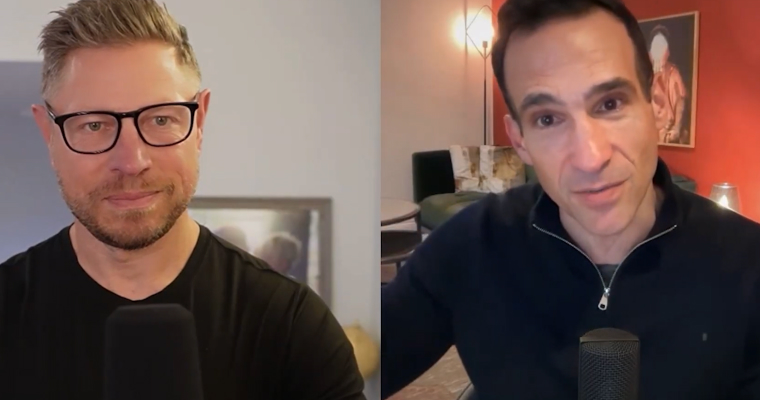
Watch The Related Podcast
1. We tend to overestimate how much everyone else drinks
There’s a consistent gap between perception and reality here.
Ask someone how much their peers drink, and the guess is usually higher than the actual average. Not wildly off in every case, but enough to matter.
And that “enough to matter” part is key. Because if it feels like everyone’s drinking more, that quietly resets the bar for what seems normal. No one announces it—it just… slides.
What’s interesting is that when people see the real numbers, something shifts. Not dramatically, not overnight. But often enough, their own drinking ticks down a bit.
2. The brain starts the process early
One thing that catches people off guard: the brain doesn’t wait for the drink.
Certain cues—wrapping up work, the sound of pouring, even a specific time of day—can kick off activity in the brain’s reward system. It’s tied to anticipation more than consumption.
Over time, those cues and the expected reward get linked in your brain. So when the cue shows up, the brain sort of leans forward, expecting what usually comes next.
That can feel like a craving, even if you haven’t made any conscious decision yet, which is why it sometimes feels like it came out of nowhere (it didn’t, exactly).
3. Expectations pull more weight than we realize
People bring expectations into drinking, whether they notice it or not.
Some expect to unwind. Others expect to feel more social, or less in their head. And those expectations don’t just sit there—they shape the experience itself.
There are experiments where people think they’re drinking alcohol when they’re not, and still start acting more relaxed or talkative. And the reverse happens too—people consume alcohol but don’t believe they did, and the effect is… muted.
So it’s not just chemistry doing the work. Belief is in the mix, too, which complicates things in an interesting way.
4. The habit loop starts before the drink
It’s tempting to treat the first sip as the starting line.
But in a lot of cases, the pattern begins earlier—somewhere in the transition from one part of the day to another. Closing a laptop, stepping out of work mode, and moving into the evening.
That moment can be a trigger. Once it happens, the rest of the sequence tends to follow pretty smoothly. By the time you’re pouring something, you’re not really at the beginning—you’re closer to the end of a chain that’s already underway.
5. Most people have a “usual,” whether they say it or not
Even people who don’t think of themselves as routine drinkers often have a default.
A certain number, or range, that shows up again and again. It doesn’t have to be exact, but it is usually consistent enough to be noticeable over time. (And it will definitely show up if you’re tracking!)
What’s a little surprising is how stable that number can be. Even on different nights, in different contexts and moods, it often lands in the same place anyway.
That’s usually a sign the brain has turned it into a script. And scripts don’t require much input once they’re up and running.
6. The group sets the pace more than you think
Put people in a group, and things tend to sync up. If the overall pace is fast, individuals often speed up without meaning to. If it’s slower, the whole thing stretches out. Most of this happens without anyone pointing it out.
It’s not overt pressure. No one’s saying “drink more,” necessarily. It’s just a kind of quiet matching that humans do in all sorts of situations.
Still, it adds up. The room you’re in can nudge your behavior in ways that are easy to miss in the moment.
7. The first decision really is different
People say the first drink matters most, and honestly, that turns out to be pretty literal.
That initial choice happens while your brain is fully equipped for planning and self-control. After that, each additional drink chips away at that capacity a little.
So even though it feels like a series of similar decisions—“one more?”—they’re not being made on equal footing. This helps explain why things can drift further than intended, even when you started with a clear plan.
So where does that leave you?
If anything stands out across all of this, it’s that drinking behavior isn’t just about willpower.
It’s built on patterns—things your brain has learned to expect, repeat, and normalize over time. Some of those patterns are obvious once you see them. Others take a minute.
But once you do start noticing them, there’s a shift. The habit feels less random, less personal, maybe even a little more predictable.
And predictable is workable. Not instantly, not perfectly, but enough to start making small adjustments that actually stick.
Get started on your mindful drinking journey with a 15-day free trial of Sunnyside.
What is Sunnyside?
Sunnyside is a mindful drinking and alcohol moderation app that can help change your habits around alcohol using a proven, science-backed method. Whether you want to become a more mindful drinker, drink less, or eventually quit drinking, Sunnyside can help you reach your goals. We take a positive, friendly approach to habit change, so you never feel judged or pressured to quit.
When you join Sunnyside, you’ll start by completing a 3-minute private assessment so we can learn a bit about you. Once that’s done, you’ll get a 15-day free trial to test out everything, including our daily habit change tools, tracking and analytics, community and coaching, and education and resources. It’s a full package designed specifically to adapt to your goals and help you reach them gradually, so you can make a huge impact on your health and well-being.
Sunnyside is a digital habit and behavior-change program that is incredibly effective on its own, but can also be the perfect complement to other work you’re doing to cut down on drinking, whether that includes talk therapy or medication such as Naltrexone.
Get your 15-day free trial of Sunnyside today, and start living your healthiest life.