
Why Naltrexone Is Not Addictive
Naltrexone is not addictive or habit-forming. It blocks opioid receptors rather than activating them, so it doesn't produce...


An alcohol sobriety program for women doesn’t have to require a crisis, a label, or a commitment to quit forever. Biological factors can affect how women experience alcohol, while life stage, stress, sleep, and hormonal changes may also shape your relationship with drinking. Sunnyside Med offers a flexible, medication-supported approach for adults who want to drink less, take a break, or quit.
Maybe nothing dramatic has happened because of your drinking. You may simply be sleeping worse, feeling more anxious the day after, drinking more often than you intended, or wondering why alcohol doesn’t seem to agree with you the way it once did.
If you’re looking for an alcohol sobriety program for women, you don’t need to wait for a crisis or decide that a particular label applies to you. If alcohol is taking more than it’s giving, that’s a reason to consider making a change.
Women can have different experiences with alcohol for a mix of biological and social reasons. None of those factors applies to every woman, and there’s no single way women drink or change their drinking. The right support should leave room for your experience and your goals, whether you want to drink less, take an extended break, or quit.
For decades, men drank more than women by most measures. That gap has narrowed considerably, driven in part by increases in alcohol use among women.
The COVID-19 pandemic put a particularly sharp spotlight on the trend. In a nationally representative U.S. study, Pollard et al. compared drinking in spring 2020 with the same period a year earlier. Among women, the frequency of heavy drinking days increased by 41%. Women also reported a significant increase in alcohol-related problems.
There isn’t one explanation for why women drink. But social pressures can be part of the picture. Women still perform a disproportionate share of unpaid caregiving and household work. For some, alcohol becomes an easy way to mark the end of the day or decompress after taking care of other people.
For mothers in particular, drinking has also been normalized as a response to parenting stress. “Mommy needs wine” and “wine o’clock” turn alcohol into a shared punchline about the pressures of motherhood.
Researchers have investigated this phenomenon. In a study of 466 mothers in the U.S. and U.K., engagement with “wine-mom” culture was associated with drinking to cope, and some measures were also associated with problematic alcohol use and parenting stress. That doesn’t mean wine-mom culture always causes problematic drinking, but it does raise questions about presenting alcohol as a culturally expected way to manage stress.
Alcohol doesn’t affect every woman the same way, but there are some well-established biological differences in how alcohol is distributed in female and male bodies.
On average, women have a lower proportion of body water than men of the same weight. Because alcohol distributes through body water, the same amount of alcohol can produce a higher blood alcohol concentration in a woman than in a man of the same weight. Body size, genetics, food intake, medications, and individual differences in metabolism matter too, so sex is only one part of the equation.
Those differences can matter for long-term health. NIAAA reports that women can experience certain alcohol-related health problems sooner and at lower levels of alcohol exposure than men. Alcohol-related liver disease, cardiovascular effects, and breast cancer are among the health risks particularly relevant to women.
Age can change the picture further. Body composition changes over time in both women and men, and losing lean mass and body water can affect how alcohol is distributed in the body.
None of this means every woman will suddenly become more sensitive to alcohol at a particular age. But the drinking pattern that felt fine at one point in your life may not always affect you in exactly the same way.
For some women, alcohol starts to feel different around the same time as perimenopause. Sleep may already be more disrupted, mood changes can occur, and hot flashes or night sweats can make a good night’s rest harder to come by.
Alcohol can overlap with some of those same experiences. One large study of middle-aged premenopausal women found that alcohol consumption was associated with a higher prevalence of bothersome hot flashes and night sweats. Heavier drinking was also associated with a greater risk of developing these symptoms over time.
That’s an association, not proof that alcohol causes vasomotor symptoms. But sleep is one area where alcohol’s effects are much clearer.
A 2025 systematic review and meta-analysis of 27 studies found that alcohol delayed the onset of REM sleep and reduced the amount of REM sleep people got. REM disruption was detectable at relatively low amounts and became greater as alcohol intake increased.
Anxiety can be part of the next-day picture too. Alcohol affects brain systems involved in relaxation and arousal, and increased anxiety can occur as its effects wear off, particularly after heavier or repeated drinking. Some people recognize this as “hangxiety“: waking up unusually anxious, restless, or on edge after drinking.
If sleep or mood is already changing during perimenopause, it can be difficult to know exactly what’s responsible for what. You don’t necessarily need to figure that out first. Paying attention to how you feel on drinking and non-drinking days, or experimenting with drinking less, can help you understand your own pattern.
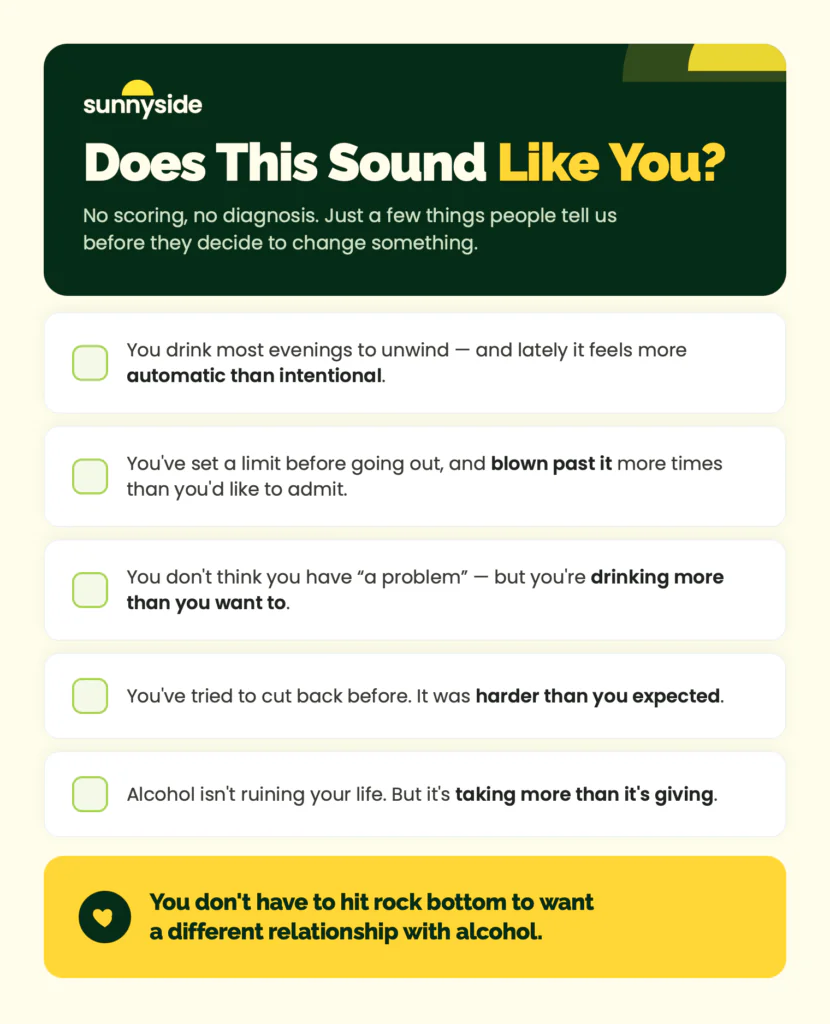
Not everyone who wants help with alcohol identifies with having a severe drinking problem. You may simply notice that you’re drinking more often than you intended, thinking about alcohol more than you’d like, or regularly regretting how you feel the next day.
People sometimes use the term gray-area drinking for this experience: drinking that feels concerning or difficult to change even though it may not match your picture of alcohol dependence.
“Alcohol is no longer dominating my thoughts all day long,” said one Sunnyside Med member.
The problem is that some people assume getting help means committing to abstinence before they’re ready to make that decision. A scoping review of access to alcohol treatment found that people were less likely to engage when a program’s abstinence requirement conflicted with their goal of reducing their drinking. Programs accommodating both abstinence and reduction goals were generally better received.
Women can encounter other practical barriers too. A review of alcohol treatment interventions for women identified childcare responsibilities, stigma and shame, economic concerns, co-occurring mental health conditions, and difficulty recognizing a need for treatment among potential barriers—plenty of roadblocks to
That doesn’t mean traditional or abstinence-based programs don’t work for women. For many people, they’re exactly the right fit. It means women should have more than one way to get support.
You also don’t have to know your long-term goal before you start. Drinking less, taking a break, and quitting can all be starting points, depending on your individual wants and circumstances.
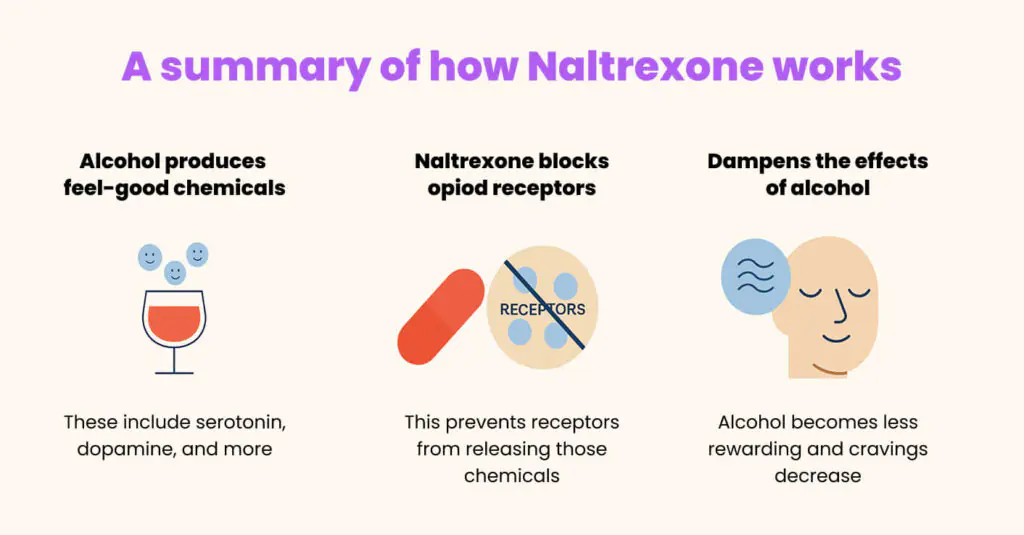
Medication can be one part of changing your relationship with alcohol. Naltrexone is a prescription medication for alcohol use disorder that blocks opioid receptors involved in alcohol’s rewarding effects.
In practical terms, it can reduce some of the reinforcement and craving that make an established drinking pattern difficult to change. A meta-analysis of controlled human studies found that naltrexone modestly but significantly reduced both alcohol consumption and craving compared with placebo.
Naltrexone isn’t a women-specific medication, and research hasn’t established that it works fundamentally differently in women and men. But it offers another option for people who want help changing their drinking without relying on willpower alone.
As one Sunnyside Med member put it, “I don’t feel that constant pull to reach for a glass of wine just to get through the evening. That urge that used to feel automatic just isn’t there.”
Sunnyside Med is a 100% online alcohol health program for adults who want to change their drinking. It isn’t a women-only program, but its private, flexible approach can address some of the barriers we’ve discussed.
A licensed clinician reviews your application to determine whether naltrexone is appropriate. If prescribed, medication is paired with drink tracking, weekly goals, text coaching seven days a week, weekly group calls, a private community, and ongoing access to a licensed care team.
The program is moderation-first, but not moderation-only. You can work toward drinking less, taking an extended break, or quitting, and your goal can change over time.
“This isn’t only for people at or approaching rock bottom,” said Sunnyside co-founder Nick Allen. “We’re building Sunnyside Med to provide proactive and preventive access to medication before alcohol becomes a massive negative part of your story.”
Among active Sunnyside Med members, 78% achieve a meaningful reduction in drinking over 12 weeks. Individual results vary.
Sunnyside Med costs $99 per month, billed quarterly, and is HSA/FSA eligible. You can learn more about how members cut back on drinking with medication and behavioral support.
Want to learn more? Get started with a two-minute assessment.
Naltrexone is a prescription medication. This content is educational and is not medical advice. A licensed clinician reviews every Sunnyside Med application.
No. Sunnyside Med supports goals including drinking less, taking an extended break, and quitting. Your goal can also change over time.
Oral naltrexone doesn't cause the unpleasant reaction to alcohol associated with medications such as disulfiram. Naltrexone has been studied in people who continued drinking while working to reduce their alcohol consumption. Whether it's appropriate for you should be determined by a licensed clinician.
The relationship is complicated. Research has found an association between alcohol consumption and bothersome hot flashes and night sweats in premenopausal women, but that doesn't prove alcohol caused the symptoms. Alcohol can also disrupt sleep, which may compound sleep problems during the perimenopausal transition.
Alcohol affects brain systems involved in relaxation and arousal. As its effects wear off, some people experience increased anxiety or restlessness, sometimes called "hangxiety." Sleep disruption can contribute to feeling worse the next day too.
Sunnyside Med is an online, medication-supported alcohol health program that supports moderation as well as abstinence. Abstinence-based and peer-support programs can be effective too; the right approach depends on your goals and needs.
No. You don't need to arrive with an existing AUD diagnosis. A licensed clinician reviews your application and health history and determines whether naltrexone is appropriate.
Ian has a family deeply hurt by alcohol, and is on his own personal journey to drink less and live his healthiest life. He’s took naltrexone daily for two years and saw incredible results. As Sunnyside Med’s first customer, he’s deeply entrenched in alcohol health and naltrexone.
Naltrexone is not addictive or habit-forming. It blocks opioid receptors rather than activating them, so it doesn't produce...

Getting a prescription for naltrexone doesn't have to mean a long sit in a doctor's waiting room. With...

Naltrexone eligibility is determined through an individual clinical evaluation, not a single pass-or-fail test. You don't need to...
If you’re interested in trying naltrexone to help you drink less, the natural next question is where to...