
Can You Drink Alcohol While Taking Creatine? What the Research Says
Yes, you can drink alcohol while taking creatine. There's no evidence that alcohol cancels out creatine's benefits, although...

Alcohol and perimenopause can be a frustrating combination. Alcohol doesn’t cause perimenopause, but it can worsen many of the same symptoms, including poor sleep, next-day anxiety, hot flashes, and night sweats. During this hormonal transition, many women find that even the amount of alcohol they used to tolerate leaves them feeling worse than it once did.
It’s 10 p.m. on a Wednesday. One glass of wine has become part of your evening routine, a small reward after the workday is done. Lately, though, something feels different. Your sleep is worse. Hot flashes come more often. The morning-after anxiety feels wildly out of proportion to one drink.
“I just can’t ignore it anymore. Alcohol is having a huge effect on me in perimenopause,” wrote one woman on Reddit. Another wrote, “Even one glass messes everything up for me.”
Their symptoms may well be hormonal. But alcohol can also aggravate many of the same symptoms, making it difficult to tell where one ends and the other begins.
Alcohol and perimenopause affect many of the same systems in the body. When they overlap, it’s easy to attribute every symptom to hormones, or to miss the role alcohol may be playing.
Wondering whether alcohol has started affecting you differently in perimenopause? Here, we’ll look at why alcohol and perimenopause can amplify one another, which symptoms are most affected, and what can help if you’d simply like to feel better.
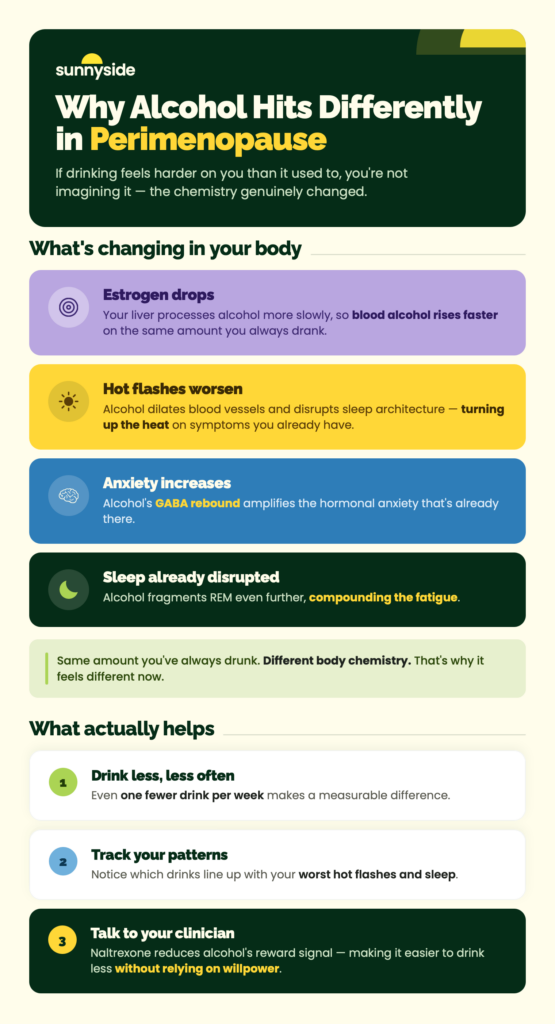
Many women say alcohol starts affecting them differently during perimenopause, even if their drinking habits haven’t changed. Researchers are beginning to explore why. A 2024 review found evidence that alcohol can temporarily influence estrogen levels and highlighted a complex relationship between female hormones and alcohol. But the exact biological explanation is still being worked out.
What is well established is that alcohol and perimenopause can affect many of the same body systems. Both can disrupt sleep, contribute to hot flashes and night sweats, influence mood, and leave you feeling foggy or fatigued the next day. When those effects overlap, a drink that once felt insignificant may suddenly feel much more noticeable.
The biggest changes tend to show up in four areas: sleep, hot flashes, mood, and weight.
Alcohol doesn’t cause perimenopause, of course, and it isn’t responsible for every symptom that comes with it. But because alcohol and perimenopause affect many of the same body systems, drinking can make certain symptoms feel more intense. Here are four of the most common.
Alcohol may help you fall asleep faster, but research consistently shows it disrupts the second half of the night, reducing overall sleep quality. That’s especially frustrating during perimenopause, when many women are already dealing with night sweats, hot flashes, or early-morning waking. Together, those effects can leave you feeling far more exhausted after one drink than you might expect.
If sleep is your biggest frustration, taking a short break from alcohol or paying attention to how different amounts affect your nights can be an eye-opening experiment.
Alcohol often feels calming at first, but as it wears off, the nervous system rebounds in the opposite direction. That rebound can contribute to poor sleep, a racing heart, shakiness, and next-day anxiety. During perimenopause, when hormones may already be affecting mood and sleep, those feelings can seem even more intense.
A 2025 qualitative study of women in midlife (Davies et al) found that many participants reported alcohol worsening anxiety, heart palpitations, and overall well-being. One participant in the study wrote, “I cannot drink much any more as it makes anxiety worse, which has become crippling since peri-menopause.”
If next-day dread is the symptom you notice most, understanding the science behind hangxiety can help explain why it happens.
Weight changes during perimenopause are common, even for women whose diet and exercise habits haven’t changed. Hormone shifts and aging are associated with a gradual loss of lean muscle and an increase in abdominal fat. Alcohol doesn’t cause those changes, but it can make weight management harder by adding calories, disrupting sleep, and increasing appetite.
That doesn’t mean you have to stop drinking to lose weight. But if your progress has stalled, alcohol is one factor you can experiment with changing.
This is one area where the research is genuinely mixed. Some studies have linked alcohol to more hot flashes, while others have found little relationship—or even fewer hot flashes—among women who drink. What population studies can’t capture, though, is how differently people respond.
Many women notice a clear pattern. One participant in the Davies study wrote that, in her particular case, “alcohol increased night sweats and palpitations.” Another said, “I have cut out alcohol because it has increased my anxiety, night sweats and affects my sleep.”
If you’ve started noticing the same connection, keeping a simple log of your drinks and symptoms for a few weeks can help you decide whether alcohol is playing a role in your particular case.
By now, you’ve probably noticed a pattern. Many of the symptoms we associate with perimenopause—poor sleep, anxiety, brain fog, fatigue, and night sweats—are also common effects of alcohol. That overlap can make it surprisingly difficult to know what’s driving what.
Because alcohol isn’t always organically discussed as part of perimenopause care, it’s easy to overlook the role it may be playing. If you’re wondering whether drinking has started affecting you differently, consider taking a short break and paying attention to what changes. Some women notice improvements within days, while for others it takes longer. It’s all about gathering information and learning how your own body responds.
A safety note: If you drink heavily or have experienced withdrawal symptoms, don’t stop drinking abruptly without medical guidance.
If alcohol has become part of how you unwind, “drink less” isn’t much of a strategy. The more helpful question is what makes cutting back easier in real life. While everyone’s experience is different, these approaches can make it easier to understand your habits and decide what changes feel worthwhile.
Mayo Clinic menopause specialist Dr. Juliana Kling notes that alcohol can worsen menopause symptoms while also increasing the risk of certain long-term health conditions.
For some women, awareness and habit changes are enough. Others benefit from additional support, especially if drinking has become deeply tied to stress relief or routine.
Sunnyside Med combines licensed medical care, coaching, and app-based habit change support for people who want to drink less. Eligible members may be prescribed compounded naltrexone, a medication whose active ingredient has been FDA-approved since 1994 to help reduce alcohol cravings and the rewarding effects of drinking. Unlike medications that require abstinence, naltrexone can be used while working toward moderation, making it a good fit for people whose goal is to drink less, not necessarily quit entirely.
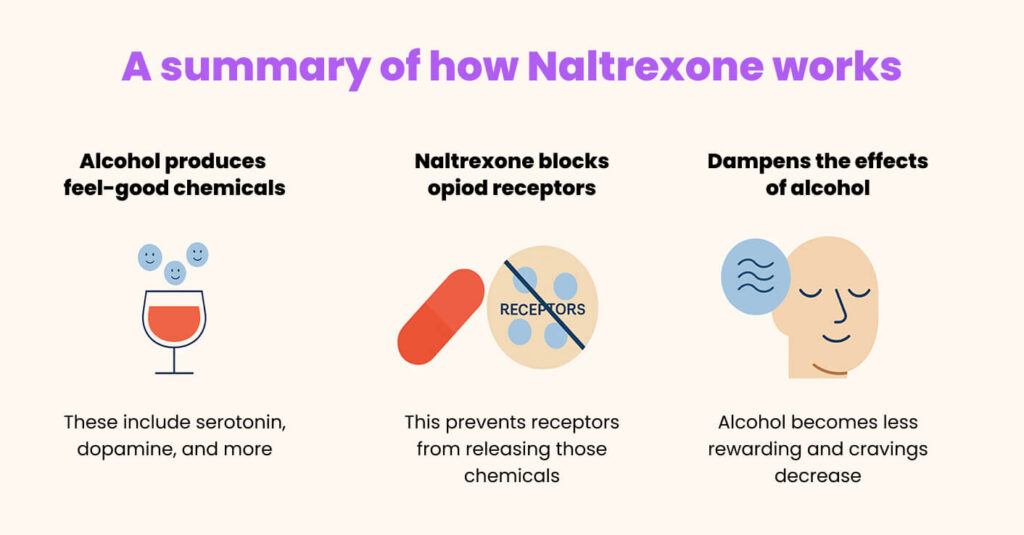
“Drinking might feel different—and that’s the point,” Sunnyside co-founder Ian Andersen says of naltrexone. “Less exciting. Less rewarding. Sometimes just… less fun. That’s the medication doing its job.”
The medication is only one part of the program. Coaching, daily tracking, reminders, and a personalized plan help members build habits that last beyond the prescription itself. Internal Sunnyside Med data show that members with at least 50% app engagement often reduce their drinking meaningfully within the first few weeks, although individual results vary. The approach reflects what decades of research have found: medication works best when it’s paired with ongoing behavioral support.
If alcohol has become one more variable in an already complicated season of life, you don’t have to figure it out alone. Whether your goal is sleeping better, easing anxiety, or simply understanding your own patterns, Sunnyside Med offers a moderation-first approach designed to help you make alcohol a smaller part of your life. You can learn more or see whether you’re eligible with a quick assessment.
Naltrexone is a prescription medication. This content is educational and should not be taken as medical advice. A licensed clinician reviews every Sunnyside Med application.
Sunnyside is the #1 mindful drinking app. Since 2020, we’ve been honing our harm-reduction approach and have helped over 400,000 people cut out 22 million drinks from their baseline habits. 96.7% of our members report success in drinking less, and in a third-party study, our approach was demonstrated to reduce weekly drinking by 33% after 12 weeks.
Think of Sunnyside as the front door for anyone who wants to change their relationship with alcohol. If you want to drink less, we can help you get there. If you want to eventually quit, but want to take a gradual approach, we can make that happen.
When you sign up for Sunnyside, you’ll take a quick 3-minute quiz, then hop into the app. It’s as simple and quick as that.
We’ll give you weekly plans to gradually reach your drinking goals, and we’ll provide nudges, coaching, exercises, and advice to help you get there.
We have daily tracking and journaling tools, including the option to chat with a real human coach at any time. And our state-of-the-art analytics help you track your progress over time.
Sunnyside is a full-featured mindful drinking app. Naltrexone will actively help you reduce cravings around alcohol, and Sunnyside will help you understand your triggers and patterns, giving you a healthy system for habit change.
If you choose to stop taking naltrexone, the Sunnyside app remains a tool you can keep using to maintain your healthy habits.
Everyone who signs up for Sunnyside gets a free 15-day trial. After that, the subscription is $8.25/month.
Whether you’re currently taking naltrexone or just doing some research on alcohol moderation, we’d love to have you sign up for our 15-day free trial today.
For some women, yes. The research is mixed: some studies have linked alcohol to more hot flashes, while others have found little association or even fewer hot flashes among women who drink. Individual responses vary, and paying attention to your own pattern can be more helpful than relying on population averages.
Researchers don't yet fully understand why many women notice lower alcohol tolerance during perimenopause. What is clear is that alcohol and hormonal changes affect many of the same systems involved in sleep, body temperature, mood, and cognition. When those effects overlap, alcohol may feel more disruptive than it once did, even if your drinking habits haven't changed.
It can be. Alcohol initially has a calming effect, but as it wears off, the nervous system rebounds in the opposite direction. This can contribute to poor sleep, a racing heart, and next-day anxiety. Because mood and sleep are often already in flux during perimenopause, many women report that hangxiety feels more intense than it used to.
Alcohol may help you fall asleep, but it also disrupts the second half of the night, reducing sleep quality. During perimenopause, when night sweats, hot flashes, and early-morning waking are already common, those disruptions can combine to leave you feeling far more tired than you might expect after a single drink.
Many women report improvements in sleep, anxiety, and overall wellbeing after reducing their alcohol intake. If you're curious whether alcohol is contributing to your symptoms, taking a short break and paying attention to what changes can be a helpful experiment.
For many women, "too much" isn't a fixed number, but rather the point where alcohol starts costing you more than it's giving you, whether that's sleep, steady moods, energy, or clear mornings. Tracking your drinks and your symptoms can help you identify that threshold and make informed decisions about what works best for you.
Ian has a family deeply hurt by alcohol, and is on his own personal journey to drink less and live his healthiest life. He’s took naltrexone daily for two years and saw incredible results. As Sunnyside Med’s first customer, he’s deeply entrenched in alcohol health and naltrexone.
Yes, you can drink alcohol while taking creatine. There's no evidence that alcohol cancels out creatine's benefits, although...
Alcohol can contribute to neuropathy, but so can diabetes, thyroid or kidney disease, vitamin deficiencies, certain medications, nerve...

Naltrexone does not appear to consistently lower sex drive. Sexual changes have been reported, but research hasn't established...
You've found something that might help you drink less. Then you read that naltrexone blocks endorphins and start...