
Why Naltrexone Is Not Addictive
Naltrexone is not addictive or habit-forming. It blocks opioid receptors rather than activating them, so it doesn't produce...

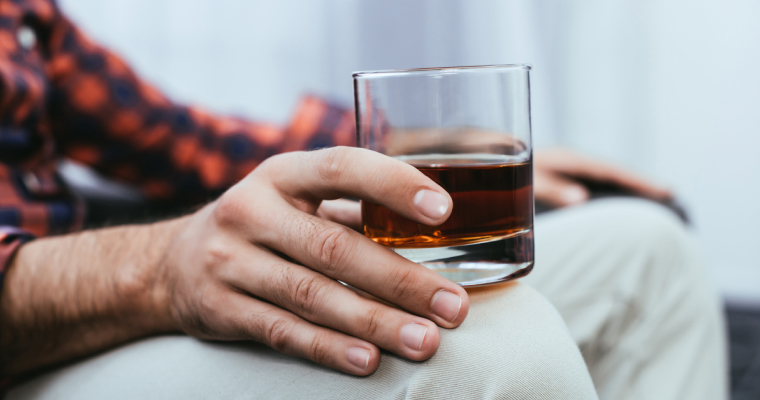
An alcohol sobriety program for men doesn’t have to begin with a crisis, a label, or a commitment to quit drinking forever. Men who want to change their drinking can start with a goal of drinking less, taking an extended break, or quitting, and medications such as naltrexone have evidence for reducing heavy drinking and alcohol consumption. Sunnyside Med combines clinician-supervised naltrexone, when prescribed, with tracking, coaching, and community support to help members work toward the drinking goal that fits them.
Maybe your drinking doesn’t look like a crisis. You’re working, keeping up with your responsibilities, and getting through the day just fine. But you may also know that you’re drinking more than you want to, or that cutting back has been harder than you expected.
If you’re looking for an alcohol sobriety program for men, you don’t need to decide what that search says about you before you get help. You don’t need to wait for a diagnosis, a major consequence, or a moment when things become “bad enough” to want something to change.
For some men, the hardest part is simply recognizing that there’s a middle ground between having no problem at all and needing to quit drinking forever. You can want to drink less, or you can want to take an extended break. You can decide you want to quit.
The right program doesn’t force a goal on you before you’ve decided what it is. Cutting back, taking an extended break, and quitting are all valid places to start.
Men tend to drink more alcohol than women, but they’re not necessarily quick to seek help when drinking starts to become a problem.
Part of that may come down to how many men think a drinking problem is “supposed” to look. If you’re still working, taking care of your family, and keeping up with your responsibilities, it’s easy to decide your drinking isn’t serious enough to address yet (and pop culture reinforces this idea).
Research suggests there are real barriers as a result of that thinking. A systematic review of help-seeking among men with addiction (Camacho-Ruiz et al., 2024) found that stigma, shame, self-reliance, and traditional ideas about masculinity can all make it harder for men to seek support. Some men described needing help as a failure to take care of themselves or fulfill the role they thought they were supposed to play.
But you don’t have to wait for other people to notice, or for your drinking to interfere with your job or relationships, before deciding you’d like it to change. You can just want the change.
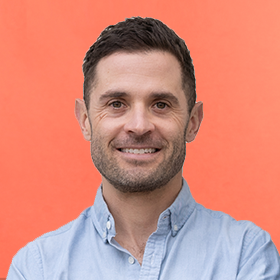
I’m Ian, one of Sunnyside’s co-founders, and I’ve been on my own journey to change my relationship to alcohol, which includes taking naltrexone every day. Alcohol runs deep in my family. I lost my mom to alcohol when I was 11, and I lost 3 grandparents to alcohol-related issues. My dad found sobriety through the support of AA, but he also struggled with his drinking when I was young.
Going through that experience as a kid raised the bar for what a problem with drinking was supposed to look like. As long as I wasn’t like the family members who really struggled, I told myself I was fine. And I was “fine” with my drinking… that is, until about 10 years ago. I paused to take a look at my habits and realized my drinking-for-fun had become drinking-way-too-much.
I decided to take three months off drinking, then I began my mindful drinking journey, started Sunnyside so I could help others, and in 2024 I decided to try naltrexone to help with the final piece of the puzzle. I’m drinking less than ever, and I’m incredibly happy with my health overall.
But there’s always been another layer. As a man, whether it was self-imposed or came from the world around me, the pressure to look normal and support everyone else was constant. Asking for help didn’t fit that picture. If I talked about alcohol, I’d be admitting I was struggling and needed help. It just didn’t fit the picture of strength that I assumed I needed to portray.
And to dig deeper, for years I was opposed to therapy. I figured there was nothing I needed to unpack (seems crazy to think about that now). Then I started, and I can say it was life-changing for me. I spoke honestly with my therapist about my drinking, and he never once labeled me. Instead, he helped me understand my why for drinking and work on the deeper things.
If there’s one takeaway I’d like to instill in anyone reading this, it’s that it’s okay to reach out for support with your drinking. The great thing about what we’ve built at Sunnyside is that you can do it all privately online, and still have support from our community and real human coaches.
Being a man can come with pressures, whether self-imposed or from around us. I believe taking control of our drinking habits is strong, empowering, and exactly the example we should be setting for those around us.
If you’re struggling with your drinking, don’t wait until it gets worse. Be proactive, and check out what we offer at Sunnyside and Sunnyside Med.
You don’t need to have reached a crisis point for alcohol to be affecting your health. Some of those effects can build gradually, long before they become obvious.
Take testosterone. A 2024 meta-analysis by Santi et al. examined 30 trials involving more than 10,000 men and found that chronic alcohol consumption was associated with lower total and free testosterone levels. The researchers also found changes in other hormones involved in the male reproductive system.
Alcohol can affect sleep, too. A systematic review and meta-analysis of 27 studies found that drinking reduced REM sleep and delayed when REM sleep began. The disruption became greater as alcohol intake increased, but changes in REM sleep were detectable even at relatively low amounts.
That helps explain why alcohol can make you sleepy without necessarily giving you better sleep. You may fall asleep more easily after drinking, particularly after a heavier night, while still waking up feeling less restored.
And sometimes the payoff from cutting back is easier to describe than the biology. As one Sunnyside Med member put it: “Really enjoying the lack of booze and increased energy… I am thankful naltrexone is helping and has basically reduced all cravings.”
These effects don’t require you to identify with a particular label. They’re reasons to pay attention to your drinking before it reaches the point where something has to go seriously wrong.
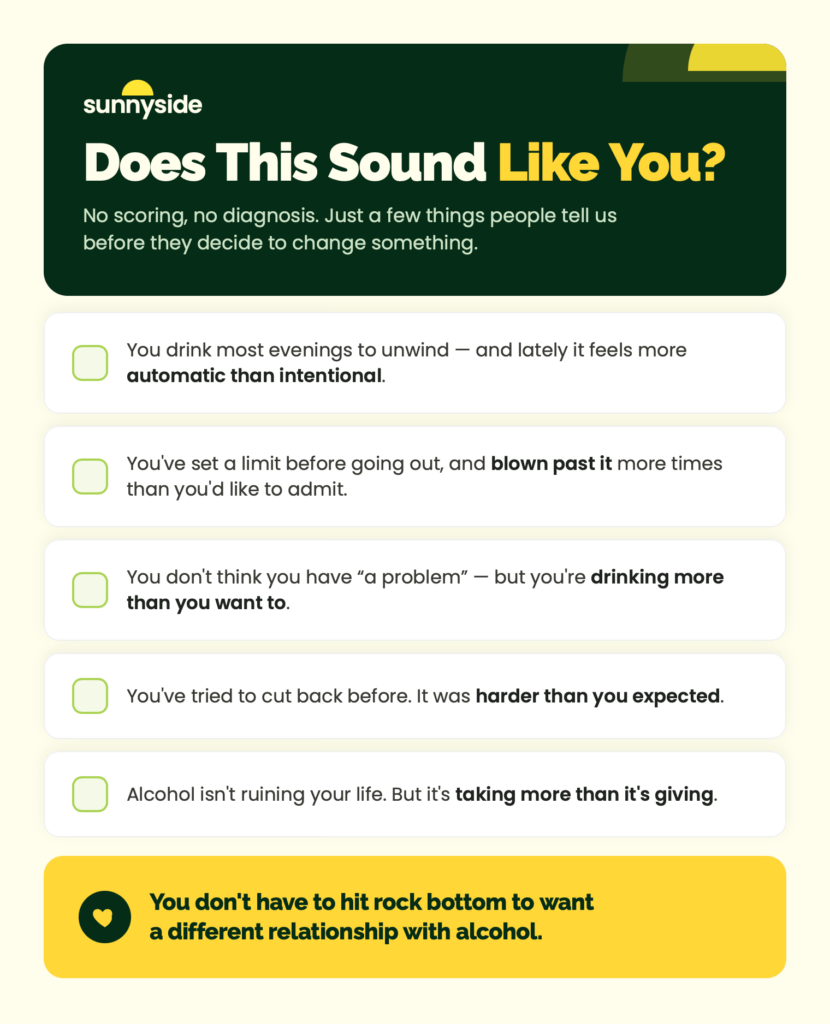
There’s often a long stretch between realizing your drinking might be a problem and actually doing something about it.
Research on alcohol use disorder suggests that years can pass between the onset of AUD and seeking formal treatment. One review puts the average lag at about eight years. There isn’t one explanation for that gap. Some people don’t think their drinking is severe enough. Others don’t identify with the available treatment options, worry about stigma, or simply believe they should be able to handle it themselves.
For men, some of those barriers can be particularly familiar. As we discussed above, research on men’s help-seeking has identified self-reliance, shame, stigma, and traditional expectations around masculinity as reasons some men hesitate to ask for support.
There’s also the question of what “needing help” is supposed to look like. If you’re still doing well at work, maintaining your relationships, and meeting your responsibilities, drinking more than you want to can feel like something you should fix yourself rather than a health issue worth addressing.
But alcohol doesn’t need to create a crisis before cutting back can benefit your health. Its effects on sleep and other aspects of physical health can begin well before drinking visibly disrupts your life.
That’s the idea behind proactive, preventive alcohol care: you can address a pattern because you want it to change, not because you’re waiting for it to become worse.
There are many effective approaches to changing your relationship with alcohol. Residential treatment, 12-step programs, peer-support groups, therapy, and other forms of care can be invaluable for the people who need or want them.
But not everyone looking for an alcohol sobriety program for men is ready to commit to abstinence. You might simply know you’re drinking more than you want to and be looking for a way to regain some control.
That can create an awkward middle ground. Your drinking bothers you, but you don’t identify with the idea that you’ve hit “rock bottom.” You want support, but you may not know whether you want to quit forever. And if the options you’re familiar with seem designed around abstinence or more severe alcohol problems, it’s easy to conclude that none of them are meant for you.
But they aren’t your only options.
Moderation can be a legitimate goal for some people, and support doesn’t have to begin with a crisis or a particular label. That’s part of what people mean when they talk about gray-area drinking: alcohol is taking up more space in your life than you want it to, even if your experience doesn’t match your mental picture of a severe drinking problem.
One option for people who want to change their drinking is naltrexone, a prescription medication used to treat alcohol use disorder.
Naltrexone blocks opioid receptors involved in alcohol’s rewarding effects. It doesn’t make you sick if you drink. Instead, it can reduce some of the reinforcement and craving that make it difficult to stop once you’ve started.
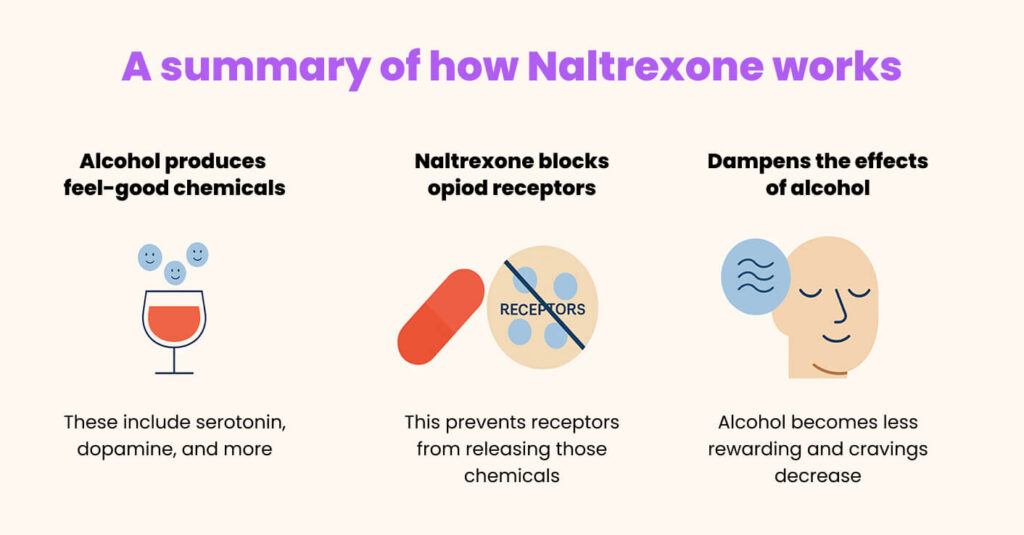
A meta-analysis by Hendershot et al. looked at placebo-controlled human laboratory studies of naltrexone. Across nine studies involving 490 participants, naltrexone modestly but significantly reduced how much alcohol people consumed. Across 16 studies involving 748 participants, it also reduced alcohol craving. Importantly, the researchers found no significant difference in these effects between alcohol-dependent and non-dependent drinkers.
That makes naltrexone relevant beyond the stereotype of someone whose drinking has already reached a crisis point. Whether it’s appropriate for you is a decision to make with a licensed clinician based on your health history and drinking pattern.
As one Sunnyside Med member put it, “Naltrexone has helped dial back those cravings drastically so if I do drink, I’m not getting drunk, and I don’t feel the need to drink every day.”
Dr. Hrishikesh Belani, M.D., Sunnyside Medical Advisor, describes the medication similarly. “I prescribe naltrexone regularly as a safe, effective way to curb heavy drinking,” he says. “I highly recommend pairing with a behavioral health program like Sunnyside.”
Quitting alcohol completely isn’t the only possible goal. For some people, cutting back is a valid place to start.
In fact, naltrexone has been studied in people who specifically wanted to reduce their drinking rather than stop altogether. In one randomized trial of 163 problem drinkers, participants entered treatment with a goal of reducing their drinking to safer levels. Naltrexone was associated with reductions in drinking, with some outcomes varying based on how the medication was taken and by sex.
Other research has reached similar conclusions. An open randomized study of men with mild alcohol dependence found that adding naltrexone to a controlled-drinking program reduced craving during treatment and was associated with fewer drinking and heavy-drinking days during follow-up.
Naltrexone works differently from medications that cause an unpleasant reaction when you drink. It blocks opioid receptors involved in alcohol’s rewarding effects, which can make drinking feel less compelling.
That gives you room to decide what you actually want from changing your drinking. You might want fewer drinking days or fewer drinks when you do drink. You might take an extended break, or you may ultimately decide that not drinking at all works better for you. Remember: Your goal doesn’t have to be identical to someone else’s for it to be worth pursuing.
Sunnyside Med is a 100% online alcohol health program designed for people who want to change their drinking without waiting for a crisis.
A licensed clinician reviews every application to determine whether naltrexone is appropriate. For members who are prescribed medication, Sunnyside Med pairs it with drink tracking, weekly goals, text coaching seven days a week, weekly group calls, a private community, and access to a licensed care team.
The idea is to address both sides of changing your drinking. Naltrexone can reduce some of alcohol’s reinforcing effects, while tracking and behavioral support help you identify the routines, triggers, and habits that have built up around drinking.
The program is moderation-first, but not moderation-only. Whether your goal is to drink less, take an extended break, or quit, that goal can change as you go.
“This isn’t only for people at or approaching a crisis point. We’re building Sunnyside Med to provide proactive and preventive access to medication,” says Nick Allen, co-founder of Sunnyside.
Among active Sunnyside Med members, 78% achieve a meaningful reduction in drinks over 12 weeks. Among active members with 50% or more app engagement, members average a 45.6% reduction in daily drinks. Individual results vary.
Sunnyside Med costs $99 per month, billed quarterly, plus an initial intake fee. The program is HSA and FSA-eligible.
Get started with a two-minute assessment to see if naltrexone and Sunnyside Med may be right for you.
No. Sunnyside Med is moderation-first, so you can start with a goal of drinking less, taking an extended break, or quitting. Your goal can also change over time.
Oral naltrexone does not cause the kind of unpleasant reaction to alcohol associated with medications such as disulfiram. Naltrexone has also been studied in people who continued drinking and wanted to reduce their alcohol consumption. Whether naltrexone is appropriate for you should be determined by a licensed clinician. You can learn more about how naltrexone works.
Sunnyside Med is a 100% online, medication-supported alcohol health program. It pairs clinician-supervised naltrexone, when prescribed, with an app, text coaching, weekly group calls, and a private community. Unlike abstinence-focused programs, Sunnyside Med supports moderation as a valid goal.
Men and women can process and experience alcohol differently because of biological factors including body composition and alcohol metabolism. On average, women tend to reach higher blood alcohol concentrations than men after consuming equivalent amounts of alcohol. But men also tend to drink more alcohol overall, and alcohol-related health effects can occur well before drinking reaches the point of a visible crisis.
You don't need to arrive with an existing AUD diagnosis. A licensed clinician reviews your application and health history and determines whether naltrexone is appropriate for you. You can see what the Sunnyside Med program includes before you apply.
There isn't a special timeline for men, and individual experiences vary. Naltrexone begins acting on opioid receptors relatively quickly, but changes in cravings or drinking patterns may be more gradual. Your Sunnyside Med care team can help you understand what to expect after you start treatment.
Ian has a family deeply hurt by alcohol, and is on his own personal journey to drink less and live his healthiest life. He’s took naltrexone daily for two years and saw incredible results. As Sunnyside Med’s first customer, he’s deeply entrenched in alcohol health and naltrexone.
Naltrexone is not addictive or habit-forming. It blocks opioid receptors rather than activating them, so it doesn't produce...

Getting a prescription for naltrexone doesn't have to mean a long sit in a doctor's waiting room. With...

Naltrexone eligibility is determined through an individual clinical evaluation, not a single pass-or-fail test. You don't need to...
If you’re interested in trying naltrexone to help you drink less, the natural next question is where to...