Two medications. One coordinated care plan.Clinical care · Coaching · App · Community
01Before you begin
4 tips to get you going.
Today, you join thousands of people changing their relationship with alcohol. That’s a huge step. Whether you want to break the nightly wine habit, rethink weekend drinking, or quit entirely, Sunnyside Med is here to help you build change that lasts.
This guide walks you through your medications, the program around the medications, and where to turn for support. Keep it nearby, follow your personal care plan, and reach out whenever you need us.
Start on a low-key day
If possible, begin on a day when you feel rested, clear-headed, and free from major commitments, not especially anxious, stressed, or hungover. That gives you room to notice how you feel and take things slowly while your body adjusts.
Commit to daily dosing
Consistency matters. Take both medications every day according to the instructions on the labels, even on days when you don’t plan to drink. Build it into your routine, and message your care team before changing your dose or schedule.
Give yourself time to adjust
Your body, and your experience of drinking, may feel different when you begin. Alcohol may affect you differently, too, so take it slowly and pay attention to what changes. Many early side effects improve with time, and your care team can help with anything uncomfortable or unexpected.
Think long-term & be patient
Medication can be a powerful catalyst, but lasting change builds over months and years, not days. Take it as directed and use everything around it: your care team, coaching, community, app, and live Zoom meetings. You don’t have to do the deeper work alone.
02Medication instructions
Important information about taking your medications.
Take them as prescribed, including on days you don’t drink.
Key instruction
Take both medications every day
Take them as prescribed, including on days you don’t drink. Consistency gives your care plan the best chance to work.
Key instruction
Take each medication at the right time
Take semaglutide in the morning and naltrexone about one hour before your usual craving window. Always follow the instructions on each label.
You’ll be taking naltrexone and semaglutide separately, but both should be taken daily following the instructions provided by your care team.
Both medications can cause temporary nausea, especially when you first start or your dose changes. The guidance throughout this guide can help you stay more comfortable as your body adjusts.
If you’re feeling nauseous or eating less than usual, take extra care around alcohol. Drinking may make nausea worse, and alcohol may affect you more quickly or strongly when you haven’t eaten as much.
If you have questions about taking your medications or managing side effects, message your care team directly through the app.
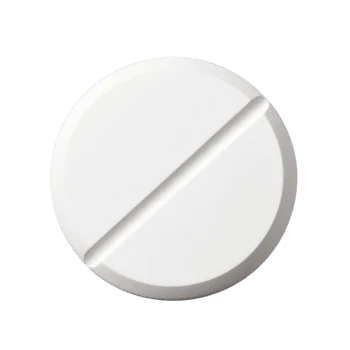
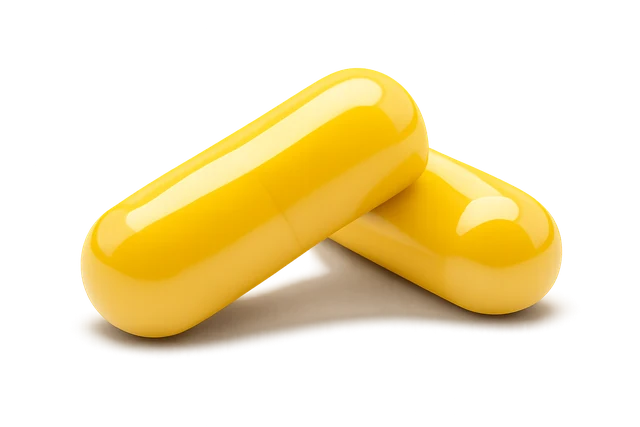
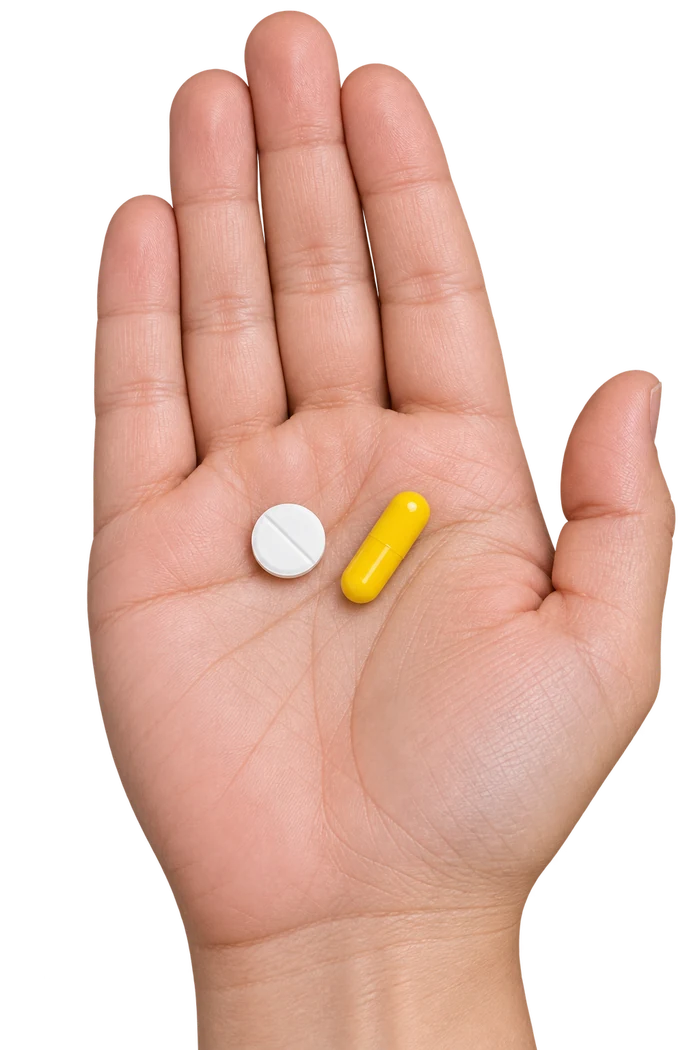
Semaglutide: white tablet. Naltrexone: yellow capsule. Your medication may vary in color and size.
Two ways to help reduce alcohol’s pull.
Semaglutide may help turn down the urge to drink. Naltrexone helps reduce the reward alcohol delivers. Working differently within one coordinated care plan, they can address two forces that can keep drinking patterns going.
Tracking, coaching, clinical care, and community help you turn that opening into change that lasts.
TimingDaily, first thing in the morning
Semaglutide (GLP-1)
Orally disintegrating tablet
May reduce the urge to drink
Clinical trials show promise for alcohol reduction
Acts on GLP-1 receptors involved in appetite and reward
May reduce alcohol cravings and heavy-drinking days
Works on the brain-gut connection
What this means for you: Over time, the pull toward alcohol may feel quieter, and you may have fewer heavy-drinking days. Research is still emerging, and individual responses vary.
Taking your semaglutide tablet
Semaglutide is a dissolvable tablet designed to absorb under your tongue. How you take it affects how well it works, so follow these steps carefully.
Take it first thing in the morning, on an empty stomach. Do not eat, drink (other than water), or take other medications for at least 30 minutes beforehand.
Place the tablet under your tongue and let it sit there without chewing, swallowing, or moving it around.
Let it dissolve completely. This usually takes 1–2 minutes. Do not rush it.
Wait 30 minutes before eating, drinking, or taking other medications. This gives the medication time to absorb.
Take it at the same time each morning. Taking it at the same time each morning makes it easier to build a reliable routine. Take it daily alongside your morning Sunnyside reminder!
Do not swallow the tablet whole. Your semaglutide is designed to absorb under the tongue, and swallowing reduces effectiveness.
TimingDaily, about 1 hour before your usual craving window
Naltrexone HCl
Capsule
Helps reduce alcohol’s reward
FDA approved for treating alcohol dependence since 1994
Blocks opioid receptors involved in alcohol’s rewarding effects
May reduce cravings and make alcohol feel less compelling
Works on the brain’s reward center
What this means for you: Over time, alcohol may feel less rewarding, cravings may feel quieter, and it may feel easier to stop once you start drinking. Individual responses vary.
Taking your naltrexone capsule
Naltrexone is a capsule that you swallow whole. Timing matters, so follow your care plan and these steps carefully.
Swallow the capsule whole with a full glass of water. Do not crush or open it.
Take it about 1 hour before your usual craving window. Take naltrexone daily at the time recommended in your care plan. If your craving window changes on weekends or holidays, message your care team about adjusting your timing. Don’t change your dose.
Take with food and a full glass of water.
Opioid safety: Don’t start naltrexone if you use or have recently used opioids, including opioid pain or cough medicines, tramadol, buprenorphine, or methadone. Most short-acting opioids require at least 7–10 opioid-free days; buprenorphine or methadone may require up to 14 days. Tell your care team if you use kratom or another opioid-like supplement. Contact your care team before your first dose if you’re unsure.
Always tell doctors, dentists, and emergency clinicians that you take naltrexone. It can block opioid pain medication.
Important medication information. Semaglutide is not FDA-approved to treat alcohol use disorder. The semaglutide ODT and naltrexone capsule prescribed through Sunnyside Med are compounded medications and are not FDA-approved. Naltrexone is FDA-approved in tablet form for alcohol dependence. Published semaglutide studies in alcohol use disorder evaluated injectable or standard swallowed oral semaglutide, not this compounded ODT or this specific medication combination. Research is still emerging, and individual results vary.
Semaglutide is not FDA-approved to treat alcohol use disorder. Research is still emerging, and this specific medication combination has not been evaluated in a randomized clinical trial. Individual results vary. Sources: Hendershot et al., JAMA Psychiatry, 2025; Schacht et al., American Journal of Psychiatry, 2026.
03Your first 90 days & beyond
Real change takes time.
Think in months, not days. Sunnyside Med combines your prescribed medication plan with ongoing habit-change support. Give yourself about 12 months to focus on building habits and changing your relationship with alcohol. Progress varies, so follow your care plan, stay connected with your care team, and recognize the small wins along the way.
Take it as prescribedLearn the Sunnyside toolsFind your rhythm
Your first 90 days are your runway
Use your first three months to take your medication as prescribed, learn the Sunnyside tools, and find your rhythm with your care team. You may not notice medication results right away, and progress varies from person to person. Keep sharing what you notice so your provider can review your plan.
Medication helps open the door
Medication is one part of your care plan. The deeper work, building routines, changing habits, and reshaping your relationship with alcohol, takes practice. Give yourself time to build something that lasts, and let your provider guide how long medication remains appropriate for you.
Let’s work through it together
If you experience side effects, your care team is ready to help. Tell us what you’re feeling, and we’ll help you understand your options and choose the right next step.
Private doesn’t mean alone
Questions, rough patches, small wins, bring them all. Your care team, member community, and Zoom meetings are here whenever you want support from people who understand.
04Your program
Medication is the catalyst. Sunnyside makes it last.
Medication is one part of a comprehensive whole. Our clinical care team, app, coaching, and community help you build new habits that stick.
“Excellent program, especially in conjunction with Naltrexone. Changed my life almost immediately while seemingly effortless, and helped maintain the change throughout the following year. I highly recommend it.”
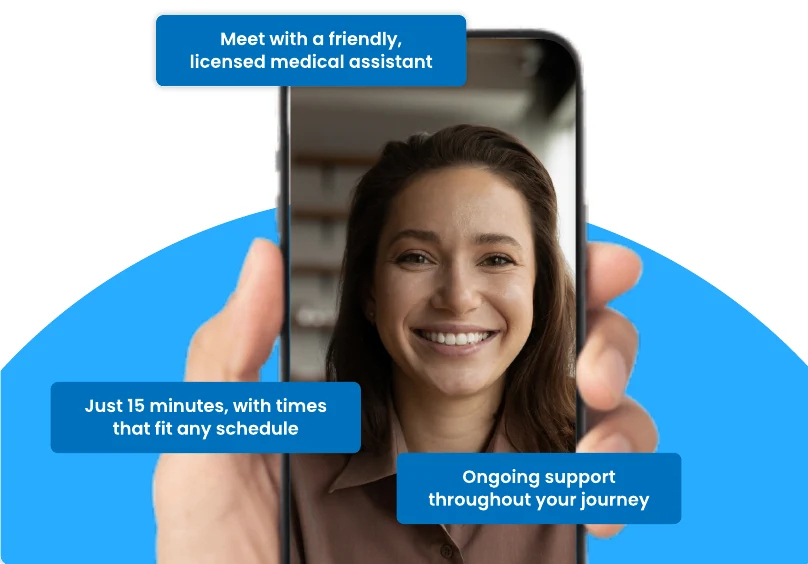
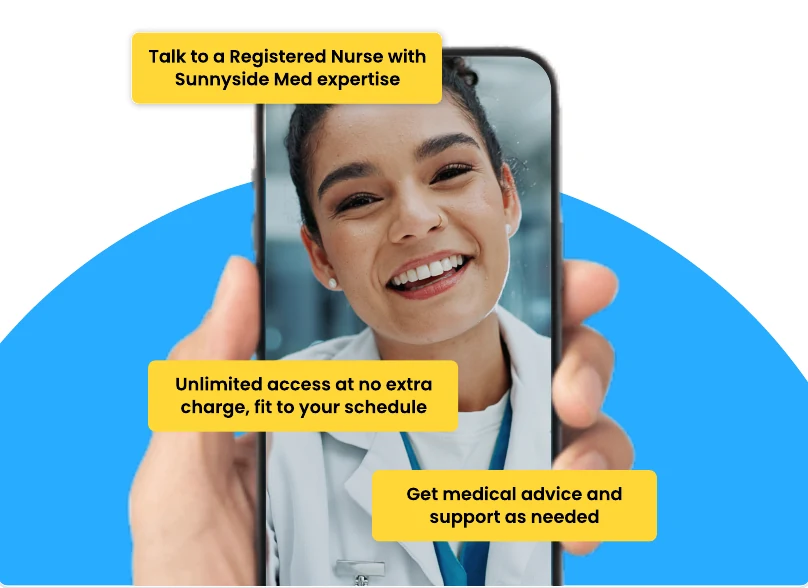
Care team support 7 days a week
Text whenever you need us and we’ll help you get the attention you need.
1:1 coaching and guidance
Get matched with a licensed coach to walk you through each step of the program.
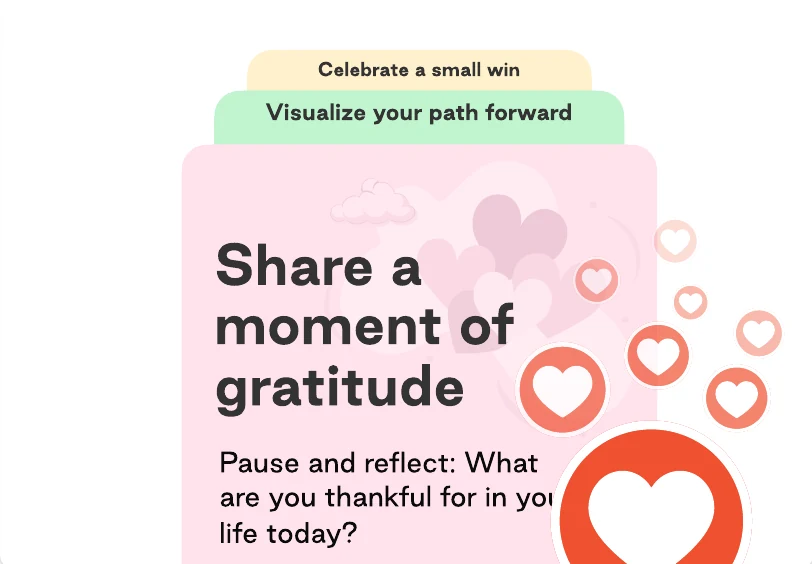
Peer connection and support
Connect with others on the journey with you in the app and via online meetings.
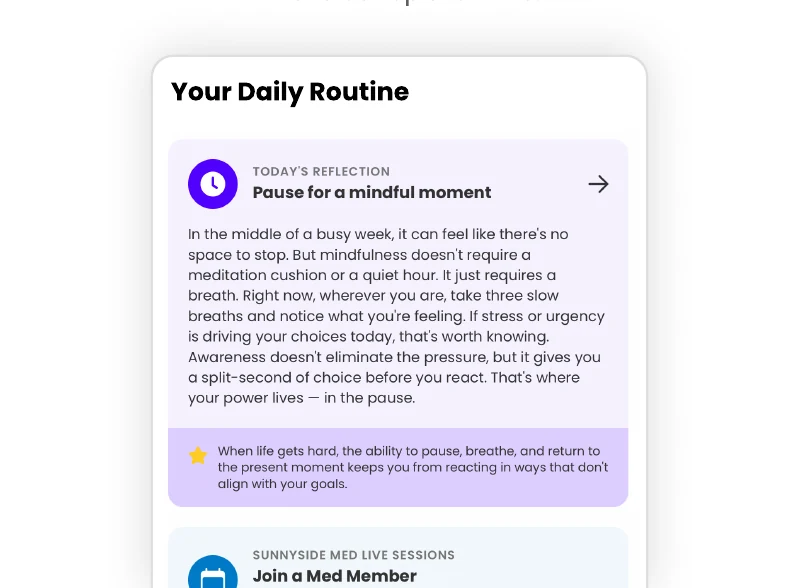
Daily routines designed around you
Break large goals into small daily habits that stack up over time.
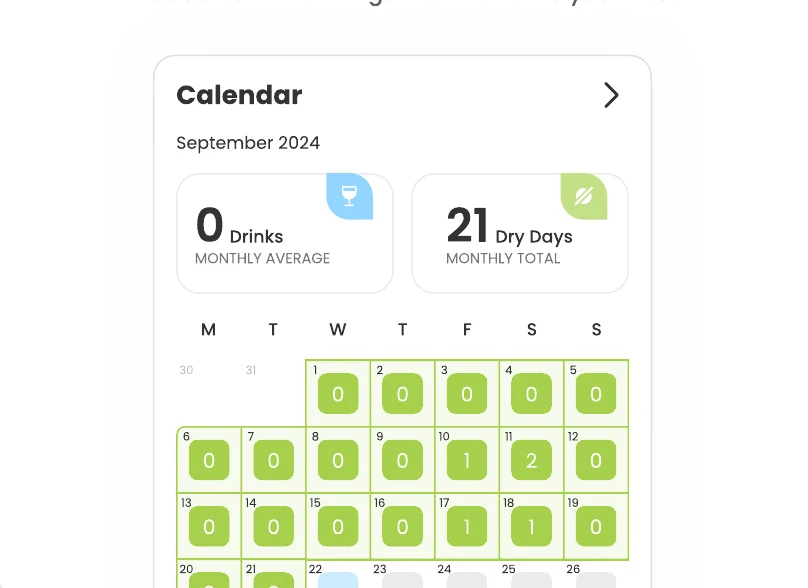
Visualize your progress
See how your habits are changing over time, measured in the things that matter to you most.
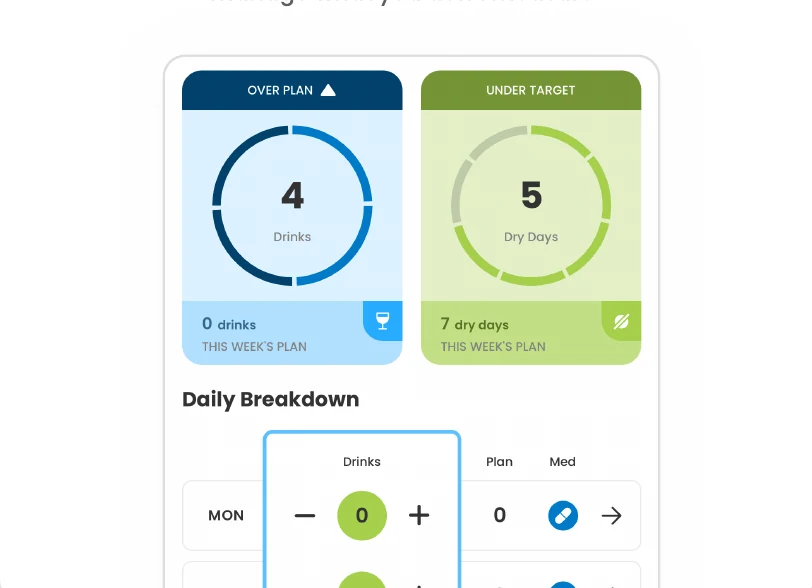
Log your drinks and medication
Simple tools to track your days. You can’t manage what you don’t measure!
Continuous clinical care
Don’t wait 6 months for a check-in. We’re here on demand.
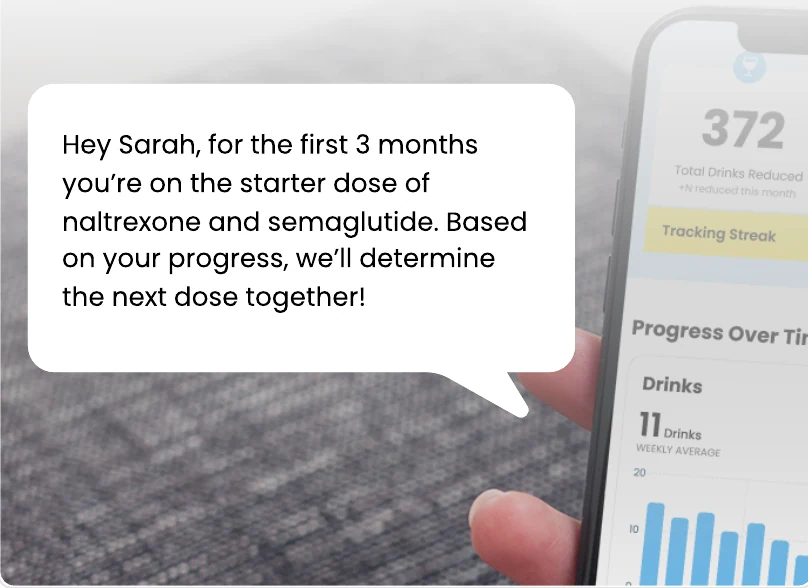
Personalized dosing
We’ll work with you to find the perfect dosing to reach your goals, with chance to adjust every 84 days.
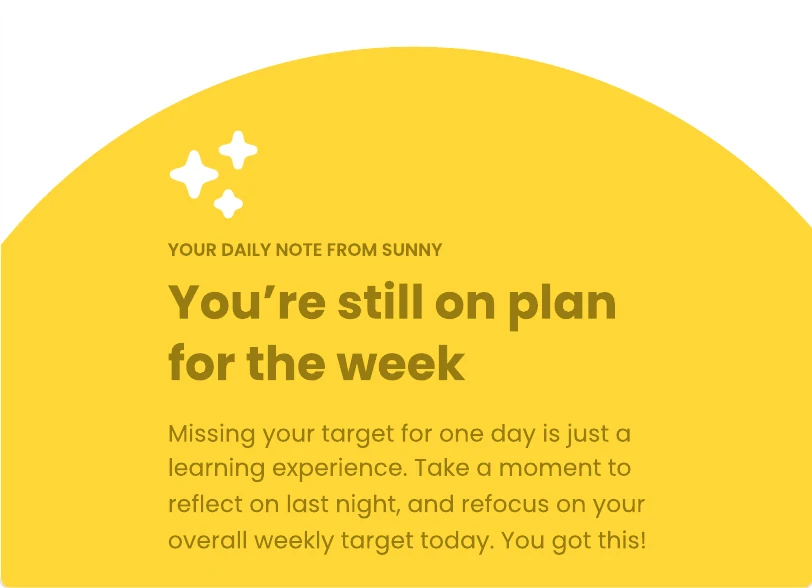
Positive and non-judgmental
There’s no shame in investing in your health. Be proud that you’re here!
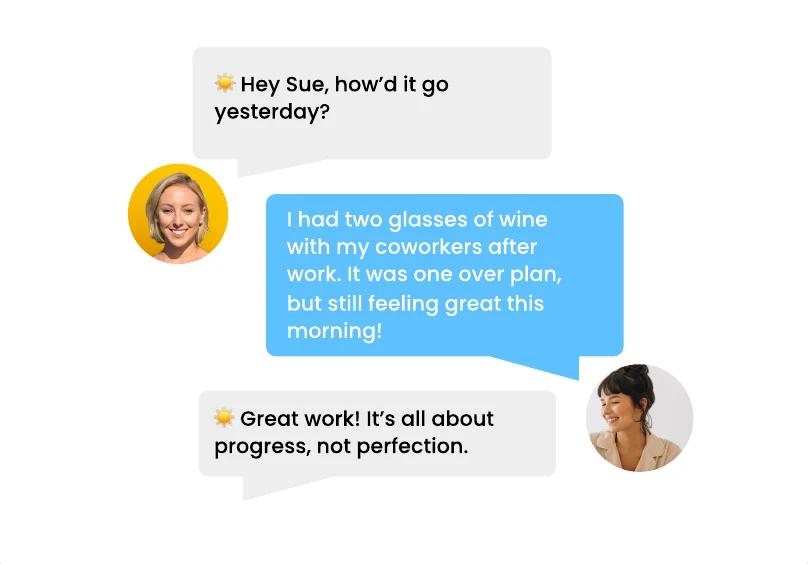
Illustrations and app examples from the printed guide. Examples aren’t a prediction of your results.
Visit the Med portal in your app for full safety and side effect information.
Common side effects
Side effects vary. Possible effects include the symptoms listed below. Some may ease as you adjust, but contact your care team if symptoms persist, worsen, or interfere with daily life.
Nausea or dizziness
Headache
GI symptoms (upset stomach, diarrhea, constipation)
Appetite and eating changes (feeling fuller sooner, reduced appetite)
Trouble sleeping
For complete side effect and safety information, including advice about what can help, visit the Med portal in your app, or talk to our care team.
Medication & interactions
Alcohol and withdrawal
You don’t have to quit drinking before starting your prescribed plan. If you drink heavily or have had withdrawal, ask your care team how to reduce safely. Shaking, sweating, or needing alcohol to feel normal after cutting back requires urgent in-person care, not just an app message.
Specific to naltrexone
Naltrexone can block opioid pain medicines. Do not try to overcome this by taking more opioids. It can cause a fatal overdose. Tell doctors, dentists, and emergency clinicians that you take naltrexone.
Starting naltrexone after recent opioid use can trigger sudden, severe withdrawal. Tell your care team about all opioid use, including pain or cough medicines, tramadol, methadone, buprenorphine, and kratom, before starting.
Tell your care team about liver problems and all medications or supplements you take.
For both medications
Alcohol may worsen nausea and dehydration, especially if you’re eating less. Ask your care team how alcohol fits into your treatment plan.
Semaglutide can slow stomach emptying and may affect the absorption of oral medicines. Review all medications and supplements with your care team.
If you take insulin or other diabetes medicines, tell your care team. Some combinations increase the risk of low blood sugar, particularly when you’re eating less or drinking alcohol.
Safety steps
Review all medications and supplements with your care team before starting or making changes. Online interaction checkers do not replace a clinician’s review.
06Care team & help
We’re here to help.
When to contact your care team
Contact your care team promptly if side effects persist, worsen, interfere with daily life, or affect eating, drinking, or sleeping. Seek prompt medical advice for yellowing skin or eyes, dark urine, or new or worsening mood changes. Your provider can review your treatment plan. For the emergency symptoms listed below, seek emergency care instead of waiting for a reply.