
30 Years of Naltrexone Research: What the Evidence Actually Shows
Naltrexone isn't a new or experimental drug. Researchers began studying its potential for alcohol use in the 1980s,...


Participants in the Sunnyside Dry(ish) January Challenge felt overwhelmingly positive about the experience, whether or not they exactly stuck to their goals, indicating that simply participating in a challenge has big benefits. Just trying to moderate or go dry is enough to see big results.
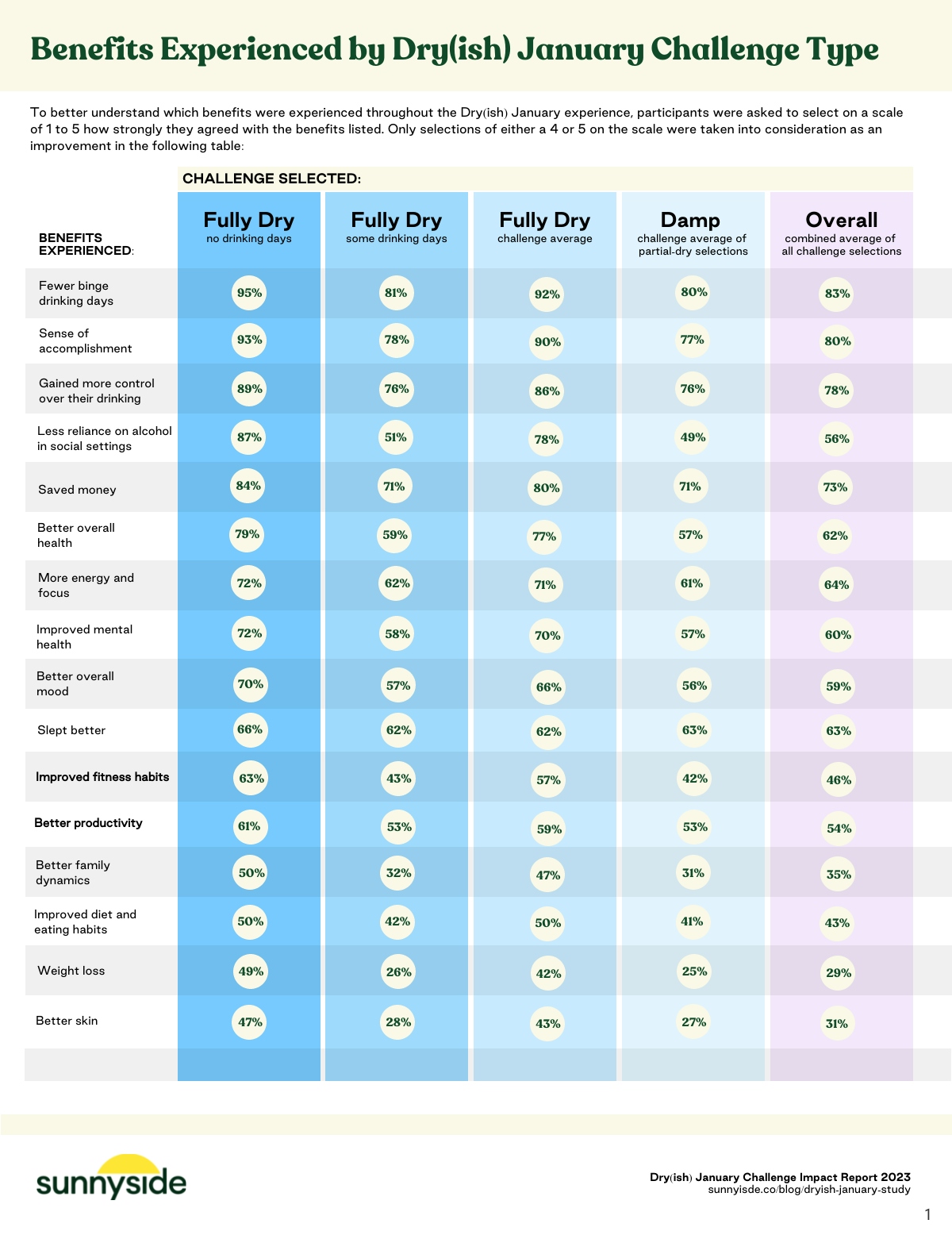
To better understand which benefits were experienced throughout the Dry(ish) January experience, participants were asked to select on a scale of 1 to 5 how strongly they agreed with the benefits listed. Only selections of either a 4 or 5 on the scale were taken into consideration as an improvement in the following table:
The survey found that on average, regardless of challenge type selected:
In many cases, those who opted into the Fully Dry challenge and stuck with not drinking for a full 31 days saw increased benefits overall as can be seen by the following chart, compared to those who still drank throughout the month:

More than 25,000 individuals participated in Sunnyside’s Dry(ish) January Challenge, a challenge to reset alcohol consumption in January with no pressure to quit, and the majority intend to continue drinking less in the following months.
The popularity of alcohol resets in January has been growing drastically over the past few years. Campaigns like Alcohol Change UK’s Dry January® saw a massive increase this year with 19% of adults participating in some form or another. If that rate holds in the US (and we believe it did), that accounts for nearly 40,000,000 people.
However, in the past couple of years, a “damp” approach to the common January alcohol reset has become significantly more popular, empowering participants to focus on mindfulness and moderation, not sobriety. Until now, there has been no significant research that can point to the positive benefits of a partially-dry, or “Dry(ish)” January.
Sunnyside created the Dry(ish) January Challenge to allow participants to choose their own plan (fully dry or reduced alcohol consumption) and get tools, education, community, and coaching support throughout the month to improve their odds of success.
The benefits were huge for both groups, far outweighing those who did not opt in, though those who chose to go fully dry had the most success in reducing alcohol consumption.
The key findings of this study involved a combination of surveys from Sunnyside members who opted into our Dry(ish) January Challenge, as well as anonymous, aggregated alcohol tracking data from participants using the Sunnyside app.
The data has been collected from 25,000 individuals who participated in the challenge, as well as survey responses from a cohort of 5,000 members within that challenge.
Following are some of the key findings from this research.
Based on our surveys and analysis, we observe several key high-level findings:
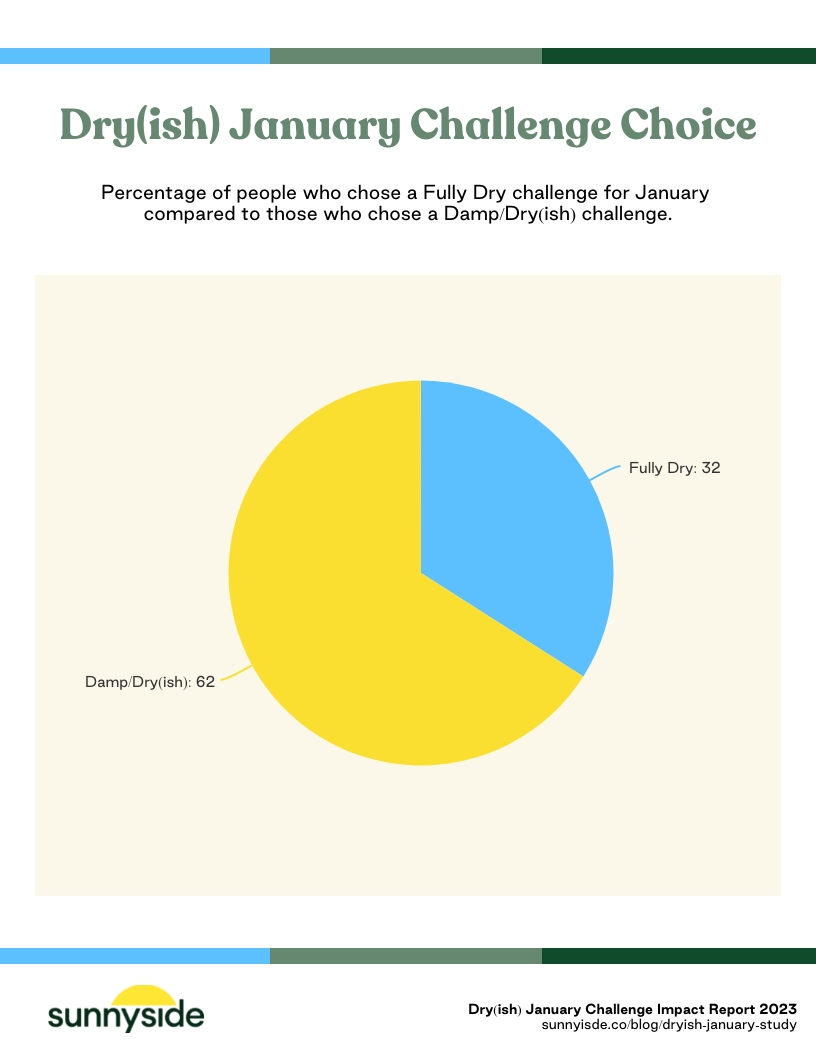
Over 25,000 people joined the Sunnyside Dry(ish) January Challenge. Participants were given the option to choose between a fully dry month or a damp approach for January.
32% of participants opted into a fully dry month, while 68% opted for a damp approach.
In an October 2022 survey, we found that 33.9% of respondents indicated they would be open to participating in a completely dry or sober January. However, when asked if they would participate in a Dry(ish) option where they had more flexibility to decide how and when they would drink, 84.9% indicated interest.
This suggests a more flexible option provides a lower barrier to entry when attempting to improve one’s relationship with alcohol. By minimizing the judgment and stigma around an all-or-nothing approach, encouraging people to participate in a Dry(ish) Challenge provides them with the motivation, tools and support needed to cut back on their drinking.
Participants who chose to go Fully Dry in January reduced their alcohol consumption by 61% vs the monthly average over the previous three months (Oct 2022 – Dec 2022).
Those who chose a “damp” or moderation-based challenge reduced their alcohol consumption by 22%. In addition, Sunnyside members who did not opt in to a challenge reduced their drinking by 11%.
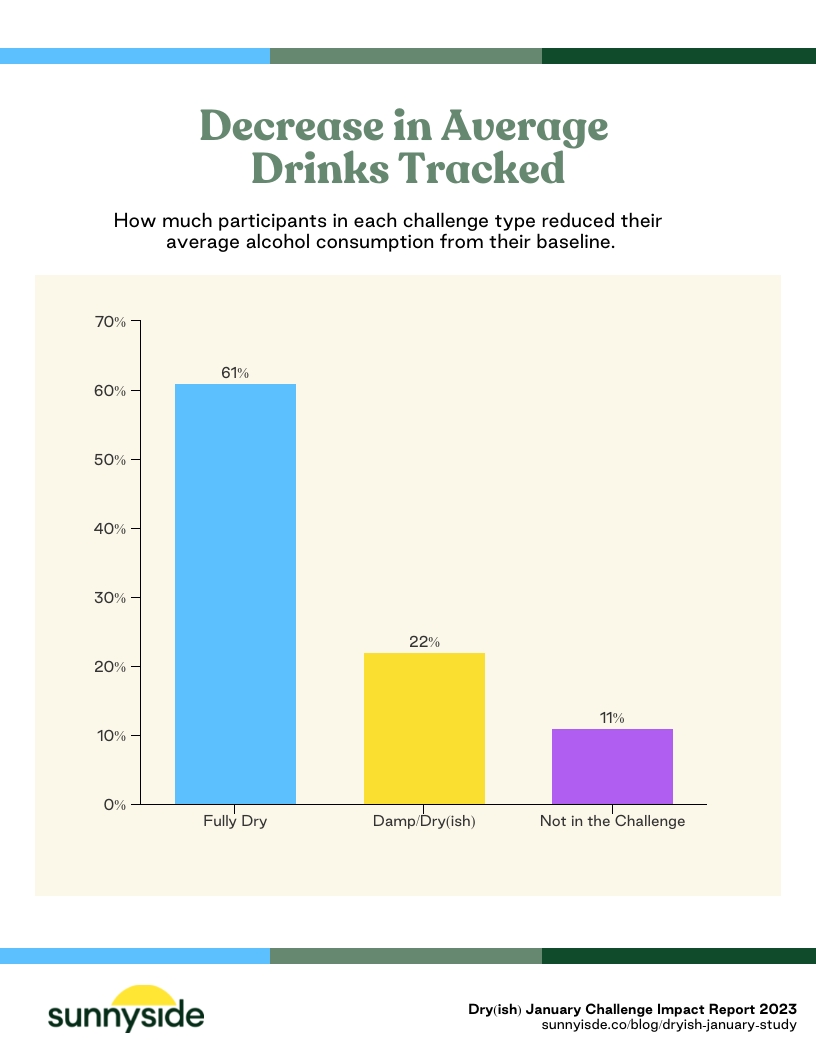
An average 61% reduction in alcohol consumption for those who chose to go fully dry is an incredible achievement, and the 22% reduction that the damp/moderation challenge participants saw is also significant. Additionally, Sunnyside members who were not in the challenge, but still utilized Sunnyside’s tools for mindful drinking, saw an average reduction in alcohol consumption of 11%.
Furthermore, participants in the Fully Dry challenge had an average of 23 dry days in January, a whopping 96% increase from the average over the previous 3 month period.
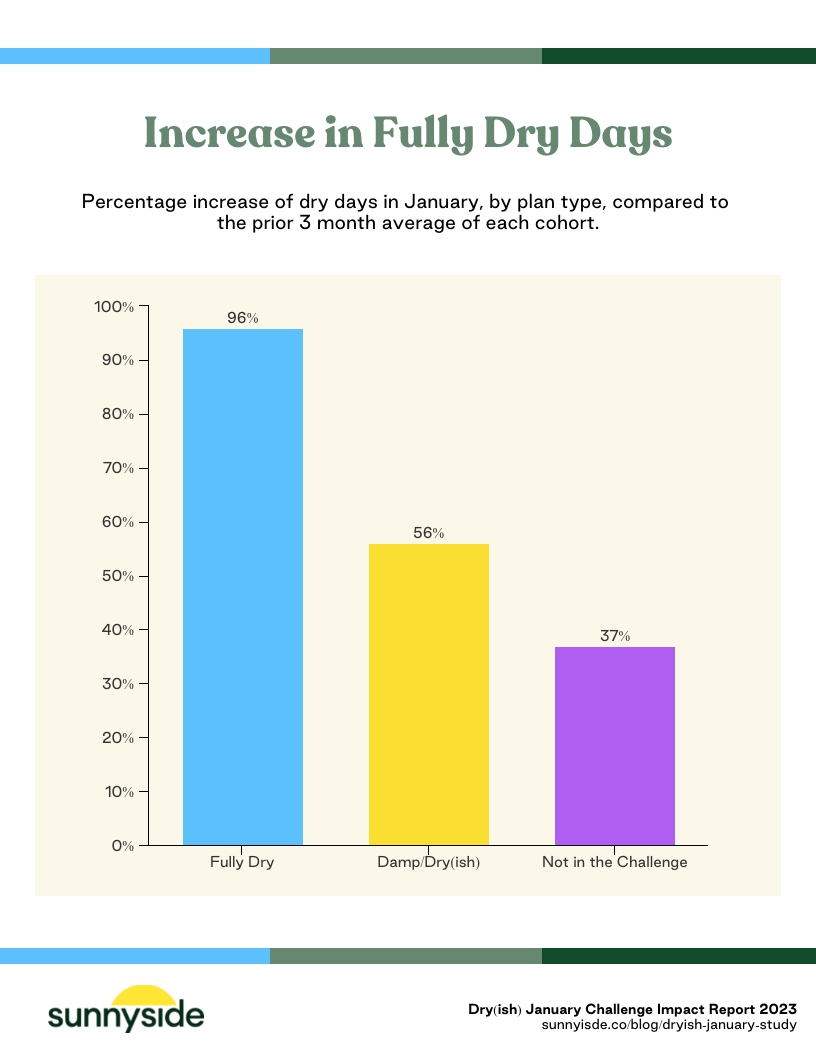
It appears that simply shifting one’s mindset and building a habit around planning and tracking has a strong impact in actively reducing the number of days that people drink. The benefits of having consecutive dry days are numerous, including but not limited to, maintaining good liver health, weight loss, improved sleep and better overall mood.
When asked if participating in the Sunnyside Dry(ish) January Challenge resulted in fewer binge drinking days, participants overwhelmingly stated that they agreed. This is a combination of all participants, regardless of the challenge they chose.
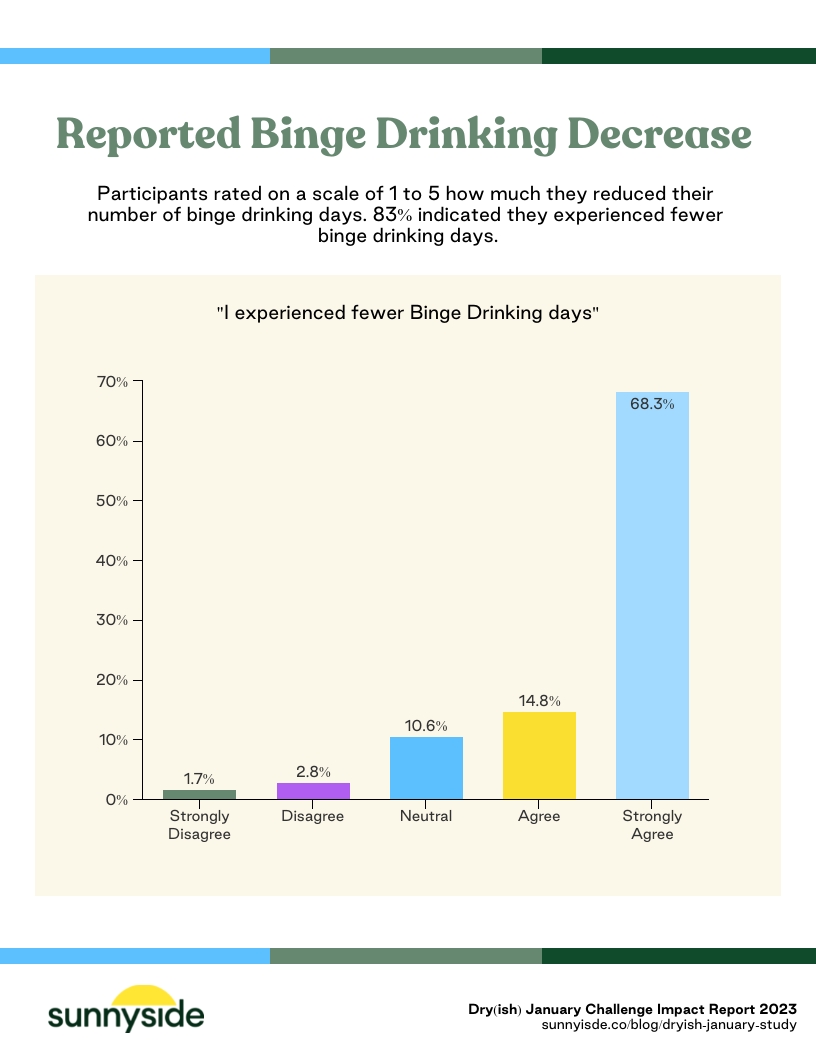
Binge drinking is defined by the NIAAA as “as a pattern of drinking alcohol that brings blood alcohol concentration (BAC) to 0.08 percent – or 0.08 grams of alcohol per deciliter – or higher. For a typical adult, this pattern corresponds to consuming 5 or more drinks (male), or 4 or more drinks (female), in about 2 hours.”
Binge drinking is a very common form of heavy and problematic drinking behavior that can have significant negative short and long term consequences. While participants did show big gains in January, 30% also stated that they’re concerned about bouncing back to old binge drinking habits now that February is here.
With the support of Sunnyside and more developed tracking habits, we’ve also learned that 92% of Dry(ish) January participants plan to drink less in February using Sunnyside. More on this later.
Sunnyside utilizes several daily and weekly tools to help participants succeed at their Dry(ish) January Challenge. These are tools that we’ve been refining over the past three years, and that anyone can get access to by signing up for a free 15-day trial at Sunnyside.
86% of participants cited drink tracking with Sunnyside as the key daily interaction that helped them succeed in Dry(ish) January.
Drink Tracking, while a simple concept, is an extremely powerful habit that has helped tens of thousands build healthier habits. Sunnyside encourages members to track their drinks in real-time, which creates a moment of conscious interference, allowing the member to pause and check-in to make sure they really want another drink. In addition, Sunnyside asks members to confirm their previous day’s drink total every morning. This gives participants a moment to reflect on their accomplishment and set a mental plan for the day ahead.
In addition, 75% of participants cited Daily Reminders from Sunnyside as a daily interaction that helped them hit their goals. Sunnyside sends three key messages throughout the day that provide motivation and a reminder of the goal for the day.
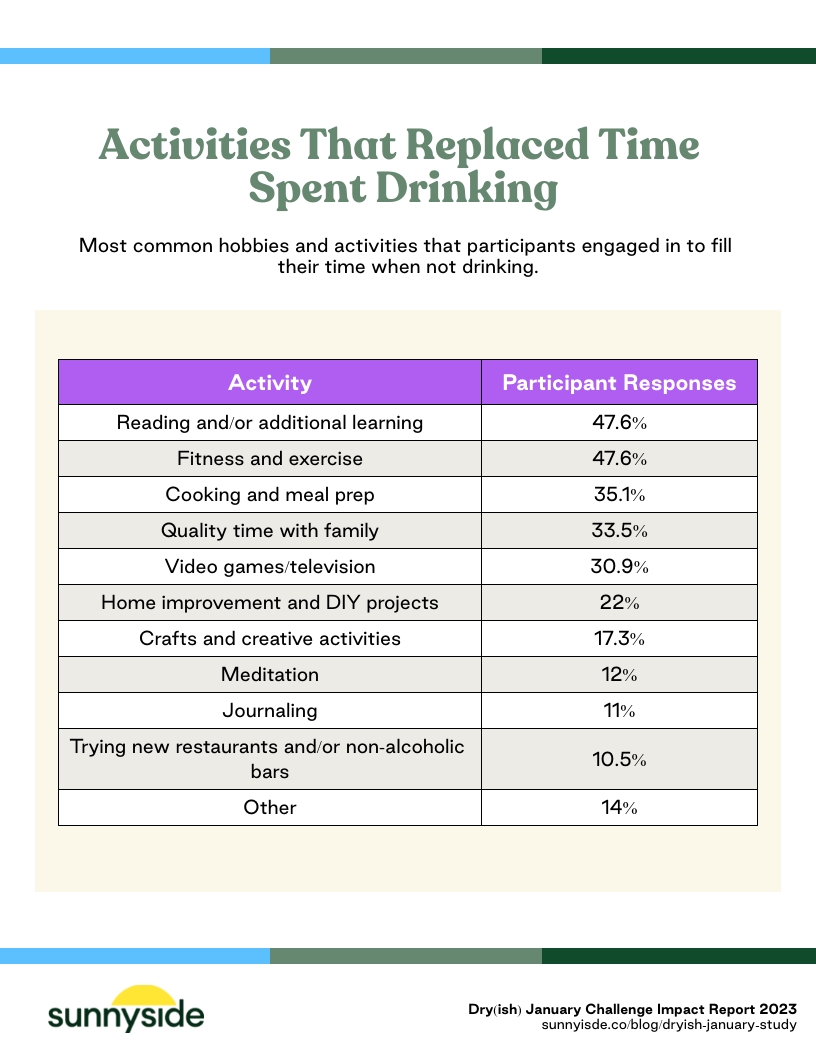
When asked how people were spending their time as opposed to drinking, 47.6% indicated that reading and additional learning were the main way they spent their time. The same number of people indicated that fitness and exercise were where they focused their energy.
Not only did people reduce their drinking, but they replaced the time with activities that would further benefit their mental and physical health.
January alcohol resets–whether going “dry” or “damp”–continue to gain in popularity year over year, but there’s a constant warning label put on these challenges. Here’s what might read in the news, especially toward the end of January:
However 92% participants of Sunnyside’s challenge plan to maintain their reduced consumption moving into February and beyond. When asked to share some thoughts on this, customers expressed a variety of reasons to stay mindful, such as:
“Two major things for me: I’ve come to realize my limits AND!!! I’ve come to enjoy being sober more than drinking. Of course, I still enjoy the buzz, but I now have such an appreciation for my energy without the alcohol that I have more reasons to say no than to say yes.”
“So many dry days! My birthday is in January but I still stuck to my goal of cutting consumption in half via thoughtful planning for what days I did and didn’t want to indulge.”
“Actually opting to NOT drink some nights, because I didn’t want to drink!”
“Getting to experience how much better life is when you don’t drink because you just feel better.”
“The number of dry days and it seemed to be easier as the weeks progressed.”
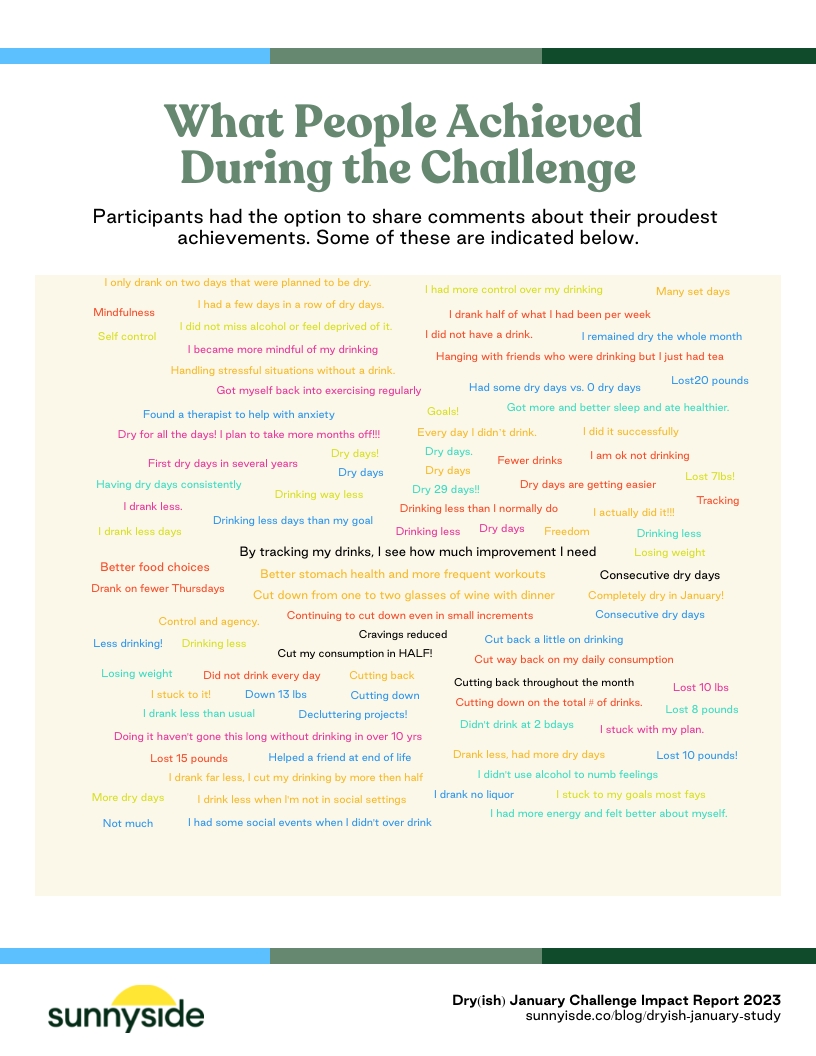
But thousands of people had proud achievements to share. Here’s a quick snapshot of what people had to say:
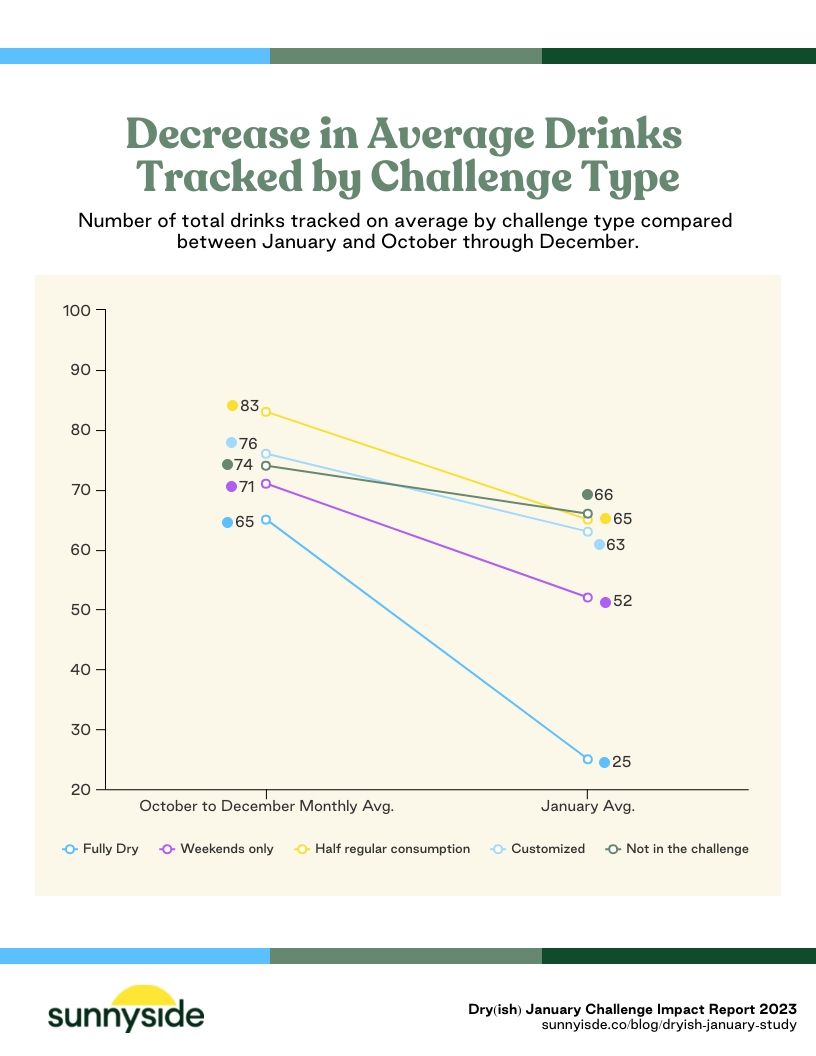
We also decided to look at the number of drinks tracked per month by individuals on average based on the challenge type they selected.
Those who opted into a Fully Dry challenge, were already averaging fewer drinks than anyone who opted into a damp challenge. Participants who chose to cut their consumption by half averaged 22% more drinks than the ones who chose the Fully Dry challenge.
What’s interesting is that participants who opted to cut their consumption by half ended the month at the same average number of drinks tracked as the Fully Dry participants had when they first started the challenge.
This suggests that the heaviest drinkers that took part in the challenge are on track to achieve far more significant improvements in their journey towards reducing their drinking consumption.
Sticking to 31 days without alcohol is hard. Our study shows that only 38% of participants who committed to going fully dry in January didn’t drink the entire month, as reported by tracking behavior in the Sunnyside app.
This fit the rate that we expected, however based on the non-judgmental approach of the challenge, most participants were not discouraged and continued tracking their drinks throughout the month.
It appears that participants felt empowered and encouraged to continue the challenge and improve their overall relationship with alcohol because they had a structured plan and system in place to keep them accountable.
To summarize some of the key takeaways from this data and Sunnyside’s challenge, we can conclude that committing to a month-long alcohol reset challenge can have huge benefits on health and wellness, even if you don’t fully succeed. Simply the act of trying and building a habit around tracking can lead to major improvements.
For those not interested in going fully dry, a damp approach where you focus on cutting back might be more appropriate, and the results are still significant. The barrier to entry in this type of challenge makes it more approachable for people who want to cut back on drinking, but are not quite ready to commit to a month of sobriety.
It’s also clear that many people join alcohol resets not only due to a critical life event, but because they want to improve their overall wellness and generally feel better.
Having access to a system of mindful drinking tools and coaching that support gradual habit change is a major advantage for anyone who is looking to cut back on drinking and improve their overall relationship with alcohol.
Started in 2020, Sunnyside has always focused on the millions of adults who want to cut back on their drinking but don’t want to quit. Sunnyside removes the labels and stigma typically associated with alcohol health and celebrates a proactive approach that builds long-term habit change.
Sunnyside has successfully helped over 140,000 people cut out 7.5M drinks, and on average Sunnyside members reduce their alcohol consumption by 30% in only 12 weeks, leading to incredible improvements in overall wellness, sleep, mental health, and diet.
When members sign up for Sunnyside, they receive personalized weekly plans that can be fully adjusted, tools for tracking and analytics, coaching from real humans, and a vibrant community of people on the same journey of moderation.
Ian has a family deeply hurt by alcohol, and is on his own personal journey to drink less and live his healthiest life. He’s took naltrexone daily for two years and saw incredible results. As Sunnyside Med’s first customer, he’s deeply entrenched in alcohol health and naltrexone.
Naltrexone isn't a new or experimental drug. Researchers began studying its potential for alcohol use in the 1980s,...
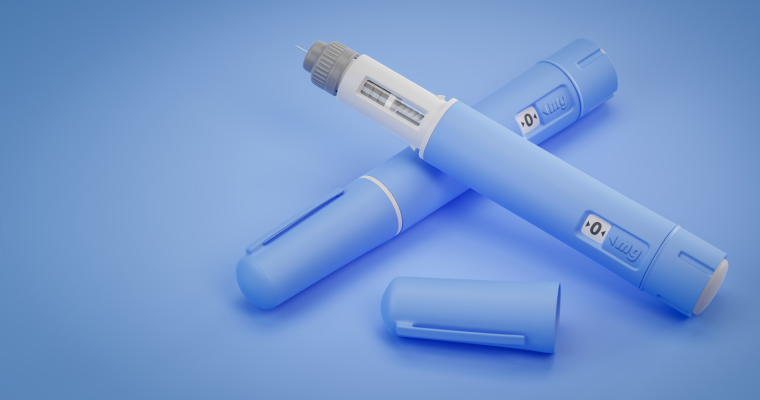
Early research suggests semaglutide may reduce alcohol cravings and some measures of drinking in people with alcohol use...

Alcohol use disorder (AUD) is often described as a chronic condition. That can sound pretty final, especially if...

AA has strong evidence behind it for helping people with alcohol use disorder achieve abstinence, but the studies...