

Why Is Gen Z Drinking Less? The “Sober Generation” Story Is Complicated
Gen Z is drinking less than previous generations did at the same age, but that doesn't mean young...

California sober generally means giving up alcohol and other drugs while continuing to use cannabis. Some people also include psychedelics or occasional drinking. There’s no official definition, and whether the approach reduces harm depends on how someone’s substance use actually changes.
You might have heard someone describe themselves as “California sober” and wondered what, exactly, they’re sober from. Usually, alcohol is off the table, but cannabis is still allowed. Beyond that, the rules can get a little fuzzy.
For some people, California sobriety is a way to stop drinking without giving up every substance they enjoy. For others, it’s a form of harm reduction: an attempt to replace a drinking habit that’s causing problems with something they consider less harmful.
But does swapping alcohol for cannabis actually help? There’s some research suggesting it might reduce drinking in certain circumstances, alongside evidence that using both substances can create additional risks. Here’s what California sober means in practice, what researchers have found, and how to think about whether the approach supports your goals.
California sober, sometimes shortened to “Cali sober,” is an informal term for avoiding alcohol and certain other drugs while continuing to use cannabis. Some people also include occasional psychedelic use, while others allow themselves to drink from time to time.
There are no official rules. Someone who smokes cannabis on weekends and hasn’t had a drink in years might call themselves California sober. So might someone who uses cannabis every evening or occasionally takes psychedelics.
That’s an important distinction because these habits don’t necessarily have the same effects on someone’s health. The label tells you something about a person’s approach to substance use, but not how much they’re using or whether their overall risk has changed.
The phrase “sober sober” generally refers to abstaining from alcohol and other intoxicating substances altogether. California sober, on the other hand, typically allows cannabis and sometimes other substances.
Neither term is a medical diagnosis or an official recovery category. People also define sobriety differently depending on their experiences and the recovery communities they’re part of. Someone who considers themselves sober because they no longer drink alcohol may have a different understanding of the word than someone who practices complete abstinence.
It can be. Harm reduction is an approach to reducing the negative consequences of substance use, even when someone doesn’t want to stop using substances altogether.
For example, someone who previously drank heavily might stop drinking and use cannabis instead. If that change leads to fewer alcohol-related problems, it could represent a meaningful improvement in their health and well-being.
But replacing alcohol with cannabis doesn’t automatically make a person’s substance use safer. The outcome depends on how much cannabis they’re using, how frequently they use it, and whether the change introduces new problems.
Someone who drinks less but begins using cannabis every day, for instance, may find themselves dealing with unwanted effects on their sleep, mood, or ability to concentrate. And someone who continues drinking while adding cannabis may face risks associated with using both substances.
The important question isn’t whether a particular pattern qualifies as California sober. It’s whether the change is helping someone reduce the problems they wanted to address in the first place.
Possibly, but the research is mixed. Some studies suggest that cannabis can reduce alcohol consumption in certain circumstances, while others have found that people who use cannabis may drink more or experience additional alcohol-related problems.
There’s also an important distinction between drinking less during a single occasion and maintaining healthier drinking habits over time. Researchers haven’t established that using cannabis is an effective treatment for alcohol use disorder (AUD).
A 2026 randomized study examined how cannabis affected alcohol consumption among adults who drank heavily and already used cannabis regularly.
During a supervised laboratory drinking session, participants consumed 19% less alcohol after using lower-THC cannabis and 27% less after using higher-THC cannabis, compared with placebo cannabis.
Those findings suggest that cannabis may reduce drinking in certain settings. But there are important limitations. The study measured alcohol consumption during a two-hour laboratory session, not over weeks or months. Participants were also predominantly young adults who already used cannabis, so the findings may not apply to people who don’t currently use it.
The study also didn’t consistently find reductions in alcohol cravings. In other words, drinking less during a laboratory session doesn’t necessarily mean cannabis will help someone manage cravings or change their drinking habits over the long term.
A systematic review of 65 studies found evidence of both substitution and complementary use. Some people appeared to use cannabis instead of alcohol, while others consumed more of both substances.
Studies involving people receiving treatment for alcohol problems have also raised questions about whether cannabis helps with long-term drinking outcomes.
For example, an analysis of participants in the COMBINE alcohol treatment study found that people who used cannabis during treatment had approximately four fewer alcohol-free days over the 16-week treatment period than those who didn’t use cannabis. However, the relationship wasn’t consistent across different frequencies of cannabis use, and the researchers couldn’t establish that cannabis caused the difference.
Similarly, a study of 205 residents of sober-living houses in Los Angeles found that recent cannabis use was associated with more drinking days and alcohol-related problems.
These findings don’t prove that cannabis makes it harder for everyone to reduce their drinking. But they do suggest that replacing alcohol with cannabis isn’t a reliably effective strategy, particularly for people already struggling with alcohol use.
There’s another important distinction between replacing alcohol with cannabis and using the two substances together.
A 2025 review of 30 studies found that people generally consumed more alcohol on occasions when they used cannabis and alcohol simultaneously than when they drank without cannabis. The findings on immediate negative consequences were less consistent.
This matters because someone might think of themselves as California sober while still drinking occasionally and using cannabis at the same time. That pattern is different from eliminating alcohol altogether, and it may introduce risks that wouldn’t exist with either substance alone.
Ultimately, the research suggests that cannabis and alcohol don’t have a simple relationship. Cannabis may replace alcohol for some people in some circumstances, but it can also accompany heavier drinking. Whether California sobriety is helping someone reduce harm depends on what actually changes in their drinking and substance use over time.
Giving up alcohol may have meaningful health benefits, particularly if you’ve been drinking heavily. But replacing it with cannabis introduces a different set of risks, and those risks can increase with frequent use.
One concern is cannabis use disorder, which occurs when cannabis use becomes difficult to control despite negative consequences. A systematic review and meta-analysis of 21 studies estimated that 22% of people who had ever used cannabis met criteria for cannabis use disorder. The review also found that young people who used cannabis weekly or daily were at greater risk of dependence.
That doesn’t mean everyone who uses cannabis will develop a problem. But it’s worth paying attention to how your habits change, especially if you’re using cannabis to manage the same situations that previously led you to drink.
Signs that cannabis use may be becoming problematic include:
These signs are consistent with criteria used to assess substance use disorders, including those in the DSM-5 substance-use checklist. Experiencing one doesn’t necessarily mean you have cannabis use disorder, but recurring problems are worth discussing with a healthcare professional.
It’s also worth considering why you’re using cannabis. If you’ve stopped drinking but now feel unable to relax, socialize, or fall asleep without cannabis, you may still be relying on a substance to manage situations that are difficult for you.
The goal doesn’t have to be complete abstinence from every substance. But if California sobriety is supposed to improve your relationship with alcohol, it’s worth making sure the replacement isn’t creating problems of its own.
Some people who identify as California sober also use psychedelics, such as psilocybin. Interest in these substances has grown partly because researchers are investigating whether psychedelic-assisted therapy could help treat conditions including alcohol use disorder.
There is some promising early evidence. In a randomized clinical trial, researchers studied 93 participants with alcohol dependence who received psychotherapy alongside either supervised psilocybin sessions or an active placebo. Participants in the psilocybin group experienced fewer heavy-drinking days over the 32-week study period.
But there’s a significant difference between receiving psilocybin in a clinical trial and taking psychedelics on your own.
Participants in the study underwent screening, received structured psychotherapy, and took psilocybin under professional supervision. The researchers also excluded people with certain psychiatric and substance-use conditions. Those safeguards were part of the treatment being studied.
The findings therefore don’t establish that occasional psychedelic use, or taking small amounts through microdosing, can help someone reduce their drinking.
Psilocybin is also not FDA-approved to treat alcohol use disorder. Although psychedelic-assisted therapy remains an active area of research, the evidence isn’t strong enough to recommend self-directed psychedelic use as an alcohol treatment.
If you’re considering California sobriety, start by thinking about what you actually want to change. Maybe you’re tired of hangovers, concerned about how much you’re drinking, or hoping to stop drinking altogether.
Whatever your goal, the most useful measure of success is how your habits and well-being change over time. Here are a few questions to ask yourself.
If reducing alcohol consumption is your goal, pay attention to how much you’re actually drinking. You can track your drinking for several weeks, including the number of drinks you have, how often you drink heavily, and how many alcohol-free days you have.
You might discover that you’ve stopped drinking during the week but are still drinking heavily on weekends. Or that you’re drinking less overall but frequently combining alcohol with cannabis.
If you’re still figuring out what kind of relationship with alcohol you want, taking a sober-curious approach can give you room to experiment without committing to a permanent label.
Drinking less can be a meaningful improvement, but it’s also worth looking at how often you’re using cannabis or other substances.
Consider whether your new habits are affecting your sleep, mood, finances, or relationships. Are you using cannabis occasionally, or has it become something you rely on every day?
Think about the situations that used to make you want a drink. Maybe you reached for alcohol after a stressful day, before a social event, or when you were having trouble sleeping.
If cannabis has taken over those same roles, you may want to ask yourself whether you’ve changed the underlying habit or simply substituted one substance for another.
If the answer is yes, that doesn’t necessarily mean you’ve failed to make progress. But finding other ways to manage stress or discomfort may help you build a more sustainable relationship with substances.
One way to evaluate your new habits is to set a limit or take a planned break from cannabis. If you repeatedly use more than you intended or find it difficult to stop, consider talking with a healthcare professional.
The same applies to alcohol. If you’re struggling to reduce your drinking despite wanting to, additional support may help. And if you drink heavily or regularly, don’t abruptly stop without medical guidance if you’re at risk of withdrawal. Alcohol withdrawal can be dangerous, particularly for people who have developed physical dependence.
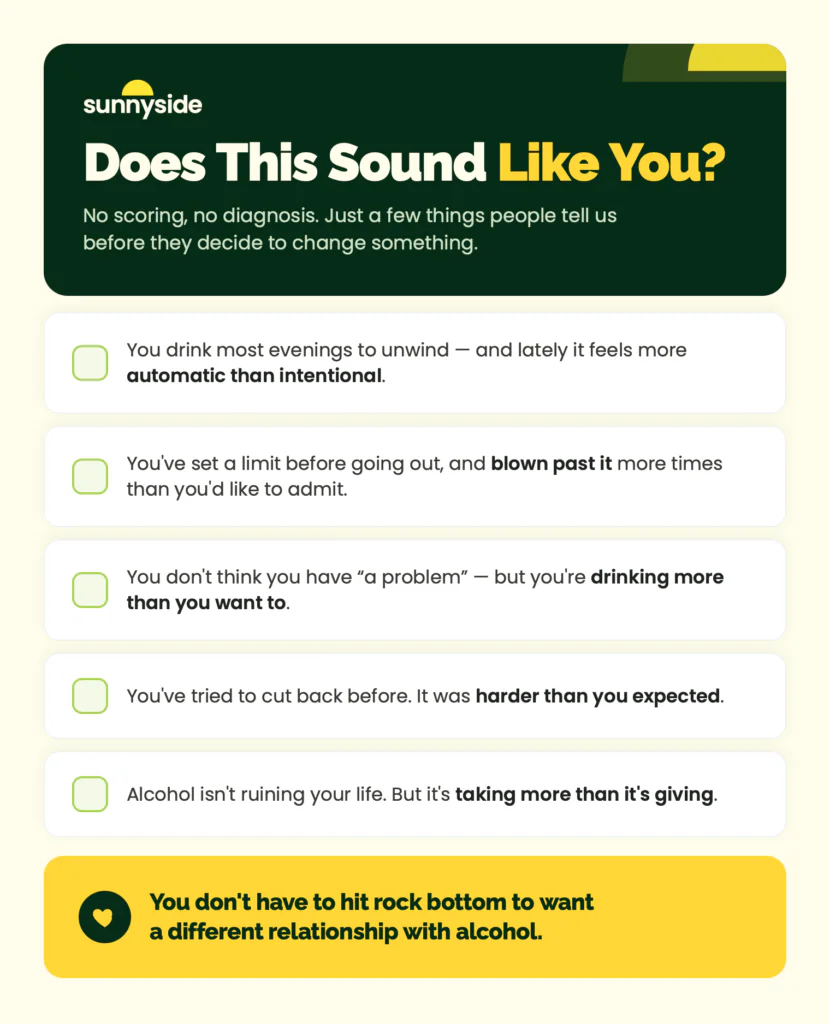
If your main goal is to drink less, you don’t need to replace alcohol with another intoxicating substance to make progress.
There are established treatments for alcohol use disorder, including behavioral therapies and prescription medications. The National Institute on Alcohol Abuse and Alcoholism identifies three FDA-approved medications for AUD, including naltrexone, which can help reduce alcohol cravings and the urge to drink.
You also don’t need to have AUD to benefit from changing your drinking habits. Tracking your consumption, planning alcohol-free days, and identifying situations that lead you to drink can all help you make more intentional decisions about alcohol.
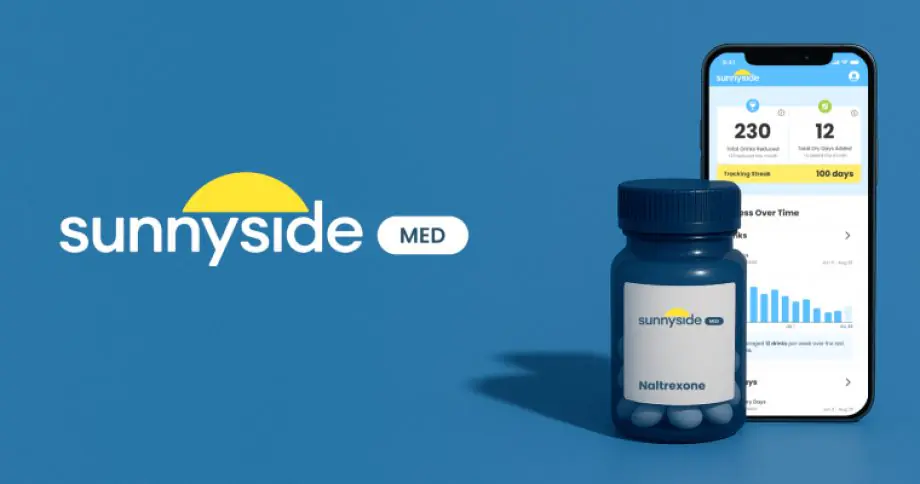
For people who want additional support, Sunnyside Med is a 100% online program that combines medication, clinical care, and behavioral support to help eligible adults reduce or stop drinking.
After completing an online assessment, you’ll meet with a licensed clinician who will review your health history and determine whether naltrexone is appropriate for you. Eligible members may receive compounded naltrexone with vitamin B6.
Medication is only part of the program. Sunnyside Med also includes drink tracking, personalized planning, unlimited one-on-one clinical support, human coaching, and a community of people working toward similar goals. 78% of active Sunnyside Med members achieved a meaningful reduction in drinking over 12 weeks. (Individual results vary.)
If you’re ready to change your relationship with alcohol, complete a brief online assessment to see whether Sunnyside Med might be a good fit.
This content is for educational purposes and isn’t a substitute for medical advice. Naltrexone is a prescription medication, and a licensed clinician determines whether it’s appropriate for each individual.
The phrase gained attention after journalist Michelle Lhooq described her experience with “Cali sober” living in a 2019 Vice essay. Its exact origin is unclear.
No. California sober typically means avoiding alcohol while continuing to use cannabis. Being sober curious means questioning your drinking habits and experimenting with reducing alcohol consumption, without necessarily committing to abstinence.
Possibly, but cannabis isn't an established treatment for alcohol use disorder. If you're struggling to quit drinking, behavioral therapy, medication, or professional support may be more reliable options.
Potentially. Naltrexone can help reduce alcohol cravings, but it doesn't treat cannabis use disorder. A clinician must determine whether it's appropriate for you, particularly if you use opioids.
Yes. Your clinician needs to know which substances you use, how frequently, and whether you combine them to assess potential risks and recommend appropriate care.
If you're using more than intended, struggling to cut back, or experiencing negative consequences, talk with a healthcare professional. Cannabis use disorder is treatable, and you don't need to wait for serious problems to seek help.
Ian has a family deeply hurt by alcohol, and is on his own personal journey to drink less and live his healthiest life. He’s took naltrexone daily for two years and saw incredible results. As Sunnyside Med’s first customer, he’s deeply entrenched in alcohol health and naltrexone.
Gen Z is drinking less than previous generations did at the same age, but that doesn't mean young...
Sunnyside Med is our top pick for the best alcohol moderation program in 2026. It combines clinician-guided access...
For a lot of parents, concern around drinking shows up as a feeling you can’t quite name—a moment...

The Super Bowl always ends up feeling bigger than the game itself. It’s the noise, the food, the...